
Air conditioning systems are essential for maintaining comfort during hot weather, but they often work harder than necessary—driving up energy bills and reducing lifespan. One surprisingly effective way to improve cooling efficiency isn’t a high-tech gadget or expensive upgrade: it’s the humble ceiling or floor fan. Many homeowners wonder whether a regular fan can truly help their AC perform better. The answer is yes—with proper use, a standard fan can significantly enhance airflow, reduce strain on your HVAC system, and lower energy consumption.
Fans don't cool the air—they cool people. But by moving air strategically, they allow thermostats to be set higher while maintaining comfort, effectively making your air conditioner run less. This article explores the science behind this synergy, provides practical strategies for maximizing results, and debunks common misconceptions about fan use with air conditioning.
How Air Circulation Affects Cooling Efficiency
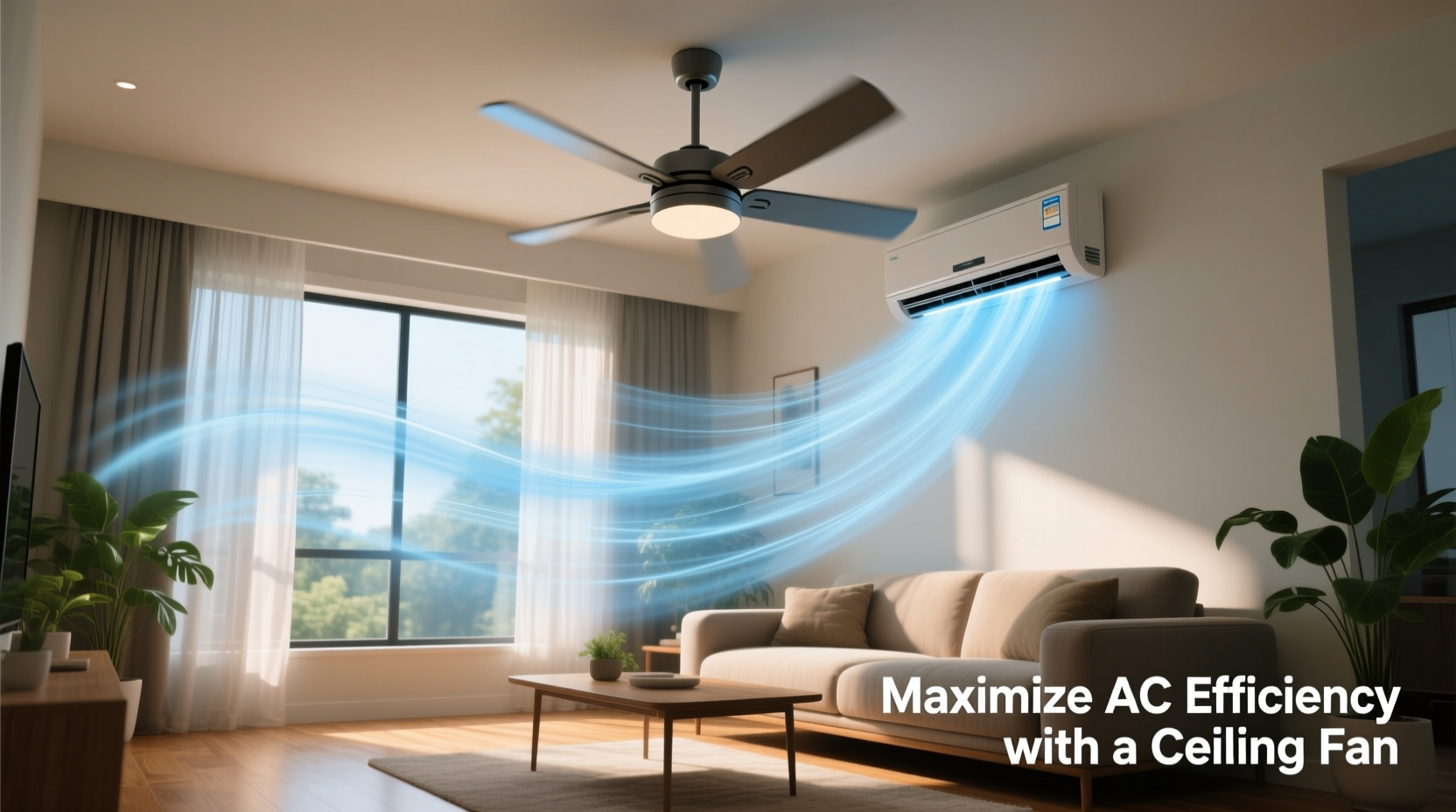
Air conditioners function by removing heat and humidity from indoor air. However, cold air tends to sink, while warm air rises, creating temperature stratification—cooler near the floor, warmer near the ceiling. In large or poorly insulated rooms, this imbalance means your AC runs longer to achieve even temperatures, wasting energy.
This is where fans come in. By circulating air, they disrupt thermal layers and promote uniform temperature distribution. When air moves across your skin, it enhances evaporative cooling, making you feel cooler even if the room temperature hasn’t changed. That perceived drop in temperature—often 3–5°F—means you can raise your thermostat setting without sacrificing comfort.
“Air movement is one of the most underutilized tools in residential cooling. A well-placed fan can make a 78°F room feel like 74°F, which translates directly into energy savings.” — Dr. Alan Fields, HVAC Efficiency Researcher at the National Institute of Building Sciences
The key is understanding that fans assist people, not spaces. Unlike AC units, fans don’t change the actual temperature of the air. Their benefit lies in enhancing human comfort through airflow, allowing the air conditioner to operate less frequently and for shorter durations.
Strategic Fan Placement for Optimal Airflow
Not all fan placements are equally effective. Where and how you position your fan determines its impact on AC performance. Below are proven methods based on room layout and fan type:
Ceiling Fans: Direction Matters
Ceiling fans should rotate counterclockwise in summer to push air downward, creating a wind-chill effect. This directs cool air from the AC toward occupants. If your fan has a reverse switch, ensure it's set correctly for the season.
Floor and Box Fans: Directing Cool Air Flow
- Corner-to-Center Push: Place a box fan in a cooled area (like near the AC vent) and point it toward the center of the room to disperse cold air.
- Window Zone Bypass: In multi-room homes, place a fan in a doorway to move cool air from conditioned zones into warmer areas, reducing hot spots.
- Return Air Assistance: Position a fan near return vents to help pull warm air back to the AC unit, improving system efficiency.
Oscillating Fans: Maximizing Coverage
Oscillating fans are ideal for larger rooms or open-concept layouts. Their sweeping motion ensures consistent airflow across multiple seating areas, preventing stagnant pockets of warm air.
Step-by-Step Guide: Integrating Fans with Your AC System
Follow this timeline to optimize your cooling strategy using regular fans:
- Assess Room Layout (Day 1): Identify where cool air enters (near vents), where people spend time, and where hot spots occur.
- Select Fan Types (Day 1–2): Use ceiling fans in bedrooms and living rooms; portable fans in hallways or areas without overhead fixtures.
- Adjust Thermostat (Day 3): Raise the temperature by 2–4°F once fans are in place. Start at 78°F instead of 74°F if comfortable.
- Test Airflow Patterns (Day 4): Sit in different areas and adjust fan angles until you feel consistent breeze.
- Establish Schedules (Ongoing): Turn fans on when rooms are occupied and off when empty. Use timers or smart plugs for automation.
- Monitor Energy Bills (Monthly): Compare usage over 30-day periods to quantify savings.
This gradual integration prevents discomfort and allows household members to adapt to slightly higher thermostat settings supported by airflow.
Fan and AC Synergy: Do’s and Don’ts
| Do’s | Don’ts |
|---|---|
| Use fans to enable higher thermostat settings (75–78°F) | Leave fans running in unoccupied rooms |
| Pair ceiling fans with central AC for whole-home circulation | Block airflow with furniture or curtains |
| Point box fans toward seating areas, not walls | Run fans at maximum speed constantly—adjust as needed |
| Clean fan blades monthly to maintain airflow efficiency | Ignore unusual noises or wobbling—these indicate maintenance needs |
| Use smart plugs to automate fan operation with occupancy | Assume fans cool rooms—remember, they cool people |
Real-World Example: Reducing Cooling Costs in a Two-Story Home
The Ramirez family lives in a 2,100-square-foot home in Phoenix, Arizona, where summer highs regularly exceed 105°F. They relied heavily on their central AC, averaging $320 per month in cooling costs from June to September. After consulting an energy auditor, they implemented a fan-assisted cooling strategy:
- Reversed ceiling fans to summer mode in all main living areas.
- Placed oscillating fans in doorways between the kitchen and family room to eliminate heat buildup.
- Raised their thermostat from 72°F to 76°F when at home, relying on airflow for comfort.
- Installed timer switches on bedroom fans to turn off after 30 minutes of sleep onset.
Over the next cooling season, their average monthly bill dropped to $245—a 23% reduction. More importantly, they reported greater comfort due to reduced “cold spots” near vents and eliminated stuffiness in upstairs bedrooms. The initial investment in two new box fans paid for itself within six weeks.
Energy Savings and Environmental Impact
A typical central air conditioner consumes 3,000–5,000 watts per hour. In contrast, a ceiling fan uses only 15–95 watts, and a box fan averages 50–100 watts. Even when both systems run simultaneously, the combined draw is far less than lowering the thermostat by several degrees.
According to the U.S. Department of Energy, raising your thermostat by just 7–10°F for eight hours a day can cut cooling costs by up to 10% annually. When fans make higher settings comfortable, those savings compound. For example:
- Setting thermostat to 78°F with fans vs. 72°F without = ~20% reduction in AC runtime.
- Reduced compressor cycling extends AC lifespan by minimizing wear.
- Lower energy demand reduces carbon footprint, especially in regions reliant on fossil fuels.
Common Misconceptions About Fans and AC
Despite widespread availability, many people misuse fans or avoid them due to myths:
- Myth: Fans cool rooms. Truth: They cool people via convection. Turn them off when no one is present.
- Myth: Running a fan wastes energy if AC is on. Truth: The small added load is offset by reduced AC runtime.
- Myth: All fans are the same. Truth: Blade design, motor efficiency, and placement dramatically affect performance.
Another misconception is that fans are only useful in window-cooled rooms. In reality, they complement any cooling system—central AC, ductless mini-splits, or portable units—by ensuring conditioned air reaches all areas evenly.
Checklist: Optimizing Fan Use with Air Conditioning
Use this checklist to ensure you’re getting the most from your fan-and-AC combination:
- ✅ Confirm ceiling fans rotate counterclockwise in summer
- ✅ Clean dust from fan blades and grilles monthly
- ✅ Position fans to direct airflow over seating areas
- ✅ Raise thermostat by 2–4°F when fans are in use
- ✅ Turn off fans when rooms are unoccupied
- ✅ Use oscillating modes for broader coverage
- ✅ Seal air leaks and insulate well—fans help, but can’t compensate for poor building envelope
- ✅ Consider smart controls for automated scheduling
FAQ
Can I use a fan with a window air conditioner?
Yes. Place a fan inside the room to distribute the cool air from the window unit more evenly. You can also use a second fan facing outward in another window to expel hot indoor air, creating cross-ventilation that enhances efficiency.
Should I leave fans on all day?
No. Only operate fans in occupied rooms. Since they provide comfort through air movement, running them in empty spaces adds unnecessary energy use without benefit.
Do fans help dehumidify the air?
Not directly. However, increased airflow can make humid conditions feel less oppressive by accelerating sweat evaporation. For true moisture control, rely on your AC’s built-in dehumidification or a standalone dehumidifier.
Conclusion
Using a regular fan to circulate air conditioning is not just possible—it’s one of the simplest, most cost-effective ways to improve cooling efficiency. By enhancing airflow and enabling higher thermostat settings, fans reduce energy consumption, extend equipment life, and increase comfort. Whether you have ceiling fans, floor models, or a mix of both, strategic placement and mindful operation can transform how your air conditioner performs.
The technology is simple, the cost is low, and the benefits are measurable. Start today by adjusting your fan direction, repositioning portable units, and raising your thermostat just a few degrees. With consistent application, you’ll enjoy a cooler-feeling home while using less energy—a win-win for your comfort and your budget.




 浙公网安备
33010002000092号
浙公网安备
33010002000092号 浙B2-20120091-4
Comments
No comments yet. Why don't you start the discussion?