
As the holiday season rolls in, homes fill with festive decorations, fragrant evergreens, and the unmistakable charm of a freshly set-up Christmas tree. With increased foot traffic and falling needles, keeping floors clean becomes more challenging—especially around the tree stand. Many homeowners now rely on robot vacuums to maintain cleanliness with minimal effort. But a common question arises: can these automated helpers operate safely near Christmas tree stands without causing damage or malfunctioning?
The short answer is yes—but with important caveats. Robot vacuums can be used near Christmas tree stands, provided certain precautions are taken. The risk isn’t just about knocking over the tree (though that’s a real concern), but also about water exposure, tangled cords, and debris that could impair the robot’s sensors or wheels. Understanding how to manage these risks ensures both your holiday centerpiece and your smart appliance remain unharmed.
Understanding the Risks Around Tree Stands
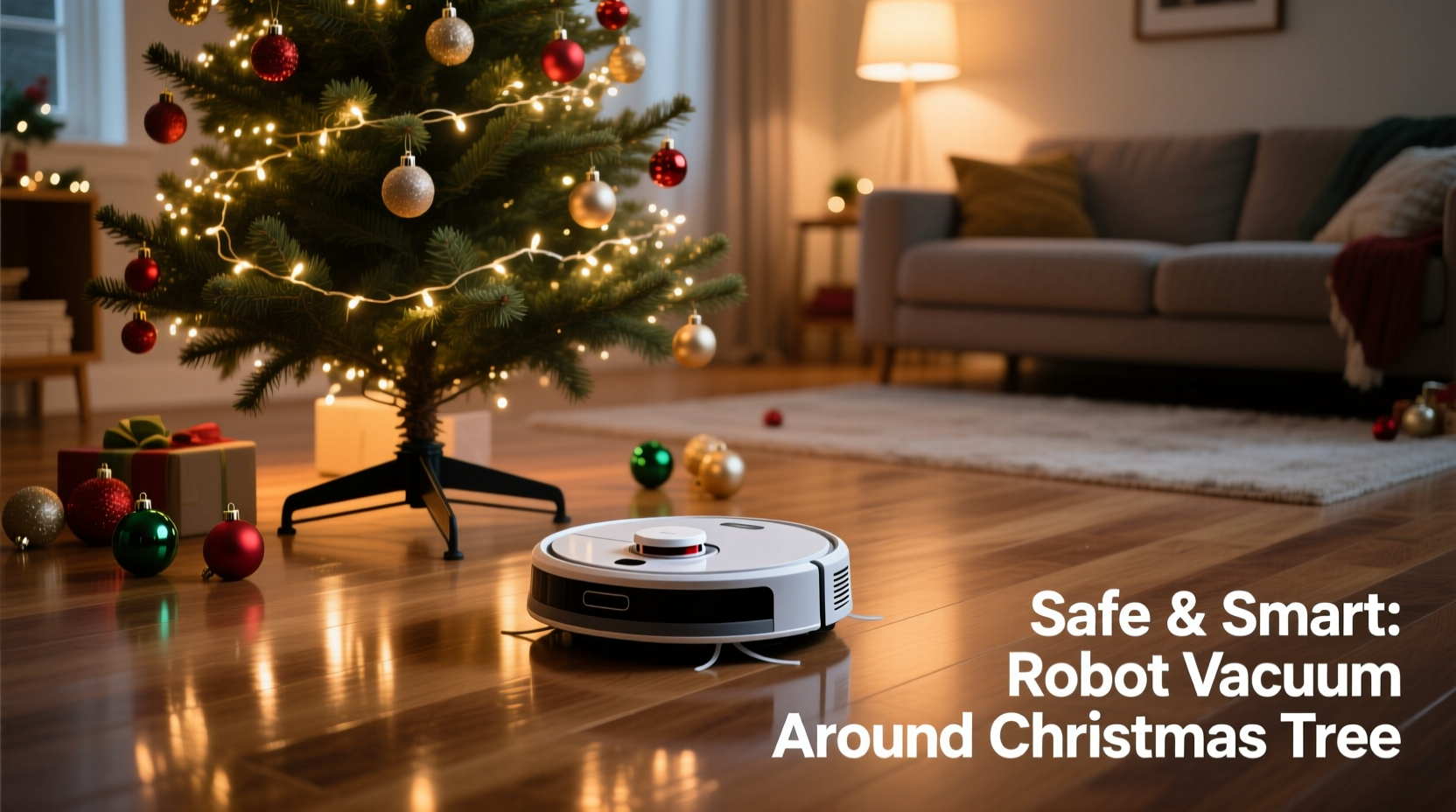
Christmas tree stands come in various designs—some hold water reservoirs to keep real trees fresh, while others support artificial models. Both types present unique challenges for robot vacuums.
Water-filled stands pose the most significant threat. Most robot vacuums are not waterproof, and even minor contact with liquid can lead to electrical shorts, motor failure, or sensor damage. A single misstep into a shallow puddle from an overfilled stand or accidental spill can render the device unusable. Additionally, wet pine needles become sticky and clump together, increasing the chance of wheel obstruction or brush roll entanglement.
Physical obstructions are another issue. Tree stands often have irregular shapes, low-hanging branches, or decorative skirts that limit clearance. Robot vacuums typically require at least 3–4 inches of vertical space to pass under furniture; many tree skirts and lower branches fall below this threshold, causing the robot to get stuck or repeatedly bump into obstacles.
Best Practices for Safe Operation
To use a robot vacuum effectively and safely near a Christmas tree, follow these practical strategies:
- Inspect the area first: Clear any loose ornaments, extension cords, or decorative ribbons from the floor. These items can tangle in the robot’s brushes or confuse its navigation system.
- Elevate or shield the water reservoir: If using a real tree, place a tray or absorbent mat beneath the stand to catch drips. Some users opt for a plastic cover (not directly touching the water) to prevent splashes during watering.
- Set up no-go zones: Modern robot vacuums from brands like iRobot, Roborock, and Ecovacs allow users to define “no-go” lines or zones via companion apps. Mark a perimeter of at least 12 inches around the tree base to keep the robot at a safe distance.
- Run during low-traffic hours: Schedule cleanings when people and pets aren’t actively moving around the tree. This reduces interference and prevents the robot from being blocked mid-cycle.
- Monitor initial runs: Observe the first few cleaning sessions near the tree to ensure the robot navigates safely and doesn’t attempt risky maneuvers.
These steps minimize risks while still allowing the robot to maintain general floor cleanliness in adjacent areas.
Do’s and Don’ts When Vacuuming Near Holiday Decor
| Do’s | Don’ts |
|---|---|
| Use virtual walls or app-defined boundaries | Allow unrestricted access to the tree base |
| Clean pine needles daily with a handheld vacuum first | Wait days before cleaning, letting debris accumulate |
| Check wheels and brushes after each run | Ignore tangled debris or moisture on sensors |
| Place the charging dock away from the tree area | Position the dock where it might interfere with decor |
| Use a robot with advanced obstacle detection | Rely on older models without object recognition |
Expert Insight: What Professionals Recommend
Industry experts emphasize caution when integrating smart home devices into seasonal setups. According to Dr. Linda Chen, a robotics engineer specializing in consumer automation, \"While modern robot vacuums are remarkably intelligent, they’re not infallible. Reflective surfaces, dangling objects, and uneven textures—common around Christmas trees—can confuse sensors. Proximity to liquids remains the biggest hazard.\"
“Even a small amount of water ingress can corrode circuitry over time. I recommend treating the tree area as a temporary exclusion zone.” — Dr. Linda Chen, Robotics Engineer
She also notes that newer models equipped with AI-powered cameras and 3D obstacle avoidance (like the Roborock S8 or iRobot j7+) perform significantly better in cluttered environments. These robots can identify and steer clear of fragile or hazardous objects, making them safer choices during the holidays.
Real-World Example: A Family’s Holiday Cleaning Strategy
The Thompson family in Portland, Oregon, has used a robot vacuum for three years. Each December, they bring in a 7-foot Douglas fir, complete with lights, heirloom ornaments, and a classic metal stand that holds three gallons of water.
In their first year, they allowed the robot full access. Midway through a cleaning cycle, it veered too close, bumped the stand, and caused a small splash. Water seeped into the robot’s side brush housing, triggering an error code. Though it recovered after drying out, performance degraded over the following weeks.
The next season, they adjusted their approach. Using the app, they drew a rectangular no-go zone around the tree. They also placed a microfiber mat underneath to catch stray needles and moisture. Now, the robot cleans the surrounding hardwood floors daily, avoiding the high-risk zone entirely. “It’s been flawless,” says Sarah Thompson. “We get clean floors without stressing about accidents.”
Step-by-Step Guide: Preparing Your Robot Vacuum for Holiday Use
Follow this sequence to safely integrate your robot vacuum into your holiday routine:
- Week 1: Assess the layout
Measure the space around your tree. Note the location of cords, stands, and low-hanging decor. - Week 2: Define boundaries
If your model supports it, open the app and draw a no-go zone around the tree base. Test with a manual run. - Week 3: Pre-clean manually
Use a handheld vacuum or duster to remove initial layers of debris near the tree. This prevents early clogs. - Week 4: Schedule test runs
Run the robot during daylight with supervision. Confirm it avoids the tree and returns to dock properly. - Ongoing: Maintain vigilance
After each cycle, check for pine needles wrapped around brushes or dampness on the chassis.
This proactive approach ensures reliability throughout the season, especially during busy gatherings when spills and tracked-in dirt are more common.
Frequently Asked Questions
Can robot vacuums detect water and avoid it?
Most standard models cannot detect water. While some high-end robots have humidity sensors or leak protection, these are rare. Relying on detection is risky—proactive boundary setting is far safer.
What should I do if my robot vacuum gets wet?
Turn it off immediately. Remove the battery if possible. Dry all accessible parts with a soft cloth, then let it air-dry in a warm, ventilated area for at least 24–48 hours. Do not power it on until fully dry. If performance issues persist, contact customer support.
Are artificial trees safer for robot vacuums than real ones?
Generally, yes. Artificial trees don’t shed needles or require water, reducing both physical and liquid hazards. However, tinsel, loose wires, and crowded bases can still pose entanglement risks. Always inspect the area before running the robot.
Final Checklist Before Running Your Robot Near the Tree
- ✅ Tree stand is stable and not leaking
- ✅ No extension cords or light strings lying on the floor
- ✅ Virtual boundaries set in the app (if supported)
- ✅ Charging dock is located in a clear, dry area
- ✅ Robot brushes and filters are clean and functional
- ✅ First run will be supervised
- ✅ Absorbent mat or tray under the tree stand (for real trees)
Conclusion: Smart Cleaning Without Holiday Hazards
Using a robot vacuum near a Christmas tree stand is entirely feasible—with thoughtful planning. By leveraging technology like no-go zones, maintaining regular maintenance checks, and respecting the limitations of your device, you can enjoy both a pristine home and a stress-free holiday season. The key is balance: automation brings convenience, but human oversight ensures safety.
As smart homes evolve, so must our habits. Seasonal changes demand temporary adjustments to routines, and the Christmas tree is no exception. Protect your investment, preserve your decor, and keep your floors spotless by applying these proven strategies today.




 浙公网安备
33010002000092号
浙公网安备
33010002000092号 浙B2-20120091-4
Comments
No comments yet. Why don't you start the discussion?