
Hanging decorative or functional lighting on brick walls—whether indoors or outdoors—adds charm and ambiance. But brick poses a unique challenge: it's porous, uneven, and often sealed with mortar, making traditional fastening methods risky if done incorrectly. Many homeowners turn to Command hooks as a damage-free alternative to drilling. But are they truly safe and effective for hanging lights on brick? The answer isn't a simple yes or no—it depends on the type of hook, light fixture, surface prep, and environmental conditions.
Command hooks, developed by 3M, are designed for temporary mounting using adhesive strips instead of nails or screws. While convenient, their performance on textured masonry like brick is inconsistent. Understanding the limitations and proper application techniques is essential to avoid costly accidents or property damage.
The Science Behind Command Hooks and Brick Adhesion
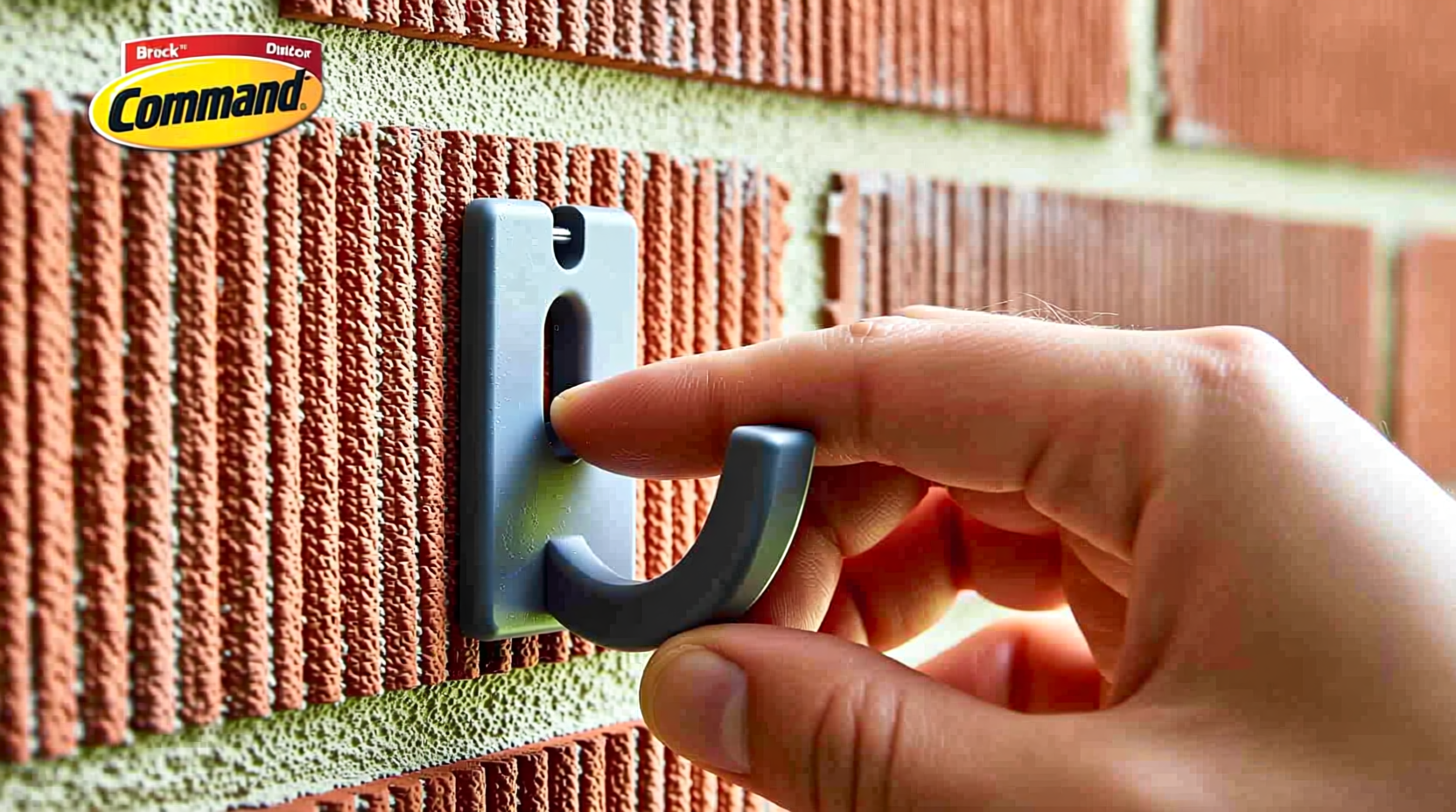
Command hooks rely on pressure-sensitive adhesives that bond best with smooth, clean, non-porous surfaces such as painted drywall, glass, metal, or ceramic tile. Brick, however, is naturally rough, absorbent, and irregular. These characteristics reduce the surface area available for adhesive contact, weakening the bond significantly.
3M does offer specialized outdoor-rated Command products with stronger adhesives formulated for higher humidity, temperature fluctuations, and slight textures. Even so, standard product testing rarely includes raw, uncoated brick. According to materials engineers at 3M, “The effectiveness of any adhesive product diminishes when applied to porous substrates unless specific surface preparation steps are followed.”
“Adhesive performance drops by up to 60% on untreated brick compared to smooth stucco or fiber-cement board.” — Dr. Lena Torres, Materials Scientist, Building Envelope Research Group
This means that while some users report success with Command hooks on brick, those results are often situational—dependent on factors like paint finish, climate, weight load, and exposure to moisture.
When It Might Work—and When It Won’t
Not all brick surfaces are created equal. Some are smoother, painted, or sealed; others are weathered and highly textured. Similarly, not all lights weigh the same. A string of lightweight LED fairy lights may stay put where a heavier strand of vintage-style Edison bulbs would fail quickly.
Here’s a breakdown of scenarios where Command hooks may—or may not—be viable:
- Painted brick: Offers better adhesion than raw brick. If the paint is intact and non-porous (e.g., acrylic or enamel), outdoor-rated Command hooks have a reasonable chance of holding lightweight fixtures.
- Sealed or coated brick: Surfaces treated with masonry sealant create a more uniform bonding surface, improving grip.
- Rough, unpainted brick: High porosity and texture prevent full adhesive contact. Not recommended for any load-bearing use.
- Outdoor exposure: Sunlight degrades adhesives over time. UV radiation weakens polymers in tapes, reducing lifespan even under minimal loads.
In short: Command hooks can work on brick only under ideal conditions—lightweight lights, smooth/painted surface, indoor or sheltered placement, and strict adherence to installation guidelines.
Step-by-Step Guide: Installing Command Hooks on Brick Safely
If you decide to proceed with Command hooks on brick, follow this detailed process to maximize safety and reliability:
- Clean the Surface Thoroughly
Use isopropyl alcohol and a lint-free cloth to remove dust, grease, and loose particles. Let dry completely. For painted brick, ensure no flaking or peeling exists in the target area. - Select the Right Hook Type
Choose outdoor-rated Command hooks with transparent or reinforced adhesive backing. Avoid small, lightweight versions. Opt for large J-hooks rated for at least 2 pounds per hook. - Condition the Surface (Optional but Recommended)
For slightly porous brick, apply a thin layer of exterior-grade primer or clear epoxy resin to create a smoother bonding platform. Allow 24 hours to cure. - Apply the Hook with Firm Pressure
Peel the liner and press the hook onto the brick with steady hand pressure for at least 30 seconds. Use a roller or flat object to ensure maximum contact across the adhesive pad. - Wait Before Loading
Do not attach lights immediately. Wait 24 hours for the adhesive to reach full strength, especially in cooler or humid environments. - Distribute Weight Across Multiple Hooks
Never rely on a single hook. Space hooks every 12–18 inches along the light strand to spread the load and reduce stress on individual units. - Inspect Monthly
Check each hook for signs of lifting, discoloration, or movement. Reapply or replace as needed.
This method improves odds of success but doesn’t eliminate risk. Always assume the system could fail unexpectedly.
Comparison Table: Hanging Light Options for Brick Surfaces
| Method | Max Load Capacity | Damage Risk | Installation Ease | Best For |
|---|---|---|---|---|
| Command Hooks (Outdoor) | 0.5–2 lbs/hook | Low (if removed properly) | Easy | Indoor fairy lights, seasonal decor |
| Brick Clips (No-Drill) | Up to 5 lbs | None | Moderate | Light strings, banners |
| Masonry Screws with Anchors | 10+ lbs | High (permanent holes) | Hard | Permanent fixtures, heavy sconces |
| Adhesive Rope Lights (Integrated Mount) | Self-supporting | Low | Easy | Continuous runs, curved edges |
As shown, Command hooks occupy a niche: easy, removable solutions for very light-duty applications. They’re not suitable for long-term or high-stakes installations.
Real Example: A Backyard Patio Lighting Attempt
Jamie, a homeowner in Portland, wanted to add string lights to her backyard brick fireplace without drilling. She used four large outdoor Command hooks to support a 20-foot copper wire light strand with 10 small bulbs. The setup held through two weeks of dry weather. Then, during a rainy weekend with temperatures dropping overnight, two hooks detached—one causing the entire strand to sag dangerously close to the firebox.
Upon inspection, Jamie found moisture had seeped behind the adhesive pads, breaking the bond. Though no fire occurred, she realized the risk was too great. She replaced the system with adjustable brick clips that clamp into mortar joints, which have held securely for over a year with zero maintenance.
This case illustrates how environmental conditions can undermine even well-installed adhesive systems. Temporary convenience gave way to safety concerns, prompting a shift to a more reliable solution.
Expert-Recommended Alternatives to Command Hooks
For those seeking damage-free or low-impact options beyond Command hooks, several alternatives offer greater security:
- Brick Clips: Metal or plastic clamps that fit into mortar joints without drilling. Brands like Tuopu and Gorilla offer models rated for 4–5 pounds each. Ideal for string lights and lightweight décor.
- Mortar Joint Hooks: Small screw-in hooks designed to anchor directly into existing mortar lines. Less invasive than wall drilling and easily patched if removed.
- Adhesive-Backed Cable Channels: Heavy-duty raceways with industrial-strength tape for routing light cords flush against brick. Often used in commercial settings.
- Freestanding Uplights: Position LED spotlights near the base of the wall to illuminate brick features without any mounting.
These alternatives balance aesthetics, safety, and reversibility far better than standard adhesive hooks.
Checklist: Can You Safely Use Command Hooks for Lights on Brick?
Before proceeding, ask yourself these critical questions:
- ✅ Are the lights made of lightweight materials (e.g., plastic, fabric, thin wire)?
- ✅ Is the total weight under 2 pounds per hook?
- ✅ Is the brick surface painted, sealed, or otherwise smoothed?
- ✅ Will the area be exposed to rain, snow, or direct sunlight?
- ✅ Can the lights be safely positioned away from foot traffic or heat sources if they fall?
- ✅ Are you willing to inspect and maintain the hooks monthly?
- ✅ Is there a backup plan if the adhesive fails?
If you answered “no” to any of the first three or “yes” to exposure risks, consider alternative mounting methods.
Frequently Asked Questions
Can I use multiple Command hooks to hold heavier lights?
While distributing weight across several hooks helps, adhesives don’t scale linearly in strength. Two hooks won’t necessarily support twice the load, especially on uneven surfaces. Additionally, if one fails, others may be overloaded suddenly. For anything over 3 pounds total, use mechanical fasteners or brick-specific hardware.
Will removing Command hooks damage painted brick?
Generally, Command hooks are designed to come off cleanly. However, on older paint or compromised surfaces, removal can peel off flakes. To minimize risk, warm the adhesive gently with a hairdryer and pull slowly at a 180-degree angle. Test on a small inconspicuous area first.
Are there waterproof Command hooks for outdoor brick?
Yes, 3M offers Outdoor Large Clear Refillable Hooks explicitly rated for wet conditions and UV resistance. They claim to hold through rain, snow, and sun—but only on smooth, sealed surfaces. Performance on porous brick remains limited despite marketing claims.
Final Recommendation: Prioritize Safety Over Convenience
While Command hooks offer a tempting shortcut, they are not a universally safe solution for hanging lights on brick. Their use should be reserved for lightweight, temporary, and closely monitored applications—especially indoors or under covered areas. Relying on them for permanent or outdoor lighting introduces unnecessary risk.
Instead, invest in purpose-built hardware like brick clips or mortar anchors. These provide peace of mind, longer durability, and better value over time. The few extra minutes spent installing a secure system outweigh the potential consequences of falling lights—especially near walkways, seating areas, or flammable materials.




 浙公网安备
33010002000092号
浙公网安备
33010002000092号 浙B2-20120091-4
Comments
No comments yet. Why don't you start the discussion?