
As the holiday season approaches, homeowners across the country begin transforming their homes with festive lights. For many, this means draping strings of LEDs or incandescent bulbs along rooflines, gutters, and siding. One popular tool often considered for such tasks is the 3M Command hook—a staple in households for its no-damage removal promise and ease of use indoors. But when it comes to attaching heavy Christmas light displays to exterior siding, questions arise: Can these adhesive hooks truly hold up under outdoor conditions? Are they safe for long-term use on different siding materials? And what happens when temperatures drop and wind picks up?
The short answer: It depends. While Command hooks are engineered for reliability on smooth indoor surfaces, their performance outdoors—especially on textured or weather-exposed siding—is far less predictable. This article dives deep into the structural realities, manufacturer specifications, environmental challenges, and real-world experiences to help you make an informed decision before hanging hundreds of lights on a few small adhesive strips.
Understanding the Limits of Command Hooks
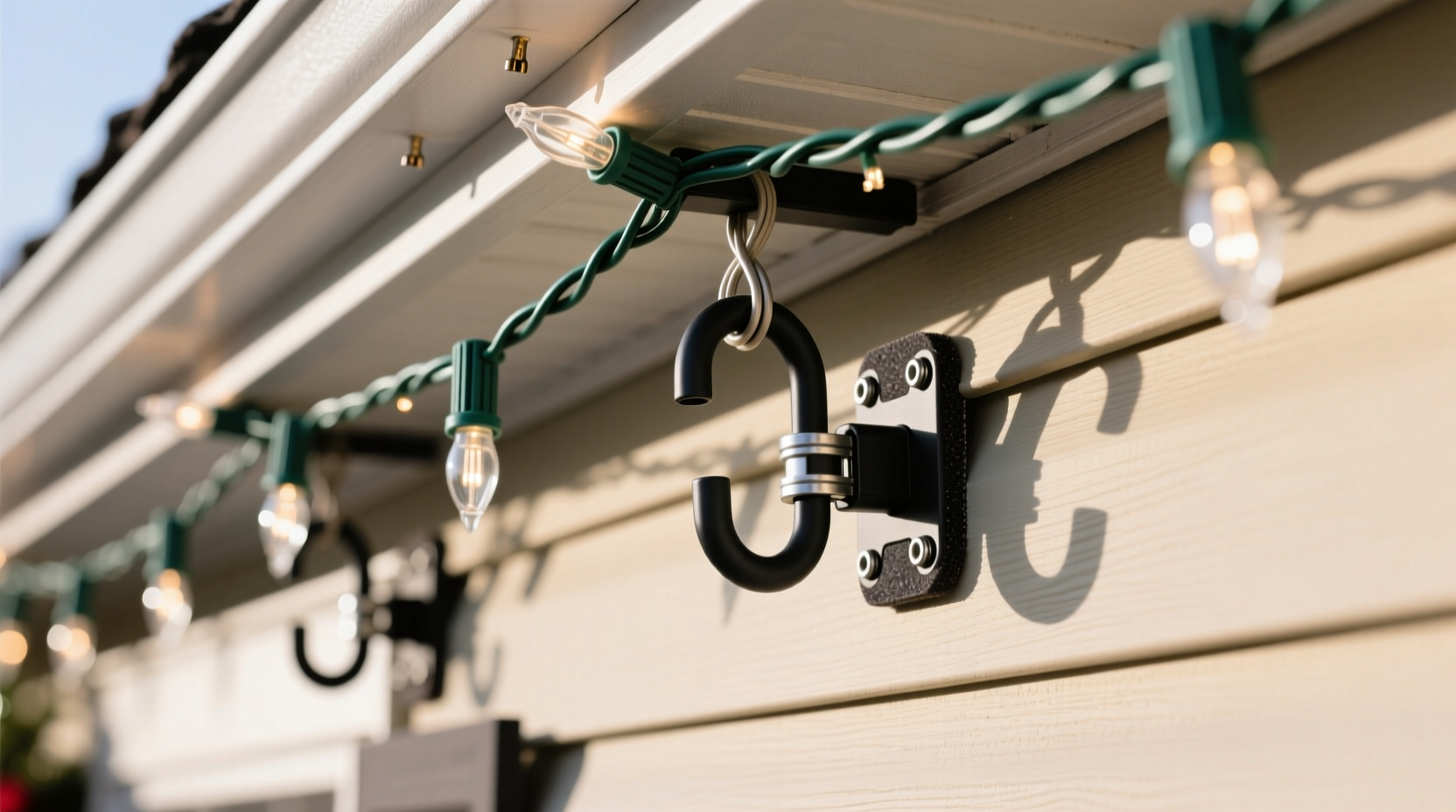
Command hooks rely on 3M’s proprietary adhesive technology designed primarily for interior use. The product line includes various sizes and weight ratings, ranging from mini hooks rated for 1 pound to large ones supporting up to 7.5 pounds. However, these ratings assume ideal conditions: clean, dry, non-porous surfaces at room temperature.
Outdoors, those conditions rarely apply. Siding materials like vinyl, aluminum, wood, fiber cement, and stucco vary significantly in texture, porosity, and thermal expansion. Add seasonal elements—freezing temperatures, rain, snow, UV exposure, and wind—and the adhesive bond weakens over time. Even if the hook initially holds, repeated expansion and contraction can cause gradual failure.
According to 3M’s official guidelines, most Command products are not recommended for outdoor use unless specifically labeled as weather-resistant. As of now, only a limited number of outdoor-rated Command products exist, and even those are intended for lightweight items like wreaths or small signs—not extended runs of Christmas lights weighing several pounds.
Siding Types and Their Compatibility with Adhesives
Not all siding is created equal when it comes to adhesion. Surface texture, material composition, and age all affect how well any adhesive will perform. Below is a comparison of common siding types and their suitability for Command-style hooks:
| Siding Type | Surface Texture | Adhesion Potential | Risk Level for Heavy Displays |
|---|---|---|---|
| Vinyl | Smooth but flexible | Moderate (if clean and dry) | High – expands/contracts with temperature |
| Aluminum | Smooth, metallic | Good (if grease-free) | Moderate – durable but cold-sensitive |
| Wood | Porous, grainy | Poor – absorbs moisture, uneven | Very High – prone to adhesive failure |
| Fiber Cement (e.g., HardiePlank) | Rough, painted or textured | Low – too porous for reliable bond | Very High – high risk of peeling |
| Stucco / EIFS | Extremely textured | Very Poor – no flat surface for seal | Extreme – almost guaranteed failure |
The data shows that only metal and newer vinyl siding offer any realistic chance of holding Command hooks—but even then, success is not guaranteed over weeks or months of winter exposure. Furthermore, the cumulative weight of multiple light strands strung across several hooks creates point loads that may exceed individual hook capacity, especially when ice accumulates or wind adds lateral stress.
Real-World Example: A Homeowner’s Holiday Hazard
Consider Mark T., a homeowner in Ohio who decided to decorate his two-story colonial using only Command Large Decorative Hooks. His plan was simple: attach one hook every 18 inches along the second-floor vinyl siding to hang LED net lights covering a 10x15 foot section. He calculated the total weight at about 6 pounds—within the combined capacity of the 12 hooks he used.
For three weeks, everything held. Then came a sudden freeze-thaw cycle. Overnight temperatures dropped below 20°F after days of rain. By morning, half the display had collapsed onto the bushes below. Upon inspection, Mark found that water had seeped behind some hooks during earlier rainfall. When it froze, the expansion broke the adhesive bond. The remaining hooks, now bearing extra strain, failed within days.
“I thought I was being smart—no nails, no damage,” Mark said. “But I didn’t account for how water and cold would affect the glue. Next year, I’m going with gutter clips and roof mounts.”
This scenario illustrates a critical oversight: real-world conditions often surpass lab-tested assumptions. What works on paper rarely survives prolonged exposure to winter elements.
“We see more failed adhesive installations during the holidays than any other time of year. People underestimate how much wind load and thermal cycling impact bonding strength.” — Laura Mendez, Building Envelope Consultant, Northeast Weatherproofing Group
Step-by-Step Guide: Safer Alternatives for Hanging Christmas Lights on Siding
If Command hooks aren’t suitable for heavy displays, what should you use instead? Here’s a practical, step-by-step approach to installing Christmas lights securely and safely on siding without causing lasting damage.
- Assess Your Display Weight
Determine the total weight of your lights, including connectors, controllers, and potential ice buildup. Multiply the listed strand weight by 1.5 to account for environmental factors. - Inspect Siding Condition
Check for cracks, warping, or loose panels. Damaged areas cannot support any added load, adhesive or mechanical. - Use Roofline and Gutter Mounts Where Possible
Clip lights onto gutters or eaves using plastic-coated hangers designed for outdoor use. These distribute weight better and avoid direct attachment to siding. - Install Plastic Siding Clips (Nail-Free Options)
Products like Light Clips Pro or Gorilla Grip Siding Hooks slide between vinyl siding grooves and lock in place without nails or adhesives. They’re engineered to handle typical light string weights and resist wind uplift. - For Non-Vinyl Siding, Consider Temporary Fasteners
Use corrosion-resistant U-nails or insulated wire staples driven lightly into stud locations. Remove them promptly after the season to minimize puncture marks. - Test Early and Monitor Frequently
Install your display at least two weeks before peak viewing. Check after wind events, snowfalls, or temperature swings for signs of loosening.
Do’s and Don’ts of Holiday Lighting on Siding
| Do | Don't |
|---|---|
| Use siding-specific clips designed for vinyl or aluminum panels | Use standard Command hooks not labeled for outdoor use |
| Clean and dry the surface thoroughly before applying any adhesive | Apply hooks in rain, snow, or freezing temperatures |
| Limit adhesive use to lightweight accents (e.g., small wreaths, single strands) | Hang multi-strand nets or icicle lights solely on adhesive hooks |
| Combine methods—use clips for main displays, adhesives only for secondary decor | Overload hooks beyond 50% of their rated capacity |
| Remove all attachments promptly after the season ends | Leave hooks or fasteners in place year-round |
FAQ: Common Questions About Using Command Hooks Outdoors
Can I use outdoor-rated Command hooks for Christmas lights?
Yes, but only for lightweight applications. 3M’s Outdoor Large Hook is rated for up to 7.5 pounds on smooth, sealed surfaces like glass or painted metal. However, it still requires proper surface prep and is not recommended for porous or flexible siding. Even then, continuous exposure to wind and moisture reduces reliability over time.
What happens if Command hooks fail mid-season?
Failed hooks can cause lights to fall, creating tripping hazards, electrical risks, or damage to landscaping. In some cases, the adhesive backing may leave residue or pull off paint when removed. Always have a backup plan and inspect displays weekly during active use.
Are there any safe adhesive options for siding?
Currently, no widely available adhesive hook offers guaranteed safety for heavy lighting on common siding types. Industrial-grade mounting tapes (like VHB tape) can work but require professional application and permanent attachment—defeating the purpose of temporary decor. For renters or damage-averse homeowners, siding clips remain the best compromise.
Final Checklist Before You Hang
- ✅ Confirm total weight of light display (including ice accumulation)
- ✅ Identify siding type and check manufacturer recommendations
- ✅ Choose appropriate hanging method (clips > fasteners > adhesives)
- ✅ Prepare surface: clean, dry, and free of dust or wax residues
- ✅ Install early to test performance before peak holiday traffic
- ✅ Use outdoor-rated power sources and protect connections from moisture
- ✅ Schedule weekly inspections during display period
- ✅ Plan for timely removal to prevent long-term wear or staining
Conclusion: Prioritize Safety Over Convenience
While Command hooks offer undeniable convenience for indoor decoration, they are not engineered to support heavy Christmas light displays on exterior siding—especially in harsh winter climates. Relying on them for such purposes risks property damage, personal injury, and premature display failure. Instead, opt for solutions designed for the task: siding clips, gutter mounts, and temporary fasteners that balance effectiveness with minimal surface impact.
Your holiday display should inspire joy, not anxiety. By choosing the right tools and methods, you ensure both visual appeal and structural integrity throughout the season. Take the time to assess your home’s unique needs, invest in quality hardware, and enjoy peace of mind knowing your lights are secure—no matter the weather.




 浙公网安备
33010002000092号
浙公网安备
33010002000092号 浙B2-20120091-4
Comments
No comments yet. Why don't you start the discussion?