
As the holiday season approaches, many homeowners turn to convenient solutions for hanging Christmas lights. Among the most popular are Command Hooks—praised for their no-damage promise and ease of use. But when it comes to draping heavy strings of lights across eaves, railings, or trees, a critical question arises: can Command Hooks actually support that kind of weight safely?
The short answer is: it depends. Not all Command Hooks are created equal, and using them beyond their intended load capacity risks damage to property, injury, or a premature end to your festive display. Understanding the technical specifications, proper application techniques, and real-world limitations is essential before relying on these adhesive hooks for heavy-duty holiday decor.
Understanding Command Hook Types and Weight Ratings
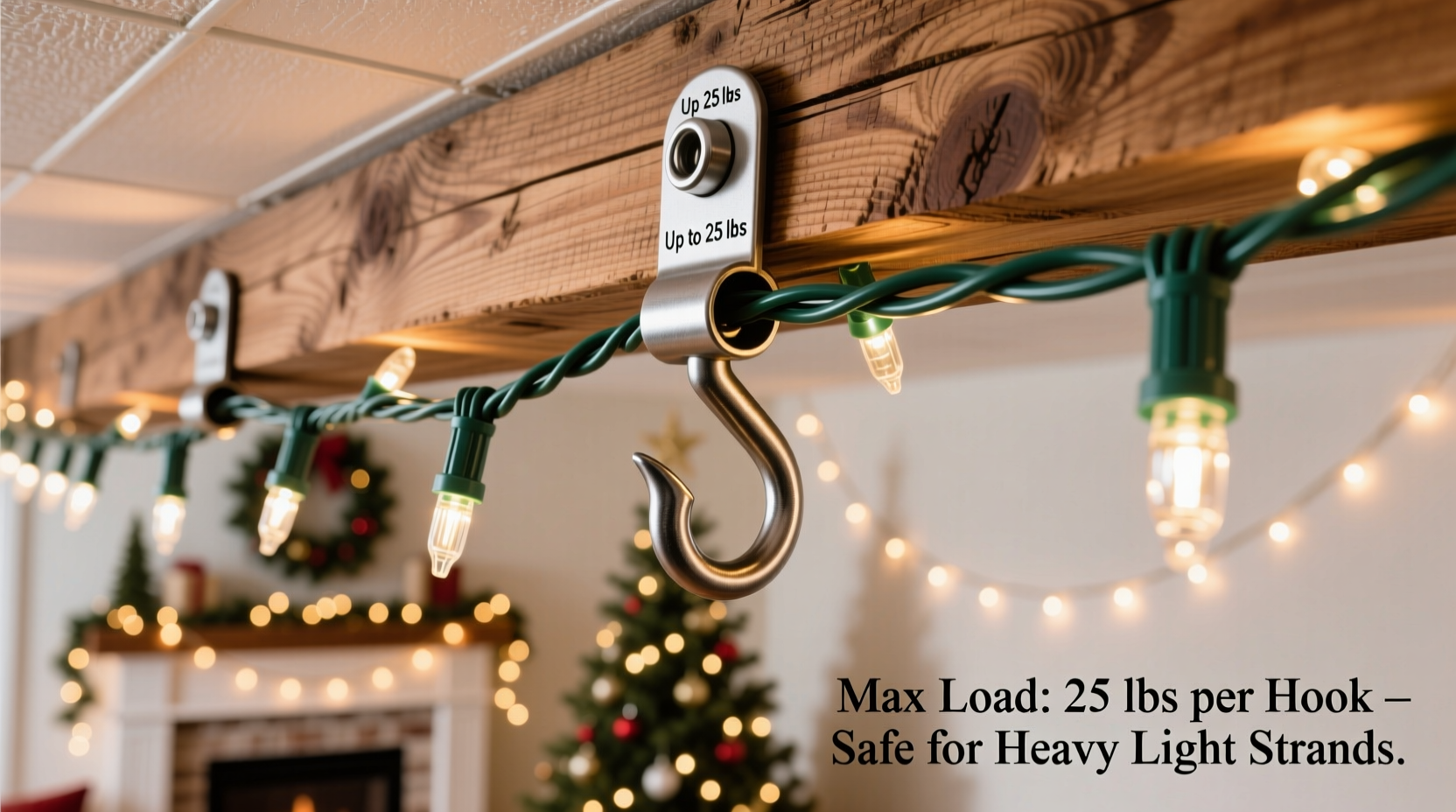
Command Hooks come in multiple varieties, each engineered for different loads and surfaces. The brand clearly labels weight limits on packaging, but confusion often arises because people assume “one size fits all.” In reality, the hook’s design, adhesive strip type, and surface compatibility directly influence how much weight it can hold.
Here’s a breakdown of common Command Hook types and their maximum weight capacities under ideal conditions:
| Hook Type | Max Weight (per hook) | Best For |
|---|---|---|
| Small Clear Hook | 0.5 lb (8 oz) | Indoor string lights, lightweight garlands |
| Medium White Hook | 1.0 lb (16 oz) | Medium indoor/outdoor use, thin LED strands |
| Large Jumbo Hook | 3.0 lbs | Heavy draping, bundled lights, outdoor wreaths |
| Metal Hook with Adhesive Strip | 4.0–7.5 lbs (varies by model) | High-load applications, gutter mounting |
It's crucial to note that these ratings assume perfect conditions: clean, smooth, non-porous surfaces (like painted drywall, glass, or finished wood), full 24-hour curing time after installation, and even weight distribution. Outdoor factors like wind, temperature fluctuations, and moisture significantly reduce effective holding power.
Real-World Load of Christmas Light Draping
To determine whether Command Hooks are appropriate, assess the actual weight of your light setup. Many people underestimate how quickly small increments add up.
A standard 25-foot strand of incandescent mini-lights weighs approximately 1.2 pounds. LED versions are lighter—about 0.7 pounds per strand—but when grouping multiple strands together for dense coverage, the total load increases rapidly. Add in extension cords, connectors, and potential snow accumulation, and a single drape could easily exceed 5 pounds.
Consider this scenario: you're decorating a two-story porch with five sets of double-layered lights along the railing. Each section uses two strands (1.4 lbs total), plus an extension cord (0.5 lbs). That’s nearly 2 pounds per hanging point. If spaced every 18 inches, and using medium Command Hooks rated at 1 lb each, you’re already over capacity—especially once wind adds dynamic stress.
“We tested adhesive hooks under simulated winter conditions and found bond strength drops up to 30% below freezing. Thermal cycling weakens adhesion over time.” — Dr. Alan Zhou, Materials Engineer at Northeast Building Labs
Step-by-Step Guide to Safe Installation with Command Hooks
If you decide to proceed with Command Hooks for Christmas light draping, follow this detailed process to maximize safety and effectiveness:
- Assess Total Weight: Weigh your complete light strand, including any attached cords or controllers. Multiply by the number of strands per hanging point.
- Select the Right Hook: Use only jumbo or metal-reinforced Command Hooks for anything over 1 pound. Never rely on small or medium hooks for exterior draping.
- Prepare the Surface: Clean the area thoroughly with rubbing alcohol. Remove dust, grease, or residue. Let dry completely.
- Apply in Optimal Conditions: Install when temperatures are between 50°F and 100°F. Avoid rainy or humid days. Cold weather inhibits adhesive bonding.
- Press Firmly for 30 Seconds: After removing the liner, press the hook straight onto the surface with firm, even pressure for at least half a minute.
- Wait 24 Hours Before Loading: This allows the adhesive to fully cure and achieve maximum bond strength.
- Distribute Weight Evenly: Space hooks closer together rather than relying on fewer, overloaded points. Aim for supports every 12–18 inches for heavy runs.
- Test Gradually: Hang one strand first and monitor for 48 hours. Check for sagging, peeling, or shifting before adding more weight.
Common Mistakes That Lead to Hook Failure
Even with correct hook selection, improper use leads to frequent failures. These errors undermine performance regardless of stated weight limits:
- Skipping surface prep: Applying hooks to dirty, dusty, or glossy surfaces reduces adhesion by up to 60%, according to 3M’s internal testing.
- Insufficient curing time: Installing lights immediately after placing the hook compromises long-term hold.
- Overloading single points: Clustering too many strands on one hook creates concentrated stress.
- Using expired products: Old adhesive strips lose tackiness. Check manufacturing dates before purchase.
- Ignoring environmental stress: Wind uplift and thermal expansion create forces far exceeding static weight.
In one documented case, a homeowner in Colorado used medium Command Hooks to hang three strands of incandescent lights along a second-floor balcony. Within a week, strong gusts peeled off two hooks, causing tangled wires and partial detachment. The issue wasn’t the initial weight—it was wind-induced lateral force that exceeded shear resistance.
Mini Case Study: A Front Porch Gone Wrong
Sarah M., a homeowner in Portland, Oregon, wanted a festive look without drilling holes into her newly painted stucco siding. She opted for large Command Hooks to hang cascading light swags from her roofline. Each swag consisted of four LED strands (totaling ~3 lbs) and was supported by two jumbo hooks spaced 2 feet apart.
Initially, everything held well. But after a week of steady rain and dropping temperatures, she noticed one side beginning to sag. By day ten, one hook had completely detached, dragging the lights into the bushes below. Upon inspection, water had seeped behind the adhesive edge, breaking the bond. While the product performed as expected under lab conditions, real-world exposure revealed its vulnerability.
Sarah switched to plastic gutter clips for the remainder of her display—a solution less invisible but far more reliable in wet climates. Her experience underscores a key truth: convenience must be balanced with environmental realities.
Better Alternatives for Heavy Light Displays
For substantial Christmas lighting projects, especially outdoors, consider these more robust options:
- Gutter Clips: Specifically designed for rooflines, these snap into gutters without tools and support 5+ pounds each.
- Shingle Tabs: Small plastic anchors that slide under shingles; ideal for vertical runs with minimal visibility.
- Deck Rail Clips: Molded to fit standard rail sizes, these provide secure, weather-resistant mounting.
- Temporary Nails or Screws with Cord Grips: For masonry or wood, use small finish nails with insulated hangers. Patch holes afterward with matching caulk.
- Magnetic Hooks (for metal surfaces): Useful on steel soffits or garage doors; some models hold up to 10 lbs.
While these methods may leave minor marks, they offer dramatically higher reliability for seasonal installations lasting weeks or months.
Checklist: Can You Safely Use Command Hooks?
Before committing to Command Hooks for Christmas light draping, run through this evaluation:
- ✅ Is the total weight per hanging point under the hook’s rated limit?
- ✅ Are you using jumbo or metal-reinforced hooks for outdoor/heavy use?
- ✅ Is the surface clean, dry, and compatible with adhesive bonding?
- ✅ Have you allowed 24 hours for adhesive curing before loading?
- ✅ Are hooks spaced closely enough to prevent sagging?
- ✅ Will weather conditions (wind, rain, cold) remain within acceptable ranges?
- ✅ Do you have a backup plan if a hook fails?
If more than two answers are “no,” reconsider your approach.
Frequently Asked Questions
Can I combine two Command Hooks to double the weight capacity?
No. Doubling hooks side by side does not reliably double strength due to uneven load distribution and potential peel forces. Instead, reduce the span between individual hooks to spread the load more effectively.
Do Command Hooks work on brick or stucco?
Generally, no. Most Command Hooks require smooth, non-porous surfaces. Brick, stucco, and vinyl siding lack the flatness needed for proper adhesion. Use mechanical fasteners or specialty mounts for textured exteriors.
How do I remove Command Hooks without damaging paint?
Use the slow-peel method: pull the tab straight down at a consistent speed. Do not jerk or yank. If resistance increases, pause and continue slowly. Residual adhesive can be removed with a cloth dampened with mineral spirits (test on inconspicuous area first).
Final Recommendation and Expert Guidance
Command Hooks can be used for heavy Christmas light draping—but only under strict conditions. They are best suited for lightweight LED strands on smooth, sheltered surfaces where environmental exposure is minimal. For anything beyond light accent lighting, traditional mounting methods offer superior durability and peace of mind.
As interior designer and holiday stylist Mariah Tolbert advises:
“Adhesive hooks are fantastic for renters or temporary décor, but don’t let convenience override safety. If your heart skips a beat when you see a hook straining, it’s already too late. Invest in the right hardware for the job.” — Mariah Tolbert, Holiday Stylist & Author of *Festive Without Fear*
Conclusion
Hanging Christmas lights should bring joy—not anxiety about falling fixtures or damaged walls. While Command Hooks offer an appealing no-drill solution, their limitations become apparent under real-world holiday demands. By understanding weight limits, respecting installation protocols, and knowing when to switch to stronger alternatives, you can create a dazzling, secure display that lasts the entire season.
Don’t gamble your holiday aesthetic on convenience alone. Assess your needs honestly, prepare thoroughly, and choose mounting methods that match both your vision and physics. Whether you go with adhesive, clip-on, or fastened solutions, prioritize safety, longevity, and enjoyment.




 浙公网安备
33010002000092号
浙公网安备
33010002000092号 浙B2-20120091-4
Comments
No comments yet. Why don't you start the discussion?