
Hanging Christmas lights is one of the most anticipated parts of holiday decorating. When done right, they transform a home into a glowing winter wonderland. But when installed improperly, they can damage paint, fall mid-season, or worse—create a safety hazard. One popular solution many homeowners turn to is Command hooks. Marketed as damage-free and easy to install, these adhesive hooks promise a clean way to hang decorations without nails or drilling. But when it comes to heavy Christmas light strands mounted along trim, are Command hooks truly up to the task?
The short answer: It depends. While Command hooks can work under ideal conditions, their ability to hold heavy light strands on trim is limited by several factors—hook type, surface condition, weight load, and weather exposure. Understanding these variables is crucial before trusting your holiday display to adhesive strips.
Understanding Command Hook Weight Limits
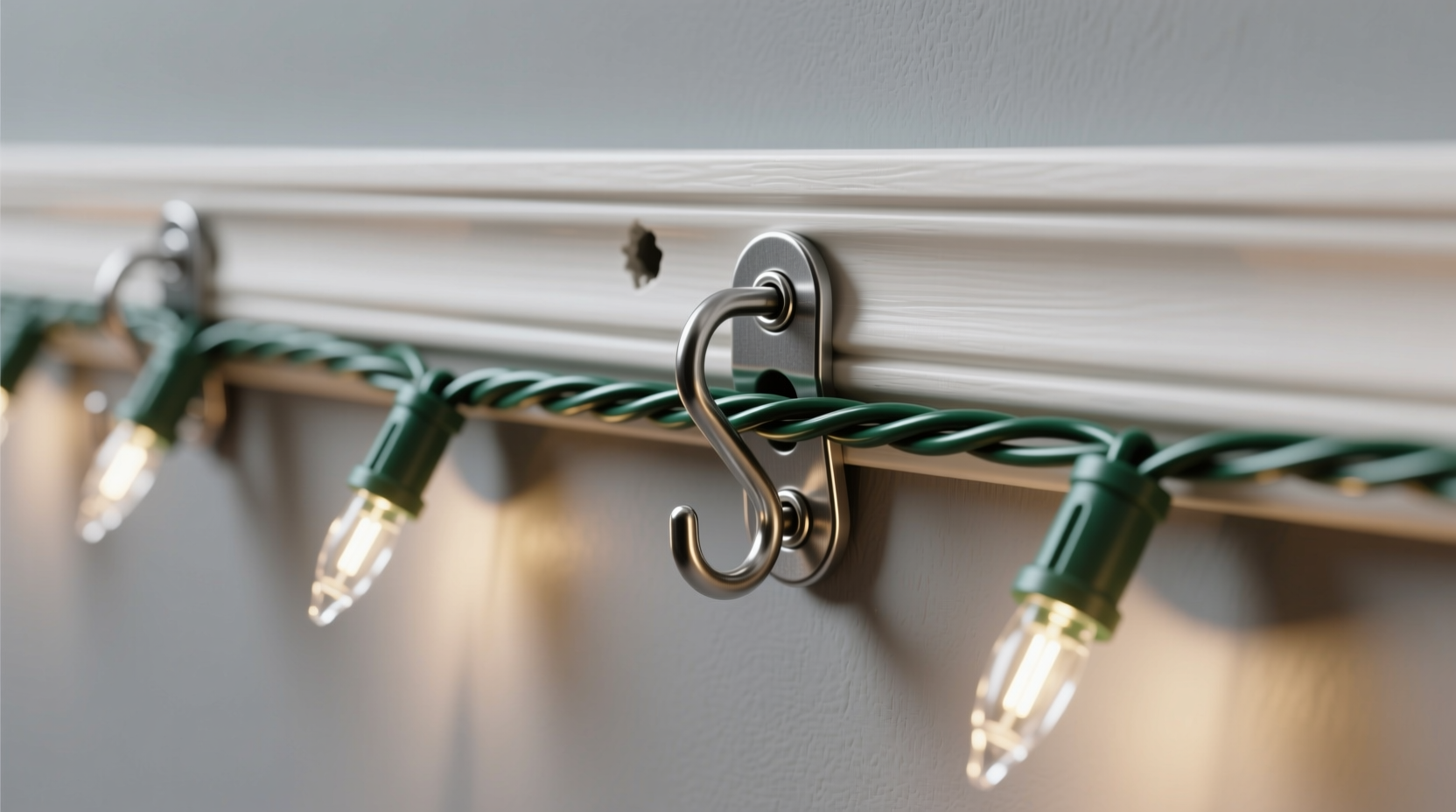
Command offers a range of hooks designed for different weight capacities. Not all Command hooks are created equal, and using the wrong type can lead to premature failure. The brand clearly labels each product with its maximum weight limit, which varies based on hook size and adhesive strip strength.
| Hook Type | Max Weight (per hook) | Best For |
|---|---|---|
| Small Clear Hooks | 1 pound | Light garlands, thin wire lights |
| Medium White Hooks | 3 pounds | Standard LED mini lights (short runs) |
| Jumbo Hooks | 7.5 pounds | Heavier cords, multiple light strands |
| Metal Hooks (Large) | 7.5 pounds | Dense incandescent strands, outdoor use |
A typical heavy-duty Christmas light strand—especially older incandescent models—can weigh between 1.5 to 3 pounds per 25 feet. When multiple strands are connected or draped along eaves and trim, the cumulative weight increases quickly. If you're planning to hang 75 feet of lights across your roofline, that’s potentially 9 pounds of strain distributed across several points. Even jumbo hooks may struggle if not spaced correctly or if adhesion is compromised.
Surface Conditions That Affect Adhesion
Even the strongest Command hook will fail if the surface isn’t properly prepared. Trim materials vary widely—from painted wood and vinyl to aluminum and composite siding—and each interacts differently with adhesive strips.
Painted surfaces must be smooth, clean, and fully cured. Fresh paint (less than 30 days old) lacks the chemical stability needed for strong bonding. Glossy finishes also reduce grip, as the adhesive struggles to adhere to non-porous surfaces. Textured or rough trim, such as cedar shakes or stucco-finished soffits, presents another challenge because the adhesive can't form full contact.
Outdoor environments introduce additional stressors: temperature fluctuations cause expansion and contraction in both the trim and the adhesive, weakening the bond over time. Moisture from rain, snow, or morning dew can seep under the strip, especially if the hook isn’t sealed properly during installation.
“Adhesive performance drops significantly below 50°F. For cold climates, applying Command products in warmer conditions and allowing 24 hours to cure improves success.” — Dr. Alan Pierce, Materials Engineer at Northeast Building Science Lab
Preparing Trim for Maximum Hold
To ensure optimal adhesion, follow this preparation checklist before installing any Command hook:
- Clean the area thoroughly with isopropyl alcohol to remove dirt, oil, or wax residues.
- Sand glossy surfaces lightly with fine-grit sandpaper to create micro-texture for better grip.
- Allow wet surfaces to dry completely—preferably overnight after rain.
- Avoid placing hooks near gutters or downspouts where water runoff accumulates.
- Press firmly on each hook for 30 seconds to activate the adhesive bond.
Real-World Example: A Failed Holiday Display
Consider the case of Mark T., a homeowner in Portland, Oregon. Excited to decorate his craftsman-style home, he used medium-sized white Command hooks to hang three connected strands of incandescent lights along his front porch trim. Each strand weighed about 2.8 pounds, totaling just over 8 pounds supported by six hooks—seemingly within safe limits.
Two weeks into December, after several rainy nights and dropping temperatures, two of the hooks detached. One strand sagged dangerously close to the walkway, while another dangled unevenly, ruining the symmetry of the display. Upon inspection, Mark found that moisture had penetrated the adhesive edges on the south-facing side of the house, where afternoon sun melted frost only to refreeze at night. The repeated freeze-thaw cycle degraded the bond faster than expected.
While no injuries occurred, the incident required reinstallation using screw-mounted clips—a more permanent but reliable method. Mark later admitted he hadn’t cleaned the trim thoroughly and assumed “waterproof” meant “all-weather-proof,” overlooking the importance of surface prep and thermal cycling.
Step-by-Step Guide: Installing Heavy Lights Safely with Command Hooks
If you’re determined to use Command hooks for heavier light strands, proceed with caution and precision. Follow this timeline and process to maximize success:
- Day 1 – Assess and Plan (1 hour): Measure your trim length and calculate total light weight. Choose jumbo or metal Command hooks rated for outdoor use. Space hooks every 12–18 inches depending on load.
- Day 1 – Gather Supplies (30 min): Collect alcohol wipes, lint-free cloth, measuring tape, level, pencil, scissors, and selected hooks.
- Day 2 – Surface Prep (Morning, 1 hour): Clean each attachment point with alcohol. Let dry completely. Lightly abrade glossy areas if needed.
- Day 2 – Install Hooks (Late Morning, 45 min): Position hooks using a level for alignment. Press firmly for 30 seconds each. Avoid touching the adhesive pad before application.
- Day 2 – Wait 24 Hours: Do not hang anything during this critical curing period. This allows the adhesive to reach full strength.
- Day 3 – Attach Lights (Evening, 1 hour): Carefully drape lights onto hooks. Avoid tugging or overloading individual points. Test stability gently.
- Ongoing – Monitor Weekly: Check each hook weekly for signs of sagging, peeling, or moisture intrusion. Replace immediately if compromised.
When to Avoid Command Hooks Altogether
Despite their convenience, Command hooks are not universally appropriate for heavy Christmas light installations. There are specific scenarios where alternative mounting methods should be strongly considered:
- Older or flaking paint: Adhesives may pull loose paint when removed.
- High-wind areas: Sustained gusts place lateral stress that adhesive bonds aren’t designed to handle.
- Long-term installations: Most manufacturers recommend removing Command products within 12 months; leaving them longer increases removal difficulty and potential damage.
- Incandescent vs. LED: Incandescent strands generate heat, which can soften adhesive over time. LEDs run cooler and are more compatible.
- Multi-story homes: Falling lights pose greater risk if they detach high above ground level.
In these cases, traditional solutions like plastic gutter clips, staple guns (on wooden fascia), or screw-in mounting brackets offer far greater reliability. While they require tools and minor drilling, the trade-off is long-term security and peace of mind.
Do’s and Don’ts of Using Command Hooks for Holiday Lighting
| Do | Don’t |
|---|---|
| Use outdoor-rated Command products with UV protection | Use indoor-only hooks outside |
| Space hooks closer together for heavy loads | Assume one hook can carry an entire strand |
| Wait 24 hours after installation before hanging lights | Hang lights immediately after applying the hook |
| Clean the surface with alcohol before application | Apply to dusty, greasy, or wet surfaces |
| Inspect regularly throughout the season | Install and forget until January |
Frequently Asked Questions
Can I leave Command hooks up year-round for seasonal reuse?
Technically, some outdoor-rated Command hooks are designed to last up to 12 months. However, leaving them beyond that increases the risk of adhesive residue, reduced performance, and difficulty removing cleanly. For best results, remove them after the holidays and reinstall fresh ones next season.
What happens if a Command hook fails mid-season?
If a hook detaches, first check whether the adhesive failed or the surface gave way. If paint peeled, avoid reapplying to the same spot. Instead, clean the surrounding area and use a new hook nearby. Consider switching to mechanical fasteners for remaining sections to prevent recurrence.
Are there stronger alternatives that still protect trim?
Yes. Removable plastic clips that slide under shingles or into gutters provide excellent support without damaging trim. Brands like Gorilla Grip and LightKeeper Pro offer no-drill solutions specifically designed for heavy light strands. These distribute weight more evenly and resist wind uplift better than single-point adhesive hooks.
Expert Recommendations for Long-Term Success
According to interior designer and holiday stylist Lena Boyd, who has curated lighting displays for over 200 homes across New England, “The key to beautiful, lasting holiday lighting isn’t speed—it’s strategy.”
“The most common mistake I see is treating all hooks the same. People buy the small ones because they’re cheaper or less visible, but then wonder why their display sags by New Year’s Eve. Match your hardware to your load, and always prioritize structure over stealth.” — Lena Boyd, Holiday Design Specialist
She recommends combining methods: use Command hooks on delicate areas like window frames or soffits where drilling isn’t allowed, but switch to secured clips along eaves and corners where stress is highest. This hybrid approach balances aesthetics with durability.
Conclusion: Proceed with Caution and Preparation
Command hooks can be used for heavy Christmas light strands on trim—but only under controlled conditions and with meticulous attention to detail. They are not a universal fix, nor a substitute for structural mounting when dealing with significant weight or harsh climates. Their value lies in temporary, low-impact installations where preserving finish integrity is paramount.
For lightweight LED strings on well-prepared, sheltered trim, Command hooks offer a viable, damage-free option. But for dense incandescent runs, exposed locations, or multi-story setups, relying solely on adhesive strength risks disappointment and potential hazards. The wisest approach combines the convenience of Command products with strategic reinforcement where needed.




 浙公网安备
33010002000092号
浙公网安备
33010002000092号 浙B2-20120091-4
Comments
No comments yet. Why don't you start the discussion?