
Hanging Christmas lights is one of the most joyful parts of seasonal decorating — but it can also be one of the most stressful when you're worried about damaging your home’s exterior or interior walls. Many homeowners turn to Command hooks as a paint-safe alternative to nails or staples, but there's a common concern: Can these adhesive hooks actually support heavy light strands without peeling paint or failing mid-season?
The short answer is: Yes — but only if you choose the right type of Command hook, install it correctly, and understand the weight limits and surface conditions. Done properly, Command hooks can securely hold substantial light displays without harming painted surfaces, trim, or siding.
This guide breaks down everything you need to know about using Command hooks for heavy-duty Christmas lighting, including product selection, installation best practices, real-world performance, and alternatives when more support is needed.
Understanding Weight Limits and Hook Types
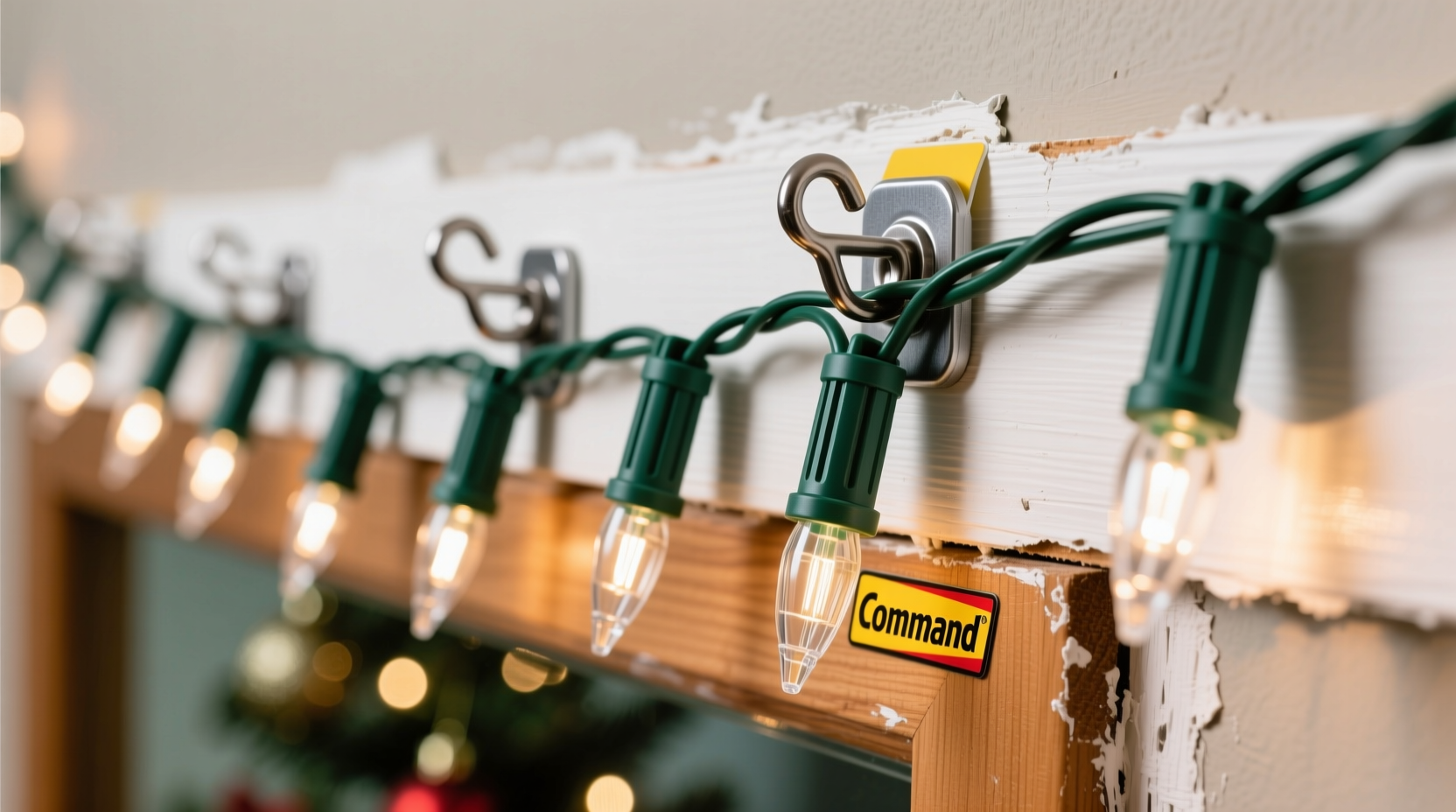
Not all Command hooks are created equal. The brand offers several variants designed for different load capacities and surface types. Using a standard small hook meant for bathroom towels on a 50-foot string of commercial-grade LED lights will almost certainly result in failure — and possibly a trip down from the ladder with tangled wires and chipped paint.
Command categorizes its outdoor and indoor products by weight capacity. For Christmas lights, especially longer or multi-strand setups, you must match the hook to the total weight of the lights it will bear.
A typical strand of incandescent mini-lights weighs around 0.7 to 1 pound per 100 bulbs. LED strands are significantly lighter — often under half a pound for the same length. However, net lights, icicle lights, and commercial C9 ropes can weigh considerably more, especially when moisture accumulates from rain or snow.
| Command Hook Type | Weight Capacity | Suitable for Light Type |
|---|---|---|
| Large Outdoor Hook | Up to 7.5 lbs | Multiple LED strands, medium incandescent runs |
| Jumbo Outdoor Hook | Up to 12.5 lbs | C9 ropes, dense net lights, combined strands |
| Medium Clear Hook (Indoor) | Up to 3 lbs | Single LED strands, lightweight decor |
| Utility Hook (Metal, Outdoor) | Up to 7.5 lbs | Heavier loads on smooth surfaces |
The key takeaway: Use outdoor-rated Command hooks for exterior installations. They are UV-resistant, weatherproof, and formulated to adhere better to slightly textured or cold surfaces. Indoor hooks may fail prematurely when exposed to temperature swings and moisture.
Proper Installation: The Secret to Paint Protection
Even the strongest Command hook will fail if applied incorrectly. The integrity of the bond depends entirely on surface preparation, application pressure, and curing time. Skipping steps here is the leading cause of paint peeling and hook detachment.
Start by cleaning the wall area with rubbing alcohol. Dirt, dust, grease, or residual wax from previous cleanings can prevent proper adhesion. Wipe the spot thoroughly and let it dry completely before applying the hook.
- Peel off the backing strip to expose the adhesive pad.
- Press the hook firmly onto the surface for at least 30 seconds. Use your fingers or the heel of your hand to apply even pressure across the entire base.
- Wait at least one hour before hanging any weight. This allows the adhesive to form a strong initial bond, especially in cooler temperatures.
- For heavier loads, consider doubling up hooks side-by-side rather than overloading a single unit.
When removing hooks after the season, always pull straight down along the wall — never yank outward. The special adhesive is designed to stretch and release cleanly when removed this way. Doing so preserves both the paint and the siding underneath.
“Most paint damage we see isn’t from the hook itself, but from improper removal. Pulling sideways creates leverage that lifts paint.” — Daniel Ruiz, Home Exterior Consultant, Northern Seasons Decor
Real-World Example: A Two-Story Victorian House Display
In Portland, Oregon, homeowner Maria Thompson faced a challenge every winter: her historic 1902 Victorian home had delicate wood siding and ornate trim, making traditional nail mounting risky. She wanted to maintain curb appeal without compromising the home’s integrity.
One November, she decided to test Command Jumbo Outdoor Hooks for her 80-foot roofline display, which included three interlinked strands of commercial LED C7 lights totaling approximately 10 pounds.
Maria cleaned each attachment point with alcohol wipes, waited for full drying, then applied two jumbo hooks at each major support point — spaced every 2 feet along the eaves. She pressed each one for a full minute and waited 12 hours before connecting the lights.
The display remained secure through December, enduring wind gusts up to 30 mph and two rounds of freezing rain. After the holidays, she removed each hook by pulling straight down. No paint peeled, no residue remained, and the siding showed no signs of stress.
“I was skeptical at first,” Maria said, “but after seeing how easy it was to install and remove without damage, I’ll never go back to nails.”
Step-by-Step Guide: Hanging Heavy Lights Safely with Command Hooks
Follow this timeline to ensure a secure, paint-safe installation:
- Week Before Installation: Inventory your light strands and calculate total weight per section. Identify where hooks will go based on structural features like eaves, corners, and window frames.
- Day Before: Purchase the correct Command hook type. Buy extras in case of misapplication. Clean all mounting surfaces with isopropyl alcohol and allow to dry overnight.
- Morning of Installation: Lay out hooks and lights. Test-fit strands to confirm alignment and coverage.
- Installation Phase: Apply hooks one at a time, pressing firmly for 30–60 seconds. Wait at least one hour before draping lights.
- After Hanging: Gently tug on each connection point to verify stability. Avoid stepping back too hard on ladders during testing.
- Post-Season Removal: In early January, remove hooks by pulling straight down. Inspect surfaces for residue (rare with outdoor hooks) and wipe with rubbing alcohol if needed.
When Command Hooks Aren’t Enough: Alternatives and Upgrades
While Command hooks work well for many situations, they aren't a universal solution. Certain scenarios demand stronger or more permanent options:
- Extreme Weather Zones: Areas with frequent ice storms or high winds may require screw-mounted clips for reliability.
- Very Long Runs: Over 100 feet of interconnected lights generate tension that adhesive alone may not handle.
- Textured or Porous Surfaces: Stucco, brick, or rough wood siding reduces adhesive effectiveness. Consider gutter clips or magnetic hangers for metal roofs.
In such cases, hybrid approaches work best. Use Command hooks for sections on smooth walls or trim, and supplement with plastic clip mounts secured to gutters or fascia boards. This distributes weight and minimizes risk.
Another emerging option is magnetic hangers for steel-sided homes or aluminum gutters. These hold significant weight without adhesives and leave zero residue. However, they’re limited to compatible surfaces.
Frequently Asked Questions
Can Command hooks hold lights on painted wood siding?
Yes, provided the paint is in good condition (not peeling or chalky) and the surface is clean. Outdoor-rated Command hooks adhere well to most painted wood, vinyl, and aluminum sidings. Avoid using them on freshly painted surfaces — wait at least 30 days after painting for full cure.
What should I do if a hook starts to loosen?
If a hook begins to sag or tilt, remove it immediately and reapply a fresh one nearby. Do not attempt to re-stick the same hook. The adhesive loses effectiveness once detached. Clean the new spot thoroughly before applying the replacement.
Are there temperature limits for Command hooks?
Outdoor Command hooks are rated for use between 15°F and 120°F (-9°C to 49°C). Applying them below 50°F (10°C) requires extended bonding time — ideally 24 hours before loading. Never apply adhesive in freezing or wet conditions.
Checklist: Safe & Effective Command Hook Use for Christmas Lights
- ✅ Weigh your light strands or check manufacturer specs
- ✅ Select outdoor-rated Command hooks with sufficient weight capacity
- ✅ Clean all mounting surfaces with isopropyl alcohol
- ✅ Press each hook firmly for 30–60 seconds
- ✅ Wait at least one hour (preferably 12) before hanging lights
- ✅ Space hooks appropriately — every 12 to 24 inches depending on weight
- ✅ Remove by pulling straight down; never pry or peel outward
- ✅ Store leftover hooks in original packaging for next year
Conclusion: Decorating Smartly Without Sacrificing Your Walls
You don’t have to choose between a stunning holiday display and protecting your home’s finish. With the right Command hooks, careful installation, and realistic expectations about weight and weather, you can enjoy brilliant, secure Christmas lighting that leaves your paint intact and your conscience clear.
The convenience of removable, residue-free hanging solutions has transformed seasonal decorating. Millions of households now avoid drilling holes or climbing ladders with hammers, thanks to innovations in adhesive technology. But success depends on attention to detail — not just buying the product, but using it as intended.
Take the time to plan your layout, prepare your surfaces, and select the appropriate hardware. Your future self — standing on the lawn in January, admiring undamaged walls — will thank you.




 浙公网安备
33010002000092号
浙公网安备
33010002000092号 浙B2-20120091-4
Comments
No comments yet. Why don't you start the discussion?