
Hanging Christmas lights is one of the most joyful parts of holiday decorating—but it can also be one of the most frustrating if things go wrong. A common question homeowners ask each season is whether Command™ hooks are safe for holding up heavy strings of Christmas lights. With so many varieties available—from adhesive strength to weight ratings—it’s easy to assume these convenient hooks are a one-size-fits-all solution. The reality is more nuanced. Used correctly, Command hooks can support many types of light displays. But when overloaded or improperly installed, they can fail unexpectedly, leading to damaged walls, fallen decorations, or even electrical hazards.
This guide dives deep into the capabilities and limitations of Command hooks when used with heavier Christmas light strings. You’ll learn how to assess your specific lighting setup, choose the right hook type, install them properly, and know when to switch to more robust mounting solutions. Whether you’re draping lights across a brick facade or outlining windows on a stucco wall, understanding the science behind adhesion and load distribution will keep your display secure—and your home intact.
Understanding Command Hook Weight Ratings
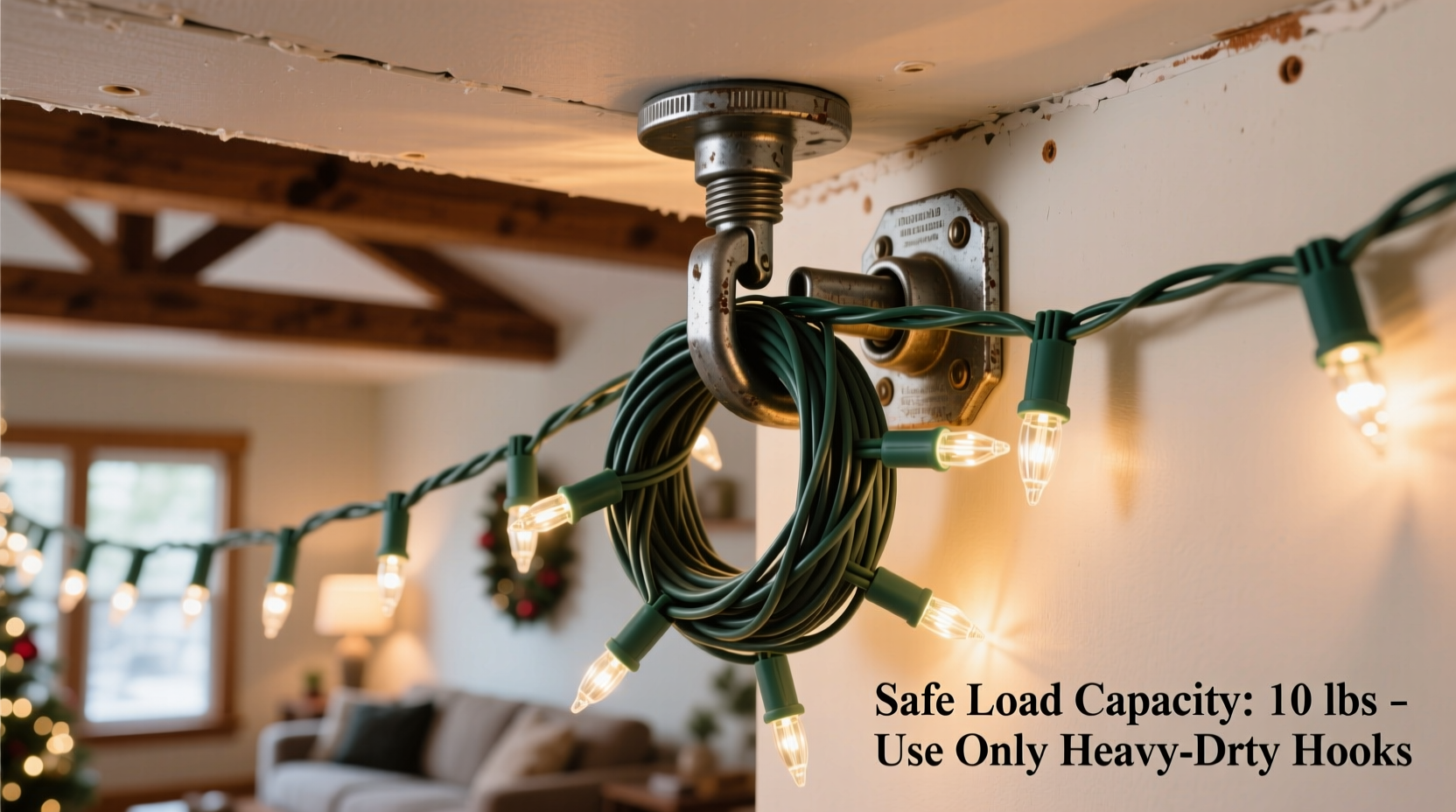
Command hooks are marketed with specific weight capacities, but these numbers only tell part of the story. The manufacturer typically labels small, medium, and large hooks with maximum load tolerances—ranging from 1 pound for mini hooks to 7.5 pounds or more for jumbo versions designed for outdoor use. However, these figures assume ideal conditions: clean, smooth surfaces; proper installation; and static (non-moving) loads.
Christmas light strings introduce variables that complicate this equation. First, their weight isn’t always obvious. A single string of 100 incandescent bulbs might weigh just over half a pound, but longer LED strands with metal casings, connectors, and power bricks can exceed 3–4 pounds per strand. When multiple strands are linked together or bundled along eaves and gutters, total weight quickly adds up.
Second, environmental factors matter. Outdoor installations face wind, temperature swings, and moisture—all of which degrade adhesive performance over time. Even indoor setups near fireplaces or vents experience thermal expansion and contraction that stress the bond between hook and surface.
“Adhesive strength is highly dependent on surface energy. Painted drywall, wood trim, and vinyl siding all react differently to pressure-sensitive adhesives.” — Dr. Lena Torres, Materials Scientist at PolyBond Labs
The takeaway? Always check both the total weight of your light string and the environmental exposure before selecting a hook. Never assume a standard Command hook rated for 4 pounds can safely hold a 3.8-pound strand without margin for safety.
Types of Command Hooks and Their Suitability
Not all Command hooks are created equal. There are several product lines tailored to different needs, and choosing the correct version is critical for safety and longevity.
| Hook Type | Max Weight | Suitable For | Limited Use Cases |
|---|---|---|---|
| Small Clear Refillable Hooks | 1 lb | Indoor lightweight garlands, thin wire LEDs | Outdoor use, multiple strands, windy areas |
| Medium Decorative Hooks | 3–4 lbs | Single medium-weight strands indoors | Brick, stucco, cold climates |
| Large Outdoor Hooks | 7.5 lbs | Heavier LED or incandescent strings outside | Long-term installations beyond winter |
| Utility Hooks (with rubber coating) | 7.5+ lbs | Bulky cords, transformers, dense clusters | Painted surfaces prone to peeling |
Outdoor-specific Command hooks use weather-resistant adhesives formulated to maintain grip in temperatures ranging from -20°F to 125°F. They also feature UV-stabilized plastic housings that resist brittleness. These should be your default choice for any exterior application—even if you're hanging relatively light strands.
Step-by-Step: Installing Command Hooks for Heavy Lights
Proper installation is as important as choosing the right hook. A poorly applied adhesive pad may seem secure initially but fail weeks later due to trapped air, dust, or improper pressing.
- Clean the Surface Thoroughly: Use isopropyl alcohol and a lint-free cloth to wipe the area. Remove dirt, grease, and old residue. Let dry completely.
- Check Surface Compatibility: Avoid rough textures like brick, stone, or heavily textured paint. Smooth painted wood, vinyl siding, glass, and metal are ideal.
- Peel and Press: Remove the liner from the adhesive pad. Firmly press the hook onto the surface for 30 seconds—don’t just stick and walk away.
- Wait Before Loading: Allow at least one hour (preferably 24 hours) before hanging lights. This gives the adhesive time to fully bond.
- Hang Strategically: Drape lights gently. Avoid yanking or letting excess weight hang from a single point.
- Inspect Weekly: Check for gaps forming around edges, tilting, or signs of pulling away—especially after storms or rapid temperature changes.
One often-overlooked factor is cable management. Bundling multiple strands increases localized weight dramatically. Instead of looping everything over one hook, stagger placements every 12–18 inches depending on total mass.
Real-World Example: A Front Porch Gone Wrong
In suburban Denver, homeowner Mark R. decided to upgrade his holiday display using only Command hooks to avoid drilling holes in his newly painted stucco walls. He purchased several large outdoor-rated hooks and hung five connected strands of commercial-grade LED icicle lights totaling nearly 6 pounds. Initially, everything held perfectly.
Two weeks into December, an overnight freeze was followed by a sudden thaw. Water seeped behind one of the hooks during melting snow, weakening the adhesive bond. By morning, the entire line had collapsed, dragging down adjacent sections. One fallen strand landed across a walkway, creating a tripping hazard, while another dangled near a railing where children played.
After assessing the failure, Mark realized he’d underestimated both moisture exposure and cumulative stress. He reinstalled the lights using a hybrid approach: Command hooks for lighter sections and screw-mounted gutter clips for high-load zones. The revised setup remained secure through January.
This case illustrates that even high-rated products have physical limits. Environmental conditions can accelerate degradation, and real-world risks extend beyond mere aesthetics.
When Command Hooks Aren’t Enough: Safer Alternatives
There comes a point when no amount of adhesive improvement can compensate for excessive load or unsuitable surfaces. Recognizing when to switch to mechanical fasteners is key to long-term safety.
- Gutter Clips: Ideal for hanging lights along rooflines. These clip directly into gutters without tools and distribute weight evenly.
- Roof Tile Hangers: Designed for tile or shingle roofs, these S-shaped wires slide under tiles to suspend lights without penetration.
- Screw-in Hooks: For permanent or semi-permanent installations, threaded hooks provide unmatched holding power. Use rust-resistant brass or stainless steel.
- Magnetic Hooks (on metal surfaces): Great for steel doors, beams, or railings. Strong neodymium magnets can hold several pounds securely.
If preserving wall integrity is a priority, consider temporary track systems—such as removable rail mounts adhered with industrial-strength tapes (e.g., VHB tape)—that allow multiple attachment points without direct wall loading per hook.
“While non-damaging solutions are appealing, safety must come first. If your display exceeds 80% of a product’s rated capacity, engineer for redundancy or upgrade to mechanical supports.” — Greg Holloway, Residential Electrical Safety Inspector
Frequently Asked Questions
Can I reuse Command hooks after taking them down?
Yes, but only if the adhesive backing remains intact and clean. Most Command products come with refill strips so you can restore the sticky side. However, once removed from a surface—especially outdoors—the original bond strength cannot be guaranteed upon reapplication.
Do Command hooks damage paint when removed?
They’re designed not to, provided you follow removal instructions: pull straight down slowly using the tab, applying steady force. Sudden jerks or sideways tugs increase the risk of paint lifting, particularly on older or poorly adhered paint layers.
Are there weight limits for vertical vs. horizontal pulls?
Absolutely. Command hooks perform best under vertical (downward) loads. Horizontal tension—like lights stretched tightly between two points—creates shear forces that adhesives handle poorly. In such cases, reduce span length or supplement with additional anchor points.
Expert Checklist: Safe Holiday Light Hanging
Before you start decorating, run through this essential checklist to ensure your display stays secure and hazard-free:
- ✅ Weigh your complete light string (including plugs, controllers, and bundled sections)
- ✅ Match hook type to environment (indoor vs. outdoor)
- ✅ Clean and dry mounting surfaces before applying hooks
- ✅ Press firmly and wait 24 hours before loading
- ✅ Space hooks appropriately—no more than 18 inches apart for heavy strings
- ✅ Avoid stretching cables tightly; allow slight sag to reduce tension
- ✅ Inspect weekly for loosening, especially after weather events
- ✅ Have a backup plan for high-stress areas (gutters, corners, long runs)
Final Thoughts: Balancing Convenience and Safety
Command hooks offer undeniable convenience for holiday decorating, especially for renters or those avoiding permanent modifications. When used within their design parameters, they provide reliable, damage-free mounting for many types of Christmas lights. But “heavy” is a relative term—and what feels manageable to one person may push the limits of adhesive technology.
The safest approach combines product knowledge, realistic load assessment, and respect for environmental challenges. Don’t rely solely on packaging claims. Think critically about how wind, ice, and daily wear affect your specific installation. And never hesitate to combine methods—using Command hooks for lighter sections while reinforcing high-load zones with mechanical anchors.
Your holiday display should bring joy, not anxiety. By making informed choices today, you protect not only your property but also the people enjoying the lights around you. Take the extra few minutes to plan, prepare, and verify. It’s the difference between a fleeting moment of beauty and a lasting tradition done right.




 浙公网安备
33010002000092号
浙公网安备
33010002000092号 浙B2-20120091-4
Comments
No comments yet. Why don't you start the discussion?