
In an era where skincare and minimalism dominate beauty trends, many are rethinking their makeup routines. The days of full-coverage base products layered from forehead to chin are giving way to lighter, more breathable approaches. One question gaining traction: Can you use concealer without foundation and still achieve a polished, natural everyday look? The answer is not only yes—it’s often the smarter choice.
Using concealer alone offers targeted coverage, reduces product buildup, and lets your skin breathe. It’s ideal for those aiming for a “no-makeup” makeup aesthetic or anyone with generally clear skin who just needs a little help with specific concerns like dark circles, redness, or minor blemishes. When done right, this approach enhances your features without masking them.
Why Skip Foundation? The Rise of Skin-First Beauty
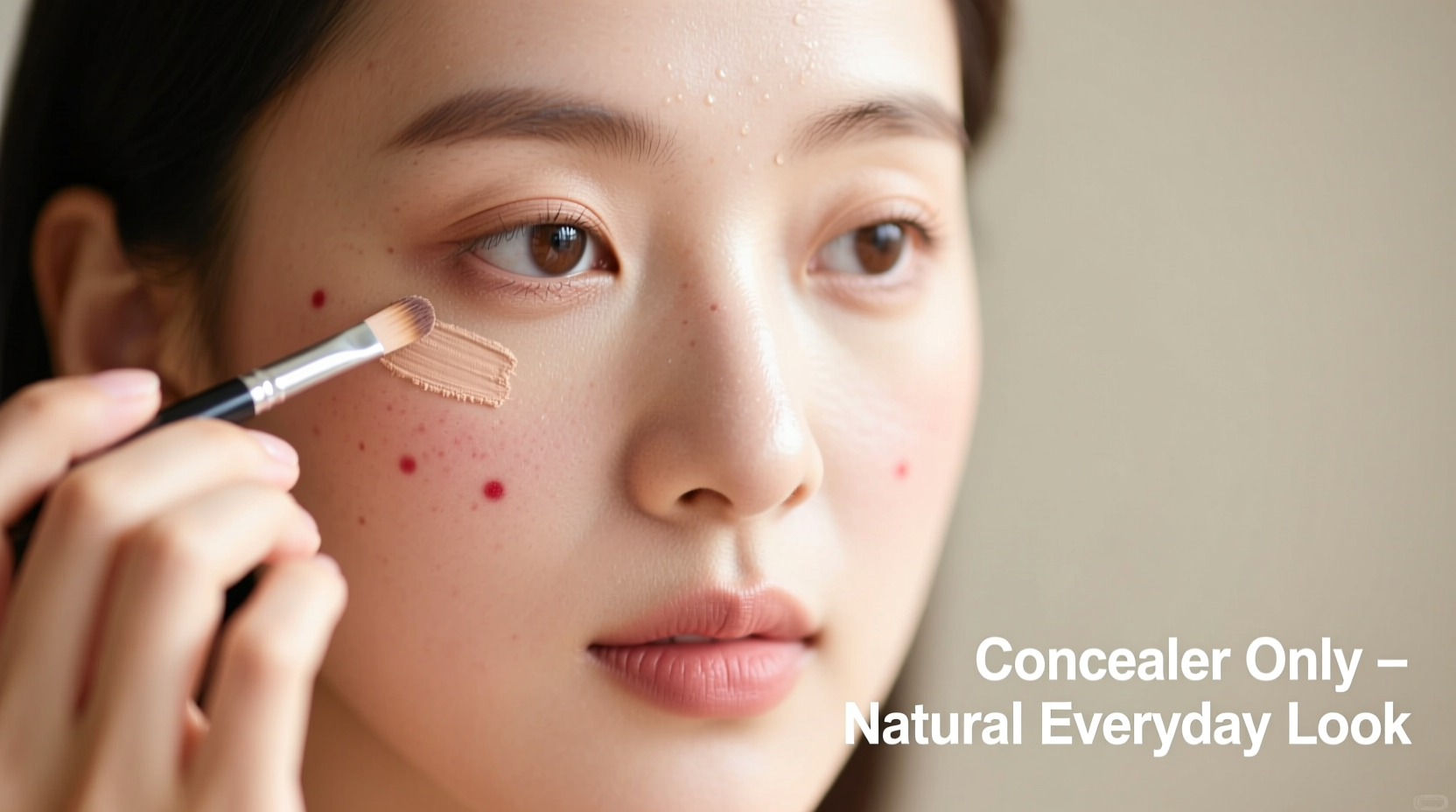
The beauty industry has shifted toward celebrating real skin texture and tone. With increased awareness around skin health, consumers are embracing routines that prioritize radiance over opacity. Skipping foundation allows your skin to function naturally—sweating, breathing, and regenerating without being sealed under layers of product.
Foundation can sometimes settle into fine lines, emphasize dry patches, or create a cakey appearance when worn daily. For people with combination or oily skin, heavy bases may contribute to clogged pores and breakouts. In contrast, using concealer without foundation gives you control over where coverage is truly needed, avoiding unnecessary application on already-clear areas.
“Less is more when it comes to modern makeup. A well-placed concealer can do more for a fresh-faced look than a full face of foundation.” — Lena Park, Celebrity Makeup Artist & Skincare Advocate
When Concealer Alone Works Best
Not every skin type or lifestyle benefits equally from skipping foundation. However, certain conditions make this method particularly effective:
- Clear or mostly clear skin: If breakouts or discoloration are minimal, full foundation isn’t necessary.
- Dry or mature skin: Heavy bases can cling to flakiness; concealer applied sparingly avoids accentuating texture.
- Oily T-zone with balanced cheeks: Target shine-prone areas selectively instead of blanketing the entire face.
- Morning routines on the go: Applying only concealer saves time while still offering a put-together appearance.
- Hot or humid climates: Lighter coverage prevents melting and smudging throughout the day.
This strategy aligns with dermatological recommendations to minimize irritation and support long-term skin health. By reducing overall product exposure, you lower the risk of sensitivity and allow topical skincare—like serums and moisturizers—to work more effectively.
Step-by-Step Guide: How to Apply Concealer Without Foundation
Achieving a seamless, natural result requires technique—not just slapping on concealer and blending haphazardly. Follow this five-step process for a refined finish:
- Cleanse and Hydrate: Start with a gentle cleanser followed by a lightweight moisturizer suited to your skin type. Allow two minutes for absorption to prevent pilling.
- Apply Sunscreen: Non-negotiable. Use a broad-spectrum SPF 30+ formula. Let it set for at least three minutes before moving on.
- Select the Right Concealer Shades: Choose one shade matching your skin tone for general imperfections, and a slightly lighter (not white) shade for under-eyes. Avoid overly yellow or pink undertones unless they correct specific issues.
- Precision Application: Use a small brush or fingertip to dot concealer only where needed:
- Under eyes (in a soft triangle)
- Redness around nose or chin
- Active blemishes or post-acne marks
- Any visible veins or discoloration
- Blend Gently: Use a damp beauty sponge or clean ring finger to press (not drag) the product into the skin. Focus on feathering edges so there’s no harsh line. Set lightly with translucent powder only in high-movement zones like under the eyes or sides of the nose.
The key is restraint. You’re enhancing, not erasing. A few seconds spent blending properly makes all the difference between “I wore makeup” and “I look well-rested.”
Choosing the Right Concealer for a Natural Finish
Not all concealers are created equal. Some formulas are too opaque or drying for standalone wear. Look for characteristics that promote realism and comfort:
| Feature | Recommended | Avoid |
|---|---|---|
| Finish | Skin-like, satin, or natural | Mattifying (unless controlling oil) |
| Coverage | Medium buildable | Full-coverage or heavy |
| Texture | Hydrating or balanced | Drying or thick |
| Ingredients | Hyaluronic acid, glycerin, ceramides | Alcohol denat., parabens, fragrances |
| Applicator | Fine doe-foot or brush tip | Bulky sponge wand |
Brands like NARS Radiant Creamy Concealer, Glossier Stretch Concealer, and Merit Shade Slick offer formulas designed specifically for natural, skin-first aesthetics. These blend easily, move with facial expressions, and don’t crack or crease prematurely.
Mini Case Study: Emma’s Transition to Minimalist Makeup
Emma, a 32-year-old teacher from Portland, used to apply full foundation every morning—even on weekends. After developing persistent dry patches and occasional breakouts along her jawline, she consulted a dermatologist who suggested scaling back her routine.
She began using only concealer for six weeks, focusing on her under-eye darkness and mild redness near her nostrils. She paired it with tinted sunscreen and a cream blush for a healthy flush. Within two weeks, her skin felt smoother and looked more radiant. Her students even commented, “You seem more energized lately!”
“I realized I was covering up things no one else noticed,” Emma said. “Now I spend less time getting ready and feel more confident because I’m not hiding behind makeup.”
Her experience reflects a growing trend: people discovering that strategic correction beats uniform coverage when the goal is authenticity.
Do’s and Don’ts of Using Concealer Without Foundation
To ensure success with this minimalist technique, keep these guidelines in mind:
| Do | Don't |
|---|---|
| Use a color-correcting primer for extreme darkness (e.g., peach for blue-toned under-eyes) | Apply too much product in one layer—build gradually |
| Set only problem areas with loose powder | Powder your entire face—it creates a flat, mask-like effect |
| Blend outward and upward to mimic natural light reflection | Extend concealer past natural contours (e.g., beyond cheekbones) |
| Reapply midday if needed using a patting motion | Rub or wipe off and reapply roughly—it disrupts remaining product |
| Wash tools weekly to avoid bacterial transfer | Use dirty fingers or old sponges—they cause breakouts |
Common Concerns Addressed
Despite its benefits, some remain hesitant about ditching foundation. Here’s what experts say about frequent objections:
- “Won’t my dark circles still show?” Not if you use proper color theory. Blue-based shadows respond well to peach or salmon correctors underneath concealer. Apply thin layers and let each dry slightly before adding more.
- “What about uneven skin tone?” Consider a tinted moisturizer or sheer BB cream instead of foundation. These unify tone lightly while allowing texture to show through naturally.
- “Isn’t concealer supposed to go under foundation?” Traditionally, yes—but modern techniques favor skin-first layering. When used alone, concealer bonds better with bare skin and appears less “placed.”
Frequently Asked Questions
Can I wear concealer every day without damaging my skin?
Yes, as long as you choose a non-comedogenic, hydrating formula and remove it thoroughly at night. Double cleanse if needed—start with an oil-based cleanser, then follow with a water-based one.
How do I stop concealer from creasing under my eyes?
Creasing often results from excess product or poor hydration. Moisturize well, apply sparingly, and set lightly with a finely milled powder. Also, avoid pulling the skin taut while blending—this stretches it and encourages folding.
Is it okay to mix different concealers on one face?
Absolutely. Many professionals use multiple shades and textures: a hydrating one under eyes and a more matte version on blemishes. Just be sure they blend seamlessly at the edges.
Final Checklist: Getting Started with Concealer-Only Makeup
Before switching to a foundation-free routine, run through this quick checklist:
- ✅ Assess your skin: Are most areas clear except for a few spots?
- ✅ Invest in two concealers: one for brightness (under eyes), one for correction (redness/blemishes).
- ✅ Have a reliable SPF moisturizer as your base layer.
- ✅ Keep a clean blending tool handy—a mini sponge or tapered brush works best.
- ✅ Practice your technique in natural light to see how it reads in real-world conditions.
- ✅ Remove makeup nightly and maintain a consistent skincare regimen.
Conclusion: Embrace Simplicity, Enhance Authenticity
Using concealer without foundation isn’t just a shortcut—it’s a deliberate choice to highlight your natural beauty rather than obscure it. With thoughtful application and quality products, you can achieve a fresh, awake, and polished look that feels as good as it looks.
This approach supports healthier skin, saves time, and aligns with today’s values of authenticity and sustainability in beauty. Whether you're stepping into a meeting, running errands, or meeting friends for coffee, you can feel confident knowing your look is effortless yet intentional.




 浙公网安备
33010002000092号
浙公网安备
33010002000092号 浙B2-20120091-4
Comments
No comments yet. Why don't you start the discussion?