
In the evolving world of beauty, less is often more. The desire for lightweight, breathable makeup has led many to rethink their routines—especially when it comes to base products. Foundation, once considered essential, is now being set aside in favor of targeted solutions like concealer. But can you really skip foundation and still achieve polished, even-toned skin? The answer is a resounding yes—if you know how.
Using concealer without foundation isn’t just possible; it’s a smart strategy for those who want to address specific concerns like dark circles, redness, or blemishes while preserving the skin’s natural texture. When applied with intention and technique, concealer alone can deliver a fresh, healthy glow that looks intentional rather than overdone.
The Rise of Skin-First Makeup
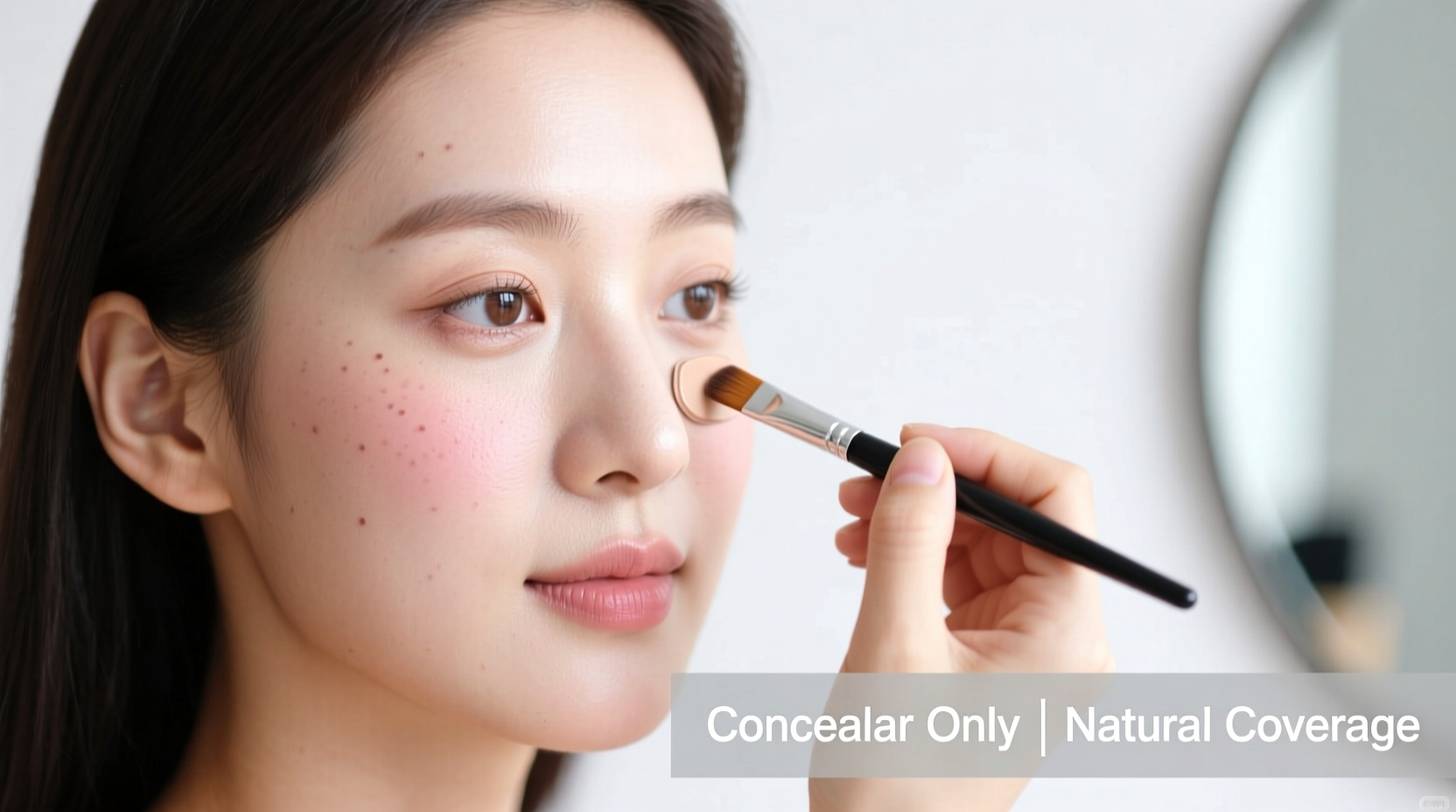
Modern beauty trends are shifting toward authenticity. Consumers increasingly value skincare-infused cosmetics and minimal application methods that enhance rather than mask. This “skinimalism” movement prioritizes hydration, radiance, and individuality over full-coverage perfection.
Makeup artists and dermatologists alike have noted a growing preference for products that support skin health. “We’re seeing clients opt out of heavy bases because they realize their skin doesn’t need to be erased,” says Laura Kim, celebrity makeup artist and co-founder of BeautyStat Cosmetics. “Targeted concealment allows imperfections to breathe while still offering refinement.”
“We’re seeing clients opt out of heavy bases because they realize their skin doesn’t need to be erased.” — Laura Kim, Celebrity Makeup Artist
This philosophy makes concealer an ideal centerpiece in a simplified routine. Unlike foundation, which blankets the entire face, concealer focuses only where needed—reducing product buildup, minimizing clogged pores, and letting your natural complexion shine through.
When Concealer Alone Works Best
Not every skin type or concern requires full foundation. In fact, skipping foundation can be advantageous in several scenarios:
- Oily or acne-prone skin: Heavy foundations can exacerbate oiliness and trigger breakouts. Using only concealer reduces overall product load on the skin.
- Dry or mature skin: Thin layers prevent emphasis on fine lines and flakiness that heavier formulas may cling to.
- Even skin tone with minor flaws: If your skin is generally balanced but has isolated issues (like under-eye darkness or a small red spot), full foundation is unnecessary.
- Hot or humid climates: Less product means less melting, smudging, and touch-ups throughout the day.
- Morning routines with time constraints: A quick dab of concealer takes seconds compared to blending an entire base.
The key lies in precision. Applying concealer strategically ensures coverage where it matters most—without creating a disconnect between treated and untreated areas.
How to Apply Concealer Without Foundation: A Step-by-Step Guide
Achieving a natural finish with concealer-only application requires more than just placing dots under the eyes. Follow this timeline for a polished, undetectable result.
- Cleanse and moisturize. Start with a clean, hydrated base. Use a lightweight moisturizer suited to your skin type. Allow it to absorb fully (3–5 minutes) to prevent pilling.
- Prime selectively (optional). Instead of full-face primer, apply a tiny amount only to areas prone to redness or creasing—such as around the nose or under the eyes. Choose a hydrating or color-correcting formula based on your needs.
- Choose the right shade(s). You may need two shades: one for brightening (lighter, pink-toned) under the eyes and another matching your skin exactly for blemishes or redness.
- Apply in thin layers. Use a small synthetic brush, sponge, or ring finger to tap concealer precisely onto problem zones. Avoid dragging—patting motions create better adhesion and prevent displacement.
- Blend edges thoroughly. Feather the outer edges so there’s no visible line between covered and uncovered skin. Spend extra time at transition points like jawline and temples.
- Set lightly. Only set areas that tend to crease or move—typically under the eyes and sides of the nose. Use a translucent powder sparingly with a fluffy brush or damp sponge.
- Finish with a unifying touch (optional). For extra cohesion, mist your face with a hydrating facial spray or apply a sheer tinted balm over the entire face to blur any contrast.
Remember: the goal isn’t to mimic foundation. It’s to refine, not replace, your skin.
Choosing the Right Concealer Formula
Not all concealers behave the same on bare skin. Some dry down too thick, others oxidize or emphasize texture. Here’s how to pick one that delivers natural-looking results without foundation:
| Concealer Type | Best For | Texture Tips |
|---|---|---|
| Liquid (medium coverage) | Under eyes, mild redness | Look for serum-like consistency; avoid matte unless skin is oily |
| Cream (high coverage) | Blemishes, scars, hyperpigmentation | Use sparingly—best with a stippling brush to avoid heaviness |
| Stick (full coverage) | Spot correction, long wear | Can appear cakey if not blended immediately; follow with damp sponge |
| Pencil (targeted) | Small spots, lip lines, brows | Great for precision, not ideal for large areas |
| Tinted balm (sheer) | All-over softening, dry skin | Blurs imperfections while adding moisture—ideal for no-makeup days |
For a truly natural effect, dermatologist Dr. Shereene Idriss recommends opting for skin-enhancing ingredients: “Hydrolyzed collagen, hyaluronic acid, and niacinamide help plump and calm the skin, making imperfections less noticeable even before you apply anything.”
Do’s and Don’ts of Concealer-Only Application
To get the best results—and avoid common pitfalls—follow these guidelines:
| Do | Don’t |
|---|---|
| Use multiple light layers instead of one thick coat | Apply too much product at once |
| Match concealer to your neck for seamless blending | Choose a shade too light, especially on cheeks |
| Tap, don’t rub, to blend | Drag concealer across delicate under-eye area |
| Set only where necessary | Powder your entire face—it defeats the purpose of minimalism |
| Touch up only when needed during the day | Reapply heavily over existing layers—this causes cracking |
Real-Life Example: A Day in the Life of Minimalist Coverage
Sophie, a 32-year-old graphic designer based in Portland, used to spend 20 minutes each morning applying foundation, contour, and setting spray. After developing sensitivity to silicones, she switched to a simplified routine centered around concealer.
“I started using just a hydrating liquid concealer under my eyes and on a few post-acne marks near my jawline,” she explains. “At first, I worried it wouldn’t be enough. But after adjusting my technique—using my fingers to warm it, setting only the under-eye area—I got more compliments than ever.”
Her current routine takes five minutes: cleanse, moisturize, apply SPF, then spot-conceal. She finishes with a cream blush and lip tint. “People think I’m glowing naturally now. The truth is, I’m just showing more of myself—and that feels better.”
Checklist: Can You Skip Foundation Today?
Ask yourself these questions before choosing a concealer-only approach:
- Is my overall skin tone relatively even?
- Are my main concerns localized (e.g., dark circles, occasional blemish)?
- Do I prefer a dewy, fresh-faced finish over matte perfection?
- Am I willing to invest in a high-quality concealer that matches my skin perfectly?
- Have I prepped my skin properly (cleansed, moisturized, protected)?
If you answered yes to most of these, concealer without foundation could be your ideal solution.
Frequently Asked Questions
Will people notice I’m not wearing foundation?
Only if they’re looking closely—and even then, not necessarily negatively. Most observers perceive smooth, well-hydrated skin as healthy and attractive. With proper blending and strategic application, your coverage will look intentional and polished, not incomplete.
Can I use concealer on oily skin without foundation?
Absolutely. Opt for a long-wearing, oil-free liquid concealer with a satin or natural finish. Avoid overly matte formulas, which can dry out and crack. Set only the T-zone lightly with translucent powder to control shine without flattening your look.
How do I prevent concealer from creasing under my eyes?
Creasing often results from excess product or lack of prep. Use a smaller amount and tap it in gently. Consider applying an eye cream first and letting it absorb fully. If needed, set only the innermost corner with a micro-puff of powder. Some slight settling after an hour is normal and often adds to the natural effect.
Final Thoughts: Embrace the Art of Less
Using concealer without foundation isn't a compromise—it's a conscious choice to highlight your natural beauty. It reflects confidence in your skin and an understanding that makeup should serve, not dominate. With the right tools, techniques, and mindset, you can achieve a refined, camera-ready look that feels as good as it looks.
The shift toward minimalism isn’t about doing less work; it’s about working smarter. By focusing on what truly matters—hydration, balance, and precision—you create a canvas that appears effortlessly put together.




 浙公网安备
33010002000092号
浙公网安备
33010002000092号 浙B2-20120091-4
Comments
No comments yet. Why don't you start the discussion?