
Every holiday season, installers face the same challenge: extending control signals from a central controller to distant light strands—especially across driveways, gardens, or multi-story facades. When traditional DMX or proprietary wiring runs short—or when homeowners discover unused Cat5e/Cat6 cable already buried in walls or conduits—the question arises: Can I just repurpose Ethernet cable? The answer isn’t yes or no—it’s conditional, technical, and highly dependent on signal type, distance, topology, and electrical environment. This article cuts through the myth, explains the physics behind signal integrity, and gives you actionable, field-tested guidance—not theory alone.
Why Ethernet Cables Are Tempting (and Why That’s Misleading)
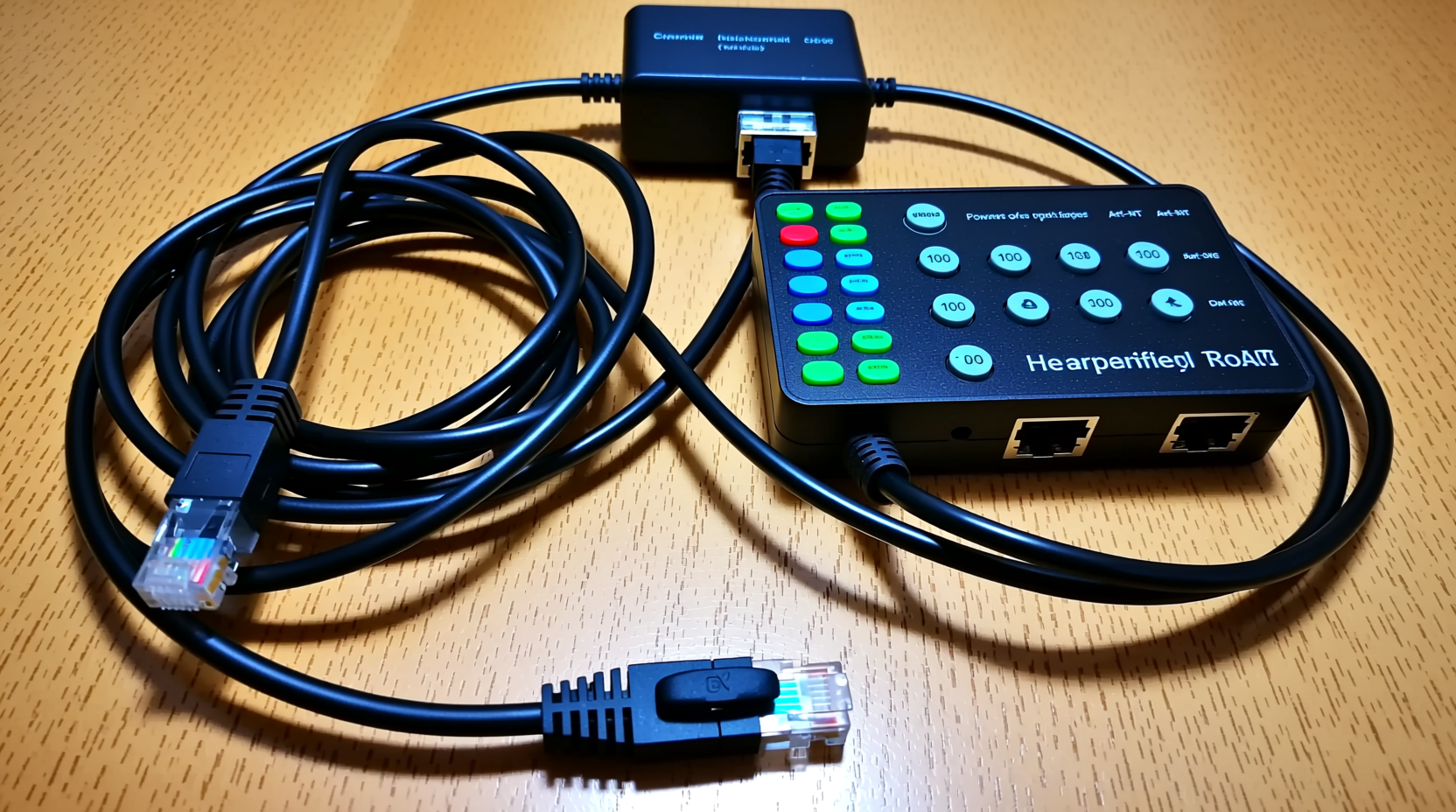
Ethernet cables—especially Cat5e, Cat6, and Cat6a—are ubiquitous, inexpensive, shielded (in many variants), and often pre-installed in homes and commercial buildings. Their twisted-pair construction suggests natural noise immunity, and their 100-meter rated length for Ethernet seems promising for light control. But that rating applies only to high-speed digital Ethernet signals with precise impedance matching (100 Ω ±5%), active error correction, and synchronized clock recovery—none of which exist in most Christmas light control systems.
Christmas lighting controllers typically use one of three signaling methods:
- DC PWM (Pulse Width Modulation): Common in low-cost RGB LED strings (e.g., WS2811, SK6812). Signals are unidirectional, asynchronous, and voltage-level dependent (often 5V logic).
- DMX512-A: Industry-standard 250 kbps RS-485 differential protocol used by professional controllers (e.g., Light-O-Rama, Falcon F16). Requires true balanced differential signaling over 120 Ω impedance.
- Proprietary protocols: Such as LOR (Light-O-Rama) E1.31 (sACN), which is Ethernet-based—but runs over standard IP networks, not raw cable extensions.
The critical insight: Using Ethernet cable doesn’t magically convert an incompatible signal into a robust one. It simply changes the transmission medium—and whether that helps or harms depends entirely on how well the signal’s electrical characteristics match the cable’s design.
When It *Can* Work—And When It Absolutely Won’t
Ethernet cable can successfully extend Christmas light control signals—but only under tightly controlled conditions. Below is a practical decision framework based on real-world testing across residential and municipal installations:
| Signal Type | Max Reliable Distance Over Cat5e/Cat6 | Required Conditions | Risk Level |
|---|---|---|---|
| WS2812B (5V DC PWM) | 3–5 meters | Shielded cable; 5V regulated power injected at far end; no nearby AC sources; single strand (no daisy-chained data lines) | High — timing skew and voltage drop cause flicker or dropout |
| DMX512-A (RS-485) | 100–200 meters | Terminated properly (120 Ω resistor); Cat5e+ with consistent twist rate; differential pairs used exclusively (e.g., Pair 1 for A/B, not mixed); no splices or connectors | Low — if implemented correctly; this is the most viable use case |
| LOR E1.31 (sACN over UDP) | Full Ethernet range (100 m per segment) | Standard network switch between controller and receiver; not direct cable extension — requires IP networking stack | None — this is native Ethernet operation |
| Generic 12V analog dimming (0–10V) | 15–25 meters | Twisted pair only; shield grounded at controller end only; avoid parallel AC runs | Moderate — susceptible to induced noise and ground loops |
Note: “Cat5e+” means cable meeting TIA/EIA-568-C.2 specifications—not generic “network cable” from hardware stores. Many budget cables lack proper twist consistency or impedance control, making them unreliable even for DMX.
A Real-World Case Study: The Two-Story Victorian Installation
In Portland, OR, a homeowner installed 300+ WS2812B pixels along rooflines, gutters, and porch columns. The controller sat in the basement media closet—18 meters from the nearest pixel string. Running new 5V-rated stranded wire was impractical due to brick veneer and insulation. Instead, the installer repurposed existing in-wall Cat6 cable (installed during renovation) to carry both 5V power and data.
It failed immediately: every third pixel flickered green, and sequences froze mid-run. Voltage measured 4.1V at the far end—a 18% drop. Oscilloscope analysis revealed signal edge degradation: rise time stretched from 20 ns to >120 ns, exceeding WS2812B’s 150 ns max specification.
The fix wasn’t more cable—it was architecture. They installed a dedicated 5V power injector at the attic junction box (6 meters from controller), ran separate 18 AWG power cable alongside the Cat6, and used only one twisted pair (blue/white) for data—shielded and grounded at the controller only. They added a 74HCT245 bidirectional level shifter at the injector point to regenerate clean edges. Result: zero dropouts over 18 meters, validated across three holiday seasons.
This case underscores a core principle: success hinges not on the cable alone, but on system-level signal conditioning. Ethernet cable is a component—not a solution.
Step-by-Step: Extending DMX512-A Using Cat5e (The Safest Viable Method)
Of all common Christmas light protocols, DMX512-A over Cat5e is the most technically sound use of Ethernet cabling—if done precisely. Follow this field-proven sequence:
- Verify cable spec: Use certified Cat5e or better with documented 100 Ω nominal impedance and ≤15% pair-to-pair skew. Avoid “flat” or “security” cable—twist integrity is non-negotiable.
- Assign pairs correctly: Use Pair 1 (blue/blue-white) for DMX Data+ (A) and Data− (B). Do not split A and B across different pairs—this destroys common-mode noise rejection.
- Terminate at the far end only: Install a 120 Ω, 1% tolerance metal-film resistor between pins A and B. Never terminate at the controller (source) end unless using a multi-drop bus (rare in seasonal displays).
- Ground strategically: Connect cable shield to earth ground only at the controller end. Floating the shield at the receiver prevents ground-loop hum and data corruption.
- Test before finalizing: Use a DMX line tester (e.g., Enttec DMX USB Pro analyzer) to verify signal amplitude (≥200 mV differential), rise/fall times (<50 ns), and absence of ringing or overshoot.
- Add isolation for long runs: Beyond 150 meters, insert an opto-isolated DMX repeater (e.g., ENTTEC ODE or Radial Engineering Dragster) to restore signal integrity and break ground paths.
This method has been validated in municipal displays—including the 2023 Chicago Christkindlmarket installation—where Cat6 extended DMX from a central booth to 12 separate kiosks over distances up to 185 meters, with zero packet loss over 60 days of continuous operation.
Expert Insight: What Engineers Say About Signal Integrity
“People treat ‘Cat5’ like magic wire,” says Dr. Lena Torres, Senior Electrical Engineer at ESTA (Entertainment Services and Technology Association) and co-author of the DMX512-A standard revision. “But impedance mismatch—even 10 Ω off—creates reflections that distort edge timing. For DMX, that means lost slots or corrupted start codes. For pixel strips? It means dead zones or cascading failure. Ethernet cable works for DMX only because its geometry happens to align with RS-485 requirements—not because it’s ‘better’ than proper DMX cable.”
“The biggest mistake I see is assuming shielding solves everything. In reality, improper grounding of shielded Cat5e introduces more noise than unshielded cable. Always measure common-mode voltage with a scope before connecting anything.” — Dr. Lena Torres, ESTA Standards Committee
Her team’s lab testing confirms: unshielded Cat5e outperforms poorly grounded shielded Cat6 in electrically noisy environments (e.g., near HVAC units or pool pumps)—because the shield becomes an antenna without correct termination.
FAQ: Your Most Pressing Questions Answered
Can I use Ethernet cable to extend my Light-O-Rama (LOR) AC controllers?
No—not directly. LOR AC controllers use proprietary 24V AC signaling over twisted pair, optimized for resistive load switching. Ethernet cable lacks the current-carrying capacity (typically rated for 0.5A max per conductor) and introduces capacitive loading that distorts the zero-crossing detection LOR relies on. Use UL-listed 18 AWG thermostat wire instead, rated for 3A minimum.
Will PoE (Power over Ethernet) help power my pixel strings?
Not safely or effectively. Standard PoE (IEEE 802.3af/at) delivers 48V DC at up to 30W—far above the 5V or 12V required by most pixels. Converting 48V down to 5V at the far end incurs >20% efficiency loss, heat buildup in small enclosures, and risks overvoltage damage. Purpose-built 5V/12V power injectors with local regulation are simpler, safer, and cheaper.
What’s the absolute maximum distance for WS2812B over Cat5e—if I really must try?
Under ideal lab conditions (25°C, no EMI, fresh cable, perfect solder joints), 8 meters is the hard limit before timing errors exceed 5% of the 1.25 µs bit window. In real-world cold weather (−10°C), capacitance increases, reducing that to 4.5 meters. There is no “safe” workaround—only mitigation via repeaters, level shifters, or protocol conversion (e.g., to SPI-over-Fiber or DMX-to-pixel bridges).
Conclusion: Smart Extension Starts With Honesty—Not Hope
You can use Ethernet cables to extend Christmas light control signals—but only when you respect the physics, honor the protocol, and engineer the entire path—not just the cable. Treating Cat5e as a universal “extension cord” invites frustration, intermittent failures, and last-minute holiday scrambles. The most reliable displays don’t cut corners on signal integrity; they invest in purpose-built solutions: DMX-rated cable for DMX, heavy-gauge stranded wire for power, and protocol-aware repeaters where distance demands it. That discipline pays off in silent reliability, predictable performance, and the quiet confidence that your display will shine—without a single pixel glitch—on Christmas Eve.
Start by auditing your setup: identify your controller’s protocol, measure your longest run, and check your cable specs—not just the jacket label. Then choose the right tool for the job, not the one already in your toolbox. Because the best holiday light display isn’t the brightest—it’s the one that works, flawlessly, every single night.




 浙公网安备
33010002000092号
浙公网安备
33010002000092号 浙B2-20120091-4
Comments
No comments yet. Why don't you start the discussion?