
In the world of holiday displays, stage productions, and architectural lighting, synchronized light shows have become increasingly sophisticated. As hobbyists and professionals alike strive for tighter control, higher pixel density, and seamless timing, questions arise about unconventional methods of powering and controlling these systems. One such question gaining traction: can you use ethernet cables to power synchronized light shows reliably?
The short answer is no—ethernet cables are not designed to deliver power for lighting loads, especially at the scale required for most synchronized displays. While they may seem like a convenient substitute due to their availability and structured wiring, using them for power introduces serious risks related to safety, performance, and reliability. This article explores the technical reasons behind this limitation, compares viable alternatives, and provides practical guidance for building robust, safe lighting systems.
Understanding Power Requirements in Synchronized Light Shows
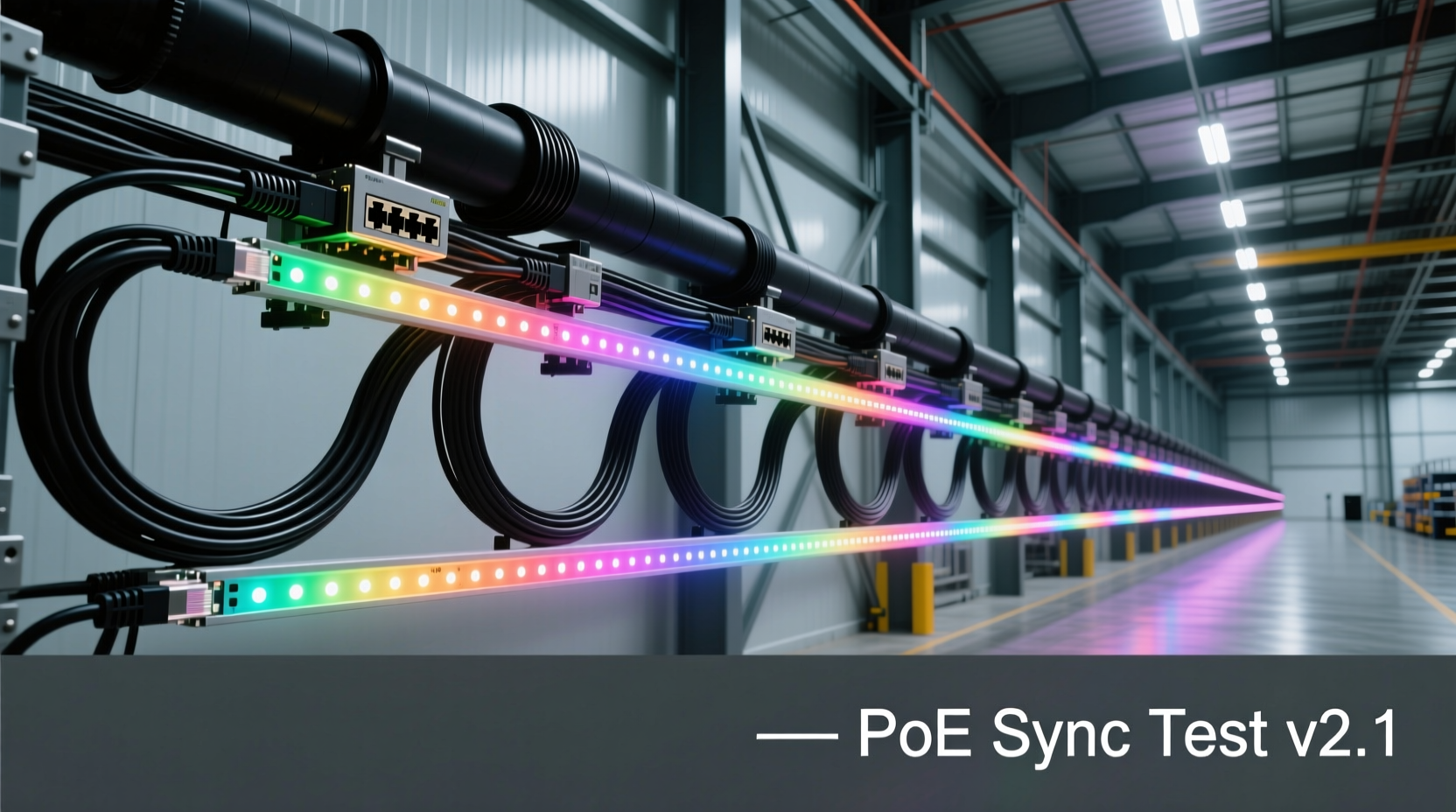
Synchronized light shows typically rely on addressable LEDs—such as WS2811, WS2812B (NeoPixels), or SK6812 strips—that receive both data signals and electrical power through separate conductors. These lights operate at low voltages (usually 5V or 12V DC) but can draw substantial current when deployed across hundreds or thousands of nodes.
For example, a single 5V WS2812B LED draws approximately 60mA at full brightness (white). A strand of 100 LEDs could therefore require up to 6 amps—equivalent to 30 watts. Multiply that by multiple strands, and total system demands quickly exceed what small-gauge wires can safely handle.
The key challenge lies in balancing three factors:
- Voltage drop: Long runs of undersized wire cause voltage to diminish over distance, leading to dimming or flickering at the far end of a strip.
- Current capacity: Wires must carry sufficient amperage without overheating.
- Signal integrity: Data lines require clean transmission free from electrical noise or impedance mismatches.
Ethernet cables, while excellent for data, fall short in delivering adequate power under these conditions.
Why Ethernet Cables Are Not Suitable for Power Delivery
Ethernet cables—specifically Cat5e, Cat6, and similar variants—are engineered for high-speed digital communication, not power transmission. They consist of four twisted pairs (eight individual conductors), each made from 24–26 AWG copper wire. This gauge is too thin to carry more than a few hundred milliamps safely over any meaningful distance.
Attempting to use all eight wires in parallel might seem like a workaround, but even then, limitations persist:
- Insufficient current rating: A single 24 AWG wire is generally rated for about 0.577 amps in chassis wiring applications. Even if all eight conductors were perfectly balanced and used in parallel (a near-impossible real-world scenario), theoretical maximum would be around 4.6 amps—barely enough for one medium-sized LED strip, with significant derating needed for heat dissipation.
- Poor thermal performance: Ethernet cables lack shielding against heat buildup. When overloaded, insulation can melt, creating fire hazards or short circuits.
- Unbalanced load distribution: In practice, it's nearly impossible to ensure equal current sharing across all eight wires due to slight differences in resistance, termination quality, and physical layout.
- No standardized polarity or configuration: Unlike dedicated power cables, ethernet wiring doesn’t follow consistent color coding for positive/negative rails, increasing risk of reversed polarity during installation.
Safe and Reliable Alternatives for Powering Lighting Systems
Instead of improvising with ethernet cables, consider proven solutions tailored for low-voltage, high-current applications:
Dedicated Power Injection Cabling
Use thick-gauge, insulated stranded wire (typically 18 AWG or lower number/higher thickness) to inject power at multiple points along long LED runs. This minimizes voltage drop and ensures consistent brightness.
Separate Power and Data Runs
Maintain distinct pathways for power and signal:
- Data line: Can run over short distances via twisted pair (sometimes even ethernet cable) if properly terminated with 100Ω resistors and protected from noise.
- Power line: Should always use purpose-built power cable with adequate gauge and fused protection.
POE-Like Hybrid Solutions (With Caution)
While standard Power over Ethernet (PoE) delivers up to 90W (IEEE 802.3bt), it operates under strict protocols and uses specialized equipment. Some advanced users adapt PoE injectors and splitters to power remote controllers—but only within specification.
Important caveats:
- PoE supplies 48V DC—not compatible with most 5V/12V LED strips without buck conversion.
- Conversion efficiency losses reduce usable output.
- Only gigabit-rated cabling should be used to avoid overheating.
“Repurposing network cabling for power bypasses critical engineering safeguards. It might work briefly, but reliability and safety suffer.” — Mark Linville, Electrical Systems Engineer, StageLight Technologies
Step-by-Step Guide: Building a Reliable Synchronized Lighting Setup
Follow this sequence to design and deploy a safe, high-performance synchronized lighting system:
- Calculate total power demand: Multiply number of LEDs per channel by max current draw. Add 20% headroom.
- Select appropriate power supply: Choose a regulated DC power supply matching your voltage needs (5V/12V) with sufficient wattage.
- Plan power injection points: For runs longer than 5 meters (for 5V) or 10 meters (for 12V), plan mid-span power injection using heavy-gauge wire.
- Lay separate data and power lines: Run CAT5e or shielded twisted pair only for data where EMI resistance is needed. Keep away from AC mains.
- Terminate data correctly: Use 100–120Ω resistor between data and VCC at the last node. Consider optoisolated controllers for long runs.
- Fuse all power lines: Install inline fuses or resettable breakers near the power supply to prevent overcurrent damage.
- Test incrementally: Power and test one section at a time before expanding the full display.
Mini Case Study: The Garage Display That Melted Its Network Cable
Dan, an enthusiastic DIY decorator in Ohio, built a 300-LED Christmas display synchronized to music using a Raspberry Pi and several WS2812B strips. Wanting a neat installation, he routed everything through existing Cat5e cables buried in conduit alongside his driveway.
He connected four pairs for “+5V” and four for “ground,” assuming doubling the wires would suffice. Initially, the system worked. But after two nights of operation, one strip began flickering. On inspection, he found charred insulation near a connector junction—the internal conductors had overheated and partially fused.
An electrician later explained that uneven resistance across the eight wires caused one pair to carry disproportionately high current, exceeding its thermal limit. Dan replaced the entire setup with 18 AWG silicone-jacketed cable and added local power injection. His display now runs safely throughout the season.
This case illustrates how well-intentioned shortcuts can compromise both functionality and safety.
Comparison Table: Ethernet vs. Purpose-Built Cabling
| Feature | Ethernet Cable (Cat5e/Cat6) | Dedicated Power Cable (18 AWG) |
|---|---|---|
| Conductor Gauge | 24–26 AWG | 18 AWG |
| Max Current (approx.) | ~0.5A per pair (derated) | ~10A (chassis wiring) |
| Voltage Drop Over 10m | Severe (up to 2V loss at 2A) | Minimal (~0.3V at 2A) |
| Heat Dissipation | Poor – bundled, unshielded | Good – spaced, often silicone-insulated |
| Suitable for Data? | Excellent | Fair (if twisted/shielded) |
| Suitable for Power? | No (except very low current) | Yes (primary use) |
| Cost per Meter | Low–moderate | Moderate |
| Safety Certification | For data only | Often UL/CE listed for power |
Checklist: Ensuring a Safe and Functional Lighting Installation
Before powering up your synchronized light show, verify the following:
- ✅ All power connections use appropriately gauged wire (18 AWG or thicker for runs over 3m).
- ✅ Power supplies are rated for at least 120% of calculated peak load.
- ✅ Data lines are isolated from high-current paths to reduce interference.
- ✅ Fuses or circuit breakers protect every major power feed.
- ✅ Voltage is stable at the farthest LED node (measure under load).
- ✅ Waterproof connectors are used outdoors (IP65 or higher).
- ✅ No ethernet cables are being used as primary power conductors.
- ✅ Ground loops are avoided by using common ground references.
Frequently Asked Questions
Can I use ethernet cable for data in a synchronized light show?
Yes—ethernet cable is excellent for transmitting data signals, especially over longer distances. Use one twisted pair for the data line, another for clock (if applicable), and include a ground wire. Shielded versions (STP) help reduce electromagnetic interference. Always terminate with proper resistors and isolate from power where possible.
Is there any safe way to send power over ethernet?
Only through certified Power over Ethernet (PoE) systems. Standard PoE (802.3af/at) delivers 15–30W; newer 4PPoE (802.3bt) supports up to 90W. These require PoE-enabled switches, injectors, and splitters. Even then, the 48V output usually requires DC-DC conversion for LED strips, adding complexity. It’s viable for remote controllers or sensors, but rarely cost-effective for direct LED powering.
What happens if I overload an ethernet cable?
Overloading causes excessive heat buildup in the thin conductors. This can melt insulation, create short circuits, degrade signal quality, or even ignite nearby materials. In outdoor installations, moisture ingress into damaged cables increases shock risk. Additionally, voltage instability may damage sensitive LED drivers or microcontrollers.
Conclusion: Prioritize Safety, Performance, and Longevity
While the idea of reusing ethernet cables for powering synchronized light shows may seem resourceful, it compromises safety, reliability, and overall performance. The fundamental mismatch between the cable’s design intent and the electrical demands of modern LED systems makes it an unsuitable choice.
Investing in proper cabling and power architecture pays dividends in reduced maintenance, consistent visual quality, and peace of mind. Whether you're illuminating a backyard holiday scene or designing a commercial facade display, adhering to sound electrical principles ensures your show runs flawlessly—night after night.




 浙公网安备
33010002000092号
浙公网安备
33010002000092号 浙B2-20120091-4
Comments
No comments yet. Why don't you start the discussion?