
As the holiday season approaches, homes across the country light up with festive displays. Christmas lights are a beloved tradition, but powering them often requires extension cords—sometimes multiple, sometimes strung across yards, driveways, and rooftops. While convenient, improper use of extension cords can pose serious fire, shock, and tripping hazards. Understanding how to use extension cords safely—and in accordance with national and local electrical codes—is essential for protecting your home and family.
The National Electrical Code (NEC), enforced by local jurisdictions and updated every three years, doesn’t explicitly ban using extension cords for Christmas lights, but it does set strict limitations on their permanent or continuous use. Many homeowners unknowingly violate these rules every year, creating dangerous situations that could be avoided with proper knowledge and planning.
Understanding the Risks of Misusing Extension Cords
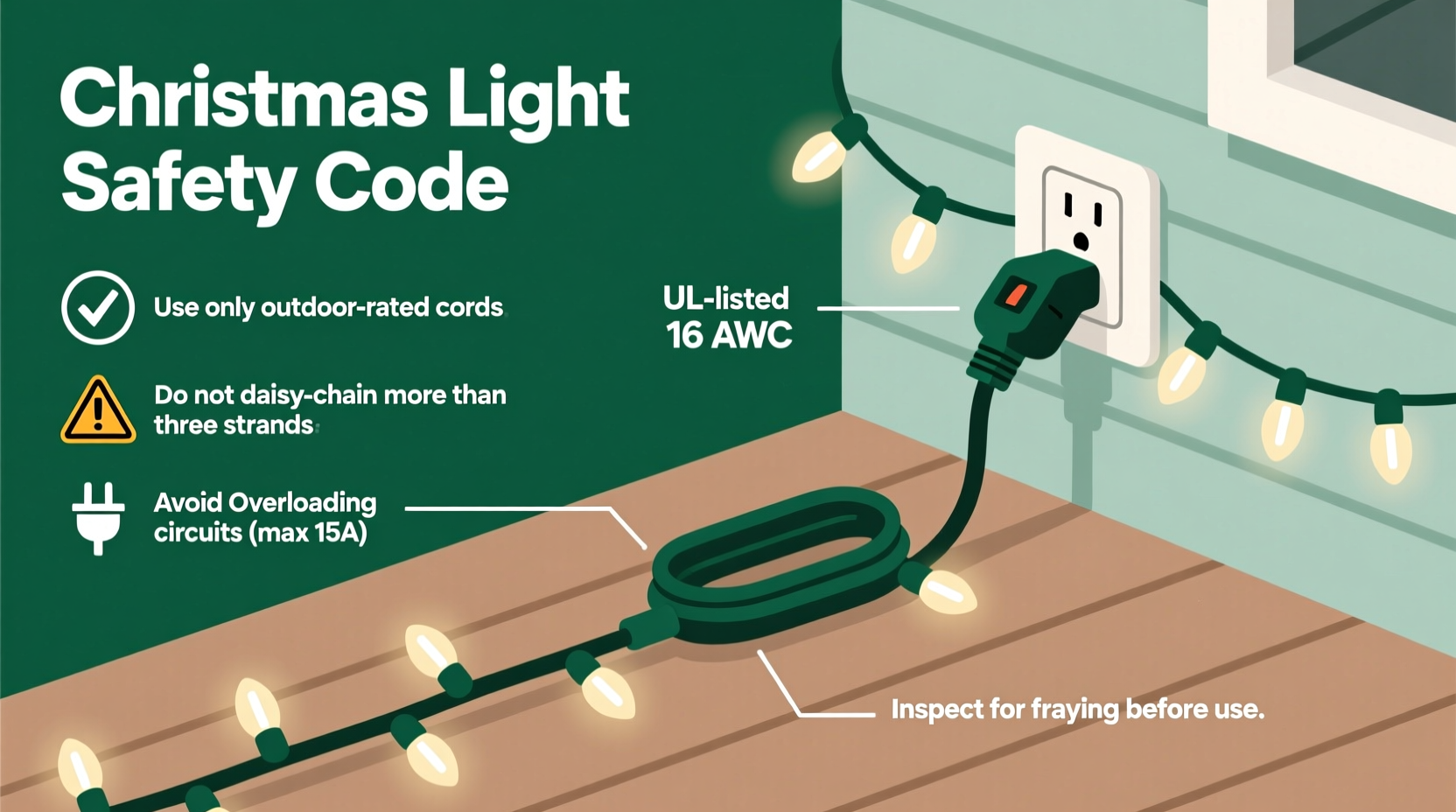
Extension cords are designed as temporary power solutions—not permanent wiring substitutes. When used incorrectly, especially outdoors and under load from dozens of light strands, they can overheat, degrade, or short-circuit. The U.S. Fire Administration estimates that between 2016 and 2018, an average of 160 home fires per year were caused by decorative lighting, resulting in several deaths and millions in property damage. A significant number of these incidents involved improper cord usage.
Common risks include:
- Overloading circuits: Plugging too many lights into one cord or outlet can exceed safe amperage limits.
- Damaged insulation: Outdoor exposure to sun, moisture, snow, and foot traffic degrades cord jackets over time.
- Indoor cords used outdoors: These lack weather-resistant ratings and can lead to ground faults or electrocution.
- Daisy-chaining: Connecting multiple extension cords increases resistance and fire risk.
- Poor grounding: Using non-grounded (two-prong) cords with devices requiring grounding raises shock hazards.
The danger isn't just theoretical. In suburban Chicago, a homeowner connected four indoor extension cords end-to-end to reach his roofline, powering over 500 mini-lights. After two weeks, the middle connection overheated beneath a pile of wet leaves, igniting nearby mulch. The fire spread to the garage before being extinguished. No one was hurt, but $38,000 in damages were reported—all preventable with proper equipment and installation.
“Extension cords are lifesavers when used correctly, but they’re not meant to replace permanent wiring. If your holiday display needs more than one or two cords, it’s time to consider dedicated outdoor outlets.” — James Rutherford, Licensed Master Electrician and NEC Consultant
Electrical Code Guidelines You Must Follow
The National Electrical Code (NEC), specifically Article 400 and Article 590, governs the use of flexible cords and cables. While enforcement varies locally, most areas adopt NEC standards with minor amendments. Here's what the code says about extension cord use:
1. Temporary Use Only
NEC 400.8(1) states that extension cords “shall not be used as a substitute for permanent wiring.” This means running cords through walls, ceilings, or under carpets violates code. Similarly, leaving them installed year-round—even if functional—is not compliant.
2. Outdoor Rating Requirements
Cords used outside must be rated for outdoor use. Look for labels like “W-A” or “W” on the jacket, indicating resistance to moisture, UV rays, and temperature extremes. Indoor-only cords (rated S, SJ, etc.) deteriorate quickly outdoors and increase shock risk.
3. Ground Fault Circuit Interrupter (GFCI) Protection
Any outdoor receptacle within six feet of a door, window, or interior space must be GFCI-protected (NEC 210.8). GFCIs cut power instantly if current leakage is detected—critical when using electricity near water or damp ground. Most modern homes have built-in GFCI outlets, but older homes may require upgrading.
4. Amperage and Wattage Limits
Standard household circuits run at 15 or 20 amps (1,800–2,400 watts). Each string of mini-lights draws about 0.3 to 0.5 amps. Exceeding circuit capacity causes breakers to trip—or worse, wires to overheat. Always calculate total load before plugging in.
Choosing the Right Extension Cord for Christmas Lights
Not all extension cords are created equal. Selecting the correct type ensures safety, efficiency, and compliance. Consider these factors:
Gauge Matters: Thicker Is Better
Wire gauge (measured in AWG) determines how much current a cord can handle. Lower numbers mean thicker wires and higher capacity. For Christmas lights:
- 16-gauge: Suitable for short runs (up to 25 ft) and small displays (under 200 lights).
- 14-gauge: Recommended for medium runs (25–50 ft) and moderate loads (200–500 lights).
- 12-gauge: Best for long distances (50+ ft), high-wattage displays, or multiple light strings.
Length Considerations
Longer cords increase electrical resistance, reducing voltage delivery. This can cause dimming or flickering lights—and in extreme cases, motor burnout in illuminated inflatables. Match cord length to actual need; don’t use a 100-foot cord for a 20-foot span unless necessary.
Connector Types
Ensure plugs and outlets match. Outdoor-rated cords typically have three-prong grounded connectors. Avoid adapters that remove the ground pin—this defeats a critical safety feature.
| Cord Gauge | Max Length | Recommended Load | Best Use Case |
|---|---|---|---|
| 16 AWG | Up to 25 ft | Under 1000W | Small indoor trees, porch railings |
| 14 AWG | 25–50 ft | 1000–1500W | Rooflines, medium yard displays |
| 12 AWG | 50–100 ft | 1500–2400W | Large inflatables, multi-string setups |
Step-by-Step Guide to Safe Installation
Follow this sequence to install Christmas lights using extension cords safely and in line with best practices:
- Assess Your Display Needs
Measure distances from outlets to each light zone. Count total light strings and check wattage per set (usually printed on packaging). - Calculate Total Load
Add up watts: e.g., 20 strings × 40 watts = 800 watts. Divide by voltage (120V) to get amps: 800 ÷ 120 ≈ 6.7A. Stay below 80% of circuit capacity (12A on a 15A circuit). - Select Proper Cords
Choose outdoor-rated, grounded cords with appropriate gauge and length. Prefer 14 or 12 AWG for exterior use. - Inspect All Components
Check cords for frays, cracked insulation, bent prongs, or corrosion. Discard damaged units. - Use GFCI Outlets
Plug into GFCI-protected receptacles. Test buttons monthly. If none exist, use a GFCI adapter plug. - Route Cords Safely
Keep off walkways. Use cord covers on driveways. Elevate with insulated hooks—never nails or staples. Avoid sharp bends. - Avoid Daisy-Chaining
Never connect more than one extension cord together. If needed, use a single longer cord or power multiple zones separately. - Secure Connections
Elevate plugs off the ground using outlet boxes or stands. Wrap connections in waterproof tape or use gel-filled cord connectors. - Turn On and Monitor
Let lights run for 30 minutes. Touch cords near plugs and connections—if warm, reduce load or shorten run. - Unplug When Unattended
Turn off lights when sleeping or leaving home. Use timers to automate operation.
“We had a call last December where a homeowner daisy-chained three cords to power a sleigh display. The junction melted and sparked against dry pine needles. It only took minutes to ignite the shrubbery. One timer with auto-shutoff could’ve prevented it.” — Fire Marshal Linda Cho, Portland Bureau of Emergency Management
Alternatives to Extension Cords
If your setup relies heavily on extension cords, it may be time to upgrade your infrastructure. Consider these safer, more permanent options:
- Dedicated Outdoor Receptacles: Have an electrician install weatherproof, GFCI-protected outlets at key locations (e.g., front, back, sides of house).
- Low-Voltage Lighting Systems: Use 12V LED systems powered by transformers. Safer and more efficient, though less common for large displays.
- Smart Power Strips: Outdoor-rated strips with surge protection and remote control via app. Can monitor energy use and shut off automatically.
- Solar-Powered Lights: Ideal for pathway markers, trees, and accent lighting. Eliminates cords entirely.
For those with recurring large displays, investing $300–$600 in permanent outlets pays off in convenience, safety, and insurance peace of mind.
Frequently Asked Questions
Can I leave extension cords plugged in all winter?
No. Extension cords are intended for temporary use. Leaving them outdoors beyond the holiday season violates NEC 400.8 and increases exposure to weather damage. Remove and store them after the holidays.
Is it safe to use indoor extension cords outside if covered?
No. Even with protective wraps or enclosures, indoor cords lack UV and moisture resistance. Water can seep in, leading to shorts or electrocution. Always use cords labeled for outdoor use.
How many Christmas light strings can I connect together?
Most manufacturers limit connecting 3–5 sets end-to-end (check packaging). Exceeding this risks overheating the first string’s wiring. Use parallel connections via power strips instead.
Final Checklist Before You Plug In
- ✅ Used outdoor-rated, properly gauged extension cords
- ✅ Avoided daisy-chaining multiple cords
- ✅ Plugged into GFCI-protected outlets
- ✅ Kept cords clear of water, snow, and foot traffic
- ✅ Calculated total wattage and stayed under circuit limits
- ✅ Secured connections off the ground and protected from weather
- ✅ Installed timers to limit daily runtime
- ✅ Planned to remove cords after the holiday season
Conclusion: Safety First, Always
Christmas lights bring joy, warmth, and community spirit—but they should never come at the cost of safety. Using extension cords improperly might seem harmless until something goes wrong. By following electrical code guidelines, choosing the right equipment, and installing thoughtfully, you can enjoy a dazzling display without risking fire, injury, or code violations.
This holiday season, take an hour to review your setup. Replace worn cords, verify GFCI function, and eliminate risky shortcuts. Your future self—and your neighbors—will thank you. Share this guide with friends who go all-out with decorations. Together, we can make festive lighting both beautiful and safe.




 浙公网安备
33010002000092号
浙公网安备
33010002000092号 浙B2-20120091-4
Comments
No comments yet. Why don't you start the discussion?