
Stringing up Christmas lights is one of the most joyful parts of holiday decorating. But behind the sparkle lies a serious responsibility: ensuring your setup is electrically safe. Many people rely on extension cords to power their outdoor and indoor displays, but not all cords are created equal — and misuse can lead to overheating, tripped breakers, or even house fires. Understanding how to properly use extension cords for Christmas lights isn’t just about convenience; it’s about protecting your home and family.
The short answer is yes — you can use extension cords for Christmas lights, but only if you follow specific electrical guidelines, choose the right type of cord, and stay within safe load limits. This guide breaks down everything you need to know to decorate confidently and safely.
Understanding Electrical Load and Cord Ratings
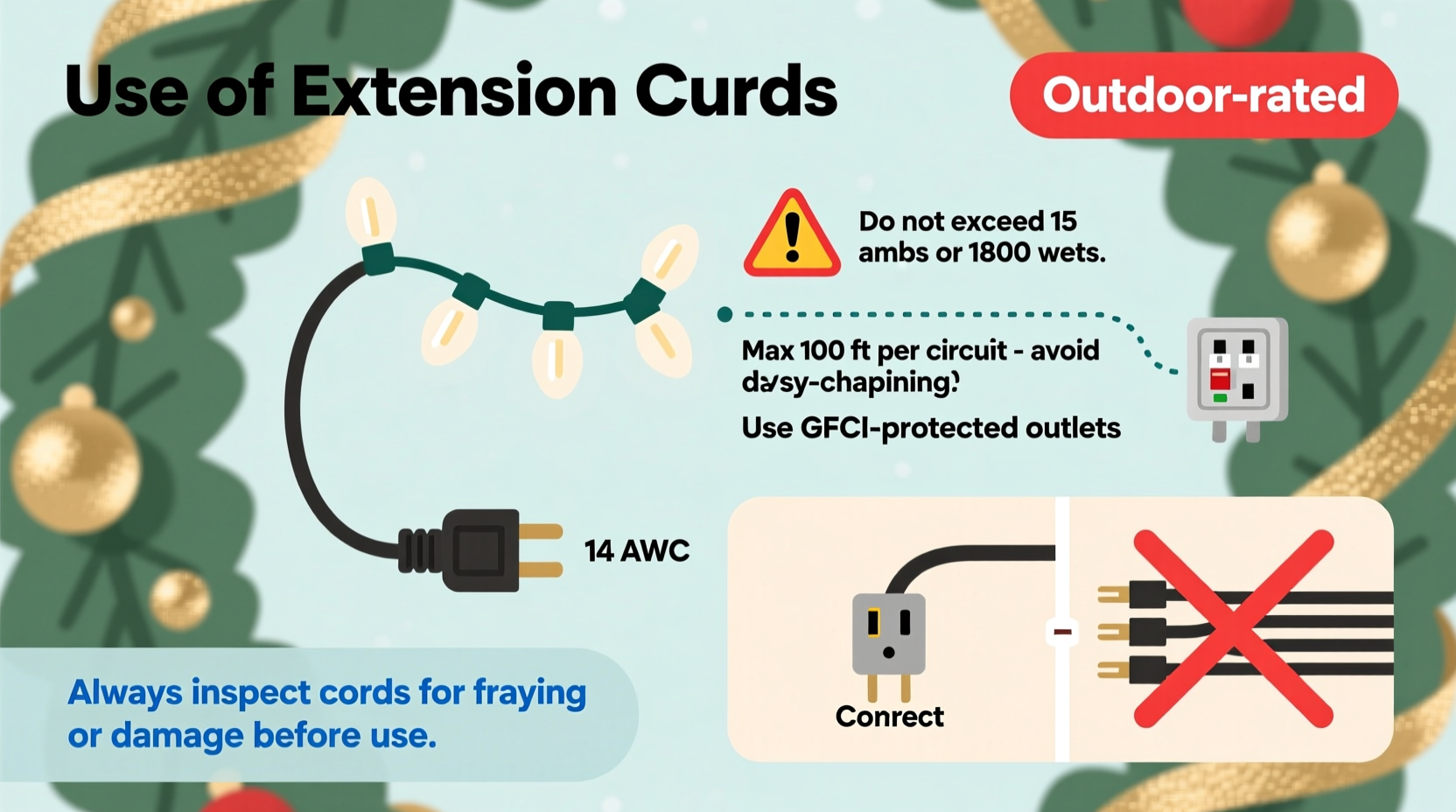
Every extension cord has a maximum current rating, typically measured in amperes (amps) or watts. Exceeding this limit causes the cord to overheat, increasing the risk of melting insulation, short circuits, and fire. Christmas lights, especially older incandescent models, can draw more power than expected when connected in long runs or multiple strands.
To determine whether an extension cord can handle your light display, start by calculating the total wattage of all connected lights. Most mini string lights consume between 40 and 100 watts per strand. LED lights are far more efficient, often using less than 10 watts per 50-light strand. Multiply the wattage per strand by the number of strands you plan to connect.
Once you have the total wattage, divide by your household voltage (usually 120 volts in North America) to get the amperage:
Formula: Amps = Total Watts ÷ Voltage
For example, ten strands of 40-watt incandescent lights draw 400 watts total. At 120 volts, that’s 3.33 amps. You’d need an extension cord rated for at least 5 amps (a common minimum) to handle this load safely, ideally with some margin.
Choosing the Right Extension Cord Type
Not all extension cords are suitable for holiday lighting. The key factors are gauge (thickness), length, insulation type, and intended use (indoor vs. outdoor).
- Gauge (AWG): Lower gauge numbers mean thicker wires and higher current capacity. For Christmas lights, use no smaller than 16 AWG for short indoor runs. For longer runs or multiple strands, 14 AWG or 12 AWG is safer.
- Length: Longer cords increase resistance, reducing efficiency and raising heat risk. Keep cords as short as possible. If you must go long, use a heavier gauge (e.g., 12 AWG for 50+ feet).
- Insulation & Jacketing: Outdoor cords must be marked “W-A” or “Outdoor Use” and feature weather-resistant jackets. Never use indoor-only cords outside, even temporarily.
- Grounded vs. Ungrounded: Three-prong (grounded) cords are safer for outdoor or high-load applications. They reduce shock risk and improve stability under load.
Recommended Cord Types by Scenario
| Scenario | Cord Gauge | Max Recommended Length | Special Features |
|---|---|---|---|
| Indoor LED lights (few strands) | 16–18 AWG | Up to 25 ft | Light-duty, non-grounded OK |
| Indoor incandescent or mixed strands | 14 AWG | Up to 50 ft | Grounded plug preferred |
| Outdoor LED lights | 14 AWG | Up to 50 ft | Weather-resistant, grounded |
| Outdoor incandescent or large displays | 12 AWG | Up to 100 ft | Heavy-duty, UV-protected jacket |
“Using undersized extension cords is one of the top causes of holiday electrical fires. Match the cord to the load, not the decor.” — National Fire Protection Association (NFPA)
Safety Guidelines for Connecting Multiple Light Strands
Many people daisy-chain light strings together, but manufacturers set limits on how many can be safely linked. Incandescent lights usually allow 3 to 5 sets end-to-end before risking overload. LEDs can often support 20 or more, but always check the label.
The real danger comes when multiple daisy-chained strings are then plugged into an extension cord that isn’t rated for the combined load. A single overloaded outlet or cord can become a hotspot.
Step-by-Step Safe Connection Process
- Check each light string’s maximum connection limit printed on the packaging or wire tag.
- Calculate total wattage of all strings you plan to connect.
- Select an extension cord with a wattage and amp rating above the total load.
- Use GFCI-protected outlets outdoors to prevent shock in wet conditions.
- Plug only one major light run per outlet to avoid circuit overloads.
- Elevate connections off the ground using outlet covers or cord lifters to prevent water exposure.
Common Mistakes That Create Hazards
Even small oversights can compromise safety. Here are frequent errors and how to avoid them:
- Using indoor cords outdoors: Moisture seeps into non-rated insulation, causing shorts or electrocution.
- Running cords under rugs or furniture: Trapped heat builds up, increasing fire risk.
- Overloading power strips: Plugging multiple extension cords into one strip exceeds its internal circuitry limits.
- Ignoring damaged cords: Frayed wires, cracked plugs, or bent prongs should never be used, even temporarily.
- Leaving lights on unattended: Turn off Christmas lights when leaving home or sleeping.
Do’s and Don’ts Summary
| Do | Don’t |
|---|---|
| Use outdoor-rated cords outside | Use indoor cords in rain or snow |
| Check cord ratings before plugging in | Assume all cords are interchangeable |
| Secure cords with clips, not nails or staples | Puncture insulation to fasten cords |
| Test GFCI outlets monthly | Ignore tripped GFCIs — investigate the cause |
| Unplug lights after 12 hours of use | Leave lights on 24/7 for weeks |
Real Example: A Close Call on Chestnut Street
In December 2022, a homeowner in Ohio decorated his roofline with 15 strands of incandescent mini-lights, daisy-chained and powered by a 16 AWG indoor extension cord running from a second-floor bedroom outlet. After three nights, neighbors noticed smoke coming from the attic vent.
Firefighters traced the issue to the extension cord, which had melted inside the wall due to sustained overload. The total draw was nearly 6 amps — well above the 5-amp safe limit for a 16 AWG cord. Fortunately, the GFCI outlet eventually tripped, preventing a full blaze.
The homeowner switched to LED lights and installed a dedicated outdoor 12 AWG extension cord with a timer. He now checks connections weekly and unplugs nightly. His display still shines brightly — but safely.
Expert Checklist for Safe Holiday Lighting
Follow this checklist every time you set up Christmas lights:
- ☐ Confirm all extension cords are rated for outdoor use if used outside.
- ☐ Verify the cord gauge matches the total wattage of connected lights.
- ☐ Inspect cords for damage — discard any with fraying, kinks, or exposed wires.
- ☐ Use GFCI outlets for all outdoor connections.
- ☐ Avoid daisy-chaining beyond manufacturer limits.
- ☐ Elevate ground-level connections to prevent water contact.
- ☐ Install a timer to limit daily runtime (6–12 hours recommended).
- ☐ Label cords and store them coiled loosely (never tightly wound).
Frequently Asked Questions
Can I leave Christmas lights plugged in all night?
No. It’s strongly advised to turn off Christmas lights when you’re asleep or away from home. Even low-wattage LED systems generate heat over time, and faults can develop unexpectedly. Use a programmable timer to automate shutdowns.
How many Christmas lights can I plug into one extension cord?
It depends on the cord’s rating and the lights’ total wattage. For example, a 14 AWG cord rated for 15 amps (1,800 watts at 120V) could safely handle up to 180 strands of 10-watt LED lights — but only if they’re not daisy-chained beyond limits. Always calculate actual load rather than guessing by count.
Is it safe to use multiple extension cords together?
Only if absolutely necessary and done correctly. Connecting two cords increases resistance and reduces power delivery, raising heat risk. If you must link cords, ensure both are outdoor-rated, same-gauge, and not buried or pinched. Better yet, use a single longer cord of appropriate thickness.
Final Recommendations for a Safe and Sparkling Season
Christmas lights bring warmth and joy, but they demand respect for electrical safety. The foundation of a hazard-free display is planning: know your loads, choose the right cords, and never cut corners for convenience. Invest in heavy-duty 12 or 14 AWG outdoor extension cords, use timers and GFCIs, and inspect everything before and during the season.
Modern LED lights have made holiday decorating much safer and more energy-efficient. Still, the extension cord remains the weakest link if misused. Treat it with care, and your lights will shine bright without incident.




 浙公网安备
33010002000092号
浙公网安备
33010002000092号 浙B2-20120091-4
Comments
No comments yet. Why don't you start the discussion?