
Many people with oily skin avoid facial oils out of fear they’ll make their complexion greasier or trigger breakouts. But this belief is based on a misconception about how skin functions. In reality, using the right facial oil can actually help regulate excess sebum production, strengthen the skin barrier, and improve overall texture. The key lies in understanding your skin’s needs and choosing oils that are lightweight, fast-absorbing, and non-comedogenic—meaning they won’t clog pores.
Oily skin isn't necessarily over-hydrated—it may be producing more oil because it's dehydrated or compromised. When the skin lacks moisture, it signals the sebaceous glands to produce more oil as compensation. This cycle can lead to shine, congestion, and acne. Introducing a well-formulated facial oil can interrupt this imbalance by reinforcing the lipid layer, locking in hydration, and calming inflammation—all without adding heaviness.
Why Facial Oils Benefit Oily Skin
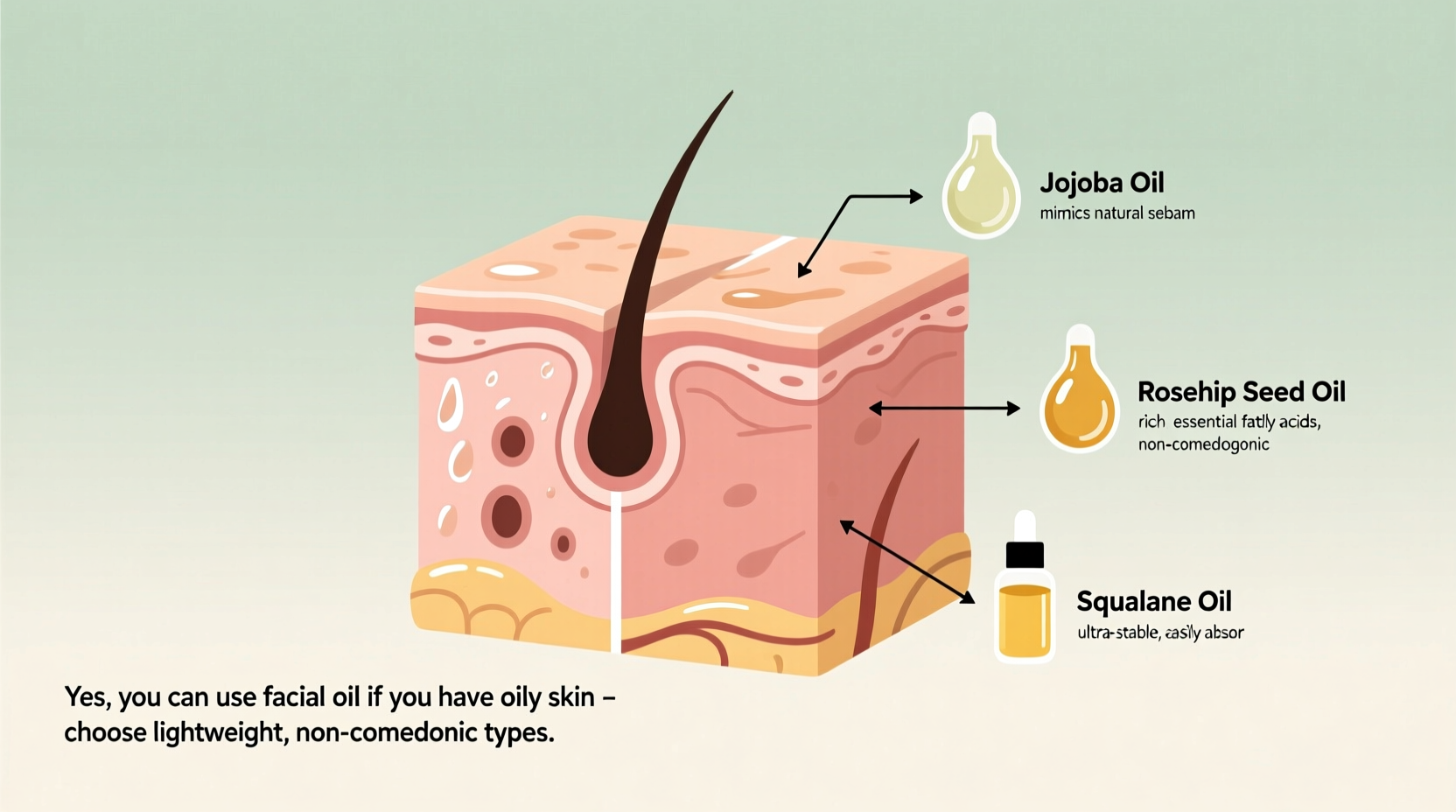
The idea that oil causes oil is outdated. Modern dermatology recognizes that a healthy skin barrier relies on lipids—including naturally occurring sebum and beneficial plant-based oils—to retain moisture and defend against environmental stressors. For oily skin types, skipping moisturizer or oil entirely often backfires, leading to increased oil production and sensitivity.
Facial oils rich in linoleic acid—a type of omega-6 fatty acid—are particularly effective for oily and acne-prone skin. Studies show that individuals with acne tend to have lower levels of linoleic acid in their sebum, which contributes to thicker, stickier oil that clogs pores. Topical application of linoleic-rich oils helps normalize sebum composition, reducing comedones and improving clarity.
“Using facial oils on oily skin can be transformative when done correctly. It’s not about avoiding oil—it’s about replacing poor-quality lipids with high-functioning ones.” — Dr. Lena Patel, Board-Certified Dermatologist
Best Facial Oils for Oily Skin: What to Look For
Not all oils are created equal. Some are heavy, pore-clogging, and likely to cause congestion (like coconut oil), while others are feather-light, anti-inflammatory, and deeply nourishing. The ideal facial oils for oily skin meet several criteria:
- Non-comedogenic (rated 0–2 on the comedogenic scale)
- High in linoleic acid, low in oleic acid
- Fast-absorbing with no greasy residue
- Rich in antioxidants like vitamin E or polyphenols
- Natural anti-inflammatory properties
Top 5 Facial Oils That Work for Oily Skin
| Oil Type | Linoleic Acid Content | Comedogenic Rating | Key Benefits |
|---|---|---|---|
| Squalane (plant-derived) | Moderate to high | 0–1 | Mimics natural sebum, lightweight, hydrating, reduces shine |
| Grapeseed Oil | ~70% | 1–2 | Astringent, antioxidant-rich, helps control excess oil |
| Safflower Oil | ~75% | 0–1 | Deeply moisturizing without heaviness, supports barrier repair |
| Hemp Seed Oil | ~60% | 0 | Anti-inflammatory, balances sebum, contains gamma-linolenic acid (GLA) |
| Jojoba Oil | ~8% | 2 | Technically a wax ester; closely resembles human sebum, regulates oil production |
Note: While jojoba oil is slightly higher in oleic acid, its molecular structure mimics sebum so closely that it effectively “tricks” the skin into reducing oil output. It remains one of the most recommended oils for oily and acne-prone complexions.
How to Use Facial Oil with Oily Skin: A Step-by-Step Guide
Applying facial oil incorrectly can lead to pilling, greasiness, or breakouts. Follow this routine to integrate oil seamlessly into your regimen:
- Cleanse gently. Use a water-soluble, non-stripping cleanser to remove dirt and excess oil without disrupting the pH balance.
- Tone or apply treatment serums. If using actives like niacinamide, salicylic acid, or hyaluronic acid, apply them first to damp skin.
- Apply facial oil. Dispense 2–3 drops into palms, rub hands together, and press lightly onto face and neck. Avoid rubbing vigorously.
- Seal with moisturizer (optional). For daytime, you may skip heavier creams. At night, follow with a light gel moisturizer if needed.
- Use sunscreen during the day. Never skip SPF—even oily skin needs UV protection.
Common Mistakes to Avoid
Even the best oil can backfire if used improperly. These pitfalls are common among oily-skinned individuals:
- Using too much product. More isn’t better. Start with 2 drops and increase only if needed.
- Choosing heavy, occlusive oils. Avoid coconut, wheat germ, and cocoa butter—they’re highly comedogenic.
- Layering oil over thick creams. This traps oil at the surface, increasing shine and risk of clogged pores.
- Introducing oil during active breakouts. Wait until inflammation subsides before adding new products.
- Expecting immediate results. It can take 2–4 weeks for skin to adjust and rebalance oil production.
“Patients with oily skin who start using squalane or grapeseed oil often report less shine within three weeks—not because the oil absorbs oil, but because the skin stops overproducing it.” — Dr. Anika Rao, Clinical Skincare Researcher
Mini Case Study: Balancing Oil Without Stripping Skin
Maya, a 28-year-old graphic designer, struggled with shiny T-zones and frequent breakouts. She avoided moisturizers and oils, believing they worsened her condition. Instead, she used strong clay masks and alcohol-based toners daily. Over time, her skin became reactive—red, tight after cleansing, yet still oily by noon.
After consulting a dermatologist, Maya introduced a minimalist routine: a gentle foaming cleanser, hyaluronic acid serum on damp skin, and 2 drops of squalane oil pressed into her face morning and night. Within two weeks, her midday shine decreased significantly. By week four, her breakouts were less frequent, and her skin felt balanced—not tight, not slick.
The change wasn’t due to drying out her skin but rather supporting its natural equilibrium. The squalane helped restore her lipid barrier, reducing the need for excessive sebum production.
Do’s and Don’ts: Quick Reference Checklist
Your Facial Oil Checklist for Oily Skin
- ✅ Do choose oils with a comedogenic rating of 0–2
- ✅ Do apply to damp skin for better absorption
- ✅ Do start with 2–3 drops max
- ✅ Do patch test for 3 nights before full-face use
- ✅ Do pair with non-comedogenic moisturizers and sunscreens
- ❌ Don’t use coconut or olive oil—they’re highly comedogenic
- ❌ Don’t layer multiple oils or heavy creams over oil
- ❌ Don’t apply oil to active, inflamed acne lesions
- ❌ Don’t expect instant mattifying effects—it’s about long-term balance
Frequently Asked Questions
Can facial oil cause breakouts on oily skin?
It depends on the oil and your skin’s tolerance. Non-comedogenic oils like squalane, grapeseed, and hemp seed are unlikely to cause breakouts when used correctly. However, oils high in oleic acid (e.g., avocado, olive) or those rated 4–5 on the comedogenic scale (like coconut oil) can clog pores and should be avoided.
Should I use facial oil in the morning or at night?
You can use it both times, depending on your routine. Many prefer applying a lightweight oil like squalane in the morning under sunscreen for added protection and smooth makeup application. At night, it can lock in treatment serums and support overnight repair. Just ensure your skin isn’t overly layered, especially in humid climates.
Won’t facial oil make my skin look greasy?
Not if you choose the right formula and use it properly. Lightweight, fast-absorbing oils disappear into the skin within seconds and actually reduce shine over time by regulating sebum. Greasiness usually results from using too much product, combining oil with heavy creams, or selecting the wrong oil type.
Final Thoughts: Embrace Oil to Balance Oil
Using facial oil with oily skin isn’t just safe—it can be one of the most effective steps in achieving a calm, resilient, and balanced complexion. The goal isn’t to eliminate oil but to work with your skin’s biology, not against it. By selecting linoleic-rich, non-comedogenic oils and applying them mindfully, you support hydration, reduce inflammation, and signal your sebaceous glands to slow down unnecessary oil production.
The transformation may not happen overnight, but consistency yields visible results: fewer breakouts, reduced shine, and a smoother texture. Forget the myth that oil equals grease. With informed choices, facial oil becomes a strategic ally—not an enemy—for oily skin.




 浙公网安备
33010002000092号
浙公网安备
33010002000092号 浙B2-20120091-4
Comments
No comments yet. Why don't you start the discussion?