
Many homeowners wonder whether it's safe or practical to use indoor lights in outdoor areas—especially when those areas are sheltered by eaves. The short answer is: sometimes, but with important caveats. While overhangs provide protection from direct rain and sunlight, they don’t eliminate all environmental risks. Understanding the difference between indoor and outdoor-rated fixtures, the role of moisture, temperature fluctuations, and electrical safety is crucial before making a decision.
This article breaks down what happens when indoor lights are used under eaves, the risks involved, and how to make informed choices that balance aesthetics, functionality, and safety.
Understanding Indoor vs. Outdoor Light Fixtures
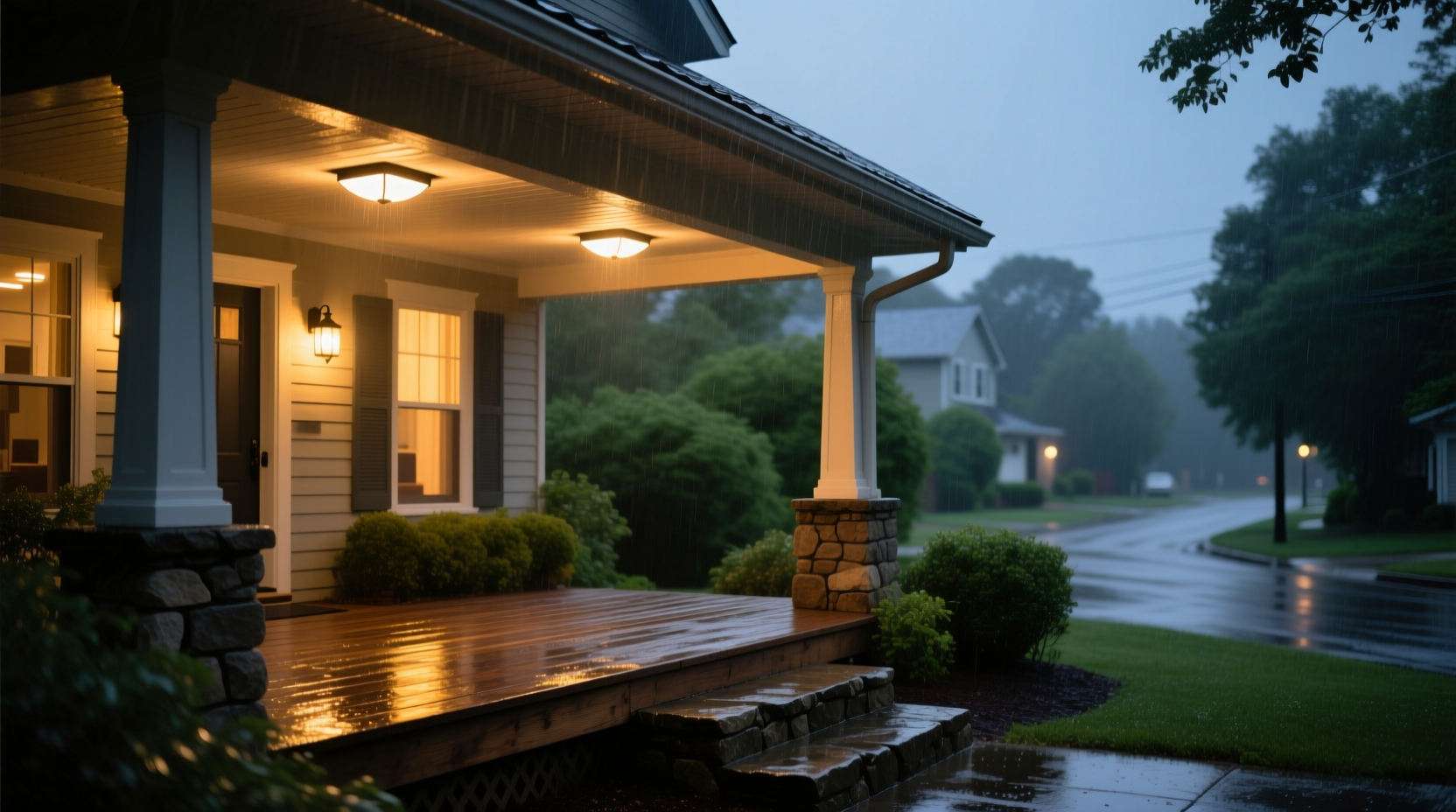
The fundamental distinction between indoor and outdoor lighting lies in their design standards, materials, and protective features. These differences exist for good reason—outdoor environments expose fixtures to far more stress than interior spaces.
Indoor lights are typically built with cost efficiency and aesthetic appeal in mind. They often lack weather-resistant seals, corrosion-proof components, or insulation against moisture ingress. Their wiring, housing, and sockets are not designed to withstand prolonged exposure to humidity, condensation, dust, or temperature swings—even when partially protected.
In contrast, outdoor-rated lights meet specific safety codes such as UL (Underwriters Laboratories) listings for damp or wet locations. A fixture labeled “damp location” can handle high humidity and indirect moisture, like under a covered porch. One rated for “wet locations” can endure direct rain or snow exposure.
“Just because a light isn’t getting rained on directly doesn’t mean it’s safe outdoors. Humidity, thermal cycling, and airborne salts can degrade indoor fixtures faster than most people realize.” — James Linwood, Electrical Safety Consultant
What Eaves Actually Protect Against (And What They Don’t)
Eaves do offer meaningful shelter. They reduce direct rainfall, block some UV exposure, and moderate temperature extremes. However, they are not airtight enclosures. Air circulates freely beneath them, carrying moisture, insects, dust, and corrosive elements—especially in coastal or humid climates.
Condensation forms overnight on surfaces that cool below the dew point. This is common under eaves where airflow is restricted but not eliminated. Over time, this repeated wetting and drying cycle promotes corrosion of metal components, degradation of insulation, and potential short circuits in indoor-rated fixtures.
Additionally, pests such as spiders, ants, or wasps may nest inside unprotected housings. Their activity can damage wiring or create conductive debris paths across electrical contacts. Rodents might chew through unshielded cables, especially if the fixture connects to an exterior wall or soffit.
| Factor | Protected by Eaves? | Risk Level for Indoor Lights |
|---|---|---|
| Direct Rainfall | Yes | Low |
| Wind-Driven Moisture | Partial | Moderate to High |
| Nighttime Condensation | No | High |
| Temperature Fluctuations | Reduced | Moderate |
| Pest Intrusion | No | High |
| UV Exposure | Partial | Low to Moderate |
The table shows that while eaves mitigate certain hazards, they leave others largely unchecked. Using indoor lights in these zones may work temporarily, but longevity and safety remain compromised.
Real-World Example: A Covered Porch Gone Wrong
A homeowner in Charleston, South Carolina installed decorative indoor pendant lights under a deep roof overhang along their side porch. The area rarely saw rain, and the lights remained dry during storms. For nearly two years, everything functioned normally.
Then, after a humid summer, one fixture flickered and failed. Upon inspection, an electrician found significant corrosion on the socket base and wire nuts inside the junction box. Moisture had seeped in through microscopic gaps during repeated dew cycles. Spider webs trapped humidity against live connections, creating a slow path to failure. Though no fire occurred, the risk was real—and replacement required rewiring due to damaged insulation.
This case illustrates how seemingly safe conditions can still lead to dangerous outcomes when using equipment beyond its intended environment.
Step-by-Step Guide: Assessing Whether You Can Safely Use Indoor Lights Under Eaves
If you're considering installing indoor lights under eaves, follow this evaluation process to minimize risk:
- Determine the Fixture’s Rating
Check the label or manufacturer specifications. If it says “For Dry Locations Only,” it should not be used outside—even under cover. - Evaluate Local Climate Conditions
High-humidity regions, coastal areas, or places with frequent fog increase risk significantly. In arid climates with low dew points, risks are reduced but not eliminated. - Inspect Mounting Location
Is the fixture recessed into the soffit or fully exposed to open air? Recessed installations with tight seals fare better than surface-mounted units with visible gaps. - Assess Ventilation and Airflow
Poor airflow increases condensation buildup. Areas enclosed on three sides (like alcoves) trap moisture longer than open eaves. - Consider Long-Term Maintenance
Are you prepared to inspect annually for corrosion, replace gaskets, or upgrade later? Indoor lights under eaves require vigilance. - Consult a Licensed Electrician
Have a professional evaluate your plan. They can advise on code compliance, grounding requirements, and alternative solutions.
Skipping any of these steps increases the chance of premature failure or safety hazard.
When It Might Be Acceptable (With Caveats)
There are limited scenarios where using indoor lights under eaves could be considered low-risk:
- The space is deeply recessed, with minimal exposure to lateral moisture.
- The local climate is consistently dry with low humidity (e.g., desert regions).
- The fixture is enclosed in a secondary weatherproof housing or retrofit enclosure.
- The installation includes drip loops in wiring and sealed conduit entry points.
- You accept the need for frequent maintenance and shorter lifespan.
Even then, this approach should never be used with high-wattage bulbs or near flammable materials. LED bulbs generate less heat and are safer in marginal conditions, making them a better choice if proceeding.
Safer Alternatives to Indoor Lights Under Eaves
Instead of pushing the limits of indoor-rated fixtures, consider these smarter, code-compliant options:
1. Damp-Rated Fixtures
These are designed specifically for covered outdoor areas. They feature gasketed lenses, rust-resistant finishes, and insulated wiring. Many look identical to indoor models, blending seamlessly with home aesthetics.
2. Retrofit Kits
Some manufacturers offer weatherproof conversion kits for popular indoor designs. These include silicone seals, protective diffusers, and corrosion-resistant mounting hardware.
3. Temporary or Decorative String Lights (Outdoor Rated)
For ambiance rather than primary illumination, use string lights clearly marked for outdoor use. Look for labels like “UL Listed for Outdoor Use” and jacketed wiring.
4. Enclosed Luminaires with Gaskets
Choose fixtures with full rubber seals between the housing and lens. These prevent moisture intrusion even in breezy, damp conditions.
“The best outdoor lighting blends performance and beauty. There’s no need to compromise safety for style when quality outdoor-rated options are widely available.” — Maria Tran, Landscape Lighting Designer
Electrical Code and Insurance Implications
Beyond technical concerns, there are legal and financial risks. Most residential electrical codes—including the National Electrical Code (NEC)—require outdoor fixtures to be rated for their location. Installing indoor lights in outdoor settings, even under eaves, may violate local ordinances.
If a fire or fault occurs due to improper installation, homeowner insurance providers may deny claims. Insurers routinely investigate causes of electrical damage and will check product ratings. Using a dry-rated fixture in a damp-exposed location gives them grounds to reject liability.
Furthermore, during home inspections or sales disclosures, unpermitted or non-compliant electrical work must be reported. Correcting violations later can be costly and delay transactions.
FAQ
Can I use an indoor ceiling fan under eaves?
No. Indoor ceiling fans are not sealed against moisture and lack corrosion-resistant motor housings. Even under cover, condensation and humidity will eventually damage internal components. Always use fans rated for “damp” or “wet” locations outdoors.
What does “covered porch” mean in electrical terms?
A covered porch is generally classified as a “damp location” unless it is fully enclosed and climate-controlled. Damp locations are protected from weather but subject to moderate humidity and occasional moisture. Fixtures here must be rated accordingly.
Is it safe to use indoor plug-in lamps on a covered patio?
Only if the outlet is GFCI-protected and the lamp remains indoors or within a fully enclosed, dry space. Plug-in lamps not designed for outdoor use should never be left outside, even under eaves. Water ingress through vents or bases can cause shocks or shorts.
Checklist: Safe Use of Lighting Under Eaves
- ✅ Confirm fixture is rated for damp or wet locations
- ✅ Verify local building codes allow the installation type
- ✅ Use only LED bulbs to reduce heat output
- ✅ Install GFCI protection on the circuit
- ✅ Seal all conduit entries and wire penetrations
- ✅ Perform annual inspection for corrosion or insect nests
- ✅ Avoid using indoor-only fixtures, even if \"mostly dry\"
Conclusion
While eaves offer shelter, they don’t transform outdoor spaces into indoor environments. Using indoor lights under them may seem harmless at first, but long-term exposure to humidity, condensation, pests, and temperature shifts creates real risks. Electrical failures, fire hazards, and voided warranties are possible consequences.
Modern outdoor lighting offers stylish, durable, and affordable alternatives that match indoor aesthetics without compromising safety. Investing in properly rated fixtures ensures peace of mind, code compliance, and lasting performance.




 浙公网安备
33010002000092号
浙公网安备
33010002000092号 浙B2-20120091-4
Comments
No comments yet. Why don't you start the discussion?