
Niacinamide and acids—two powerhouse skincare ingredients that dominate routines for their brightening, exfoliating, and texture-refining benefits. Yet, a persistent question lingers in forums and dermatology clinics alike: can they be used together without damaging the skin’s protective barrier? The answer isn’t a simple yes or no. It depends on formulation, concentration, frequency, and individual skin resilience. When combined thoughtfully, niacinamide and acids can complement each other. But misused, they risk irritation, redness, and compromised barrier function. Understanding the science behind their interaction is key to harnessing their full potential—without payback.
Understanding Niacinamide and Acids: What They Do
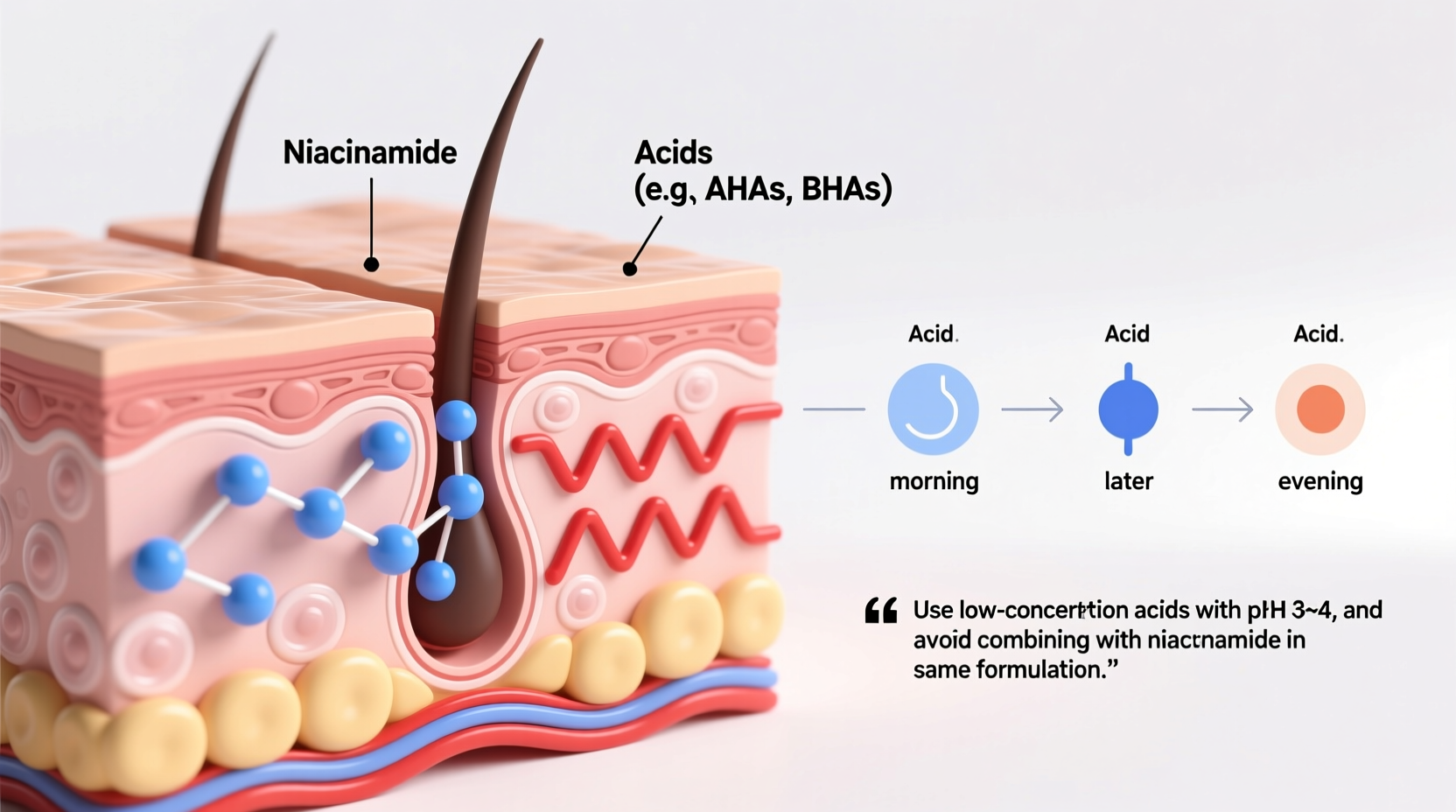
Niacinamide, also known as vitamin B3, is a water-soluble compound celebrated for its multifunctional role in skin health. It strengthens the skin barrier by boosting ceramide production, reduces inflammation, regulates sebum, and minimizes hyperpigmentation. Because it's stable and well-tolerated across skin types, it has become a staple in serums, moisturizers, and toners.
Acids, on the other hand, come in several forms:
- Alpha Hydroxy Acids (AHAs): Glycolic, lactic, and mandelic acid work on the skin’s surface to dissolve dead cells, improving texture and radiance.
- Beta Hydroxy Acid (BHA): Salicylic acid penetrates deeper into pores, making it ideal for acne-prone and oily skin.
- Polyhydroxy Acids (PHAs): Gentler than AHAs, PHAs like gluconolactone offer mild exfoliation suitable for sensitive skin.
While both categories deliver visible improvements, their mechanisms differ. Acids primarily exfoliate and accelerate cell turnover, which can temporarily weaken the stratum corneum—the outermost layer of the skin. Niacinamide supports barrier recovery and helps stabilize this layer post-exfoliation. This complementary action suggests synergy, but only when applied correctly.
The Science of Compatibility: pH, Penetration, and Stability
The compatibility of niacinamide with acids hinges largely on pH. Niacinamide is most stable at a neutral to slightly acidic pH (around 5.0–7.0). In contrast, most AHAs and BHAs require a lower pH (typically 3.0–4.0) to remain effective. When mixed directly in low-pH formulations, niacinamide can convert into nicotinic acid—a compound that may cause flushing and irritation.
However, modern cosmetic chemistry has addressed this through encapsulation and buffering systems. Many commercial products now contain stabilized niacinamide that remains effective even in mildly acidic environments. For instance, The Ordinary’s Niacinamide 10% + Zinc 1% is formulated at a pH compatible with many acid-based treatments.
That said, layering still requires strategy. Applying a glycolic acid toner followed immediately by a high-concentration niacinamide serum may create an unstable environment on the skin’s surface. The result? Potential stinging, redness, or diminished efficacy of one or both ingredients.
“Layering active ingredients isn't just about what you use—it's about how and when you use them. Timing and formulation matter more than we often realize.” — Dr. Lindsey Zubritsky, Board-Certified Dermatologist
Best Practices for Layering Niacinamide with Acids
Using niacinamide and acids together doesn’t have to compromise your barrier—if you follow a structured approach. Here’s how to integrate both safely:
1. Separate by Time of Day
A straightforward method is to alternate usage. Apply acids in your evening routine and reserve niacinamide for the morning. This prevents direct interaction while allowing both ingredients to work optimally. Since AHAs increase photosensitivity, using them at night makes sense from a safety standpoint, while niacinamide’s antioxidant properties support daytime protection against environmental stressors.
2. Use a Buffering Agent or Moisturizer
If combining in one routine, apply niacinamide after your acid treatment and follow with a moisturizer. Alternatively, wait 15–20 minutes between applications to allow the acid to fully absorb and the skin’s pH to rebalance. You can also “buffer” by applying a light moisturizer between steps to reduce irritation risk.
3. Choose Lower Concentrations First
Start with gentle formulas. For example:
- Lactic acid (5–10%) instead of glycolic acid (10–15%)
- Niacinamide at 5% rather than 10%
4. Avoid Combining Multiple Strong Actives
Don’t pair niacinamide and acids with retinoids or vitamin C (especially L-ascorbic acid) in the same routine. This increases the likelihood of overloading the skin, leading to dryness, peeling, and impaired barrier function.
Do’s and Don’ts When Using Niacinamide with Acids
| Do’s | Don’ts |
|---|---|
| Use niacinamide daily to support barrier repair | Mix high-strength acids with 10% niacinamide immediately |
| Apply acids at night and niacinamide in the morning | Use multiple exfoliants (e.g., AHA + BHA + retinol) in one session |
| Wait 15–20 minutes between applying acid and niacinamide | Ignore signs of over-exfoliation like flaking or burning |
| Choose PHA or lactic acid if you have sensitive skin | Layer on dry, compromised skin without hydration |
| Follow up with a ceramide-rich moisturizer | Use physical scrubs alongside chemical exfoliants |
Real-World Example: Sarah’s Barrier Recovery Journey
Sarah, a 32-year-old marketing professional, struggled with dullness and breakouts. Eager for results, she began using a 10% glycolic acid toner every night and layered it with a 10% niacinamide serum. Within two weeks, her skin became increasingly sensitive—tight, red, and prone to tiny bumps around her mouth.
After consulting a dermatologist, she learned she had disrupted her moisture barrier. Her routine was too aggressive, especially since she also used a foaming cleanser and skipped moisturizer occasionally. The combination of low-pH acid and high-concentration niacinamide, applied too frequently and too close together, overwhelmed her skin.
She adjusted her regimen: switched to a PHA exfoliant twice weekly, used niacinamide only in the morning, and introduced a barrier-supporting moisturizer with ceramides. Within four weeks, her skin regained calm, hydration, and clarity—proving that balance, not intensity, drives long-term success.
Step-by-Step Guide to Safely Combine Niacinamide and Acids
- Assess Your Skin Type: Sensitive or reactive skin needs gentler handling. Oily or resilient skin may tolerate more frequent use.
- Start Slow: Begin with acid use 2–3 times per week, paired with daily niacinamide in the AM.
- Choose Compatible Products: Opt for buffered acids (like lactic or PHA) and stabilized niacinamide serums.
- Sequence Correctly: At night: cleanse → acid (wait 15 min) → niacinamide → moisturizer. Or separate entirely by time of day.
- Monitor for Reactions: Watch for stinging, redness, flaking, or increased sensitivity to products.
- Incorporate Barrier Support: Use moisturizers with ceramides, cholesterol, and fatty acids to reinforce protection.
- Adjust Frequency: If irritation occurs, reduce acid use to once weekly and rebuild slowly.
Frequently Asked Questions
Can I mix niacinamide and glycolic acid in the same product?
Yes, but only if the formula is carefully balanced. Some brands use pH buffering or encapsulated niacinamide to prevent degradation. However, standalone mixing (e.g., dropping pure niacinamide powder into a glycolic solution) is not recommended due to instability risks.
Does niacinamide cancel out the effects of acids?
No, when used properly, niacinamide does not negate acid benefits. In fact, it may enhance them by reducing inflammation caused by exfoliation and supporting faster recovery. The key is proper timing and formulation.
Is it safe to use niacinamide with salicylic acid?
Yes—this is one of the most compatible pairings. Both are oil-soluble and effective for acne and pore refinement. Many spot treatments and serums combine them successfully (e.g., Paula’s Choice 2% BHA Liquid + The Ordinary Niacinamide 10% + Zinc 1%). Just avoid overuse, especially if you're prone to dryness.
Conclusion: Balance Is Key to Barrier Health
You can absolutely use niacinamide with acids without compromising your skin barrier—but only with intention and care. The goal isn’t to maximize actives, but to optimize results while preserving skin integrity. Smart layering, mindful concentrations, and attention to your skin’s feedback turn potential conflict into powerful synergy.
Whether you’re targeting texture, tone, or breakouts, remember that healthy skin is resilient skin. Prioritize barrier support, listen to your skin’s signals, and adjust accordingly. With the right approach, niacinamide and acids can coexist harmoniously in your routine, delivering clearer, stronger, and more radiant skin over time.




 浙公网安备
33010002000092号
浙公网安备
33010002000092号 浙B2-20120091-4
Comments
No comments yet. Why don't you start the discussion?