
Reading before bed is a cherished habit for many—offering mental escape, relaxation, and improved sleep hygiene when done right. But what happens when your bedside lamp fails or you're traveling without proper lighting? Many turn to their smartphones, using the built-in flashlight as a quick fix. While convenient, this raises an important question: can you use phone flash as a reading light without straining your eyes?
The short answer is: it's possible under very specific conditions, but generally not advisable for regular or prolonged use. The human eye is sensitive to light intensity, color temperature, and contrast. Phone flashes are designed for photography—not illumination—and often fail on all three counts when used for reading.
This article dives into the science of eye strain, evaluates the limitations of phone flash, compares it with better alternatives, and offers practical solutions for safe nighttime reading.
Understanding Eye Strain and Light Exposure
Eye strain—also known as asthenopia—occurs when your eyes become fatigued from intense use, such as focusing on a screen or reading in poor lighting. Symptoms include dryness, blurred vision, headaches, and discomfort around the eyes. One of the primary contributors to eye strain at night is improper lighting.
The way light interacts with your visual system depends on several factors:
- Intensity: Too bright or too dim light forces your pupils to constantly adjust, leading to fatigue.
- Color Temperature: Blue-rich white light (common in LEDs and phone flashes) suppresses melatonin, disrupting sleep cycles and increasing visual discomfort.
- Directionality: Harsh, focused beams create glare and shadows, making text harder to read.
- Contrast: Poor contrast between text and background increases cognitive load on the eyes.
Phone flashlights typically emit a narrow beam of cool-white LED light with high luminance—often exceeding 50 lumens, sometimes up to 100 or more. This concentrated brightness may illuminate a book’s page, but it does so unevenly, creating hotspots and dark edges. Unlike a diffused reading lamp, it lacks softness and spread, forcing your eyes to work harder to adapt.
“Using a direct, unfiltered light source like a phone flash for reading creates micro-fatigue in the ocular muscles. Over time, even brief exposure can contribute to chronic discomfort.” — Dr. Lena Patel, Optometrist and Vision Health Specialist
Why Phone Flash Is Not Ideal for Reading
Despite its accessibility, the smartphone flashlight falls short as a functional reading light. Here's why:
1. Poor Light Distribution
Phone flashes are engineered to spotlight subjects in photos, not evenly illuminate surfaces. When held near a book, they produce a small circle of intense light, leaving surrounding areas in shadow. Your eyes must rapidly shift between bright and dark zones, causing strain.
2. Excessive Blue Light Emission
Most phone flash LEDs emit light in the 5000K–6500K color temperature range—classified as cool white or daylight spectrum. This blue-heavy light interferes with melatonin production, the hormone responsible for regulating sleep. Reading under such light, especially before bedtime, can delay sleep onset and reduce sleep quality.
3. Glare and Reflection Issues
Shiny book pages or glossy e-readers reflect the intense beam, creating glare that further stresses the eyes. Even matte paper can develop reflective spots under direct overhead lighting from a phone.
4. Unnatural Holding Position
To use the flash effectively, you often need to hold your phone above or beside the book, which disrupts ergonomic posture. This leads to neck and shoulder tension over time, compounding physical discomfort beyond just the eyes.
Safe Alternatives to Phone Flash for Nighttime Reading
Thankfully, there are multiple better options—some affordable, portable, and specifically designed to minimize eye strain.
Dedicated Book Lights
Clip-on or flexible-arm reading lights are widely available and ideal for travelers or those who read in bed. They offer adjustable brightness, warmer color temperatures (around 2700K–3000K), and even beam angles that cover an entire page without spilling into your eyes.
E-Ink Readers with Front Lighting
Devices like the Kindle Paperwhite use front-lit screens with uniform, low-glare illumination. The light comes from the edges of the display and is diffused across the screen, mimicking paper under a lamp. These are among the safest digital options for extended reading.
Adjustable Bedside Lamps
A small warm-white LED lamp with dimming capability provides excellent ambient support. Position it behind your shoulder so light falls naturally onto the page without casting shadows or shining directly into your eyes.
Smartphone Screen-Based Reading (with Settings Adjusted)
If you're reading an e-book on your phone, it's actually safer than using the flash—provided you optimize settings:
- Enable “Night Mode” or “Blue Light Filter” (available on iOS and Android).
- Lower screen brightness to match ambient light levels.
- Use dark mode with light text if supported by the app.
- Hold the phone at a 12–16 inch distance from your eyes.
Comparison: Phone Flash vs. Safer Reading Light Options
| Feature | Phone Flash | Book Light | E-Ink Reader Light | Bedside Lamp |
|---|---|---|---|---|
| Brightness Control | Limited (on/off only) | Yes (adjustable) | Yes (stepless dimming) | Yes (dimmer switch) |
| Color Temperature | Cool white (5000K+) | Warm white (2700K–3000K) | Adjustable or warm preset | Warm white recommended |
| Glare Risk | High | Low to moderate | Very low | Moderate (if poorly positioned) |
| Eye Strain Potential | High | Low | Very low | Low (with proper setup) |
| Sleep-Friendly? | No | Yes (with warm setting) | Yes | Yes (warm light, low intensity) |
Mini Case Study: Emma’s Late-Night Reading Routine
Emma, a 34-year-old project manager, used her iPhone flashlight to read novels in bed after long workdays. She enjoyed the convenience but began experiencing frequent morning headaches and trouble falling asleep. After consulting an optometrist, she learned that the intense blue light and glare from her phone were likely contributing to both issues.
She switched to a clip-on book light with adjustable warmth and brightness. Within a week, her sleep improved, and the headaches disappeared. Later, she upgraded to a Kindle with adaptive front lighting, which automatically adjusts based on room conditions. Her reading experience became more comfortable, immersive, and sustainable.
Emma’s story illustrates how a simple change in lighting can significantly impact both eye health and sleep quality—even if symptoms seem unrelated at first.
Step-by-Step Guide: How to Read Safely at Night Without Eye Strain
- Assess your current lighting: Are you using a phone flash, dim overhead light, or no dedicated source?
- Choose a warm-white light source: Aim for 2700K–3000K color temperature to minimize blue light exposure.
- Position the light correctly: Place it behind your shoulder or above your head so it shines directly onto the page without reflecting back.
- Adjust brightness: Use dimmable settings to avoid harsh contrasts. The light should be sufficient to read clearly but not bright enough to wash out the text.
- Limit screen-based reading before bed: If using a tablet or phone, enable night mode at least one hour before sleep.
- Take breaks: Follow the 20-20-20 rule—every 20 minutes, look at something 20 feet away for 20 seconds.
- Monitor symptoms: If you notice dry eyes, headaches, or difficulty focusing, reassess your lighting setup.
FAQ: Common Questions About Phone Flash and Eye Health
Is it harmful to read with a phone flashlight occasionally?
Occasional use—such as reading a few paragraphs during a power outage—is unlikely to cause lasting harm. However, repeated exposure, especially before bedtime, can contribute to eye fatigue and disrupted sleep patterns. It’s best reserved for emergencies.
Can I reduce the harshness of my phone flash for reading?
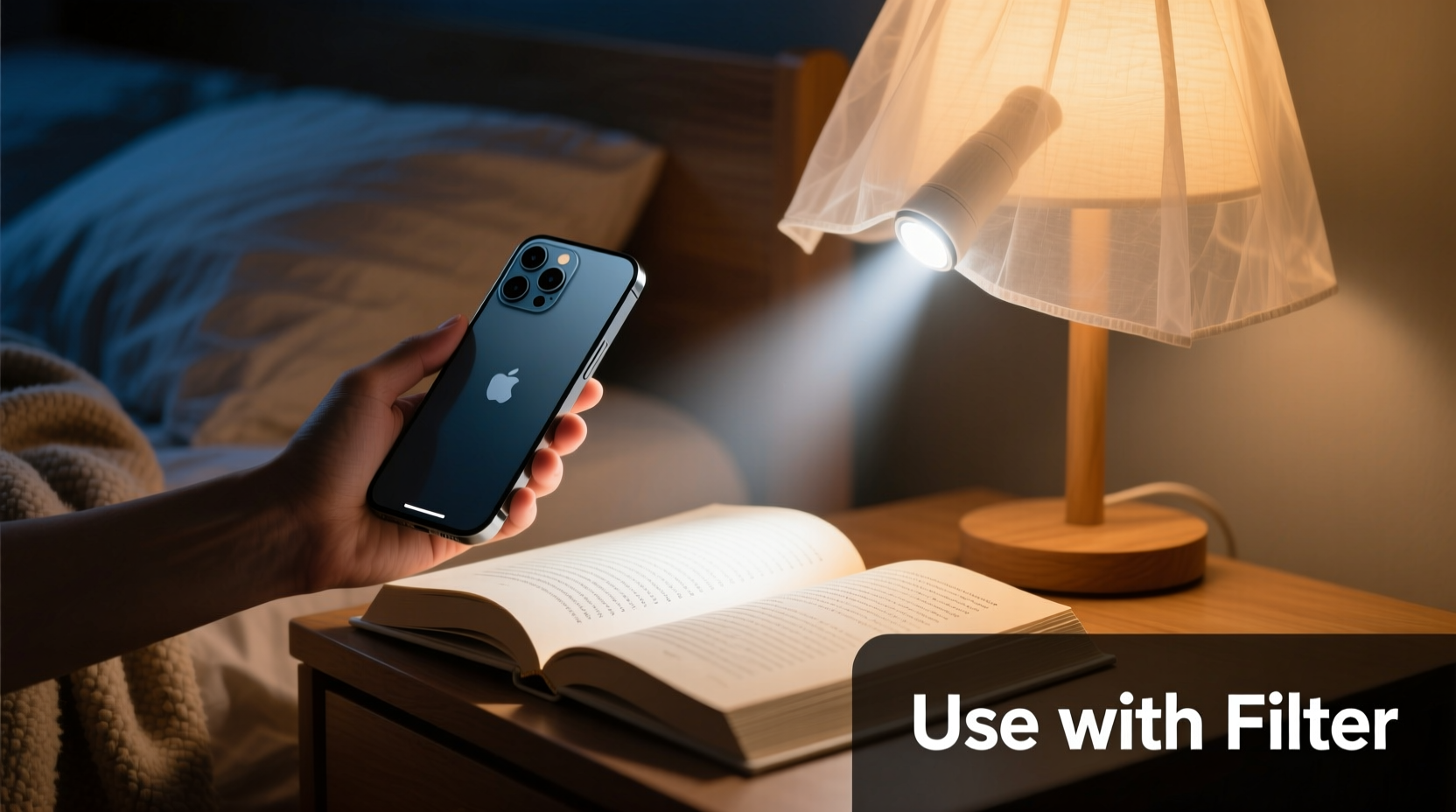
Yes, to some extent. Covering the flash with a translucent material like a white napkin, printer paper, or even a piece of milk jug plastic can diffuse the beam and soften the light. This reduces glare and spreads illumination slightly. Still, this is a temporary workaround, not a long-term solution.
Are warm-colored phone flashes better?
Some newer smartphones allow limited control over flashlight color via third-party apps or developer modes, but most do not. Even if available, warm settings are rare and usually dim. Dedicated warm-light devices remain far superior for comfort and consistency.
Checklist: Safe Nighttime Reading Setup
- ☑ Use a warm-white light source (2700K–3000K)
- ☑ Avoid direct phone flash unless absolutely necessary
- ☑ Position light behind your shoulder or above the reading material
- ☑ Ensure even illumination across the page
- ☑ Limit screen brightness if reading digitally
- ☑ Enable blue light filters on devices used at night
- ☑ Take regular visual breaks during long sessions
- ☑ Replace flickering or overly bright bulbs immediately
Conclusion: Prioritize Comfort and Long-Term Eye Health
While the phone flashlight might seem like a quick fix for reading in the dark, it’s fundamentally unsuited for the task. Its intense, cool, and unfocused beam strains the eyes, disrupts sleep, and creates uncomfortable visual conditions. For those who value both their vision and rest, investing in a proper reading light is a small but impactful decision.
Whether it’s a compact book light, an e-reader with adaptive illumination, or a well-placed bedside lamp, choosing the right tool makes reading not only easier—but also more enjoyable and sustainable over time. Eye strain isn’t just about momentary discomfort; it can accumulate into chronic issues if ignored.
Your nightly reading ritual should be relaxing, not taxing. Make the switch today, and give your eyes the care they deserve.




 浙公网安备
33010002000092号
浙公网安备
33010002000092号 浙B2-20120091-4
Comments
No comments yet. Why don't you start the discussion?