
Stringing up Christmas lights is one of the most joyful parts of holiday decorating. But as homes grow brighter with every passing season, so does the demand on electrical systems. Many people turn to power strips to manage multiple light strings, but doing so without caution can lead to overheating, circuit overloads, or even fires. The short answer is yes—you can use power strips for multiple Christmas light strings—but only if done responsibly and within safety limits.
The key lies in understanding your equipment’s capacity, matching it to your lighting load, and following best practices that prioritize safety over convenience. With millions of households plugging in seasonal displays each year, a small oversight can have serious consequences. This guide breaks down exactly how to use power strips safely, what to look for when buying one, and how to avoid common mistakes that put homes at risk.
Understanding Electrical Load: Watts, Amps, and Voltage
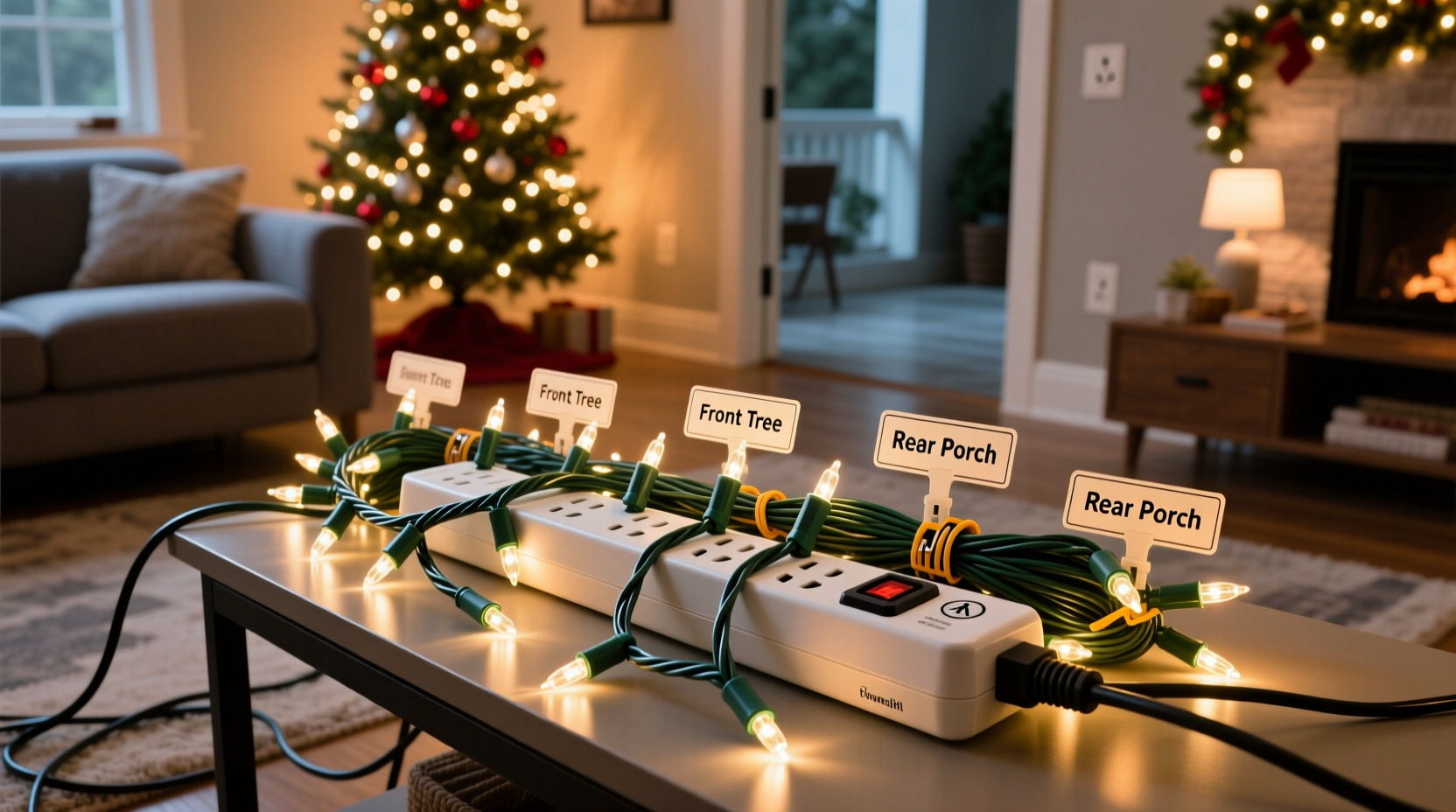
Before connecting anything, it's essential to understand basic electrical terms. Most household outlets in the U.S. operate at 120 volts and are protected by a 15-amp circuit breaker. That means each circuit can handle up to 1,800 watts (calculated as volts × amps: 120 × 15 = 1,800). However, electricians and safety experts recommend using only 80% of a circuit’s capacity for continuous loads—like holiday lights left on for hours. That brings the safe limit down to 1,440 watts per circuit.
Each string of Christmas lights consumes a certain number of watts. Traditional incandescent mini-lights can use 40–50 watts per string, while LED strings typically use only 4–10 watts. If you’re running ten incandescent strings, that’s already 500 watts. Add in icicle lights, inflatables, and other decorations, and it’s easy to exceed safe limits—especially when daisy-chaining multiple devices into a single power strip.
Choosing the Right Power Strip for Holiday Lights
Not all power strips are created equal. Many inexpensive models are designed for low-power electronics like phone chargers or desk lamps—not sustained heavy loads from multiple light strings. Using an under-rated strip can cause it to overheat, melt, or fail entirely.
Look for power strips labeled for “heavy-duty” or “commercial” use. These typically feature:
- Higher joule ratings (600+ for surge protection)
- 15-amp capacity (matching standard home circuits)
- Individual outlet switches for better control
- Thick, durable cords (16-gauge or lower AWG number)
- UL certification (Underwriters Laboratories) indicating safety testing
Avoid power strips with thin cords, flimsy plastic housings, or those marketed solely as “surge protectors” without sufficient amperage ratings. Surge protection is valuable, but it doesn’t make a strip suitable for high-wattage applications if its internal wiring can’t handle the load.
“Using a consumer-grade power strip for outdoor holiday lighting is like putting bicycle tires on a delivery truck—it might roll, but it wasn’t built for that job.” — Mark Reynolds, Licensed Electrician and NFPA Contributor
Safe Practices for Daisy-Chaining Light Strings and Power Strips
One of the most misunderstood aspects of holiday lighting is daisy-chaining—connecting multiple light strings end-to-end. While many manufacturers allow this, there’s usually a hard limit, often between 3 and 7 strings depending on the type and wattage.
For example, if a string of LED lights is rated for 7 watts and allows up to 5 sets to be connected, the total draw would be 35 watts—well within safe range. But connect ten 50-watt incandescent strings? That’s 500 watts on a single run, which exceeds most manufacturer guidelines and risks overheating the first plug in the chain.
Similarly, daisy-chaining multiple power strips together—often called “piggybacking”—is strongly discouraged. Each additional strip increases resistance, generates more heat, and bypasses the built-in safety features of individual units. The National Fire Protection Association (NFPA) explicitly warns against this practice, especially during the holidays when usage is prolonged.
| Light Type | Watts Per String | Max Strings Allowed to Daisy-Chain | Total Safe Wattage |
|---|---|---|---|
| LED Mini Lights | 7 W | 5 | 35 W |
| LED Icicle Lights | 10 W | 4 | 40 W |
| Incandescent Mini Lights | 48 W | 3 | 144 W |
| Incandescent C9 Bulbs | 170 W | 2 | 340 W |
| Inflatable Decorations | 150–300 W | 1 | 300 W |
The table above shows typical values, but always verify with your product packaging. Exceeding these limits—even slightly—can degrade insulation, damage sockets, and create hotspots near plugs and connections.
Step-by-Step Guide to Setting Up Multiple Light Strings Safely
- Calculate Total Load: Add up the wattage of all lights and decorations planned for one circuit. Include everything plugged into outlets on that circuit, not just the ones on the power strip.
- Select a Suitable Power Strip: Choose one rated for at least 15 amps and with individual outlet switches. Ensure it has a visible circuit breaker reset button.
- Limit Daisy-Chaining: Follow manufacturer instructions strictly. Never exceed the recommended number of connected light strings.
- Use Separate Circuits: Plug major displays into different wall outlets that are on separate circuits. Avoid clustering all decorations into one room’s outlets.
- Inspect Cords and Connections: Before plugging in, check for fraying, cracked insulation, or bent prongs. Moisture exposure outdoors can accelerate wear.
- Test Before Leaving Unattended: Run the setup for at least 30 minutes while monitoring for warmth in cords, plugs, or the power strip housing.
- Turn Off When Unattended: Use timers to automatically shut off lights when no one is home or during sleeping hours.
Outdoor Use: Extra Precautions for Weather and Extension Cords
Outdoor lighting introduces additional risks due to weather exposure, ground contact, and longer cord runs. Power strips should never be placed directly on the ground or in standing water. Even if labeled “weather-resistant,” they must be elevated and covered.
When using extension cords, match the gauge to the distance and load. A 16-gauge cord is acceptable for short runs (up to 25 feet) with low-wattage LEDs. For longer distances or higher loads, step up to 14-gauge or 12-gauge cords to reduce voltage drop and overheating risk.
All outdoor connections should be made with GFCI (Ground Fault Circuit Interrupter)-protected outlets. These detect current imbalances—such as those caused by moisture—and cut power instantly to prevent shocks. If your home lacks outdoor GFCIs, use a GFCI-protected extension cord or adapter.
“The combination of water, electricity, and temporary setups creates a perfect storm for accidents. GFCI protection isn’t optional—it’s essential.” — National Electrical Code (NEC) Safety Bulletin, Article 406.4(D)
Mini Case Study: How One Family Prevented a Potential Fire
The Thompson family in Ohio had been decorating their home for years with elaborate light displays. In 2022, they added new LED icicle lights along the roofline and connected them through a $12 power strip bought online. After two nights of operation, they noticed a burning smell near the garage outlet.
Upon inspection, the power strip was warm to the touch, and the casing had begun to warp. They unplugged everything and consulted an electrician, who discovered they were running 1,600 watts across three daisy-chained strips—all on a single 15-amp circuit. The primary strip was only rated for 10 amps and had no thermal cutoff.
After replacing it with a UL-listed, 15-amp commercial strip, redistributing loads across two circuits, and installing timers, their display ran safely for the rest of the season. The incident prompted them to audit all holiday equipment annually—a habit they now recommend to neighbors.
Checklist: Responsible Power Strip Use for Christmas Lights
- ✅ Confirm total wattage of all connected lights is below 80% of circuit capacity
- ✅ Use only UL-certified, heavy-duty power strips rated for 15 amps
- ✅ Avoid daisy-chaining more than manufacturer allows
- ✅ Never plug one power strip into another
- ✅ Elevate and cover outdoor strips to prevent water exposure
- ✅ Use GFCI outlets or adapters for all outdoor connections
- ✅ Install timers to limit runtime and reduce fire risk
- ✅ Inspect cords and connections before each use
- ✅ Replace any damaged or overheated equipment immediately
Frequently Asked Questions
Can I leave Christmas lights plugged into a power strip overnight?
You can—if the setup is safe and includes protective measures. Only do so if you’ve verified the load is within limits, used a quality power strip, and ideally installed a timer or smart plug to limit duration. Never leave homemade or overloaded setups unattended.
Is it safe to use a power strip with an extension cord for outdoor lights?
Yes, but only if both the strip and extension cord are rated for outdoor use. Connect the extension cord to the wall outlet first, then plug the power strip into the cord—not the other way around. This prevents the strip from being exposed to ground-level moisture.
How many LED light strings can I safely connect to one power strip?
It depends on the strip’s rating and the lights’ wattage. A typical 15-amp strip can handle about 1,440 watts continuously. Since most LED strings use 5–10 watts, you could theoretically connect 100–150 strings—if spread across multiple outlets and within daisy-chain limits. In practice, aim for fewer connections and distribute loads across several circuits.
Conclusion: Light Up Responsibly
Christmas lights bring warmth, joy, and tradition to the darkest time of year. But the magic shouldn’t come at the cost of safety. Using power strips for multiple light strings is not only possible—it’s practical—when guided by knowledge and caution. By respecting electrical limits, choosing the right equipment, and avoiding common pitfalls, you can create a dazzling display that’s as safe as it is beautiful.
This holiday season, take an hour to review your setup. Check labels, test connections, and upgrade outdated gear. Small efforts today can prevent emergencies tomorrow. Share what you’ve learned with family and neighbors—because a safer holiday is a brighter one for everyone.




 浙公网安备
33010002000092号
浙公网安备
33010002000092号 浙B2-20120091-4
Comments
No comments yet. Why don't you start the discussion?