
High-efficiency (HE) washing machines have become standard in homes across the U.S. and many other countries due to their water and energy savings. Designed to use less water and spin faster than traditional models, these machines rely on specific formulations of laundry detergent to function properly. Despite clear labeling and warnings, many consumers still reach for regular detergent out of habit, convenience, or cost concerns. The question remains: can you use regular detergent in an HE washer without consequences? The short answer is technically yes — but doing so comes with significant risks to both performance and appliance longevity.
Understanding the differences between regular and HE detergents, the mechanics of high-efficiency washers, and the real-world impact of improper detergent use is essential for maintaining clean clothes and a well-functioning machine.
How HE Washers Work Differently
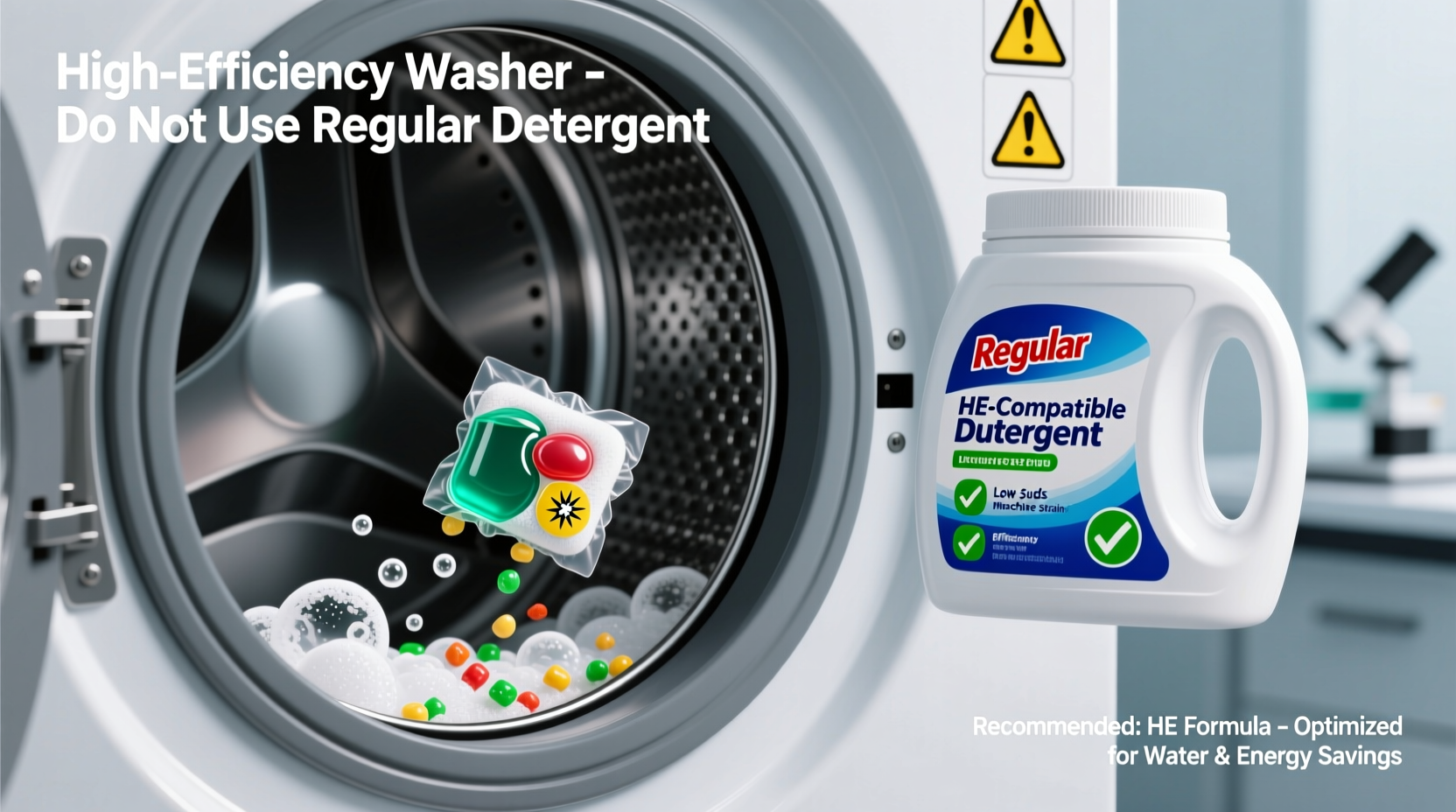
Traditional top-loading washers typically use an agitator and fill completely with water during each cycle. This design allows for generous sudsing, as excess water dilutes detergent residue. In contrast, HE washers—both front-loading and some newer high-efficiency top-loaders—use a tumbling action and only enough water to saturate fabrics. These machines are engineered to be more efficient, using up to 40% less water and 25% less energy per load.
The reduced water volume means that suds must dissipate quickly to allow proper rinsing. When too many suds form, they interfere with the tumbling motion, reduce cleaning effectiveness, and may not rinse out completely. This is where detergent formulation becomes critical.
Regular vs. HE Detergent: What’s the Difference?
The primary difference between regular and HE detergents lies in surfactant concentration and foaming properties. HE detergents are formulated to produce fewer suds while still effectively lifting dirt and oils from fabric. They dissolve rapidly in low-water environments and are optimized for fast-rinse cycles.
Regular detergents, on the other hand, were developed for high-water-volume machines. They generate abundant foam, which helps suspend soil in traditional wash systems. However, this same foaming behavior becomes problematic in HE machines, where excess suds can persist through multiple rinse cycles.
Chemically, HE detergents often contain higher concentrations of enzymes and lower levels of builders like phosphates (where regulated), making them more targeted and efficient in small doses. Using a regular detergent in an HE washer usually requires reducing the amount—but even then, the formulation isn’t designed for low-suds performance.
Risks of Using Regular Detergent in an HE Washer
While one accidental use of regular detergent likely won't destroy your washer, repeated misuse leads to compounding problems. Here are the most common risks:
- Excessive Sudsing: Sustained foam interferes with the drum’s tumbling action, reducing mechanical cleaning power.
- Poor Rinsing: Suds trap dirt and prevent it from being flushed away, leaving clothes dull and stiff.
- Detergent Buildup: Residue accumulates in hoses, pumps, and seals, promoting mold and mildew growth.
- Foul Odors: Trapped moisture and soap scum create a breeding ground for bacteria, leading to persistent musty smells.
- Machine Malfunctions: Sensors may detect overflow conditions, triggering error codes or premature shutdowns.
- Increased Wear and Tear: Pumps and motors work harder to manage suds-laden loads, shortening appliance lifespan.
“Using regular detergent in an HE washer is like putting diesel fuel in a gasoline engine—it might run once, but long-term damage is almost certain.” — Mark Reynolds, Appliance Engineer at Midwest Home Systems
Efficiency and Cleaning Performance Comparison
Beyond mechanical risk, the core purpose of laundry—cleaning—is compromised when using the wrong detergent. A study by the American Cleaning Institute found that regular detergents in HE machines removed 18–27% less soil under controlled conditions compared to HE-specific formulas. Additionally, participants reported grayer whites, stiffer fabrics, and lingering odors after repeated use.
The issue isn’t just about quantity; it's chemistry. HE detergents are designed to activate quickly in cold water and low moisture, which aligns with modern energy-saving habits. Regular detergents often require warm water and longer agitation to fully dissolve and perform, neither of which is standard in most HE cycles.
| Factor | Regular Detergent in HE Washer | HE Detergent in HE Washer |
|---|---|---|
| Suds Production | High – causes rinse issues | Low – optimized for quick dissipation |
| Cleaning Efficiency | Moderate to poor, especially in cold water | High – enhanced enzyme activity |
| Rinse Completion | Often incomplete – residue left behind | Complete within standard cycle |
| Odor Development | More likely due to trapped moisture and soap | Rare when used correctly |
| Appliance Longevity | Reduced – increased strain on components | Maximized with proper maintenance |
Real-World Example: A Costly Mistake
Consider Sarah from Portland, Oregon, who switched to an HE front-loader two years ago. To save money, she continued using her family’s long-time brand of regular liquid detergent, simply halving the recommended dose. At first, everything seemed fine. But within six months, her whites began looking dingy, towels felt rough, and a persistent sour smell developed inside the drum.
She ran multiple cleaning cycles with vinegar and bleach, but the odor returned after a few weeks. Eventually, the washer started displaying “Sud” error codes mid-cycle and would stop spinning. A service technician diagnosed severe detergent buildup in the drain pump and pressure switch, requiring a $180 repair. The technician also noted early signs of bearing wear due to unbalanced loads caused by excessive suds dampening the drum’s motion.
After switching to a certified HE detergent and performing monthly maintenance washes, Sarah noticed immediate improvements. Her clothes came out cleaner, softer, and fresher—and no further error messages appeared.
Step-by-Step Guide: Transitioning Safely to HE Detergent Use
If you've been using regular detergent in your HE washer, it's not too late to make the switch. Follow this timeline to reset your machine and optimize performance:
- Stop using regular detergent immediately. Even “low-suds” claims on non-HE bottles don’t guarantee compatibility.
- Run a cleaning cycle. Use a dedicated washing machine cleaner or a cup of distilled white vinegar in the drum. Select the hottest, longest cycle available (usually “Clean Washer” or “Tub Clean”).
- Wipe down the gasket and dispenser. Front-loaders are prone to mold in the rubber door seal. Remove any visible residue with a cloth dipped in vinegar or a baking soda paste.
- Switch to an HE-certified detergent. Look for the “HE” symbol on packaging—a blue diamond with the letters “HE” inside.
- Use the correct dosage. Most HE loads require only 1–2 tablespoons. Overdosing is a common mistake—even with HE detergents.
- Maintain monthly cleaning cycles. Prevent future buildup by running a hot tub-clean cycle every 30 days.
- Leave the door open between uses. Allow airflow to dry internal components and discourage microbial growth.
Checklist: Using Detergent Correctly in Your HE Washer
- ☑ Confirm your washer is HE-compatible (check model number)
- ☑ Only use detergent labeled with the HE symbol
- ☑ Measure detergent precisely—don’t guess
- ☑ Avoid overloading the drum (reduces cleaning efficiency)
- ☑ Clean the detergent drawer weekly
- ☑ Inspect the door seal monthly for residue or mold
- ☑ Run a maintenance wash at least once a month
- ☑ Store detergent in a cool, dry place to preserve potency
Frequently Asked Questions
Can I use half the amount of regular detergent in my HE washer?
You can reduce the amount, but it won’t solve the fundamental problem: regular detergents are formulated to foam heavily, even in small quantities. Reducing the dose may lessen suds, but it doesn’t eliminate the risk of residue buildup or poor rinsing. For consistent performance and machine safety, always use HE-formulated detergent.
Are all HE detergents more expensive?
Not necessarily. While premium HE brands can be pricier, many store-brand HE detergents offer comparable performance at lower prices. Additionally, because HE detergents are concentrated, you use less per load—often making them more cost-effective over time. Some budget-friendly options include Arm & Hammer Sensitive Skin Free & Clear HE, Great Value 2X Concentrated HE, and Tide Simply Clean & Fresh HE.
What happens if I accidentally use regular detergent once?
A single incident likely won’t cause permanent damage. However, you should run an extra rinse cycle immediately to flush out excess suds. Monitor the next few loads for residue or odor. If you notice persistent suds or drainage issues, follow the cleaning steps outlined above to restore optimal function.
Expert Recommendations and Final Thoughts
Laundry experts consistently emphasize compatibility between machine type and detergent chemistry. According to Dr. Linda Kim, a textile chemist at the University of California, Davis, “The evolution of HE technology demands equally advanced detergents. We’re no longer just cleaning clothes—we’re optimizing resource use, fabric care, and environmental impact. Using the wrong product undermines all three.”
Manufacturers like Whirlpool, LG, and Samsung explicitly warn against using non-HE detergents in their user manuals. Doing so may not only shorten the life of your washer but could also void parts of the warranty related to pump, motor, or sensor damage.
Moreover, modern HE detergents have improved significantly in recent years. Many now include odor-control agents, color-safe brighteners, and hypoallergenic formulas suitable for sensitive skin. There’s little functional reason to revert to older formulations unless driven by misinformation or habit.
Take Action Today for Cleaner Clothes and a Healthier Machine
Your washing machine is a major investment—one that should last 10 to 15 years with proper care. Using the right detergent isn’t just a recommendation; it’s a necessity for protecting both your appliance and your wardrobe. Switching to HE detergent takes seconds, costs no more in the long run, and prevents avoidable repairs and replacements.
Start today: check your current detergent bottle, run a cleaning cycle if needed, and commit to using only HE-approved products moving forward. Small changes in routine lead to big gains in efficiency, cleanliness, and longevity.




 浙公网安备
33010002000092号
浙公网安备
33010002000092号 浙B2-20120091-4
Comments
No comments yet. Why don't you start the discussion?