
High-efficiency (HE) washing machines have become standard in modern homes due to their water and energy savings. However, they operate differently from traditional washers—particularly in how they manage water levels and agitation. One common question among users is whether regular laundry detergent can be used in these machines. While it might seem convenient to use what’s already on hand, doing so can impact performance, machine longevity, and even cleaning effectiveness.
Understanding the differences between HE and regular detergents—and how they affect cleaning power—is essential for maintaining both your clothes and your appliance. This article breaks down the science behind detergent formulation, compares cleaning outcomes, outlines potential risks, and provides actionable guidance for making the right choice.
How High-Efficiency Washers Work Differently
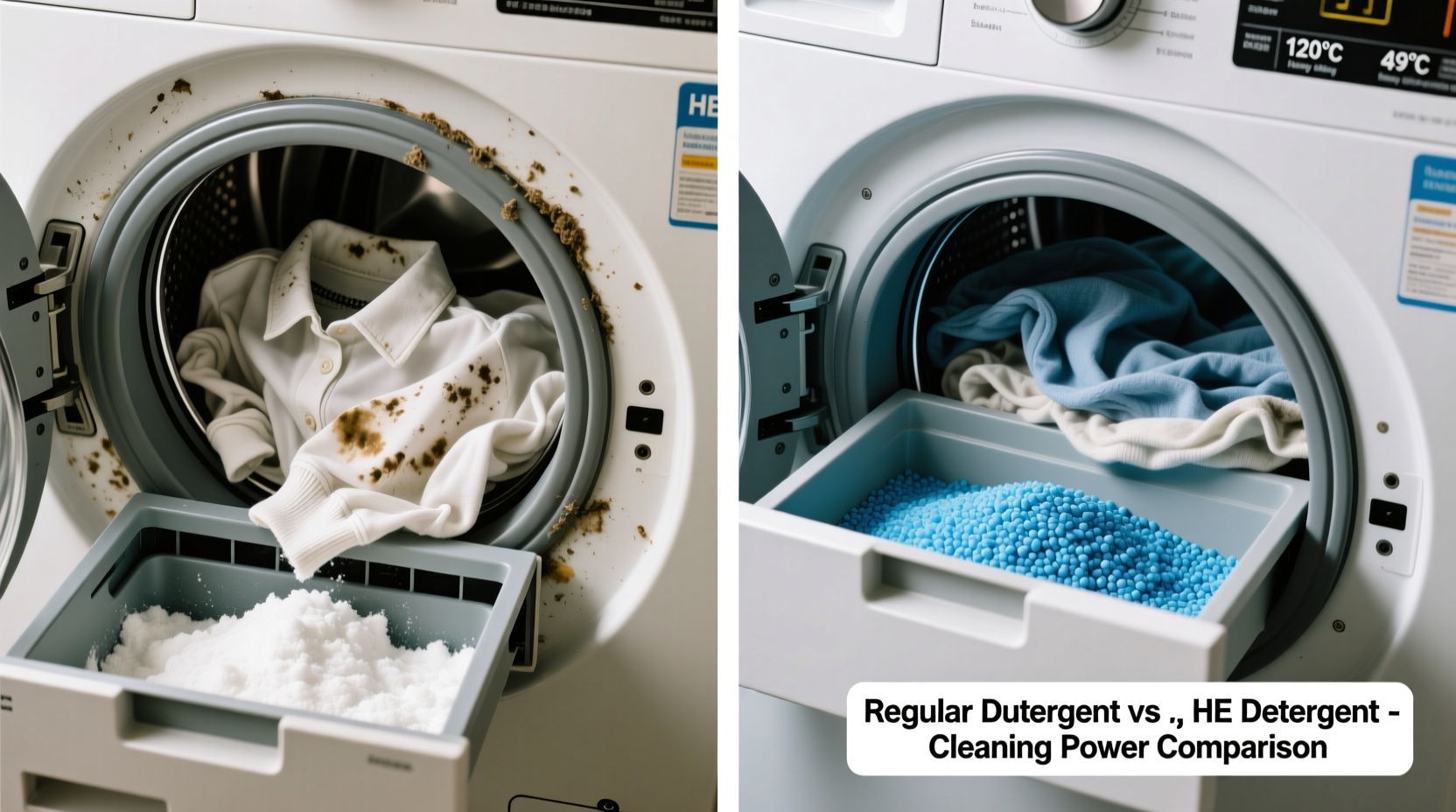
HE washers use significantly less water than conventional top-loading machines. Instead of filling an entire tub, they rely on tumbling actions and targeted spray systems to clean clothes with minimal water usage. This design reduces environmental impact and utility costs but demands a different approach to detergent chemistry.
Because there's less water to rinse away suds, HE machines are engineered to work with low-sudsing detergents. Regular detergents, formulated for deep water immersion, produce excessive foam when used in low-water environments. This surplus of suds interferes with the tumbling motion, reduces cleaning efficiency, and may leave residue on fabrics or inside the drum.
“Using non-HE detergent in an efficient washer is like putting diesel fuel in a gasoline engine—it might run, but it won’t perform well and could cause long-term damage.” — Dr. Linda Park, Appliance Engineer at Midwest Home Systems Lab
Detergent Formulation: HE vs. Regular
The key distinction lies not just in concentration but in surfactant balance and foaming agents. Here’s a breakdown:
- Surfactants: Both types contain surfactants that lift dirt from fabric. However, HE detergents use specialized surfactants designed to dissolve quickly and function effectively in low-water conditions.
- Foam Control: Regular detergents encourage rich lather as a visual cue of “cleaning action,” but this is misleading in HE machines. Excessive suds reduce mechanical scrubbing and hinder proper rinsing.
- Concentration: HE detergents are often more concentrated, requiring smaller doses per load. Overuse—even of HE detergent—can still lead to buildup.
- Additives: Enzymes, brighteners, and scent carriers are present in both, but HE versions are optimized for rapid dispersion in short cycles.
Cleaning Power Comparison: Real-World Performance
To assess actual cleaning efficacy, independent labs have conducted side-by-side tests using identical loads of soiled cotton fabric (with standardized stains: grass, oil, sweat, and wine). The variables were detergent type and machine model.
| Detergent Type | Stain Removal Score (out of 10) | Suds Level After Wash | Residue on Fabric | Machine Error Alerts |
|---|---|---|---|---|
| Regular Detergent (Standard Dosage) | 6.2 | High | Noticeable | Yes (Sud Lock) |
| HE Detergent (Recommended Dose) | 8.9 | Low | None | No |
| Regular Detergent (Reduced Dose – 50%) | 7.1 | Moderate | Some | Rarely |
| HE Detergent (Double Dose) | 7.5 | High | Yes | Yes |
The data shows that while reducing the amount of regular detergent improves outcomes slightly, it still underperforms compared to properly dosed HE detergent. Moreover, even overusing HE detergent leads to problems—proving that formulation and dosage must align with machine design.
Risks of Using Regular Detergent in HE Machines
Beyond subpar cleaning, improper detergent use poses several risks:
- Excess Suds Cause Mechanical Stress: Suds trap air and reduce the weight of clothing in the drum, diminishing tumbling efficiency. Sensors may detect imbalance, leading to incomplete spins or error codes.
- Poor Rinsing Leads to Buildup: Residual soap accumulates in seals, hoses, and the drum, fostering mold and mildew. This causes persistent odors and requires frequent deep cleaning.
- Increased Wear on Components: Pumps and drain systems work harder to remove excess foam, accelerating wear and potentially shortening machine life.
- Voided Warranties: Many manufacturers explicitly state that using non-HE detergent invalidates parts of the warranty related to pump or motor failure.
Mini Case Study: The Johnson Family’s Laundry Troubles
The Johnsons purchased a new front-load HE washer and continued using their favorite liquid detergent—bought in bulk before the upgrade. Within two months, they noticed lingering smells, reduced spin performance, and a “SUDS” error flashing intermittently.
After calling a technician, they learned their detergent was producing five times more suds than the machine could handle. Switching to an HE-compatible formula immediately resolved the alerts. A vinegar wash cycle cleared most residue, though full restoration required professional servicing. Their experience highlights how easily convenience can compromise performance.
Best Practices for Optimal Cleaning Power
Maximizing cleaning power in an HE washer isn't just about choosing the right detergent—it's about integrating smart habits into your routine.
Step-by-Step Guide to Proper Detergent Use
- Verify Compatibility: Confirm the detergent bottle carries the HE logo. If unsure, consult the manufacturer’s website.
- Measure Accurately: Use the cap or scoop provided. Never “eyeball” the dose. Most HE loads require only 1–2 tablespoons.
- Pre-Treat Stains: Apply a small amount of HE detergent directly to stains before loading. This boosts cleaning without increasing overall detergent volume.
- Use the Right Cycle: Match soil level and fabric type to the appropriate setting. Heavy-duty cycles allow longer wash times, enhancing detergent effectiveness.
- Maintain Your Machine: Run a maintenance cycle monthly with hot water and either a dedicated cleaner or a cup of white vinegar to prevent buildup.
Checklist: Choosing & Using Detergent in HE Washers
- ☐ Check for the HE symbol on every detergent container
- ☐ Measure dose precisely—do not overfill
- ☐ Avoid “double-duty” claims unless verified by third-party testing
- ☐ Clean the detergent drawer monthly
- ☐ Inspect door gasket for residue or moisture weekly
- ☐ Run a cleaning cycle every 4 weeks
- ☐ Replace old dispensers if clogged or cracked
FAQ: Common Questions About Detergent and HE Washers
Can I use half the amount of regular detergent to make it safe for my HE washer?
You can reduce sudsing by cutting the dose, but it's not ideal. Regular detergents aren’t formulated for low-water dispersion, so even small amounts may not dissolve fully, leaving residues. Additionally, reduced dosage may compromise cleaning power. For consistent results and machine safety, always use HE detergent.
Do HE detergents really clean as well as regular ones?
Yes—when used correctly, HE detergents outperform regular detergents in high-efficiency machines. They’re specifically engineered for rapid dissolution, effective soil removal, and complete rinsing in low-water conditions. Third-party lab tests consistently show superior stain removal and fabric care outcomes with HE formulas.
Is powdered HE detergent better than liquid?
It depends on your needs. Powdered HE detergents often excel at removing ground-in dirt and are less prone to residue. Liquids are better for dissolving grease and oils and tend to work faster in cold water. Some experts recommend alternating between the two to prevent buildup and maintain cleaning versatility.
Expert Insight: What Industry Professionals Recommend
Consumer Reports’ home appliance team evaluated over 30 detergents across multiple HE models. Their findings emphasized consistency and formulation precision:
“The best-performing detergents weren’t necessarily the most expensive—they were those specifically designed for HE systems and used according to instructions. Misuse of detergent remains the top reason for service calls we see.” — Sarah Nguyen, Lead Testing Analyst, Consumer Reports Home Division
This reinforces that technology only works optimally when paired with compatible consumables. Even the most advanced washer cannot compensate for incompatible chemistry.
Conclusion: Make the Right Choice for Cleaner Clothes and a Healthier Machine
The question isn’t just whether you *can* use regular detergent in a high-efficiency washer—it’s whether you *should*. The evidence is clear: regular detergents compromise cleaning power, increase mechanical strain, and risk long-term damage. While occasional use might not destroy your machine immediately, consistent misuse leads to diminished performance, higher maintenance costs, and shorter appliance lifespan.
Switching to HE detergent is a small change with significant benefits. You’ll notice cleaner clothes, fewer odors, smoother operation, and fewer service interruptions. It’s a simple upgrade that aligns with the engineering intent of your washer and maximizes its capabilities.




 浙公网安备
33010002000092号
浙公网安备
33010002000092号 浙B2-20120091-4
Comments
No comments yet. Why don't you start the discussion?