
Retinol and hyaluronic acid are two of the most celebrated ingredients in modern skincare. One is a powerful cell-communicating ingredient that accelerates skin renewal; the other is a hydration hero capable of holding up to 1000 times its weight in water. When used together, they can transform dull, aging, or dehydrated skin into a plump, smooth, and radiant complexion. Yet many people hesitate—can you actually use retinol with hyaluronic acid? And if so, does the order matter? The answer isn’t just yes—it’s strategic.
Combining these two ingredients correctly can enhance results while minimizing irritation, a common side effect of retinol. Understanding their chemistry, compatibility, and optimal layering sequence is essential for maximizing benefits without compromising your skin barrier.
Understanding Retinol and Hyaluronic Acid
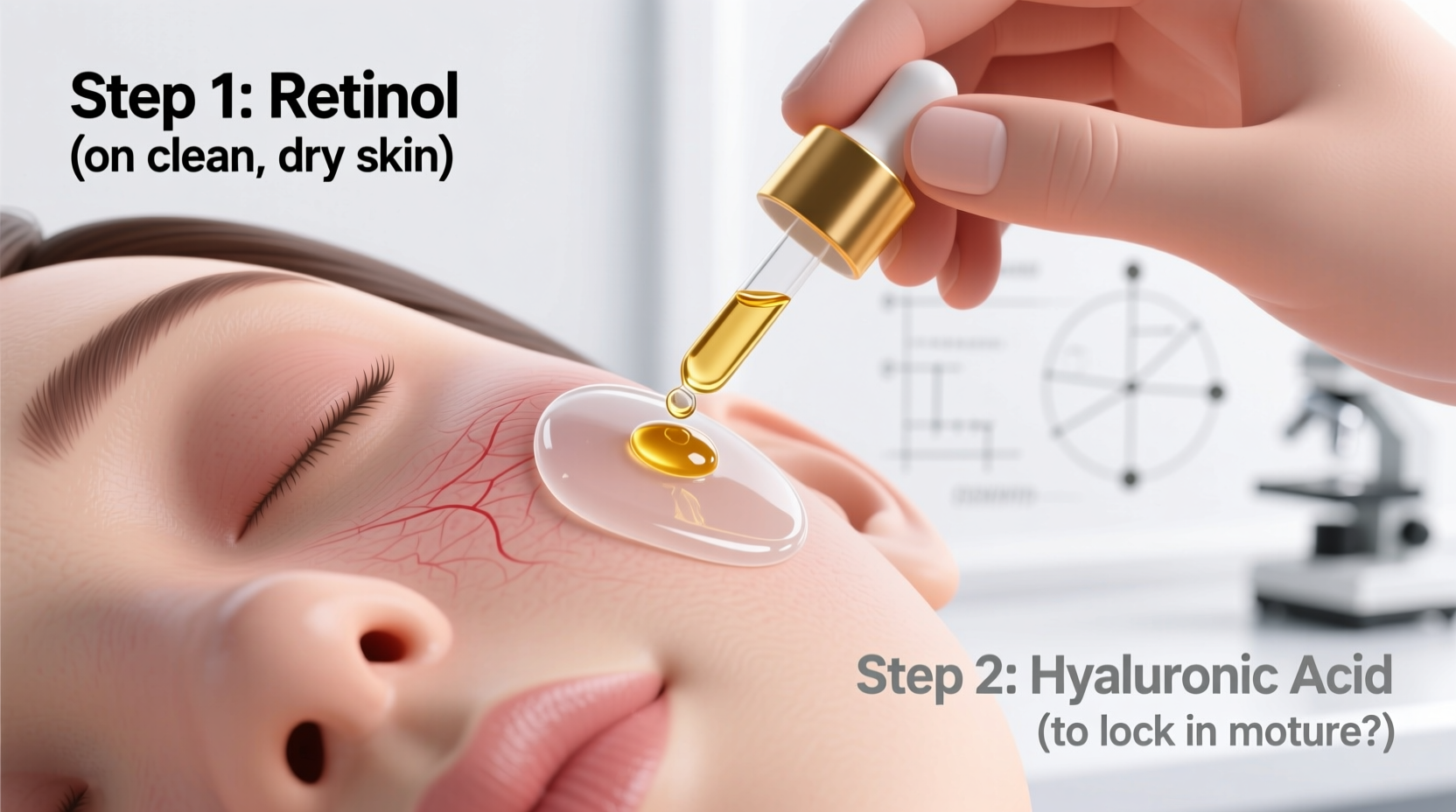
Before diving into application techniques, it's important to understand what each ingredient does and how they interact with the skin.
Retinol is a derivative of vitamin A and one of the most researched anti-aging compounds available over the counter. It works by increasing cellular turnover, stimulating collagen production, and unclogging pores. Over time, consistent use leads to reduced fine lines, improved texture, and a more even tone. However, retinol can be irritating—especially when first introduced—causing dryness, redness, and peeling.
Hyaluronic acid (HA), on the other hand, is a humectant naturally found in the skin. It draws moisture from the environment and binds it to the skin, instantly boosting hydration and volume. Unlike retinol, HA is gentle and suitable for all skin types, including sensitive and acne-prone skin. It doesn't exfoliate or alter cell behavior but supports the skin’s moisture barrier, which helps reduce transepidermal water loss.
Because their mechanisms are complementary rather than conflicting, using retinol with hyaluronic acid is not only safe but often recommended by dermatologists to buffer retinol’s drying effects.
“Pairing retinol with a hydrating agent like hyaluronic acid can significantly improve tolerance and adherence to retinoid therapy.” — Dr. Lindsey Zubritsky, Board-Certified Dermatologist
The Science Behind Combining Retinol and Hyaluronic Acid
The synergy between retinol and hyaluronic acid lies in their functional balance: retinol drives change, while hyaluronic acid provides support.
When retinol increases cell turnover, it temporarily weakens the skin’s protective barrier. This can lead to increased sensitivity and moisture loss. Hyaluronic acid counters this by reinforcing hydration, helping the skin maintain resilience during the adjustment phase. Studies have shown that well-hydrated skin tolerates active ingredients better and recovers faster from irritation.
A 2020 clinical review published in the Journal of Cosmetic Dermatology highlighted that incorporating humectants like HA into retinol regimens improves patient compliance due to reduced discomfort. Furthermore, hydrated skin allows for smoother product absorption, meaning retinol can penetrate more evenly and work more effectively.
There is no chemical incompatibility between retinol and hyaluronic acid. They do not degrade each other or neutralize their effects. In fact, many high-performance serums and moisturizers already combine both ingredients to deliver anti-aging and hydrating benefits in a single formula.
What Order Should You Apply Them?
Order matters in skincare, especially when layering actives and hydrators. The general rule is to apply products from thinnest to thickest consistency, but ingredient compatibility and function also play a role.
For retinol and hyaluronic acid, the ideal sequence depends on your skin type and the formulations you're using. However, a universally effective approach follows this logic:
- Cleanse
- Tone (if used)
- Apply hyaluronic acid to damp skin
- Apply retinol
- Moisturize
Applying hyaluronic acid before retinol serves two purposes: it preps the skin with hydration, and it creates a cushioning layer that may reduce direct contact irritation from retinol. Because HA works best on damp skin, spritzing your face with water or toner before application enhances its moisture-binding capacity.
After applying hyaluronic acid, wait about 30–60 seconds for it to absorb slightly before applying retinol. This prevents pilling and ensures even distribution. Then follow with a nourishing moisturizer to seal everything in—this step, known as “moisturizer occlusion,” helps prevent water loss and further soothes potential irritation.
Alternative Approach: Using a Combined Product
If you prefer simplicity, consider using a serum or moisturizer that contains both retinol and hyaluronic acid. These formulas are carefully balanced to deliver both ingredients without pH conflicts or destabilization. Look for encapsulated retinol paired with multiple molecular weights of HA for sustained hydration and controlled release.
Even with combined products, layering still applies. If your routine includes additional HA or retinol, stick to the same principle: hydrate first, then treat.
Step-by-Step Evening Routine Guide
Here’s a practical, dermatologist-approved routine for safely combining retinol and hyaluronic acid:
- Cleanse: Use a gentle, non-stripping cleanser to remove makeup, dirt, and oil without disrupting the skin barrier.
- Hydrate the Skin Surface: Lightly mist your face with a hydrating toner or water. Do not pat dry—leave skin slightly damp.
- Apply Hyaluronic Acid Serum: Dispense 2–3 drops and press into face and neck. Allow 30–60 seconds to absorb.
- Apply Retinol: Use a pea-sized amount and gently spread across forehead, cheeks, nose, and chin. Avoid the eye area unless the product is specifically formulated for it.
- Moisturize: Follow with a rich, fragrance-free moisturizer to lock in hydration and protect the skin overnight.
This sequence maximizes hydration while minimizing irritation. For beginners, limit retinol use to 2–3 nights per week and gradually increase frequency as your skin builds tolerance.
Do’s and Don’ts When Layering Retinol and Hyaluronic Acid
| Do’s | Don’ts |
|---|---|
| Apply hyaluronic acid to damp skin for maximum hydration | Apply hyaluronic acid on completely dry skin—it may draw moisture from deeper layers |
| Use a pea-sized amount of retinol to avoid over-application | Layer retinol over irritated or compromised skin |
| Follow retinol with a moisturizer to reduce dryness | Mix retinol with vitamin C or benzoyl peroxide in the same routine—risk of irritation |
| Start slowly: 2–3 times per week, then build up | Skip sunscreen the next morning—retinol increases UV sensitivity |
| Store retinol in a cool, dark place to preserve potency | Use expired or discolored retinol products—they may be degraded and ineffective |
Real-World Example: How Sarah Balanced Acne and Dryness
Sarah, a 32-year-old office worker with combination skin, struggled with post-acne marks and seasonal dryness. She started using retinol to improve texture but experienced flaking around her cheeks and jawline within days. After consulting a skincare specialist, she adjusted her routine to include hyaluronic acid before retinol.
She began spritzing her face with rosewater after cleansing, applied a hyaluronic acid serum, waited a minute, then applied a low-concentration retinol (0.25%). She finished with a ceramide-rich moisturizer. Within three weeks, her skin adapted—no more peeling, and her acne scars began fading. Her skin felt bouncier and looked more even-toned.
“I thought I had to choose between clear skin and hydrated skin,” Sarah said. “But layering hyaluronic acid first made all the difference. Now I use this combo five nights a week, and my skin has never been better.”
Frequently Asked Questions
Can I use hyaluronic acid in the morning and retinol at night?
Absolutely. In fact, this is ideal. Hyaluronic acid works well under daytime moisturizers and makeup, providing lightweight hydration. Retinol should be reserved for nighttime due to its instability in sunlight and increased photosensitivity.
Will hyaluronic acid make retinol less effective?
No. There is no evidence that hyaluronic acid interferes with retinol’s efficacy. On the contrary, well-hydrated skin may respond better to retinol because it supports a healthier barrier and smoother cell turnover.
Can I use a hyaluronic acid moisturizer instead of a serum?
Yes, but keep in mind that moisturizers are thicker and may not deliver HA as deeply as a serum. For best results, use a hyaluronic acid serum on damp skin first, then follow with a moisturizer—whether it contains HA or not.
Checklist: Safely Combine Retinol and Hyaluronic Acid
- ✅ Patch test new products before full-face application
- ✅ Cleanse and lightly dampen skin before applying HA
- ✅ Apply hyaluronic acid first, let it absorb for 30–60 seconds
- ✅ Use a pea-sized amount of retinol and apply evenly
- ✅ Seal with a nourishing moisturizer
- ✅ Limit initial use to 2–3 nights per week
- ✅ Always wear broad-spectrum SPF 30+ the next morning
- ✅ Store retinol away from light and heat
Final Thoughts: Maximize Results with Smart Layering
Using retinol with hyaluronic acid isn’t just safe—it’s a smart strategy for achieving glowing, youthful skin. By leveraging the exfoliating and regenerative power of retinol alongside the intense hydration of hyaluronic acid, you create a balanced regimen that addresses multiple concerns at once.
The key is timing and technique. Applying hyaluronic acid first sets the stage for gentler retinol integration, reducing discomfort and improving long-term adherence. Whether you’re targeting signs of aging, uneven texture, or dehydration, this duo offers a proven path to visible improvement.




 浙公网安备
33010002000092号
浙公网安备
33010002000092号 浙B2-20120091-4
Comments
No comments yet. Why don't you start the discussion?