
Retinol and vitamin C are two of the most celebrated ingredients in modern skincare. One is renowned for its ability to accelerate cell turnover and reduce signs of aging; the other, a potent antioxidant that brightens skin and defends against environmental damage. But when it comes to combining them, confusion reigns. Can you use retinol with vitamin C serum without triggering redness, dryness, or sensitivity? The answer isn’t a simple yes or no—it depends on how you layer them, your skin type, and the formulations you choose.
This comprehensive guide breaks down the science, addresses common misconceptions, and delivers a clear, step-by-step strategy for incorporating both actives into your routine—safely and effectively.
The Science Behind Retinol and Vitamin C
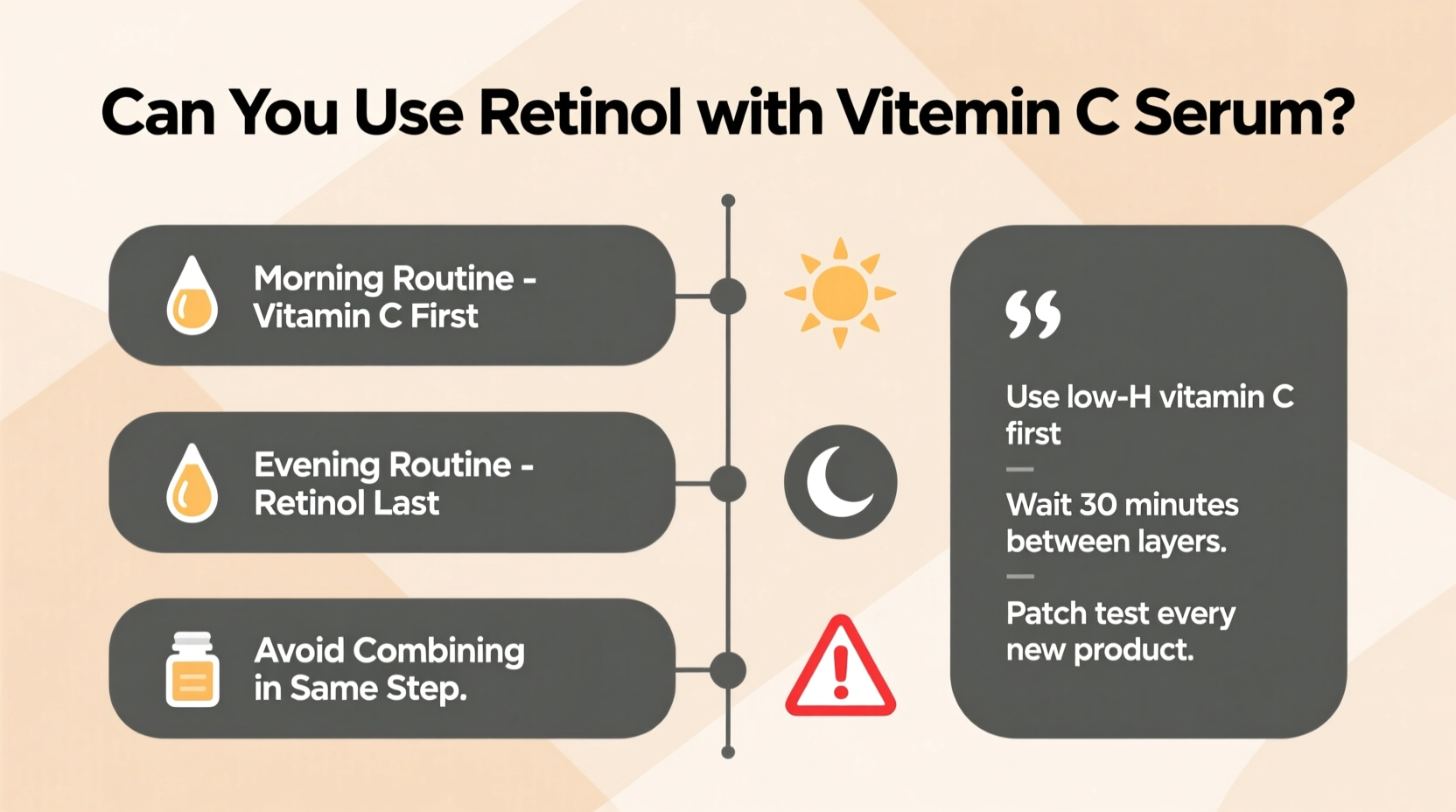
Understanding how each ingredient works is essential before attempting to combine them.
Retinol, a derivative of vitamin A, functions by binding to retinoic acid receptors in the skin. It increases cellular turnover, stimulates collagen production, and helps unclog pores. Over time, consistent use can improve texture, minimize fine lines, and fade hyperpigmentation. However, retinol is notoriously irritating—especially during the initial adjustment period known as “retinization.”
Vitamin C, specifically L-ascorbic acid, is a water-soluble antioxidant. It neutralizes free radicals from UV exposure and pollution, inhibits melanin production (reducing dark spots), and supports collagen synthesis. Unlike retinol, vitamin C works best at a low pH (typically between 3.0 and 3.5) to remain stable and effective.
The primary concern when combining the two lies in their differing pH requirements and potential for cumulative irritation. Retinol performs optimally in a more neutral environment, while vitamin C needs acidity. When layered incorrectly, they may destabilize each other or overwhelm the skin barrier.
“Using retinol and vitamin C together isn't inherently dangerous, but timing and formulation matter immensely. Many patients experience unnecessary irritation simply because they apply both at the same time.” — Dr. Lena Park, Board-Certified Dermatologist
Debunking the Myth: Are Retinol and Vitamin C Incompatible?
A widespread myth claims that using retinol and vitamin C together cancels out their benefits or causes chemical burns. This stems from outdated assumptions about pH interference. While early research suggested acidic environments could degrade retinoids, real-world evidence shows that short-term exposure—even with slight pH shifts—doesn’t render retinol inactive.
Modern formulations have also evolved. Encapsulated retinol, time-release technologies, and buffered vitamin C derivatives (like magnesium ascorbyl phosphate or sodium ascorbyl phosphate) are less pH-dependent and gentler on the skin. These advances make strategic pairing not only possible but potentially synergistic.
That said, applying high-strength L-ascorbic acid immediately followed by pure retinol on sensitive skin can lead to stinging, peeling, or compromised barrier function. The risk isn’t chemical incompatibility—it’s over-exfoliation and irritation.
Best Practices for Layering Retinol and Vitamin C
You don’t have to choose one active over the other. With proper technique, you can harness the full power of both. Here’s how to do it right.
Step-by-Step Guide to Safe Layering
- Determine your skin’s sensitivity level. Sensitive or reactive skin types should proceed cautiously. Start with lower concentrations and alternate days.
- Use vitamin C in the morning. Its antioxidant properties provide daytime protection against UV-induced free radicals. Apply after cleansing and toning, before moisturizer and sunscreen.
- Reserve retinol for nighttime. Sunlight degrades retinol, and it increases photosensitivity. Night application minimizes risk and aligns with natural skin repair cycles.
- Wait between layers. Allow 1–2 minutes between applying vitamin C and moisturizer, and again between retinol and the next product. This prevents pilling and reduces irritation.
- Buffer retinol if needed. Apply a light moisturizer before retinol to dilute its strength—a technique known as “sandwiching” that helps sensitive users build tolerance.
- Hydrate and protect the barrier. Use ceramides, hyaluronic acid, and non-comedogenic oils to maintain skin resilience.
Alternative Strategy: Alternate Days
If your skin struggles with even spaced-out applications, consider alternating days:
- Day 1: Morning – Vitamin C | Night – Retinol
- Day 2: Morning – Vitamin C | Night – No retinol (use soothing serum instead)
- Day 3: Repeat Day 1
This approach gives your skin recovery time while still benefiting from both ingredients several times per week.
Choosing the Right Formulations Matters
Not all retinol or vitamin C products are created equal. Selecting well-formulated, compatible versions significantly reduces the risk of adverse reactions.
| Factor | Vitamin C Serum Tips | Retinol Product Tips |
|---|---|---|
| pH Level | Look for pH between 3.0–3.5 for L-ascorbic acid. Avoid mixing directly with alkaline cleansers. | Opt for stabilized, encapsulated, or gel-based formulas with neutral pH. |
| Concentration | Beginners: 10% L-ascorbic acid. Advanced: up to 20%. Higher isn’t always better. | Start with 0.25%–0.3% retinol. Increase gradually to 1% max for most home users. |
| Derivative Type | Sensitive skin? Try sodium ascorbyl phosphate or ascorbyl glucoside—gentler, stable options. | Consider bakuchiol or hydroxypinacolone retinoate for milder alternatives. |
| Supportive Ingredients | Vitamin E, ferulic acid boost stability and efficacy. Avoid added alcohol or fragrance. | Products with niacinamide, squalane, or peptides help counteract dryness. |
Real-World Example: Sarah’s Journey to Radiant Skin
Sarah, a 34-year-old marketing executive, struggled with dullness, post-acne marks, and early fine lines. She started using a 15% vitamin C serum every morning and introduced 0.3% retinol three nights a week. Within a week, she experienced tightness, flaking, and mild redness around her nose and cheeks.
After consulting a dermatology nurse, she adjusted her routine: she began buffering retinol with a ceramide-rich moisturizer and reduced frequency to twice weekly. She also switched to a vitamin C derivative formula on retinol nights. Within four weeks, her skin adapted. After three months, her complexion was visibly brighter, smoother, and more even-toned—with no persistent irritation.
Sarah’s case illustrates that success isn’t just about which products you use, but how you integrate them.
Do’s and Don’ts of Combining Actives
| Do’s | Don’ts |
|---|---|
| • Use vitamin C in the AM for antioxidant defense | • Don’t apply both actives simultaneously in high concentrations |
| • Apply retinol at night, always followed by moisturizer and SPF the next day | • Don’t skip sunscreen—both ingredients increase sun sensitivity |
| • Introduce one active at a time | • Don’t use with other exfoliants (like glycolic or salicylic acid) daily |
| • Choose stabilized, well-packaged formulas | • Don’t store vitamin C in clear bottles exposed to light |
| • Listen to your skin—if it stings or peels, scale back | • Don’t push through persistent irritation; it damages the barrier |
Frequently Asked Questions
Can I apply vitamin C and retinol in the same routine if I wait a few minutes?
Yes, but not ideally at the same time of day. While waiting 1–2 minutes between layers helps, using them in separate routines (vitamin C in AM, retinol in PM) is safer and more effective. Simultaneous use increases the risk of pH disruption and irritation, especially with potent formulas.
Does vitamin C make retinol less effective?
There’s minimal evidence that topical vitamin C significantly degrades retinol under normal use conditions. Any temporary pH change resolves quickly. However, to maximize stability and minimize irritation, it's best to separate their application by time of day rather than rely on buffering within the same routine.
I have sensitive skin. Can I still use both ingredients?
Absolutely—but proceed slowly. Begin with a gentle vitamin C derivative (like magnesium ascorbyl phosphate) every other morning. For retinol, start with a low concentration once or twice a week, using the sandwich method (moisturizer before and after). Focus on strengthening your skin barrier with hydrating ingredients before increasing intensity.
Checklist: How to Safely Combine Retinol and Vitamin C
- ✅ Assess your skin type and current routine
- ✅ Choose stable, appropriately formulated products
- ✅ Use vitamin C in the morning routine
- ✅ Apply retinol only at night, starting 1–2 times per week
- ✅ Always follow retinol with moisturizer
- ✅ Wear broad-spectrum SPF 30+ daily (non-negotiable)
- ✅ Monitor for signs of irritation: redness, burning, flaking
- ✅ Adjust frequency or buffer if sensitivity occurs
- ✅ Allow 4–6 weeks for skin adaptation
- ✅ Re-evaluate progress monthly and adjust as needed
Final Thoughts: Harmony Over Hustle
The goal of skincare isn’t to load your face with every active available—it’s to achieve healthy, resilient skin through intelligent, sustainable practices. Retinol and vitamin C are powerhouse ingredients, but their value multiplies when used wisely, not aggressively.
By respecting your skin’s limits, choosing quality formulations, and separating these ingredients across your morning and evening routines, you can enjoy the anti-aging, brightening, and protective benefits of both—without the burnout.




 浙公网安备
33010002000092号
浙公网安备
33010002000092号 浙B2-20120091-4
Comments
No comments yet. Why don't you start the discussion?