
When choosing a mirrorless camera system, technical specs like autofocus speed and resolution often dominate the conversation. But for many photographers—especially portrait, wedding, and travel shooters—color science is just as critical. It’s the invisible hand that shapes how your images feel: warm or neutral, vibrant or natural, punchy or subdued. Two of the most trusted names in photography, Canon and Nikon, have long cultivated distinct color profiles. With both brands now fully committed to their mirrorless lines—the Canon EOS R series and the Nikon Z series—the question remains: which delivers better color science?
This isn’t about megapixels or frame rates. It’s about the emotional resonance of an image straight out of the camera. Do Canon’s reds pop with cinematic warmth? Are Nikon’s greens more natural in landscape scenes? And perhaps most importantly, which brand requires less post-processing to achieve professional results?
The Meaning of Color Science in Photography
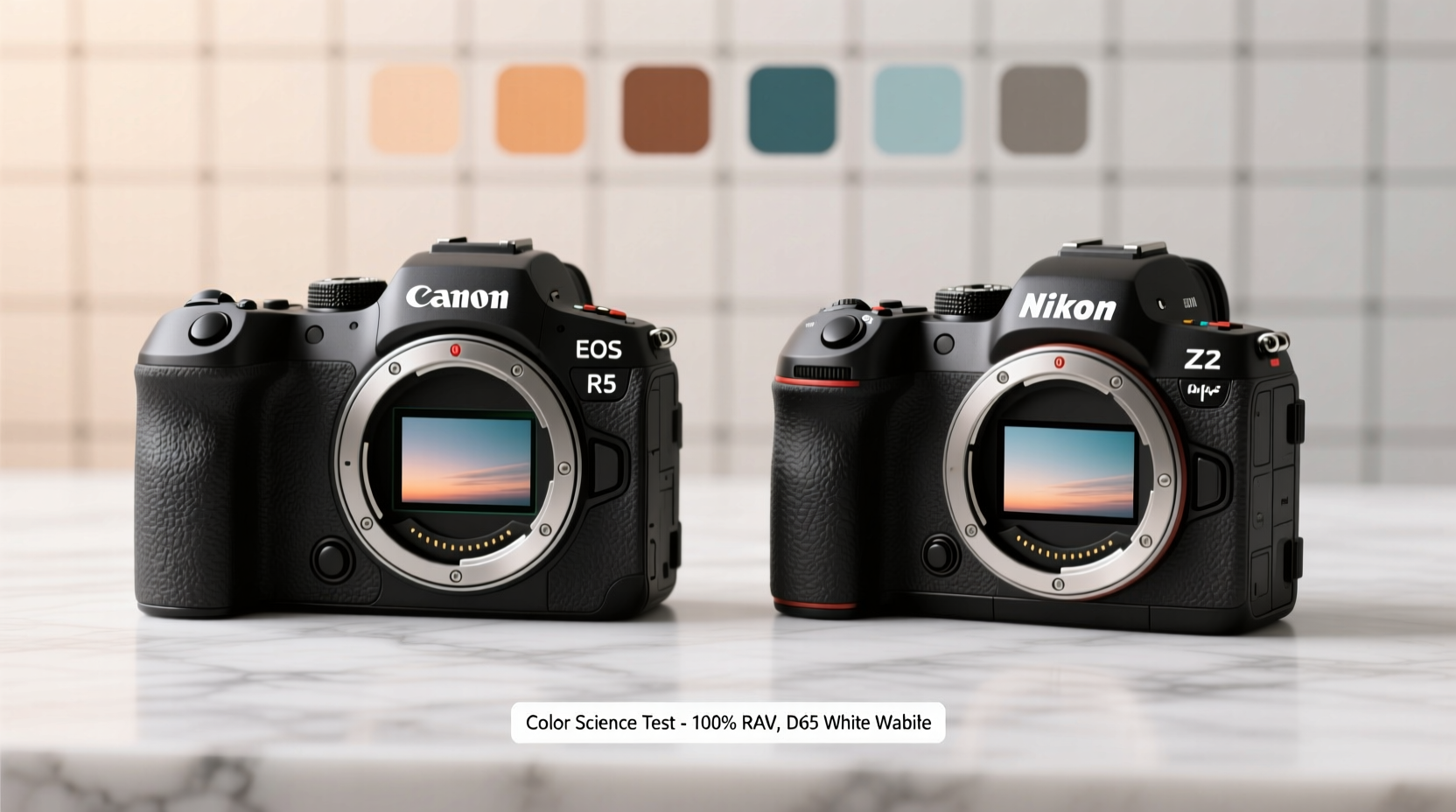
Color science refers to how a camera processes raw sensor data into a final JPEG or preview image. It includes white balance accuracy, tone curves, color matrix interpretation, and saturation behavior. While RAW files retain all sensor data and allow full control in editing, most photographers still rely on in-camera JPEGs for client previews, social media, or quick turnaround work. The quality of the default color rendering directly impacts workflow efficiency and creative consistency.
Unlike lab-tested metrics such as dynamic range or low-light performance, color science is partly subjective. However, it's also deeply rooted in engineering decisions—from sensor microlenses to firmware algorithms. Over decades, Canon and Nikon have fine-tuned these systems based on user feedback, cinematography standards, and cultural preferences.
“Color science isn't just about accuracy—it's about aesthetic intention. Canon leans toward flattering, expressive hues; Nikon favors realism with subtle contrast.” — David Lin, Professional Portrait & Documentary Photographer
Canon’s Approach: Warmth, Skin Tones, and Cinematic Flair
Canon has built a reputation for producing pleasing skin tones, particularly in daylight and golden hour conditions. This is no accident. For years, Canon DSLRs were favorites among wedding and portrait photographers because they rendered Caucasian and medium skin tones with a soft warmth that minimized blemishes without oversaturation.
In the mirrorless era, Canon has carried this philosophy forward. The DIGIC X processor and refined color matrix in cameras like the EOS R5, R6 Mark II, and R8 deliver JPEGs that are immediately usable. Reds and oranges have a gentle richness, while blues remain clean but not cold. Green tones can lean slightly warm, which some photographers find less ideal for forest landscapes but beneficial in urban or autumnal settings.
One of Canon’s standout features is its Picture Styles. Users can choose from presets like “Portrait,” “Landscape,” and “Faithful,” each tuned with specific color biases. The “Portrait” mode reduces magenta and enhances yellows, making it excellent for minimizing ruddiness in faces. Meanwhile, “Standard” mode applies moderate sharpening and saturation, giving images a broadcast-ready look.
Canon’s color processing also benefits from its extensive lens ecosystem. RF-mount lenses are optimized for the company’s color pipeline, ensuring consistent tonality across focal lengths. Additionally, Canon Log (C-Log) video profiles preserve wide dynamic range while maintaining compatibility with the brand’s color grading tools—a plus for hybrid shooters.
Nikon’s Philosophy: Accuracy, Neutrality, and Naturalism
If Canon paints with warm brushstrokes, Nikon uses a more measured palette. Nikon’s color science prioritizes neutrality and fidelity. Greens are truer to life, skies have a deeper but not exaggerated blue, and skin tones tend to stay within realistic boundaries—even under mixed lighting.
This approach shines in documentary, photojournalism, and landscape photography. The Nikon Z8, Z9, and Z6 II produce JPEGs that require minimal correction in post. White balance is consistently accurate, even in challenging indoor environments. Nikon’s Active D-Lighting helps preserve highlight and shadow detail without introducing color casts—a common issue in competing systems.
Nikon’s Picture Control system offers granular adjustments to hue, saturation, and clarity. Unlike Canon, Nikon allows users to save custom Picture Controls and transfer them between cameras—a boon for professionals managing multiple bodies. The “Neutral” and “Flat” profiles are especially popular for retaining flexibility in editing, while “Vivid” boosts saturation without oversharpening.
A key strength of Nikon’s color rendering is its handling of complex light. Under fluorescent or LED lighting, where green/magenta shifts plague many cameras, Nikon sensors generally maintain cleaner color balance. This reliability reduces the need for corrective gels or extensive white balance tweaking.
“I shoot events under terrible lighting, and Nikon’s auto white balance gets it right 9 times out of 10. That saves hours in post.” — Lena Torres, Event & Corporate Photographer
Direct Comparison: Canon vs Nikon in Real-World Scenarios
| Scenario | Canon Performance | Nikon Performance |
|---|---|---|
| Outdoor Portraits (Golden Hour) | Warm, flattering skin tones; enhanced gold/orange highlights | Natural skin tones; slightly cooler, more balanced exposure |
| Landscape (Forests & Foliage) | Greens slightly warm/yellow; may need adjustment | True-to-life greens; excellent separation in shadows |
| Indoor Events (Mixed Lighting) | Can show green cast; manual WB recommended | Strong auto WB; handles mixed sources well |
| Street Photography (JPEG Only) | Vibrant, punchy colors; great for social media | Subtle contrast; more film-like, editorial feel |
| Video (LOG & Grading) | C-Log provides smooth gradation; warm base | N-Log is flatter; easier to grade neutrally |
The table illustrates a fundamental divergence: Canon excels in creating emotionally engaging, immediately appealing images, while Nikon favors precision and adaptability. Neither is objectively “better”—the best choice depends on your genre and workflow.
Mini Case Study: Wedding Photographer Switches Systems
Sarah Kim, a Boston-based wedding photographer, used Canon DSLRs for over a decade. She loved the skin tone rendering and ease of use during fast-paced ceremonies. When she transitioned to the Nikon Z7 II for its dynamic range and silent shutter, she initially struggled with the “cooler” look of her JPEGs.
After adjusting her Picture Control settings and using a custom white balance card, Sarah found that Nikon’s files required less noise reduction in darker reception halls and held more detail in bridesmaid dresses. While she missed Canon’s automatic warmth, she appreciated the consistency across varied venues. Now, she shoots in “Neutral” mode and applies a slight warming curve in Lightroom—giving her both control and a signature look.
“I realized I wasn’t losing magic—I was gaining precision,” she said. “Now my edits are faster, and clients still love the final warmth. It’s just intentional now, not accidental.”
Workflow Implications: How Color Science Affects Editing Time
The impact of color science extends beyond aesthetics—it influences productivity. A camera with strong in-camera color processing can reduce editing time significantly, especially for high-volume shooters.
- Canon: Ideal for photographers who want minimal post-processing. JPEGs often need only minor exposure tweaks.
- Nikon: Better suited for those who prefer a neutral starting point and plan to color-grade extensively.
- Hybrid shooters: Nikon’s N-Log and flat profiles offer more grading headroom, while Canon’s C-Log maintains richer midtones.
If you frequently deliver same-day previews or shoot tethered for clients, Canon’s ready-to-share JPEGs can be a major advantage. Conversely, if you work in varied lighting and value consistency across a shoot, Nikon’s predictable output reduces the risk of batch inconsistencies.
Checklist: Choosing Based on Color Science
- Identify your primary shooting genre (portrait, landscape, event, etc.)
- Determine whether you prefer warm or neutral default tones
- Evaluate your post-processing habits—do you edit every image or rely on JPEGs?
- Test sample RAW and JPEG files from both brands (download from DPReview or studio samples)
- Consider lens ecosystem and how optics influence final color rendering
- Factor in video needs—does LOG profile behavior align with your grading style?
Frequently Asked Questions
Do Canon cameras still have a red tint issue?
Older Canon models, especially the 5D Mark III, were known for a slight red shift in dark tones. Modern EOS R-series cameras have largely corrected this through improved sensor coatings and firmware. In typical lighting, any red bias is minimal and often perceived as warmth rather than inaccuracy.
Can I make Nikon photos look like Canon?
Yes—with careful color grading. Using LUTs (Look-Up Tables) or Lightroom presets, you can emulate Canon’s warmer skin tones and richer reds. However, this requires consistent editing and may not replicate the organic feel of native Canon output. Some photographers create custom profiles to blend Nikon’s dynamic range with Canon-like color warmth.
Is color science fixed, or does it improve with firmware?
It can improve. Both Canon and Nikon have updated color matrices and white balance algorithms via firmware. For example, the EOS R5 received subtle color refinements in version 1.6.0, improving sky rendition. Similarly, Nikon updated the Z6 II’s Auto ISO behavior to reduce yellow casts in low light. Firmware updates won’t overhaul the core philosophy, but they do refine execution.
Conclusion: It’s About Intent, Not Just Technology
There is no definitive winner in the Canon vs Nikon mirrorless color science debate. Canon produces images that feel inviting and emotionally resonant—ideal for storytellers who want their photos to connect instantly. Nikon delivers precision and reliability, appealing to photographers who value control and consistency across diverse conditions.
Your choice should reflect your creative intent. If you shoot portraits and crave that timeless, sun-kissed glow, Canon remains a compelling option. If you document reality with minimal interference and need dependable color under pressure, Nikon stands out.
Ultimately, both brands offer exceptional tools. The “better” color science is the one that aligns with your vision—one that lets you spend less time correcting and more time creating.




 浙公网安备
33010002000092号
浙公网安备
33010002000092号 浙B2-20120091-4
Comments
No comments yet. Why don't you start the discussion?