
Choosing the right laptop bag isn’t just about aesthetics—it’s a daily investment in comfort, protection, and longevity. Two of the most popular materials—canvas and leather—each bring distinct advantages and trade-offs. For professionals, students, or frequent commuters, understanding the real-world performance of canvas versus leather can make the difference between a reliable companion and a short-lived accessory.
The debate isn’t settled by preference alone. It comes down to usage patterns, climate, care habits, and long-term value. One might excel in durability but fall short in elegance; the other may age beautifully but demand meticulous upkeep. Let’s break down both materials across key criteria to help you decide which truly performs better in everyday scenarios.
Durability and Resilience in Daily Use
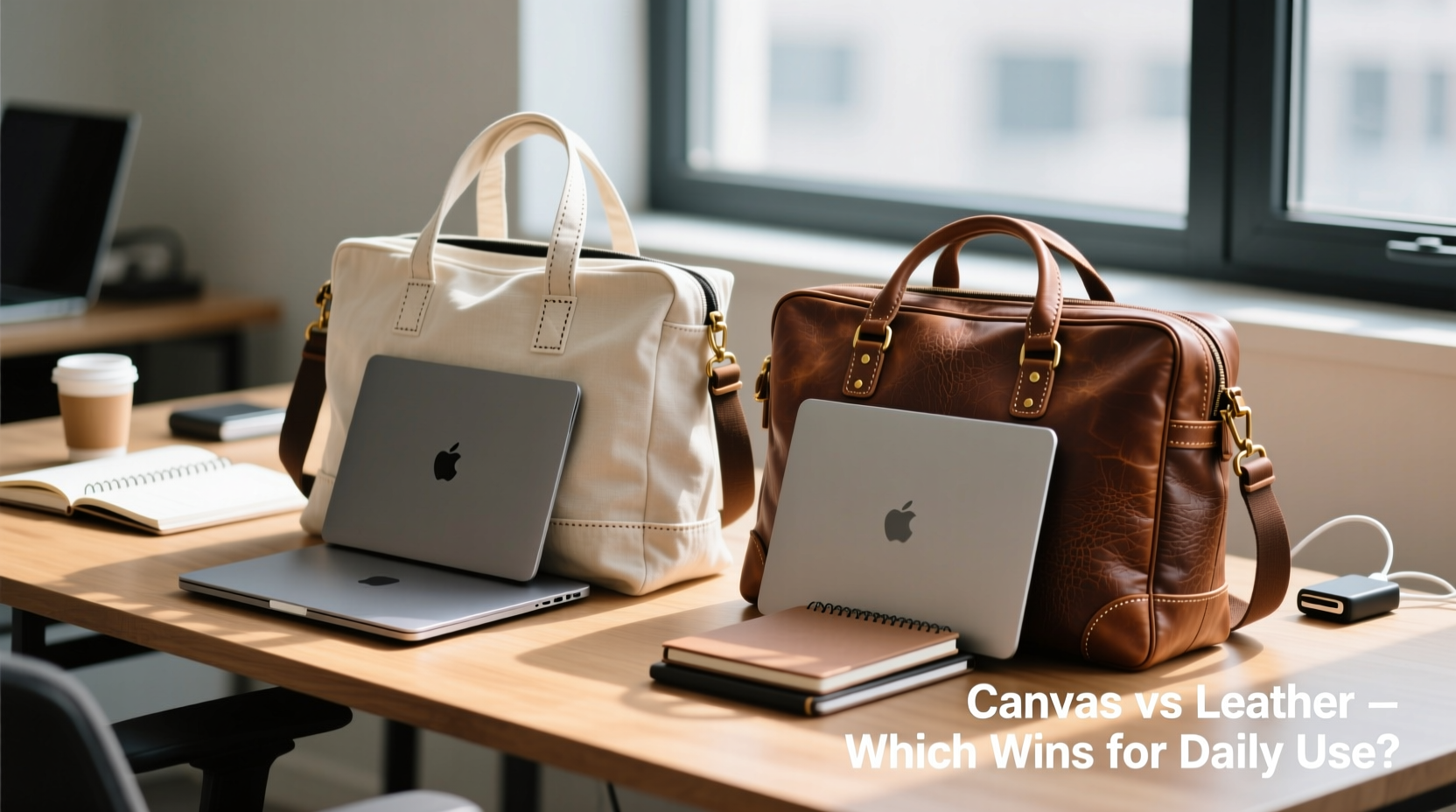
When subjected to daily wear—commuting on crowded trains, being tossed into car trunks, or enduring sudden rain—material resilience becomes critical. Canvas, typically made from tightly woven cotton or synthetic blends, is inherently rugged. High-density canvas (like 16 oz or higher) resists abrasion, scuffing, and tearing far better than many assume. It’s also naturally water-resistant when treated with wax or durable coatings.
Leather, particularly full-grain or top-grain varieties, develops a reputation for toughness, but its strength lies more in long-term structural integrity than immediate impact resistance. While it handles light scrapes well and gains character over time, untreated leather absorbs moisture quickly and can crack if neglected. However, properly conditioned leather withstands years of use without fraying—a quality canvas cannot match.
In environments with high physical stress—urban commuting, outdoor work, or student life—canvas often outperforms leather in the first 1–2 years. Leather wins in the long haul only if maintained consistently.
Maintenance and Care Requirements
One of the most overlooked factors in choosing a laptop bag is how much effort you’re willing to invest in upkeep. This is where the practicality gap widens significantly.
Canvas bags are low-maintenance. Most spills, dirt, or stains can be wiped off with a damp cloth. Some models are even machine-washable (always check manufacturer guidelines). Mild soap and water usually suffice for deep cleaning every few months. No special conditioners or seasonal treatments are required.
Leather demands regular attention. It should be cleaned with pH-balanced leather wipes and conditioned every 3–6 months to prevent drying and cracking. Exposure to sunlight accelerates fading, and humidity can encourage mold growth if stored improperly. Neglect for just a few months can lead to irreversible damage.
“Leather ages like fine wine—but only if you treat it like one.” — Marcus Reed, Product Designer at Heritage Gear Co.
For users who prioritize convenience, canvas clearly has the edge. If you forget to wipe down your bag after a rainy day, canvas forgives. Leather does not.
Style, Professionalism, and Long-Term Aesthetics
A laptop bag often serves as a subtle extension of personal or professional identity. In formal offices, client meetings, or academic settings, appearance matters.
Leather exudes sophistication. Its natural grain, rich texture, and ability to develop a patina over time give it an air of authenticity and refinement. A well-crafted leather bag signals investment and attention to detail. Over months and years, it evolves into a unique piece shaped by its owner’s lifestyle.
Canvas, while available in sleek, minimalist designs, generally leans toward casual or utilitarian aesthetics. Even premium canvas brands struggle to match the boardroom-ready presence of a polished leather briefcase. That said, modern canvas bags have closed the style gap with clean lines, muted colors, and thoughtful hardware choices.
| Factor | Canvas | Leather |
|---|---|---|
| Initial Appearance | Casual, functional | Professional, elegant |
| Ages Gracefully? | Shows wear visibly (fading, fraying) | Develops desirable patina |
| Variety of Colors/Finishes | Broad range, including bold options | Limited to natural tones and dyes |
| Scratch Visibility | Less noticeable | More visible initially, but fades into character |
Weight, Comfort, and Functionality
Comfort during extended carry—whether by handle, shoulder strap, or backpack style—is essential. Weight distribution, padding, and material density play crucial roles.
Canvas is significantly lighter than leather. A medium-sized canvas tote might weigh around 1.2 lbs, whereas a comparable leather version can tip the scales at 2.5–3 lbs before adding your laptop and accessories. This difference becomes pronounced during long commutes or when carrying additional items like notebooks, chargers, or lunch containers.
However, leather offers superior structure. It holds its shape better under load, preventing sagging or deformation over time. Canvas bags, especially lower-density ones, may slump or stretch when overstuffed, reducing internal organization efficiency.
Ergonomics also depend on design, but material choice influences padding options and flexibility. Leather molds slightly to the body over time, offering a semi-custom fit. Canvas remains consistent but less adaptive.
Mini Case Study: The Hybrid Commuter
Consider Alex, a software developer who bikes to work three days a week and attends client meetings twice a week. He needs a bag that survives rain, protects his 15” MacBook, and looks presentable in conference rooms.
Initially, he chose a full-grain leather messenger bag. It looked sharp but became waterlogged during a downpour, requiring a week of drying and conditioning. After two such incidents, he switched to a waxed canvas bag with a leather trim. The hybrid offered weather resistance, reasonable professionalism, and ease of cleaning. For his mixed-use case, canvas proved more practical despite the slight style compromise.
Cost and Long-Term Value
Price points vary widely, but generally, genuine leather bags cost 20–50% more than their canvas counterparts. Entry-level leather starts around $120, while premium models exceed $300. High-quality canvas bags range from $70–$180.
Yet cost-effectiveness depends on lifespan and usage. A well-maintained leather bag can last 8–10 years or more, making its annual cost very low over time. Canvas bags, even durable ones, typically last 3–5 years under heavy use before showing significant wear—especially at stress points like straps and zippers.
Still, factoring in maintenance costs—leather conditioners, professional cleaning, repairs—the total ownership cost of leather increases. Canvas owners spend virtually nothing beyond the initial purchase.
Checklist: Choosing the Right Material for Your Lifestyle
- ✅ Do you commute in wet or variable weather? → Prioritize waxed canvas.
- ✅ Do you attend formal meetings regularly? → Lean toward leather.
- ✅ Are you forgetful about maintenance? → Choose canvas.
- ✅ Do you carry heavy loads daily? → Opt for leather’s structure or reinforced canvas.
- ✅ Is long-term aging important? → Leather develops character; canvas shows wear.
- ✅ On a budget? → Canvas offers better upfront value.
Frequently Asked Questions
Can I use a canvas bag for business travel?
Absolutely—if it's designed with a professional silhouette and neutral color. Many modern canvas bags feature minimalist branding, leather accents, and structured interiors suitable for business environments. Just avoid overly rugged or brightly colored styles.
Does leather really protect my laptop better?
Not inherently. Protection depends on internal padding, compartment design, and shock absorption—not the outer material. Both canvas and leather bags can offer excellent device safety when engineered correctly.
How do I extend the life of my canvas bag?
Avoid prolonged exposure to moisture, store in a dry place, and spot-clean stains promptly. Reapply waterproofing spray annually if used in wet climates. Rotate usage if possible to reduce strain on seams.
Final Verdict: Which Is Actually Better?
There is no universal winner. The answer hinges on your routine, priorities, and willingness to maintain your gear.
If your days involve unpredictable weather, active commuting, minimal maintenance, or budget constraints, **canvas is the smarter everyday choice**. It’s resilient, lightweight, and forgiving—ideal for dynamic lifestyles.
If you value timeless style, work in formal settings, and commit to proper care, **leather earns its reputation**. It ages beautifully, commands respect, and, with attention, lasts a decade or more.
For many, the ideal solution lies in a hybrid: a waxed canvas body with leather trim, combining durability with elegance. Or, owning both—one for casual weeks, another for presentations and travel.
Conclusion
Your laptop bag should enhance, not complicate, your day. Whether you choose canvas or leather, focus on build quality, functionality, and alignment with your real-life needs. Don’t romanticize materials—test them against your actual routine. A $200 leather bag ruined by rain is worse than a $100 canvas one that survives five years of abuse.




 浙公网安备
33010002000092号
浙公网安备
33010002000092号 浙B2-20120091-4
Comments
No comments yet. Why don't you start the discussion?