
When it comes to choosing a tote bag that ages gracefully, two materials stand out: canvas and leather. Both are durable, widely used in everyday carry, and favored by those who value practicality with a touch of personality. But beyond durability, there’s a deeper question—how do these materials evolve over time? Which one truly develops more character?
Character, in this context, isn’t just about wear and tear. It’s about how a bag tells a story. Scuffs, creases, fading, patina—these aren’t flaws; they’re signatures of use, travel, and daily life. The way a material responds to time, handling, and environment reveals not just its quality, but also the owner’s lifestyle.
This article examines how canvas and leather tote bags age, what kind of character each develops, and which might better suit your expectations for a long-term companion.
The Nature of Character in Materials
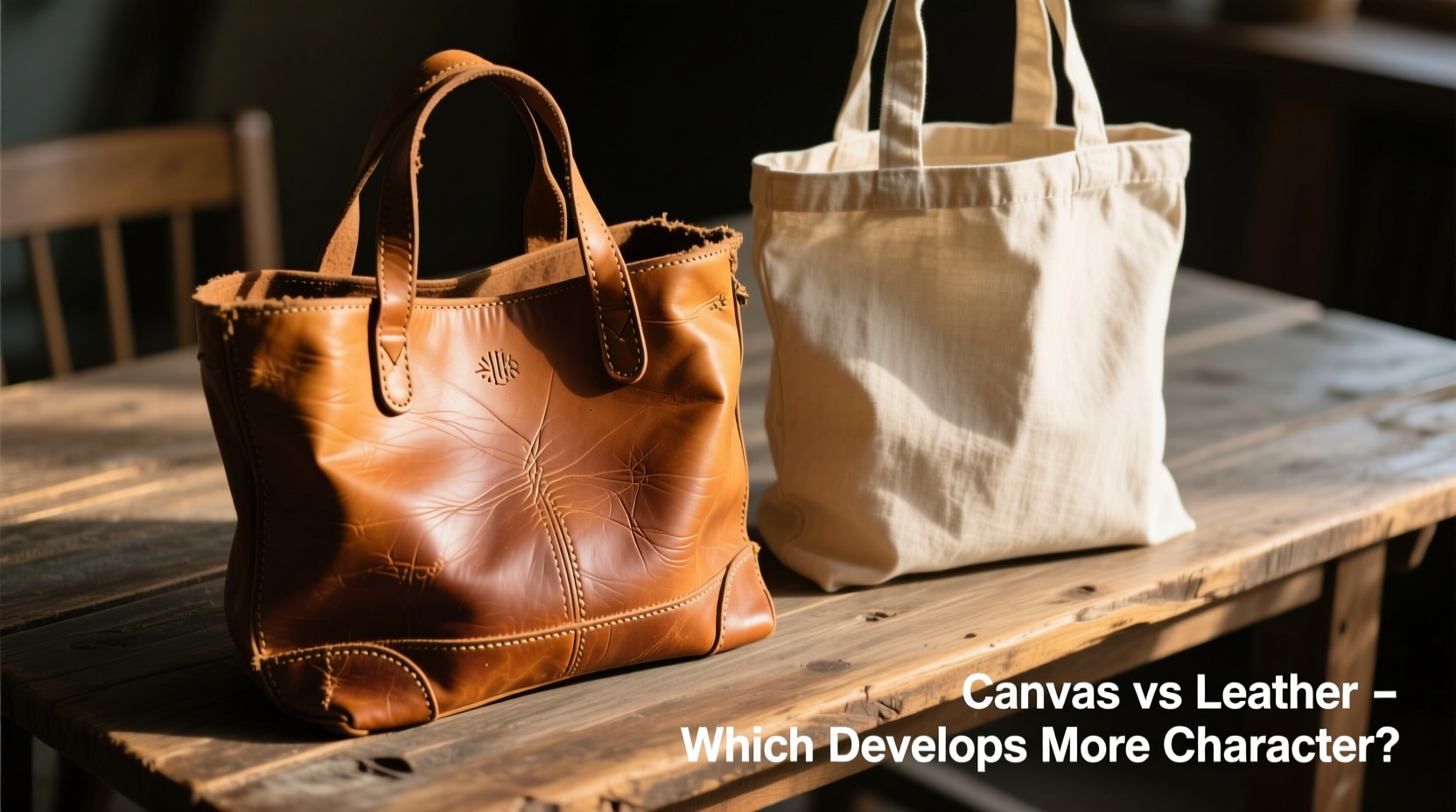
“Character” in accessories refers to the visible transformation a material undergoes through consistent use. Unlike mass-produced items designed to look pristine forever, bags made from natural or semi-natural materials change in appearance and texture. These changes can be subtle or dramatic, and they often deepen emotional attachment.
Leather is renowned for developing a rich patina—a sheen that forms as oils, light, and friction interact with the surface. Over months or years, scratches blend into soft highlights, color deepens, and the grain becomes more expressive. This evolution is celebrated in heritage fashion, where a well-worn leather bag is seen as a badge of authenticity.
Canvas, on the other hand, ages differently. Typically made from cotton or cotton-blend fabric, it doesn’t develop a patina in the traditional sense. Instead, it fades, softens, and accumulates stains and frays. Some see this as deterioration; others view it as a lived-in charm, especially when paired with contrast stitching or lining.
The key difference lies in perception: leather’s aging is often romanticized as refinement, while canvas aging is associated with ruggedness and utility. Neither is objectively superior—but one may resonate more with your personal aesthetic.
How Leather Tote Bags Develop Character
Full-grain or top-grain leather is the gold standard for character development. These leathers retain the natural grain and fibrous structure of the hide, allowing them to respond dynamically to environmental exposure and handling.
- Patina Formation: As leather interacts with skin oils, sunlight, and moisture, it gradually darkens and develops a warm luster. This process can take months, but once established, the patina gives the bag depth and individuality.
- Scratches and Scuffs: Minor abrasions don’t disappear—they integrate. Over time, they soften and become part of the surface narrative, rather than blemishes.
- Shape Memory: Leather conforms to how it’s carried. A shoulder strap dent, a folded corner, or a frequently opened flap will mold to your habits, making the bag feel uniquely yours.
- Color Shifts: Natural aniline leathers, in particular, shift in tone. A chestnut brown may deepen to mahogany, while black can reveal undertones of burgundy or blue under certain light.
“Leather doesn’t wear out—it wears in. The most beautiful bags I’ve restored were decades old, yet richer in presence than any new piece.” — Daniel Ruiz, Artisan Leather Restorer
However, not all leather develops character equally. Bonded leather or heavily coated finishes resist aging altogether, remaining stiff and artificial-looking even after years of use. For true character, seek out vegetable-tanned or oil-pulled hides with minimal synthetic coatings.
How Canvas Tote Bags Age and Evolve
Canvas is inherently utilitarian. Originally developed for sails and workwear, its strength lies in tight weave and resilience. While it lacks the organic responsiveness of leather, canvas gains character through a different set of transformations.
- Fading: Exposure to UV light causes gradual bleaching, especially in dyed cotton. This can result in a sun-kissed gradient, particularly along edges and handles.
- Softening: Stiff new canvas breaks in over weeks of use. It becomes pliable, draping more naturally and conforming slightly to contents.
- Staining and Markings: Coffee spills, ink smudges, dirt—canvas absorbs these like a journal page. Some owners deliberately embrace these as milestones: “This stain is from my first day at the new job.”
- Fraying: At stress points—like corners or handle junctions—threads may begin to loosen. When controlled, this adds texture; when excessive, it signals structural fatigue.
Unlike leather, canvas doesn’t self-repair. Once fibers are damaged, they remain so unless mended. Yet, this permanence can enhance storytelling. A patched corner or embroidered repair turns damage into intentionality.
Heavier canvases (e.g., 12-oz or higher) age more gracefully than lightweight versions. Reinforced stitching, leather trim, and water-resistant treatments also influence longevity and visual evolution.
A Real Example: The Artist’s Companion
Sophie, a freelance illustrator, has used the same canvas tote for five years. She carries sketchbooks, pencils, and her tablet daily. The original navy blue has faded to a muted slate, especially on the sides facing outward during commutes. One corner bears a coffee stain from a rushed morning in Paris. The handles have softened dramatically, molding to her grip.
Instead of hiding these marks, Sophie sees them as proof of purpose. “It looks tired,” she says, “but it feels alive. Every mark reminds me of where I’ve been.”
Her bag hasn’t gained elegance in the traditional sense—but it radiates authenticity. That, too, is character.
Comparative Breakdown: Leather vs Canvas Aging Traits
| Characteristic | Leather Tote | Canvas Tote |
|---|---|---|
| Patina Development | High – develops rich, glossy sheen over time | None – no natural luster buildup |
| Fade Resistance | Moderate to high – may darken or shift tone | Low to moderate – prone to UV fading |
| Texture Evolution | Softens and molds to use; becomes supple | Starts stiff, breaks in gradually |
| Scratch/Scuff Behavior | Integrates into surface; adds depth | May leave permanent marks or fray |
| Stain Absorption | Resists surface stains (if conditioned) | High – absorbs liquids and pigments easily |
| Repair Potential | High – scuffs buff out; tears restitchable | Moderate – patches possible, but visible |
| Lifespan (with care) | 15+ years | 5–10 years |
This comparison shows that leather generally offers more predictable and aesthetically refined aging, while canvas provides a rawer, more unpredictable journey—one that values honesty over polish.
Caring for Long-Term Character Development
How you maintain your tote directly influences how its character unfolds. Neglect accelerates degradation; improper care can ruin potential. But thoughtful maintenance nurtures beauty over time.
Step-by-Step Guide to Preserving Character
- Identify the Material: Confirm whether your tote is full-grain leather, waxed canvas, or blended fabric. Labels or manufacturer details help.
- Initial Conditioning (Leather Only): Apply a pH-balanced leather conditioner every 3–6 months to maintain suppleness and promote even patina.
- Dust & Spot Cleaning: Wipe leather with a dry cloth weekly. For canvas, use a damp sponge and mild soap for surface grime.
- Avoid Moisture Traps: Never store either material in plastic. Use breathable cotton bags or open shelves.
- Rotate Usage: Using the same bag daily speeds wear. Rotate between two to extend lifespan and balance aging.
- Address Damage Early: Small scuffs on leather can be buffed; loose threads on canvas should be trimmed or secured before unraveling.
Checklist: Choosing Based on Desired Aging
Ask yourself: What kind of story do I want my bag to tell? Use this checklist to align your choice with your values.
- ✅ I appreciate subtle elegance and refined aging → Leather
- ✅ I value rugged authenticity and visible history → Canvas
- ✅ I want minimal maintenance with maximum longevity → Leather
- ✅ I don’t mind stains and prefer a soft, broken-in feel → Canvas
- ✅ I carry heavy loads daily and need structural integrity → Leather (or reinforced canvas)
- ✅ I live in a humid or rainy climate → Leather (if properly treated) or waxed canvas
- ✅ I want a bag that looks better after 10 years → Leather
Note: Waxed canvas is a hybrid option—coated with paraffin or beeswax for water resistance. It develops a unique matte sheen and resists staining better than plain canvas, though it requires periodic re-waxing.
FAQ: Common Questions About Aging Totes
Does real leather always develop a good patina?
No—not automatically. Only full-grain or vegetable-tanned leathers develop deep patina. Bonded, corrected-grain, or synthetic-coated leathers resist aging and may crack instead of mellowing.
Can I speed up the aging process on canvas?
You can accelerate fading by sun exposure, but this risks fiber weakening. Some users lightly sand edges or apply tea stains for vintage effect—but these are cosmetic, not structural improvements.
Is it possible to restore character to a neglected leather bag?
Yes, within limits. Dry, cracked leather can often be revived with proper cleaning and conditioning. Deep scratches may require professional dyeing or buffing, but surface-level wear usually blends back into the patina with care.
Final Verdict: Which Develops More Character?
If character is defined by depth, richness, and evolving elegance, **leather takes the lead**. Its ability to develop a luminous patina, conform to the user, and improve visually over time makes it the premier choice for those seeking a bag that matures with grace.
But if character means honesty, resilience, and a visible record of lived experience, **canvas holds its own**. It doesn’t flatter—it testifies. Each stain, fade, and fray is a timestamp of real use, unfiltered by polish or pretense.
In truth, neither material is superior in absolute terms. The answer depends on what you value in aging: refinement or realism, luxury or legacy, quiet sophistication or bold authenticity.
For the traveler who wants their bag to look distinguished after a decade of boardrooms, leather is ideal. For the creative who sees beauty in imperfection and wants a bag that wears its history proudly, canvas may be the perfect match.
Conclusion: Choose the Journey, Not Just the Bag
Your tote is more than a container—it’s a companion. How it ages reflects not just material science, but your relationship with time, care, and personal expression. Whether you choose leather or canvas, the most meaningful character comes not from the material itself, but from the life it lives alongside you.
Pick the one whose aging process resonates with how you want to move through the world: polished and enduring, or raw and truthful. Then, care for it intentionally. Let every scratch, fold, and fade become part of a larger story—one only you can carry.




 浙公网安备
33010002000092号
浙公网安备
33010002000092号 浙B2-20120091-4
Comments
No comments yet. Why don't you start the discussion?