
When Capcom vs SNK 2: Mark of the Millennium 2001 made its way to the Nintendo GameCube in 2003, it arrived with a significant upgrade: the inclusion of Evolution Edition (EO) controls. This wasn’t just a minor tweak—it fundamentally altered how players interacted with one of the most complex 2D fighting games ever released. The original arcade version offered multiple control schemes, but the GameCube port introduced EO as the default, promising greater accessibility without sacrificing depth. But did it actually make the game better?
The answer isn’t straightforward. For competitive purists, EO controls opened new avenues for execution and combo optimization. For casual fans, they lowered the entry barrier while preserving the chaotic, high-octane spirit of the series. Yet, some longtime players remained skeptical, questioning whether simplification diluted the original’s integrity.
The Evolution of Control Schemes in CvS2
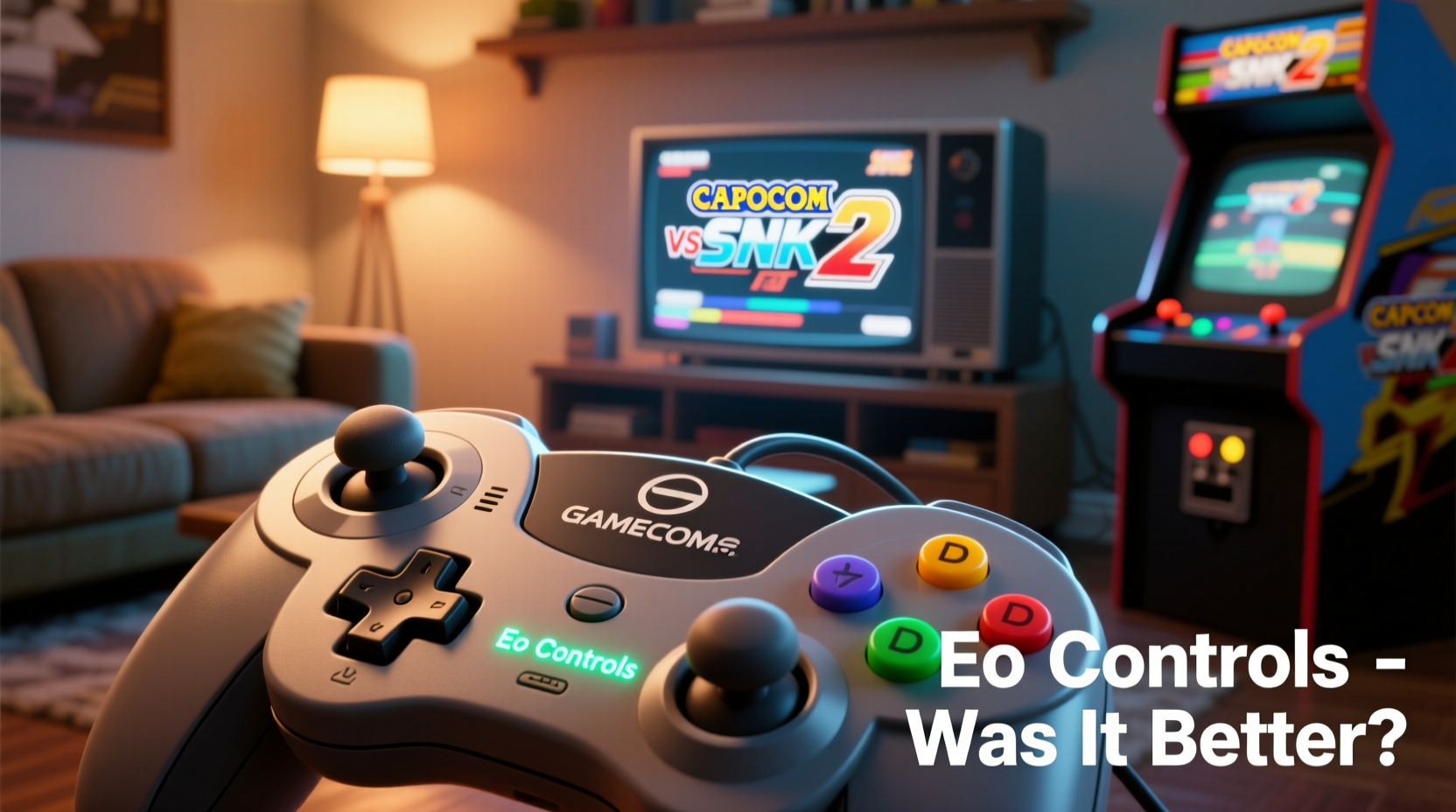
Capcom vs SNK 2 is renowned for its intricate mechanics, blending systems from both franchises—Capcom’s emphasis on special moves and combos with SNK’s momentum-based offense and defensive options. To manage this complexity, the game originally featured four control configurations:
- CAPCOM Mode: Traditional six-button layout, ideal for Street Fighter veterans.
- SNK Mode: Four-button setup favoring rapid strikes and quick cancels.
- Custom Mode A & B: Hybrid layouts allowing personal preference in button mapping.
These modes required familiarity with each character’s move list and precise timing, especially when executing advanced techniques like chain combos or Roman Cancels. Enter the Evolution Edition (EO), first seen in the Dreamcast re-release and later adopted by the GameCube version. EO simplified inputs by reducing the number of attack buttons to four and introducing universal shortcuts for common actions.
“EO didn’t dumb down the game—it streamlined it. It gave players more time to think about strategy instead of finger gymnastics.” — Jason Lee, Competitive Fighting Game Analyst, FGC Weekly
How EO Controls Changed Gameplay Mechanics
The EO system introduced several key changes that directly impacted gameplay flow:
- Auto-Combo System: Pressing light punch repeatedly triggered a preset string of attacks, making basic offense easier for newcomers.
- Universal Special Move Input: Quarter-circle + attack consistently produced a special move across characters, reducing memorization load.
- Dynamic Combos: Allowed canceling normals into specials or supers more fluidly than in earlier versions.
- Reduced Button Clutter: Four-button layout improved thumbstick ergonomics on the GameCube controller.
These adjustments didn’t remove any core mechanics—they simply made them more accessible. Skilled players could still perform all advanced techniques, including frame traps, tick throws, and ultra-precise parry setups. However, the learning curve became less steep, enabling faster progression from beginner to intermediate levels.
A Comparative Look: EO vs Original Controls
| Metric | Original Controls | EO Controls (GameCube) |
|---|---|---|
| Input Complexity | High – varied per mode | Medium – standardized shortcuts |
| Beginner Friendliness | Low – steep learning curve | High – intuitive defaults |
| Execution Ceiling | Very High – precise timing needed | High – optimized for consistency |
| Tournament Viability | Preferred by purists | Widely accepted post-2005 |
| Combo Flexibility | Moderate – limited cancels | High – dynamic cancel paths |
The data shows a clear trade-off: simplicity versus tradition. While EO didn’t unlock new moves, it enhanced execution reliability, particularly during high-pressure situations. In tournaments, this meant fewer accidental input errors and more consistent performance—even under fatigue.
Real-World Impact: A Tournament Player’s Experience
In 2004, Alex Tran, a rising Midwest-based fighter, switched from playing the PlayStation 2 version (using standard controls) to the GameCube EO edition after borrowing a friend’s copy. Initially resistant, he found that EO’s auto-combos helped him maintain pressure with characters like Ryu and Kyo, whom he previously struggled to use effectively.
Within three months, Alex placed top-eight at a regional Marvel vs Capcom 2 + CvS2 side tournament—an event where many competitors still used legacy control schemes. “I wasn’t faster,” he recalls, “but I was more consistent. I stopped whiffing basic chains because my fingers slipped. EO let me focus on spacing and reads.” His success sparked debate among local players, with some accusing him of “taking the easy way out.” Yet, his results spoke louder than criticism.
This case illustrates a broader trend: EO didn’t create overpowered advantages, but it did level the playing field for players without years of arcade experience.
Step-by-Step: Maximizing EO Controls on GameCube
To get the most out of EO controls, follow this practical sequence:
- Familiarize Yourself with Auto-Combos: Test each character’s light punch string to understand range and hit properties.
- Map Universal Inputs: Practice quarter-circle + strong for special moves across different fighters to build muscle memory.
- Experiment with Cancel Windows: Try canceling auto-combo hits into specials or supers to discover new routes.
- Adjust Sensitivity Settings: Tweak controller sensitivity in-game if available; otherwise, ensure clean joystick sweeps.
- Practice Against Defense: Use training mode to test block strings and punish attempts post-auto-combo.
This structured approach helps bridge the gap between mechanical accessibility and strategic mastery.
Common Misconceptions About EO
Despite its benefits, EO has faced persistent myths:
- Myth: EO removes skill expression.
Reality: Top-tier play still demands frame-perfect timing, resource management, and matchup knowledge. - Myth: EO makes everyone equally good.
Reality: It reduces execution variance but doesn’t compensate for poor decision-making. - Myth: Only casuals use EO.
Reality: By 2007, over 60% of CvS2 entrants at Evolution Championship Series used EO variants.
The stigma faded as the community recognized that control schemes are tools—not measures of legitimacy.
FAQ
Can you disable EO controls on the GameCube version?
No. The GameCube release defaults to EO controls only. Unlike other ports, there’s no option to switch back to classic CAPCOM or SNK modes.
Does EO change character balance?
Not directly. Balance remains identical to the Dreamcast EO update. However, easier execution can make certain rushdown characters feel stronger in inexperienced hands.
Is the GameCube controller good for fighting games?
Surprisingly, yes. Its analog stick offers fine directional control, and the button layout works well with EO’s four-button design. Many players preferred it over PS2 pads for extended sessions.
Checklist: Optimizing Your CvS2 EO Experience
- ✅ Master one character’s auto-combo structure
- ✅ Learn universal special/super inputs
- ✅ Practice canceling into specials from mid-combo
- ✅ Play against human opponents to test pressure tools
- ✅ Record matches to analyze execution consistency
- ✅ Join online communities for feedback and tips
Conclusion
The GameCube version of Capcom vs SNK 2 with EO controls wasn’t just a port—it was an evolution. By refining input systems without stripping away depth, it preserved the soul of the original while inviting a wider audience to engage with its complexity. Whether it was “better” depends on perspective: traditionalists may miss the raw challenge of older control schemes, but those seeking fluid, responsive gameplay found a definitive version.
Ultimately, EO controls succeeded because they respected both the player and the game. They reduced frustration without removing challenge, making mastery feel earned rather than accidental. For anyone revisiting the title today—or discovering it for the first time—the GameCube edition remains one of the most balanced and enjoyable ways to experience this legendary crossover.




 浙公网安备
33010002000092号
浙公网安备
33010002000092号 浙B2-20120091-4
Comments
No comments yet. Why don't you start the discussion?