
College life moves fast. Between lectures, labs, part-time jobs, and social events, the last thing you need is morning stress over what to wear. A well-designed capsule wardrobe simplifies your routine, reduces decision fatigue, and ensures you always look put-together—without spending a fortune. The key lies in selecting high-quality, versatile basics that work together seamlessly across multiple outfits. When built thoughtfully, a capsule wardrobe allows you to create dozens of combinations from just 25–35 core items.
This approach isn’t about limiting style—it’s about maximizing it through intentionality. For college students, who often face tight budgets and limited closet space, a capsule wardrobe offers both financial and logistical advantages. More importantly, it fosters confidence by eliminating fashion guesswork. With the right foundation, mixing and matching becomes second nature, freeing up mental energy for more important things—like acing that midterm or landing an internship.
The Core Principles of a College Capsule Wardrobe
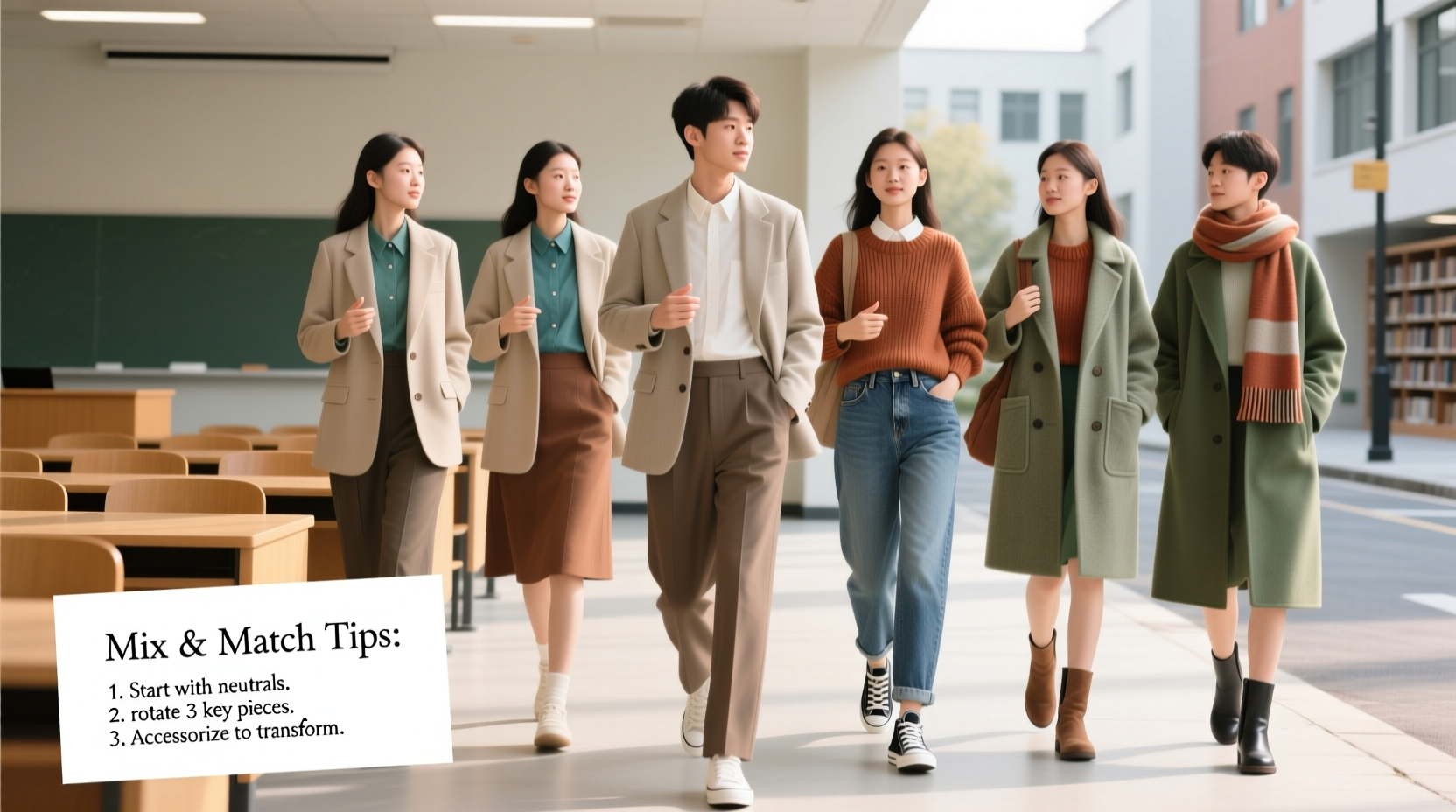
A successful capsule wardrobe rests on three pillars: simplicity, versatility, and sustainability. Unlike seasonal shopping sprees driven by trends, a capsule focuses on curated essentials that serve multiple purposes. These are clothes that transition easily from classroom to café, library to late-night study session, or casual hangouts to semi-formal campus events.
The typical college capsule includes tops, bottoms, outerwear, shoes, and accessories—all chosen to coordinate across colors and styles. Neutral bases like black, navy, gray, white, and denim form the backbone, while a few accent colors or patterns add personality. Every piece should meet at least two of these criteria: comfort for long days on campus, durability for frequent washing, and adaptability for different settings.
According to stylist and sustainable fashion advocate Naomi Mwaura, “A capsule wardrobe isn’t minimalism for minimalism’s sake. It’s strategic editing—keeping only what serves you daily.” This mindset shift—from accumulating clothes to curating utility—is what makes the system effective for busy students.
“Your wardrobe should work for you, not against you. In college, time and money are precious. A capsule helps protect both.” — Naomi Mwaura, Sustainable Style Consultant
Step-by-Step Guide to Building Your Capsule
Creating a functional capsule wardrobe takes planning, but the process pays off quickly in saved time and reduced clutter. Follow this six-step framework tailored specifically for student lifestyles.
- Assess Your Lifestyle Needs: Track your weekly schedule for one week. Note how many days you attend class, work, exercise, or attend social events. This reveals how much variety you actually need.
- Declutter First: Pull everything out of your closet. Try on each item. Keep only what fits well, feels comfortable, and aligns with your current style. Donate or sell the rest.
- Choose a Color Palette: Select 3–4 neutral base colors (e.g., charcoal, cream, navy) and 1–2 accent tones (burgundy, olive, rust). Everything in your capsule should coordinate within this scheme.
- Pick Your Core Pieces: Focus on timeless silhouettes—straight-leg jeans, chinos, button-down shirts, crewneck sweaters, trench coats, ballet flats, and clean sneakers.
- Limited Accessories: Add scarves, belts, watches, and one statement bag. Avoid trendy accessories that limit outfit options.
- Test & Refine: Wear only your capsule for two weeks. Identify gaps (e.g., missing a warm layer) or redundancies (too many black tees). Adjust accordingly.
Essential Items Checklist
To help you build efficiently, here’s a practical checklist of must-have items for a balanced college capsule wardrobe. Aim for 25–35 total pieces depending on climate and personal needs.
- 5–7 tops (t-shirts, blouses, button-downs)
- 2–3 sweaters or cardigans
- 2–3 long-sleeve layers (turtlenecks, henleys)
- 2 pairs of jeans (dark wash + black)
- 1 pair of chinos or trousers
- 1 skirt or dress (optional, if worn regularly)
- 1 pair of shorts (seasonal)
- 1 jacket (denim, bomber, or trench)
- 1 coat (wool blend or puffer, depending on weather)
- 2–3 pairs of shoes (sneakers, loafers, ankle boots)
- 1 backpack or tote bag
- Basic underwear and socks (rotate 5–7 sets)
- 1–2 scarves or hats (for warmth/style)
- Belt and watch (neutral finishes)
Stick to natural fibers like cotton, wool, and linen when possible—they breathe better, age gracefully, and resist odors longer than synthetics. Even small investments in fabric quality pay off over months of heavy use.
Mix-and-Match Strategies That Work
The real power of a capsule wardrobe emerges when you start combining pieces creatively. Instead of thinking in full outfits, think in layers and roles. Each top can pair with multiple bottoms; each bottom works with several tops and outerwear options.
For example, a white crewneck sweater can be worn:
- Over a collared shirt with chinos for a polished lecture look
- With dark jeans and boots for a weekend coffee run
- Under a trench coat with a scarf during colder months
The goal is to design interconnectivity. If every top matches every bottom, you instantly generate exponential outfit combinations. Use the “rule of three” when building: each new item should go with at least three existing ones.
| Item | Worn With | Occasion |
|---|---|---|
| White Button-Down Shirt | Dark jeans + sneakers / Chinos + loafers / Under sweater + skirt | Class, Interview, Dinner |
| Black Turtleneck | Gray trousers + boots / Denim jacket + jeans / Overcoat + scarf | Cold Days, Presentations, Dates |
| Navy Blazer | T-shirt + jeans / Button-down + chinos / Dress shirt + trousers | Formal Events, Career Fair, Guest Lecture |
| High-Waisted Jeans | Tee + hoodie / Blouse + belt / Sweater + ankle boots | Daily Wear, Errands, Hangouts |
Real Student Example: Maya’s Semester Transformation
Maya, a sophomore majoring in communications, used to spend 20 minutes every morning choosing an outfit—often ending up late for her 8 a.m. seminar. Her closet was full, yet she felt she had “nothing to wear.” After attending a campus workshop on minimalist fashion, she decided to build a 30-piece capsule.
She started by donating 40+ rarely worn items. She kept only what sparked confidence and comfort. Her palette centered on navy, cream, and soft gray, accented with burgundy. Key additions included a structured tote, a wool-blend coat, and two pairs of durable leather-look boots.
Within a week, her morning routine dropped to five minutes. She began receiving compliments on her “effortless style.” By semester’s end, she estimated saving $180 by avoiding impulse buys and extended the lifespan of her clothes due to less frequent washing and rotation.
“I didn’t realize how much mental energy I wasted on clothes,” Maya said. “Now I just grab and go. My grades haven’t changed, but my stress levels definitely have.”
Common Mistakes to Avoid
Even with good intentions, students often undermine their capsule’s effectiveness. Watch out for these pitfalls:
- Buying duplicates: Three nearly identical black t-shirts don’t increase versatility—they waste space.
- Ignoring fit: No amount of styling can fix ill-fitting clothes. Prioritize tailoring or proper sizing.
- Over-accessorizing: Too many necklaces, hats, or bags disrupt cohesion. Stick to a few cohesive accents.
- Forgetting function: That sequined top might be fun, but if you’ll only wear it once a year, it doesn’t belong in a capsule.
- Skipping care routines: Wash clothes properly. Turn knits inside out, air dry when possible, and store folded to maintain shape.
“A capsule fails when emotion overrides practicality. Ask: Will I wear this at least 10 times?” — Jordan Lee, Wardrobe Efficiency Coach
Frequently Asked Questions
Can I include trend-driven pieces in my capsule?
You can—but sparingly. One trendy item per season is enough. Pair it with timeless staples so it doesn’t dominate your look. For example, a wide-leg pant in a current cut can be worn with classic tops and shoes to keep the outfit grounded.
How do I handle seasonal changes without expanding my wardrobe?
Rotate rather than replace. Store off-season items in vacuum bags or under-bed containers. Transition with layering: swap short sleeves for long ones, add thermal undershirts, or switch sneakers for boots. A lightweight down vest can bridge spring and fall perfectly.
What if my friends have flashier styles? Will I look boring?
Not at all. A capsule emphasizes intentional style over randomness. You’ll often appear more polished because your outfits are cohesive. Confidence comes from consistency—not quantity. Plus, you can still express individuality through textures, layering, and subtle details like a patterned silk scarf or vintage brooch.
Final Thoughts: Style Without the Stress
A capsule wardrobe isn’t a restriction—it’s a liberation. For college students juggling academics, finances, and personal growth, it offers a rare win-win: looking great while saving time, money, and space. The ability to mix and match effortlessly doesn’t happen overnight, but with a clear plan and disciplined editing, it becomes instinctive.
Start small. Build gradually. Test what works for your body, schedule, and climate. Remember, the best wardrobe is the one you actually enjoy wearing—one that supports your life instead of complicating it.




 浙公网安备
33010002000092号
浙公网安备
33010002000092号 浙B2-20120091-4
Comments
No comments yet. Why don't you start the discussion?