
A minimalist approach to fashion isn’t just about looking stylish—it’s about living intentionally. The concept of a capsule wardrobe has gained momentum for its ability to reduce decision fatigue, save money, and promote sustainable consumption. At its core, a 30-item capsule wardrobe is a curated collection of clothing that can be mixed and matched across seasons, offering full functionality without excess. This guide walks you through building a practical, seasonless closet that adapts to weather, lifestyle, and personal taste—all within a strict 30-piece limit.
Why 30 Items? The Philosophy Behind the Number
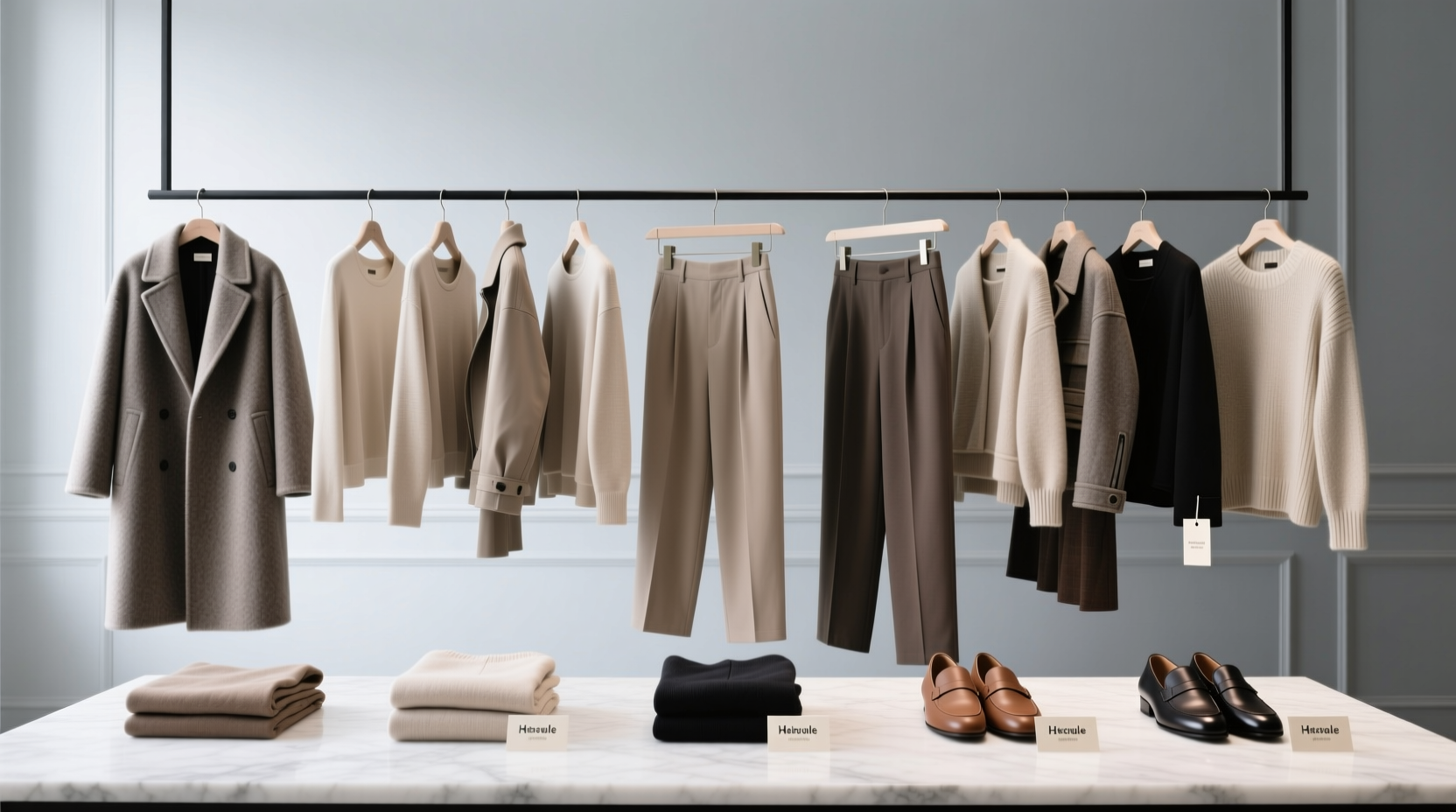
The number 30 isn’t arbitrary. It strikes a balance between minimalism and realism. Fewer than 20 pieces may leave you underprepared for climate shifts or social events; more than 40 risks reintroducing clutter. Thirty allows room for essential layers, transitional garments, and a few statement pieces—without overwhelming choice.
This constraint forces intentionality. Each item must earn its place by being versatile, durable, and aligned with your aesthetic. As designer and slow-fashion advocate Elizabeth L. Cline puts it:
“Minimalism in fashion isn’t deprivation—it’s editing. You keep what serves you and let go of what doesn’t.” — Elizabeth L. Cline, Author of *The Conscious Closet*
By limiting your wardrobe, you shift focus from quantity to quality. You begin to appreciate craftsmanship, fit, and longevity over fast trends. The result? A closet that simplifies mornings, reduces laundry loads, and supports ethical consumption.
Step-by-Step: Building Your 30-Item Capsule Wardrobe
Constructing a year-round capsule requires strategy. Follow this six-phase process to create a balanced, adaptable wardrobe.
- Declutter Ruthlessly: Remove everything from your closet. Sort into three piles: keep, donate, maybe. If an item hasn’t been worn in nine months, doesn’t fit well, or no longer reflects your style, let it go.
- Assess Your Lifestyle: Track your weekly activities for two weeks. How many days do you work remotely? Attend meetings? Exercise? Socialize? Your wardrobe should reflect reality, not aspiration.
- Define Your Color Palette: Choose a neutral base (e.g., black, navy, beige, gray) with one or two accent colors. This ensures every top pairs with every bottom.
- Select Core Layers: Prioritize pieces that transition across seasons—mid-weight knits, trench coats, merino wool tees, and convertible outerwear.
- Allocate Your 30 Items: Use a structured breakdown to distribute pieces logically (see table below).
- Test and Refine: Live with the capsule for four weeks. Note gaps or redundancies. Adjust before finalizing.
Smart Allocation: What Counts as One Item?
To stay within 30, define what constitutes a single piece. The general rule: one wearable unit = one item. Exceptions include shoes and accessories, which are typically excluded unless they’re integral (like tights).
Here’s a recommended distribution for a gender-neutral, urban professional capsule:
| Category | Number of Items | Examples |
|---|---|---|
| Tops (long/short sleeve) | 8 | T-shirts, blouses, button-downs, turtlenecks |
| Bottoms | 5 | Jeans, trousers, skirt, chinos, leggings |
| Dresses/Jumpsuits | 3 | Wrap dress, shirt dress, utility jumpsuit |
| Outerwear | 4 | Blazer, trench coat, puffer jacket, denim jacket |
| Knits/Sweaters | 5 | Cashmere sweater, cardigan, hoodie, vest |
| Workout/Comfort Wear | 3 | Yoga pants, sweatshirt, running shorts |
| Specialty Items | 2 | Suit, formal dress, swimwear |
| Total | 30 |
Note: Undergarments, socks, sleepwear, and shoes are not counted unless they serve dual roles (e.g., black ankle boots worn daily). Limit footwear to 3–4 pairs to maintain cohesion.
Real-Life Example: Maya’s Urban Capsule
Maya, a 34-year-old project manager in Portland, OR, built her 30-item capsule after realizing she spent 15 minutes every morning choosing outfits. Her city experiences mild summers and damp winters, requiring adaptable layers.
She started by identifying her non-negotiables: comfort for biking to work, professionalism for client meetings, and warmth during rainy commutes. After purging 80% of her wardrobe, she assembled a capsule centered on charcoal gray, cream, olive green, and navy.
Key pieces included:
- A reversible wool-blend coat (doubles as fall and winter outerwear)
- Two merino wool blend turtlenecks (worn under blazers or alone)
- A pair of stretch-trousers that look polished but feel like leggings
- A machine-washable silk blouse (resists wrinkles, travels well)
- A quilted vest (adds warmth without bulk)
Within three weeks, Maya reduced her laundry frequency by half and saved $200 monthly by avoiding impulse buys. “I used to think I needed variety,” she said. “Now I realize I needed reliability.”
Essential Criteria for Selecting Each Piece
Every garment in your capsule must meet at least three of these five standards:
- Versatility: Can it be dressed up or down? Worn in multiple seasons?
- Fit: Does it flatter your body and allow movement?
- Durability: Is it made from high-quality fabric with strong stitching?
- Color Compatibility: Does it match at least 80% of your other items?
- Low Maintenance: Can it be machine washed or air-dried easily?
Fabrics matter. Prioritize natural blends: cotton-linen for breathability, wool-silk for warmth without itch, TENCEL™ for drape and sustainability. Avoid dry-clean-only materials unless absolutely necessary.
Seasonal Adaptation Without Adding Items
A true year-round capsule doesn’t change with the calendar—it adapts using layering. Here’s how to handle temperature shifts:
- Summer: Wear lightweight tops solo; roll sleeves on shirts; use sandals to expose skin and cool down.
- Fall/Spring: Layer tees under open cardigans; add a trench or utility jacket.
- Winter: Wear thermal long johns under pants; layer turtleneck + shirt + blazer + coat. Swap cotton for wool socks.
The key is modular dressing. Think of your wardrobe as a system of interchangeable parts. A black turtleneck works under a summer linen shirt for mild evenings or beneath a parka in January.
“Layering is the secret weapon of capsule wardrobes. It multiplies outfit combinations exponentially without adding pieces.” — Ana White, Sustainable Fashion Consultant
Checklist: Launch Your Capsule in 7 Days
Follow this week-long plan to build your 30-item wardrobe efficiently:
- Day 1: Empty your closet and launder all clothes.
- Day 2: Sort into keep/donate piles. Be ruthless.
- Day 3: Define your color scheme and core needs (work, leisure, climate).
- Day 4: Audit remaining pieces. Identify gaps (e.g., missing warm layer).
- Day 5: Shop strategically—only for missing essentials, not trends.
- Day 6: Assemble 30 items. Hang them together for visual cohesion.
- Day 7: Test-run for a week. Track wear frequency and comfort.
Frequently Asked Questions
Can I include workout clothes in my 30 items?
Yes, but only if you wear them outside the gym. If your leggings double as casual wear or your sneakers are everyday footwear, they count. Otherwise, keep activewear separate to preserve capsule integrity.
What if I need formal attire for weddings or events?
Incorporate one versatile formal piece—like a black blazer or wrap dress—that can be styled up or down. For rare occasions, consider renting instead of owning.
How do I handle weight fluctuations?
Choose fabrics with slight stretch and timeless silhouettes. Keep one “transition” item (e.g., an adjustable waist pant) during changes. Remember: a capsule should serve your current life, not a past or future version of yourself.
Final Thoughts: Simplicity as a Style Statement
A 30-item capsule wardrobe is more than a fashion challenge—it’s a commitment to clarity. By removing excess, you gain freedom: freedom from indecision, from laundry overload, from the pressure to constantly update your look. You begin to see clothing as tools, not trophies.
Start small. Begin with your top 10 most-worn items and build outward. Refine over time. The goal isn’t perfection—it’s progress toward a closet that feels calm, cohesive, and completely yours.




 浙公网安备
33010002000092号
浙公网安备
33010002000092号 浙B2-20120091-4
Comments
No comments yet. Why don't you start the discussion?