
A cluttered closet doesn’t just make mornings stressful—it can also cloud your sense of personal style. Many people attempt a capsule wardrobe to simplify their lives, only to abandon the idea when it feels too restrictive. The truth is, a successful capsule wardrobe isn’t about owning ten items and wearing them on repeat. It’s about curating a collection of clothes that reflect who you are, serve your lifestyle, and make getting dressed effortless. This guide breaks down how to build a realistic capsule wardrobe through thoughtful decluttering—without ever feeling like you’re giving up your identity or options.
Understanding the Capsule Wardrobe: More Than Minimalism
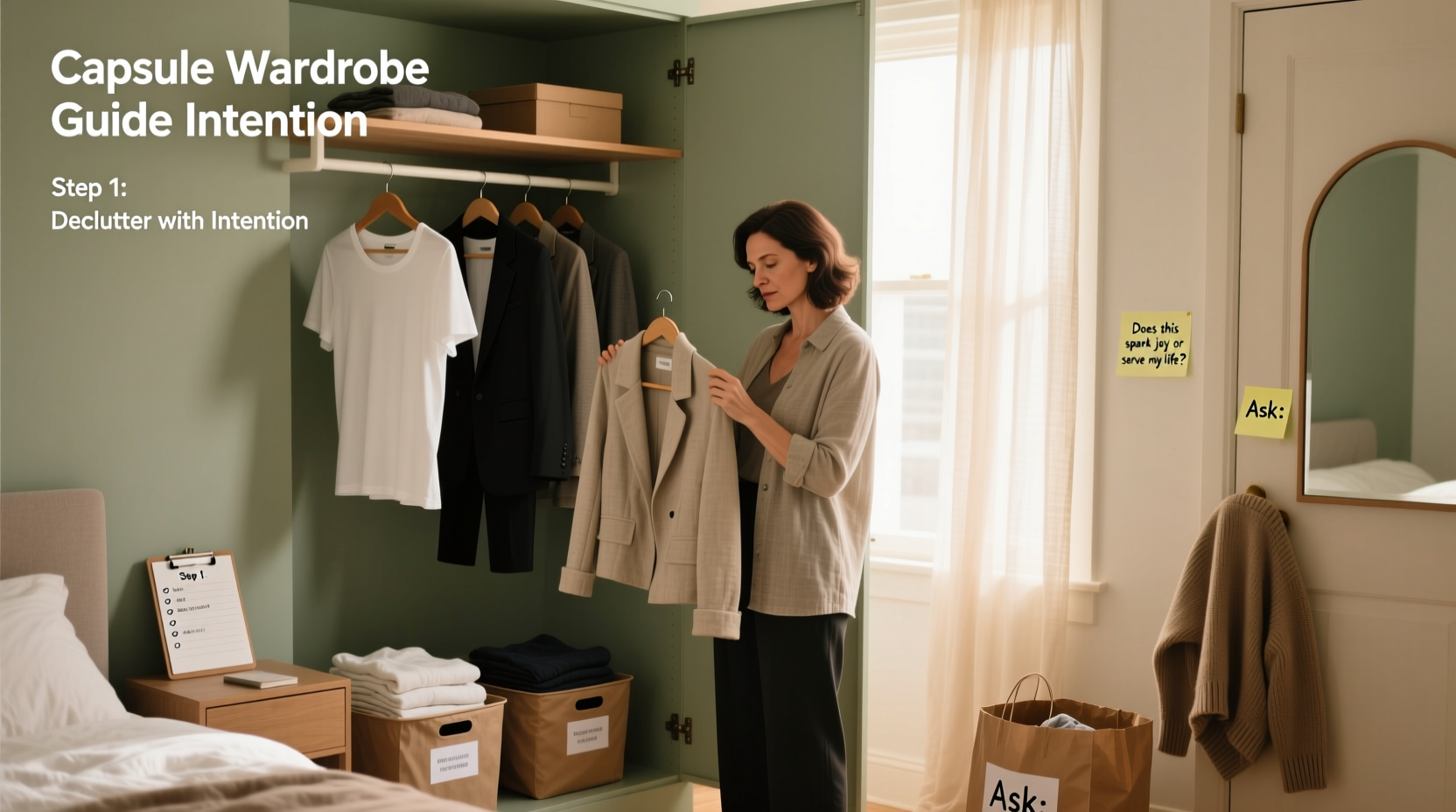
The term “capsule wardrobe” was popularized in the 1970s by London boutique owner Susie Faux, but it gained widespread attention when designer Donna Karan introduced her “seven easy pieces” concept. Today, the idea has evolved beyond fashion circles into a lifestyle strategy for intentional living. At its core, a capsule wardrobe consists of a small number of versatile, high-quality clothing items that can be mixed and matched to create multiple outfits.
What often gets lost in translation is the word “realistic.” A capsule should not force you into wearing the same black turtleneck every day. Instead, it should reflect your climate, routine, body type, and aesthetic preferences. For example, someone living in Minnesota will need different base layers than someone in Miami. A teacher may require more polished looks than a freelance writer working from home.
“A capsule wardrobe isn’t about limitation—it’s about liberation. When you remove the noise, you finally see what truly works for you.” — Courtney Carver, Author of *Soulful Simplicity*
Step-by-Step Guide to Decluttering Your Closet
Decluttering doesn’t have to happen overnight. Rushing leads to regret and inconsistency. Follow this six-phase approach over two to three weeks to build momentum without burnout.
- Pause new purchases. Stop buying clothes for at least 30 days. This creates space to assess what you already own without external distractions.
- Empty your closet completely. Take everything out and lay it on your bed or floor. Seeing all your clothes together reveals patterns—like owning five nearly identical denim jackets.
- Categorize by type. Sort items into piles: tops, bottoms, dresses, outerwear, shoes, accessories. This makes it easier to evaluate balance and repetition.
- Try each item on. Fit changes over time. If something doesn’t fit well or feels uncomfortable, set it aside—even if it’s brand new or expensive.
- Ask key questions:
- Have I worn this in the past year?
- Does it align with my current lifestyle?
- Does it pair easily with other pieces?
- Do I feel confident in it?
- Sort into keep, donate, repair, store (seasonal). Be honest. If you’re keeping something “just in case,” consider whether that case ever actually arises.
Building a Balanced Capsule: Quantity vs. Quality
There’s no universal number for how many items belong in a capsule. Some suggest 30 pieces in 3 months; others recommend 50. What matters more than quantity is cohesion. Your goal is to create at least 15–20 distinct outfits from your collection using interchangeable basics.
A balanced capsule typically includes:
- 5–7 tops (blouses, t-shirts, sweaters)
- 3–5 bottoms (jeans, trousers, skirts)
- 1–2 dresses or jumpsuits
- 1–2 outerwear pieces (jacket, coat, blazer)
- 2–3 pairs of shoes
- Accessories that enhance variety (scarves, belts, jewelry)
Focus on neutral bases—navy, gray, beige, black, white—that can be accented with 1–2 seasonal colors. Choose fabrics that hold up to washing and wear, such as cotton, wool, linen, and TENCEL™. Avoid trendy pieces unless they genuinely suit your long-term style.
Do’s and Don’ts of Capsule Building
| Do | Don’t |
|---|---|
| Prioritize fit and comfort over trendiness | Keep items “because they were expensive” |
| Choose pieces that layer well | Overfill your capsule to match arbitrary numbers |
| Include one statement piece for personality | Ignore seasonal needs (e.g., no warm layers in winter) |
| Wash and press clothes before evaluating | Rely solely on size tags—fit matters more |
Real Example: How Sarah Rebuilt Her Wardrobe Without Losing Herself
Sarah, a 38-year-old marketing consultant from Portland, spent years cycling through fast-fashion trends. Her closet held 80+ items, yet she claimed she “had nothing to wear” three times a week. After reading about capsule wardrobes, she decided to try one—but with skepticism.
She started by pulling everything out and categorizing. She discovered she owned nine black sweaters, seven of which hadn’t been worn in over a year. During the try-on phase, only 32 pieces felt good and fit properly. From those, she built a 38-item capsule including two blazers, four pairs of jeans, and a trench coat that worked across seasons.
Instead of feeling limited, Sarah found herself dressing faster and receiving more compliments. By removing visual noise, she began noticing which silhouettes flattered her most. Six months later, she had reduced annual clothing spending by 60% and donated over 50 items to a local women’s shelter.
“I thought minimalism meant looking boring,” she said. “But now I feel more like myself than ever.”
How to Maintain Flexibility and Style
The fear of restriction often comes from misunderstanding what a capsule is supposed to do. It’s not a prison sentence for your style—it’s a foundation. Think of it like a kitchen pantry stocked with olive oil, rice, spices, and onions. You can make hundreds of meals from a few staples, especially when you add fresh ingredients weekly.
Apply the same logic to your wardrobe. Keep your core consistent, but allow for rotation:
- Seasonal swaps: Store off-season items instead of discarding them. Swap summer dresses for cozy knits when temperatures drop.
- One-in, one-out rule: Want to buy a new sweater? Remove an old one first. This keeps volume manageable.
- Style anchors: Identify 2–3 signature elements—like red lipstick, gold hoops, or ankle boots—and use them to unify different outfits.
- Occasional additions: Allow yourself one non-essential purchase per season if it brings joy and complements existing pieces.
Checklist: Building Your Realistic Capsule Wardrobe
- ☐ Pause new clothing purchases for 30 days
- ☐ Empty entire closet and sort by category
- ☐ Try on every item and assess fit, condition, and relevance
- ☐ Remove anything unworn in the past year or that doesn’t fit
- ☐ Define your lifestyle needs (work, casual, social, exercise)
- ☐ Select 5–7 tops, 3–5 bottoms, 1–2 dresses, 1–2 outerwear items
- ☐ Add 2–3 pairs of versatile shoes and functional accessories
- ☐ Test the capsule for 2 weeks—adjust as needed
- ☐ Implement a one-in, one-out rule moving forward
- ☐ Schedule seasonal reviews every 3 months
Frequently Asked Questions
Isn’t a capsule wardrobe only for people with simple lifestyles?
No. Capsules can be tailored to any life. A nurse might include scrubs, lab coats, and supportive shoes. A creative director might prioritize bold textures and tailoring. The key is alignment with real-world demands—not conformity to a minimalist aesthetic.
What if I need formal clothes occasionally?
For rare events (weddings, funerals, galas), consider renting or borrowing. Alternatively, keep one elevated outfit in your capsule or stored separately. Occasional-use items don’t need daily presence but should still be accounted for in your overall plan.
Can I have more than one capsule?
Absolutely. Some people maintain separate capsules for work, weekends, or travel. Others rotate between seasonal capsules. The system should support your life, not complicate it.
Conclusion: Freedom Through Intentionality
Decluttering your wardrobe isn’t about deprivation—it’s about making room for clarity, confidence, and ease. A realistic capsule wardrobe removes decision fatigue, reduces consumption, and helps you express your authentic self without excess. You don’t need to eliminate everything except black turtlenecks. You just need to know what works, why it works, and how to use it fully.
Start small. Be kind to yourself. Adjust as you go. The goal isn’t perfection; it’s progress. When you open your closet and see only pieces you love and wear, you’ll realize that less really can be more—especially when it means more time, more money, and more peace.




 浙公网安备
33010002000092号
浙公网安备
33010002000092号 浙B2-20120091-4
Comments
No comments yet. Why don't you start the discussion?