
In an era defined by fast fashion, social media trends, and relentless consumerism, the modern wardrobe has become a battlefield of identity, expression, and excess. For many, opening the closet feels less like inspiration and more like overwhelm—a chaotic mix of unworn items, forgotten purchases, and the nagging sense that nothing truly fits or feels \"right.\" Amid this clutter, two opposing philosophies have emerged: the capsule wardrobe, built on minimalism and intentionality, and the maximalist closet, celebrating abundance, boldness, and self-expression through volume. While both approaches offer value, one quietly promises something increasingly rare—peace in having fewer choices.
The Allure and Anxiety of the Maximalist Closet
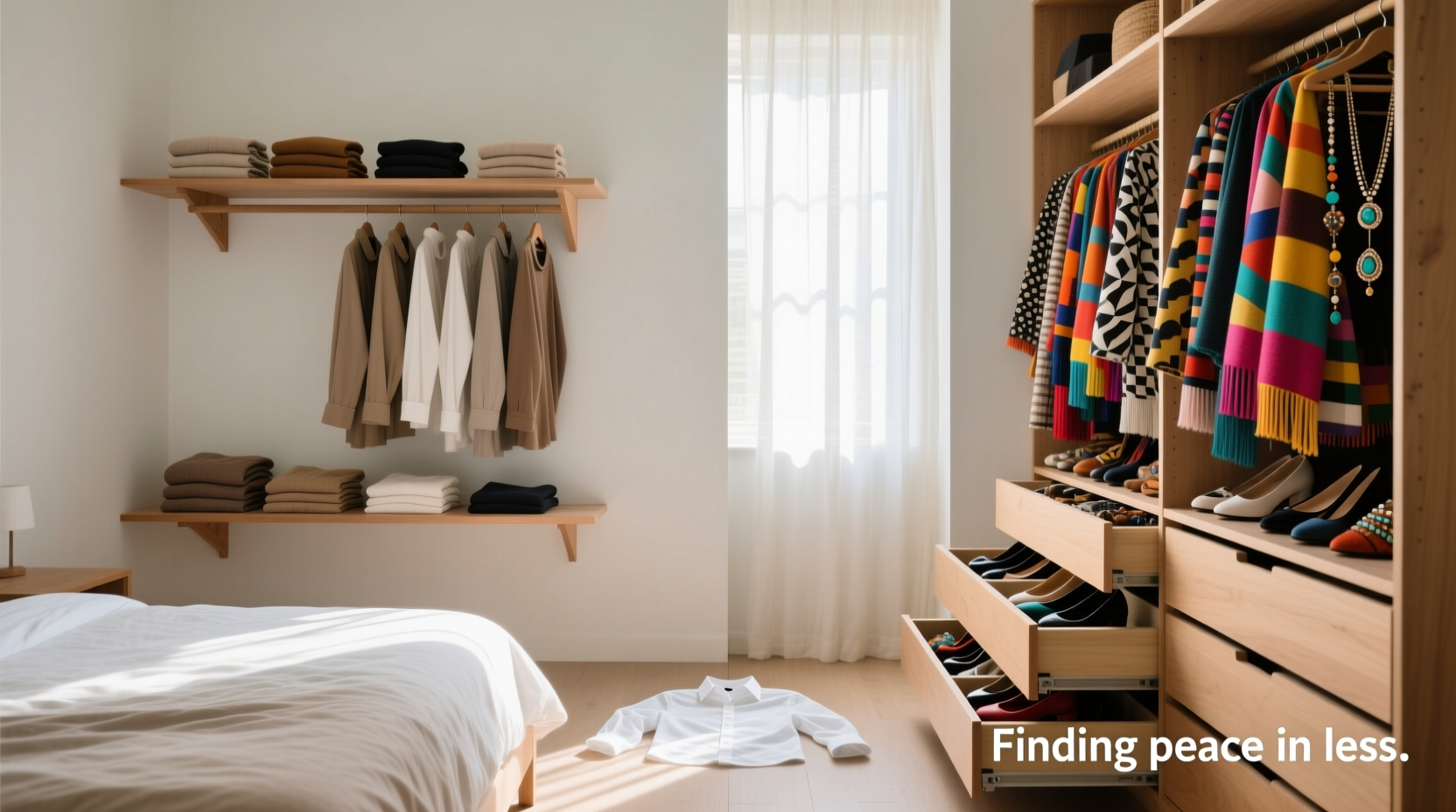
Maximalism in fashion is unapologetic. It embraces color, texture, layering, and quantity as tools of creative freedom. A maximalist closet might house hundreds of pieces—statement jackets, vintage finds, seasonal collections, and trend-driven purchases—all reflecting different moods, moments, and identities. For those who thrive on variety and visual stimulation, this approach feels empowering. Fashion becomes performance art, and the closet a personal gallery.
Yet beneath the vibrancy lies a hidden cost: decision fatigue. Research from behavioral psychology shows that the more choices we face, the more mental energy we expend—even if no actual action is taken. When every outfit requires sifting through dozens of tops, skirts, and accessories, getting dressed becomes a chore rather than a ritual. The paradox of choice suggests that while variety seems liberating, it often leads to dissatisfaction, second-guessing, and even regret.
“Too much choice doesn’t lead to more freedom—it leads to more paralysis.” — Barry Schwartz, author of *The Paradox of Choice*
This emotional toll is rarely discussed in fashion circles. A full closet should mean more possibilities, but for many, it means indecision, guilt over unused items, and a persistent feeling of being “underdressed” despite owning so much.
What Is a Capsule Wardrobe—and Why It Works
A capsule wardrobe is a curated collection of essential clothing items—typically 30 to 50 pieces—that can be mixed and matched seamlessly across a season. The concept was popularized in the 1970s by London boutique owner Susie Faux and later adopted by designers like Donna Karan, who introduced her iconic “Seven Easy Pieces” line. At its core, the capsule wardrobe isn’t about deprivation; it’s about alignment. Each piece serves a purpose, reflects personal style, and coordinates with others.
The power of the capsule lies in its constraints. By reducing options, it eliminates noise. Getting dressed becomes effortless because compatibility is already built into the system. There are no “might wear someday” items taking up space. Instead, every garment earns its place through utility, fit, and joy.
Capsule vs. Maximalist: A Practical Comparison
| Aspect | Capsule Wardrobe | Maximalist Closet |
|---|---|---|
| Number of Items | 30–50 per season | 100+ year-round |
| Decision Fatigue | Low – outfits are pre-coordinated | High – constant sorting and matching |
| Cost Efficiency | Higher initial spend, lower long-term cost | Frequent spending on trends |
| Sustainability | High – less waste, longer wear | Variable – depends on usage and quality |
| Style Expression | Refined, consistent, intentional | Diverse, dynamic, experimental |
| Maintenance | Easy to manage and organize | Requires frequent editing and reorganization |
This comparison isn’t about declaring a winner. It’s about understanding trade-offs. The capsule prioritizes clarity and calm; the maximalist celebrates creativity and individuality. The key insight? You don’t have to choose one forever. Many people move between these modes depending on life phase, career demands, or emotional needs.
How Reducing Options Brings Real Peace
Peace in fashion isn’t just about aesthetics—it’s psychological. When your wardrobe operates on autopilot, mental bandwidth is freed for more meaningful decisions. This is especially valuable in high-stress environments where appearance matters but time is scarce: executives, parents, creatives juggling multiple roles.
Consider Sarah, a marketing director in Toronto, who once spent 20 minutes every morning choosing an outfit. Her closet overflowed with designer labels and seasonal trends, yet she felt perpetually underdressed. After adopting a 40-piece capsule focused on neutral tones, quality fabrics, and versatile silhouettes, her morning routine dropped to five minutes. More importantly, she reported feeling “lighter”—not just physically, but mentally. “I stopped worrying about what I looked like,” she said, “and started focusing on what I was saying.”
This shift mirrors findings in cognitive science: external order supports internal clarity. When our environment is simplified, our mind follows. A smaller wardrobe reduces not only physical clutter but also the invisible burden of unresolved decisions.
Building Your Own Balanced Approach: A Step-by-Step Guide
You don’t need to burn your sequined blazer or donate every neon sweater to benefit from the principles of a capsule wardrobe. Instead, integrate its wisdom into your existing style. Here’s how:
- Conduct a Wardrobe Audit: Remove everything from your closet. Sort items into three piles: keep, donate, maybe. Try on each piece. Does it fit? Do you love it? Have you worn it in the past year?
- Define Your Style Archetype: Are you classic, romantic, edgy, bohemian? Identify 3–5 adjectives that describe your ideal aesthetic. Use them as filters when deciding what stays.
- Create a Foundation Layer: Choose 10–15 core pieces in neutral colors (black, navy, beige, gray) that form the base of most outfits—e.g., tailored pants, a white shirt, a trench coat, a little black dress.
- Add Intentional Accents: Allow room for personality. Include 5–10 expressive items (a bold print, a vintage jacket, colorful shoes) that can be layered over the foundation.
- Adopt a One-In, One-Out Rule: Every time you buy something new, remove one item. This keeps volume in check and forces mindful consumption.
- Seasonal Refresh, Not Overhaul: Reassess your closet every 3–4 months. Swap out seasonal items, repair damaged pieces, and reassess what’s working.
Can Maximalists Find Peace Too?
Absolutely—but it requires structure. Unstructured maximalism leads to chaos. The most sustainable maximalist closets are those with systems: designated zones for categories (evening wear, denim, accessories), regular edit sessions, and a clear sense of personal narrative. Think of Iris Apfel, the legendary stylist known for her eclectic layers and oversized glasses. Her style is maximalist, yes, but deeply coherent. Every piece contributes to a signature look.
The lesson? Whether you own 50 pieces or 500, coherence brings peace. Without it, even a minimalist closet can feel disjointed. With it, a maximalist wardrobe becomes a curated expression of self, not a storage problem.
“More is more, but only if it means more meaning.” — Iris Apfel
FAQ: Common Questions About Capsule Living
Isn’t a capsule wardrobe boring or repetitive?
Not if it’s well-designed. A thoughtfully assembled capsule offers dozens of outfit combinations through layering and accessorizing. The goal isn’t repetition—it’s efficiency. And many find that wearing their favorite pieces more often increases confidence, not monotony.
Can I still follow trends with a capsule?
Yes—strategically. Incorporate trends through accessories (scarves, jewelry, shoes) or one statement piece per season. This allows for freshness without compromising cohesion.
What if my lifestyle requires varied clothing (work, gym, events)?
Design sub-capsules. Have a professional set (5–7 workwear items), a casual set (weekend basics), and a special occasion group. Rotate as needed. The principle remains: limit options within each category.
Conclusion: Choosing Less to Live More
The debate between capsule wardrobes and maximalist closets isn’t really about clothes. It’s about values. What do you want your daily life to feel like? Do you want to spend energy managing clutter, or channel that energy into work, relationships, and growth? Simplicity isn’t the enemy of style—it’s its ally. When you stop chasing novelty and start curating meaning, dressing becomes less about performance and more about presence.
Finding peace in having fewer options doesn’t mean giving up self-expression. It means making room for what truly matters. Whether you build a 35-piece capsule or maintain a vibrant maximalist collection with strict editing rules, the goal is the same: a wardrobe that serves you, not the other way around.




 浙公网安备
33010002000092号
浙公网安备
33010002000092号 浙B2-20120091-4
Comments
No comments yet. Why don't you start the discussion?