
In recent months, a quiet but unmistakable shift has taken place on keyrings around the world. Once dominated by simple rubber fobs or generic metal tags, many now dangle with whimsical, oversized-eyed capybaras made of silicone or soft rubber. What started as a niche trend among anime fans and kawaii culture enthusiasts has exploded into mainstream popularity. From Tokyo street markets to Etsy storefronts in Portland, capybara keychains are everywhere. But beyond their undeniable charm, a practical question lingers: Are these adorable animal-shaped accessories actually better than plain rubber keychains? Or is this just another case of style over substance?
The answer isn’t as simple as “yes” or “no.” It depends on what you value in a keychain—durability, functionality, emotional satisfaction, or cost-effectiveness. To understand the real difference, we need to examine materials, design, user experience, and even psychological benefits.
Design and Aesthetic Appeal: More Than Just Cute
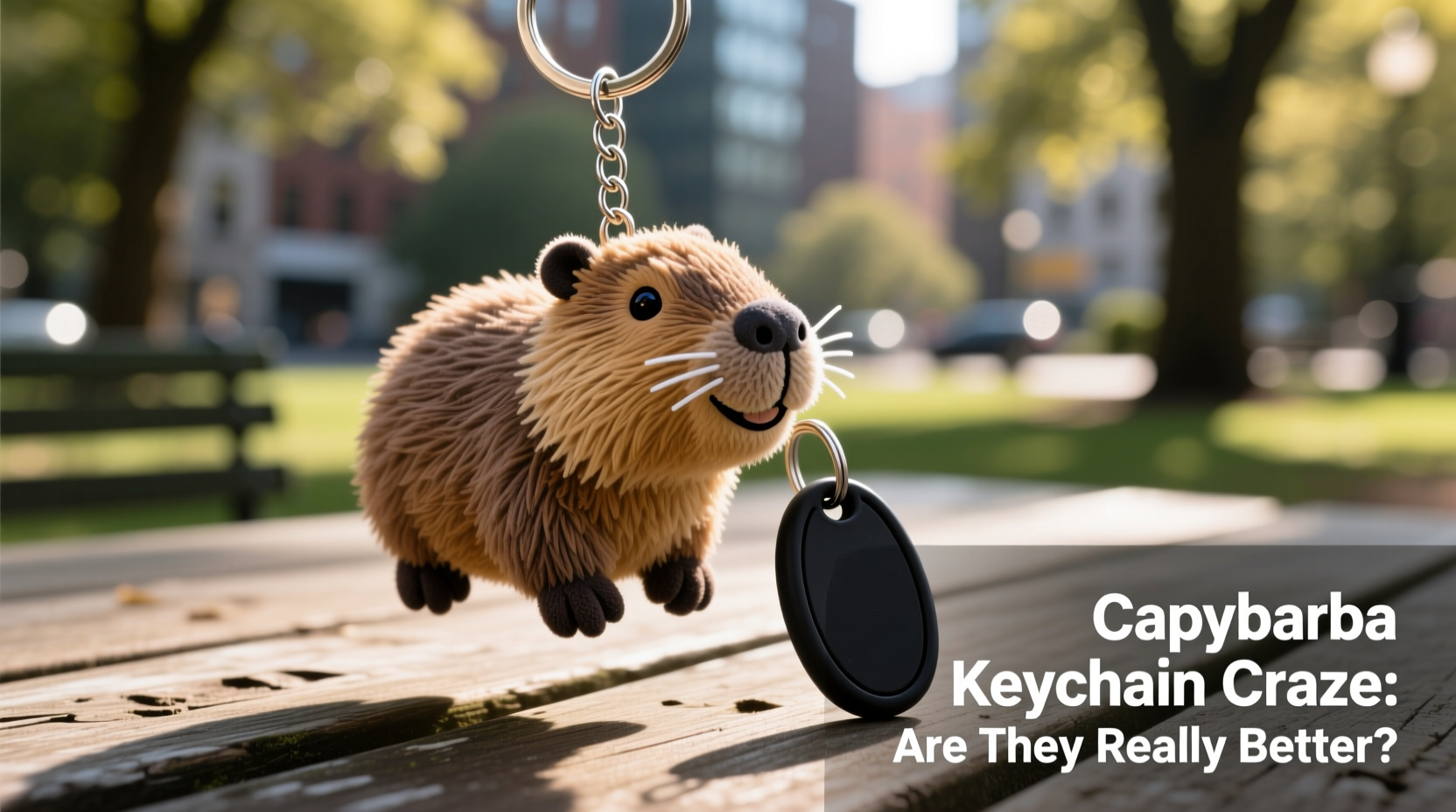
Capybara keychains stand out primarily due to their design. Most feature exaggerated, cartoonish interpretations of the world’s largest rodent—round bodies, tiny ears, serene expressions, and often, a small accessory like a teacup or flower. These designs tap into the global fascination with *kawaii* (Japanese for “cute”) culture, which emphasizes childlike innocence and emotional comfort through visual design.
Unlike plain rubber keychains, which are typically flat, rectangular, and utilitarian, capybara versions are sculpted in 3D, offering tactile engagement. Their soft silicone or TPU (thermoplastic polyurethane) construction gives them a slight squishiness, making them pleasant to handle. This sensory appeal turns a mundane object into a small source of joy—a concept psychologists refer to as \"micro-moments of delight.\"
Material Quality and Durability Compared
At first glance, both capybara keychains and standard rubber keychains are made from flexible, resilient materials—often silicone or synthetic rubber. However, quality varies significantly based on manufacturing standards.
Plain rubber keychains are usually injection-molded from basic thermoset rubber or low-cost PVC. They’re designed for mass production and minimal cost, which often means thinner walls, less UV resistance, and a higher chance of cracking over time—especially when exposed to extreme temperatures or sunlight.
Capybara keychains, particularly those from reputable sellers, tend to use food-grade or high-durometer silicone. This material resists fading, maintains flexibility in cold weather, and doesn’t degrade as quickly when exposed to oils or solvents. The thicker molding also makes them more resistant to tearing at stress points like the keyring attachment.
“Silicone’s molecular stability makes it superior to conventional rubber in both longevity and safety. When properly cured, it can last years without hardening or discoloration.” — Dr. Lena Park, Materials Scientist at PolyTech Innovations
Functional Comparison: Performance Beyond Cuteness
While aesthetics matter, a keychain must still serve its primary function: holding keys securely and being easy to use. Let’s break down performance across several criteria.
| Feature | Capybara Keychain | Plain Rubber Keychain |
|---|---|---|
| Durability | High (if made with quality silicone) | Moderate to low (prone to cracking) |
| Grip & Handling | Excellent (textured surface, ergonomic shape) | Poor (slippery when wet or oily) |
| Key Organization | Limited (bulky shape may crowd keys) | Better (flat design allows stacking) |
| Weather Resistance | High (resists UV, moisture, temperature swings) | Low to moderate (may swell or degrade) |
| Cost | $5–$15 (handmade or imported) | $0.50–$2 (bulk manufactured) |
As shown, capybara keychains excel in grip and resilience but may fall short in space efficiency. For someone carrying fewer keys, the trade-off is negligible. But users with large keysets might find the bulky animal shape inconvenient.
Real-World Example: The Commuter Who Never Loses Keys
Sophie Tanaka, a UX designer in Vancouver, switched to a pastel pink capybara keychain after losing her third set of keys in one year. “I used plain black rubber tags before,” she said. “They blended into everything—my bag, my couch, the sidewalk.” After adopting the capybara version, she noticed two changes: First, she could feel the unique shape instantly in her pocket. Second, the cheerful design made her smile every time she used it, which subconsciously made her more mindful of where she placed her keys.
“It sounds silly, but I haven’t lost them since. That little capybara became a mental anchor,” she explained. Her experience reflects a broader behavioral principle: objects with emotional resonance are less likely to be misplaced because they command attention and care.
Step-by-Step: How to Choose the Right Keychain for You
Deciding between a capybara keychain and a plain rubber one shouldn’t be arbitrary. Follow this decision-making process to ensure your choice aligns with your lifestyle:
- Assess your key load: Do you carry more than five keys? If so, prioritize slim, stackable designs over bulky ornaments.
- Evaluate your environment: Do you live in a rainy climate or park outdoors often? Silicone capybara keychains handle moisture better than cheaper rubber.
- Consider emotional utility: If you respond well to small joys—like cute stationery or uplifting phone wallpapers—a capybara keychain may boost daily mood.
- Check material transparency: Look for product descriptions that specify “food-grade silicone” or “BPA-free.” Avoid vague terms like “soft rubber” without sourcing details.
- Test grip and size: If buying online, read reviews mentioning texture and ease of handling. Some capybaras have smooth finishes that can be slippery.
FAQ: Common Questions About Capybara vs. Rubber Keychains
Are capybara keychains safe for kids?
Yes, provided they are made from non-toxic, BPA-free silicone and have no small detachable parts. Always supervise young children, as the keyring itself poses a choking hazard.
Do capybara keychains wear out faster because of their shape?
Not necessarily. While complex shapes have more surface area, high-quality silicone resists stress fractures. The weakest point—the ring attachment—is usually reinforced in well-made models.
Can I customize a capybara keychain?
Many independent sellers offer customization, including color choices, engraved names, or even matching outfits (e.g., a capybara in a raincoat). Plain rubber keychains rarely offer such personalization.
Final Verdict: Function Meets Feeling
So, are capybara keychains really better than plain rubber ones? In pure functional terms, not always. A minimalist user with a single house key might find the extra bulk unnecessary. But when you factor in durability, tactile satisfaction, emotional uplift, and long-term resilience, the capybara keychain often comes out ahead—especially if made with quality materials.
The craze isn’t just about cuteness. It reflects a growing desire for everyday objects that do more than just work—they make life a little brighter. As industrial designer Naomi Reed puts it: “We don’t just use tools. We form relationships with them. The best designs honor both utility and humanity.”
If you’ve ever smiled while fumbling for your keys, you already understand the value of a well-designed keychain. Whether you choose a serene capybara sipping tea or a no-nonsense rubber tag, let your decision reflect not just practicality, but the kind of day-to-day experience you want to create.




 浙公网安备
33010002000092号
浙公网安备
33010002000092号 浙B2-20120091-4
Comments
No comments yet. Why don't you start the discussion?