
A high-pitched squeak or grinding noise when accelerating can be more than just annoying—it’s often an early warning sign from your vehicle. While some sounds may seem minor, ignoring them can lead to costly repairs or even safety risks. Understanding what causes these noises and how to address them promptly ensures your car remains reliable, efficient, and safe on the road.
This guide breaks down the most frequent mechanical culprits behind acceleration-related squeaks, offers actionable fixes, and provides a clear path for diagnosis and repair—whether you're handling it yourself or preparing to speak confidently with a mechanic.
Common Mechanical Causes of Squeaking During Acceleration
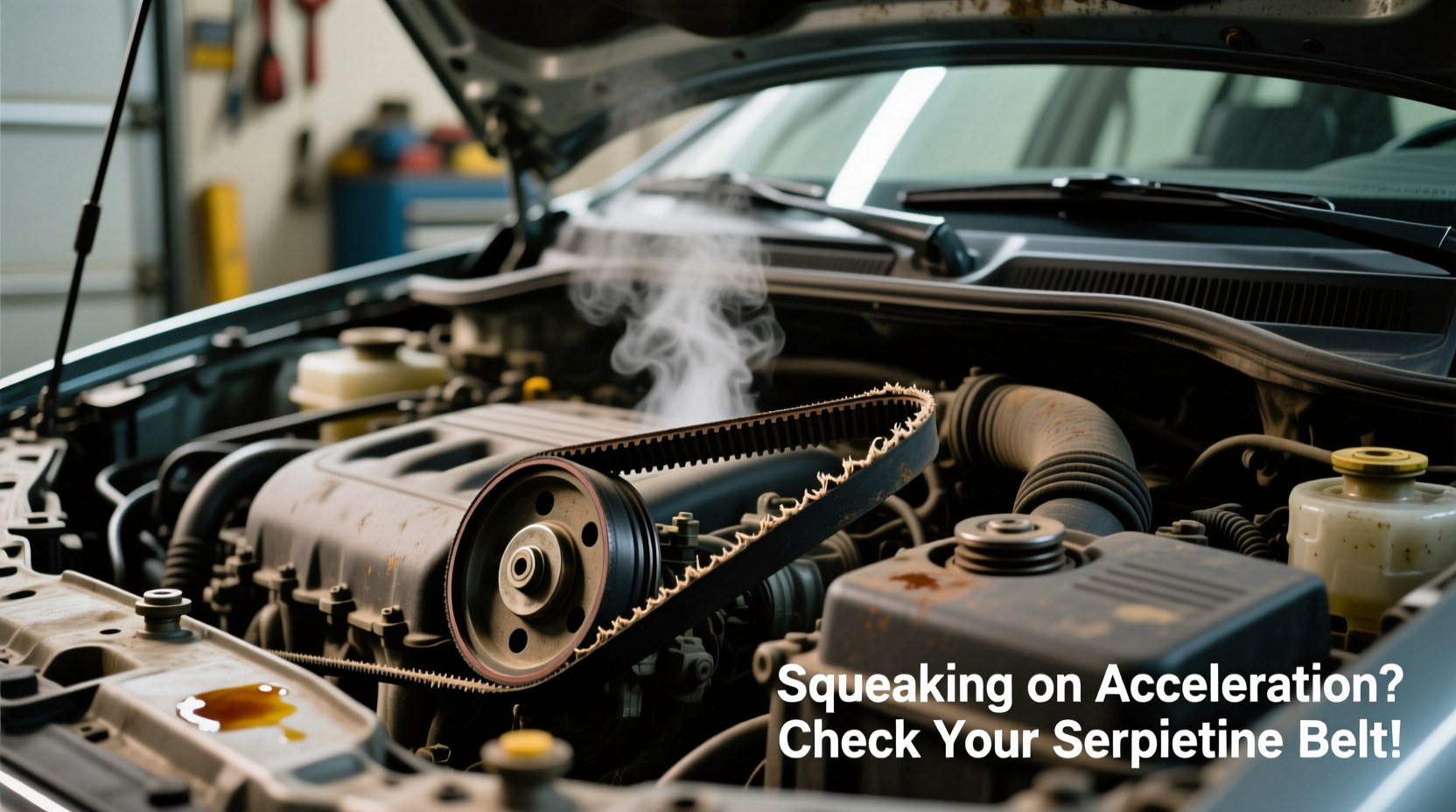
Squeaking during acceleration typically stems from friction, wear, or misalignment in key components of your vehicle. The location and timing of the noise can help pinpoint the source. Below are the most prevalent causes:
- Worn serpentine belt or accessory belts: A loose, cracked, or glazed belt slipping on pulleys often produces a loud squeal, especially at startup or under load (e.g., using AC).
- Failing pulley bearings: Tensioner or idler pulleys with worn bearings create chirping or squealing that increases with engine speed.
- Low power steering fluid: If the noise is heard primarily when turning while accelerating, low fluid or a failing pump may be the issue.
- Brake pad wear indicators: Some vehicles trigger a metallic squeak when pads are thin, which may become noticeable under light acceleration due to brake drag.
- Drivetrain or suspension issues: Worn CV joints, bushings, or wheel bearings can produce rhythmic squeaks or creaks that correlate with speed.
Step-by-Step Diagnosis Process
Before replacing parts blindly, follow this logical sequence to identify the root cause efficiently:
- Listen carefully: Start the engine cold and listen for immediate squealing. A brief squeak at startup often points to the serpentine belt.
- Check under the hood: With the engine running (use caution), use a mechanic’s stethoscope or a long screwdriver to isolate noise near the belt system.
- Inspect the belt: Look for cracks, fraying, glazing (shiny spots), or separation. Press the belt; if it deflects more than ½ inch, it may be too loose.
- Test accessories: Disable non-essential loads (AC, headlights) one by one to see if the noise changes.
- Drive and observe: Accelerate slowly and note if the sound correlates with wheel speed (suggesting brakes or bearings) or engine RPM (indicating belts or pulleys).
- Lift the vehicle safely: Inspect suspension components, CV boots for tears, and brake pads for wear if the noise seems wheel-related.
“Over 60% of acceleration squeaks we diagnose stem from belt systems. Early inspection prevents breakdowns.” — Carlos Mendez, ASE-Certified Master Technician
Key Solutions by Cause
Once you’ve identified the likely source, targeted action can resolve the issue quickly. Here’s how to handle each common cause:
1. Replace or Adjust the Serpentine Belt
If the belt shows wear or slips, replacement is usually required. Modern belts are tensioned automatically, so adjustment isn’t manual—but ensure the tensioner is functioning.
- Use a breaker bar to release tension and slide the old belt off.
- Install the new belt following the routing diagram (often on the engine cover).
- Confirm proper seating on all pulleys before restarting.
2. Replace Faulty Pulleys or Tensioners
If the belt looks fine but the squeak persists, spin each pulley by hand. Roughness, wobble, or noise indicates failure.
Replace idler and tensioner pulleys as a set if one is faulty—they endure similar wear.
3. Refill or Bleed Power Steering System
If the noise increases when turning, check the power steering reservoir. Top off with manufacturer-specified fluid if low.
If fluid is dark or foamy, flush the system and inspect for leaks in hoses or the rack.
4. Address Brake Wear Indicators
A consistent high-pitched squeak during light acceleration—even without braking—can mean the wear sensor is touching the rotor.
Inspect brake pads; if thickness is below 3mm, replace pads and sensors together.
5. Repair Suspension or Drivetrain Components
Creaking or intermittent squeaks that increase with speed may signal worn control arm bushings, ball joints, or CV joints.
Inspect for torn CV boots or excessive play in joints. Replacement requires lifting the vehicle and may need professional tools.
Do’s and Don’ts: Quick Reference Table
| Scenario | Do | Don’t |
|---|---|---|
| Squeak at startup | Inspect belt condition and tension | Ignore it—could lead to alternator or AC failure |
| Noise worsens with steering | Check power steering fluid level | Use substitute fluids not approved by manufacturer |
| Squeak linked to wheel speed | Inspect brakes and suspension | Drive long distances without inspection |
| Intermittent chirping | Test pulley bearings manually | Assume it’s “normal” engine noise |
| After recent repair | Verify proper reassembly of belts or mounts | Assume the shop made no mistakes |
Real-World Example: Sarah’s Morning Commute Noise
Sarah noticed a sharp squeal every time she accelerated from a stoplight. It was loudest in the morning and faded after a few minutes. She initially dismissed it, thinking it was weather-related. After two weeks, the noise became constant and was accompanied by dimming headlights.
She visited a local garage, where a technician found her serpentine belt was glazed and slipping, reducing alternator efficiency. The belt and tensioner were replaced for under $150. Had she waited longer, the alternator could have failed, costing over $500.
Sarah now checks her belt every oil change and listens closely for changes in engine sounds. “It’s amazing how much information your car gives you—if you’re willing to listen,” she says.
Troubleshooting Checklist
Use this checklist to systematically evaluate and resolve acceleration squeaks:
- ✅ Listen for when the noise occurs: startup, steady acceleration, turning?
- ✅ Open the hood and visually inspect the serpentine belt for cracks or shine.
- ✅ Check power steering fluid level and color.
- ✅ Spin pulleys by hand (engine off) for smooth rotation.
- ✅ Test drive and note if noise correlates with engine RPM or vehicle speed.
- ✅ Inspect brakes for wear indicators or dragging.
- ✅ Lift vehicle (safely) to examine CV boots and suspension bushings.
- ✅ Consult repair manual for belt routing and torque specs.
Frequently Asked Questions
Can a squeaky belt damage my engine?
Yes. A slipping belt can fail to power the alternator, water pump, or power steering pump. Prolonged slippage may lead to overheating or loss of critical systems while driving.
Is it safe to drive with a squeaking noise when accelerating?
Short-term driving may be safe if the noise is minor and intermittent. However, persistent or worsening squeaks should be addressed within a few days. If the vehicle loses power, steers stiffly, or overheats, stop driving immediately.
Why does my car squeak only in the morning?
Morning squeaks often result from moisture or temperature affecting the belt’s grip. As the engine warms, the belt dries and expands, reducing slippage. While common, it still signals belt aging or improper tension.
Final Thoughts and Action Plan
A squeak when accelerating isn’t something to normalize. It’s your car communicating a developing issue—often one that’s simple and inexpensive to fix early. Whether it’s a $20 belt or a worn suspension component, timely attention preserves performance, safety, and long-term value.
Start by observing the noise pattern, then perform a visual and functional check using the steps outlined. If you’re unsure, consult a trusted mechanic with specific details about when and how the noise occurs. Clear communication leads to faster, more accurate diagnoses.




 浙公网安备
33010002000092号
浙公网安备
33010002000092号 浙B2-20120091-4
Comments
No comments yet. Why don't you start the discussion?