
In an age where digital convenience often comes at the cost of security, choosing between a car token keyring and a Bluetooth key finder isn’t just about locating lost keys—it’s about protecting your vehicle from theft. Both technologies offer practical benefits, but their vulnerabilities differ significantly when it comes to unauthorized access. Understanding these differences is essential for anyone who values both convenience and safety.
As car theft methods evolve—particularly with relay attacks targeting keyless entry systems—the way you track your keys can influence your vehicle’s exposure to risk. This article breaks down how each technology works, evaluates their security profiles, and provides actionable insights to help you make a smarter, safer choice.
How Car Token Keyrings Work and Their Security Model
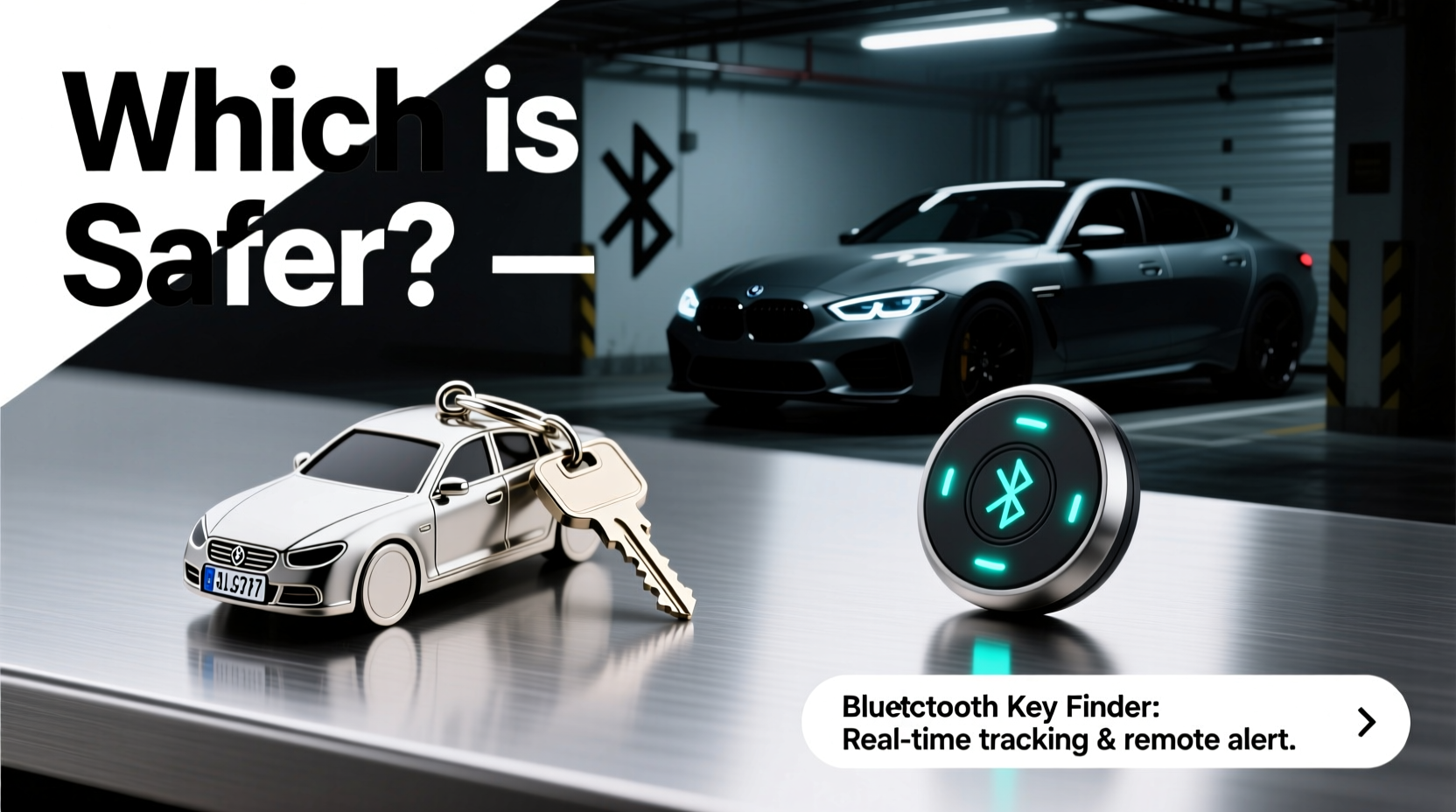
A car token keyring—commonly known as a physical key fob or transponder key—is a standalone device that communicates with your car using radio frequency (RF) signals. These tokens typically use encrypted rolling codes that change with each use, making them resistant to replay attacks. When you press “unlock” or “lock,” the fob sends a unique signal that the car validates before responding.
Modern car tokens also incorporate passive keyless entry (PKE), allowing the vehicle to detect the fob within a short range (usually 1–2 meters). While convenient, this feature has introduced new attack vectors, such as relay attacks, where thieves use devices to amplify the fob’s signal from inside your home to a thief near your car.
Because token keyrings operate on proprietary protocols and require physical proximity, they are generally more secure than add-on tracking devices—if used correctly. However, their security depends heavily on user behavior, such as storing the fob in a signal-blocking pouch when not in use.
Bluetooth Key Finders: Convenience with Added Risk
Bluetooth key finders—like Tile, Apple AirTag, or Samsung SmartTag—are compact devices attached to your keychain that connect via Bluetooth Low Energy (BLE) to your smartphone. They allow you to locate lost keys through a companion app, often leveraging crowd-sourced location networks.
While useful for finding misplaced items, these devices introduce potential security weaknesses. Unlike car tokens, most Bluetooth key finders broadcast a constant, low-power signal that can be detected by nearby devices. More concerning, some models continuously transmit identifiers that could theoretically be exploited in proximity-based tracking or triangulation attacks.
Additionally, because these tags are designed to be discoverable, they may inadvertently make your keys easier to locate—not just by you, but by someone with malicious intent. If your keys are left unattended or stored near doors or windows, a determined thief with the right tools could detect the tag’s presence and correlate it with vehicle ownership.
“Bluetooth trackers are excellent for recovery but should never be relied upon as a primary security layer.” — Mark Reynolds, Cybersecurity Analyst at AutoShield Labs
Comparing Security Risks: A Practical Breakdown
To assess which option is less likely to contribute to car theft, consider how each device behaves when unattended, how it communicates, and what attack methods apply.
| Feature | Car Token Keyring | Bluetooth Key Finder |
|---|---|---|
| Signal Type | Proprietary RF (315/433 MHz) | Bluetooth Low Energy (2.4 GHz) |
| Range | 1–2 meters (active), up to 10m (relayed) | 10–30 meters (unamplified) |
| Encryption | Rolling code encryption (high) | Limited; mostly identifier-based |
| Vulnerable to Relay Attacks? | Yes, if not shielded | No direct relay, but detectable |
| Can Be Tracked Remotely? | No (unless stolen with car) | Possible via network (e.g., Find My, SmartThings) |
| Best Defense Against Theft | Faraday pouch, out of sight | Remove when not needed, disable network sharing |
The table highlights a critical distinction: while car tokens are vulnerable to technical exploits like relay attacks, Bluetooth key finders pose a different kind of risk—information leakage. A constantly broadcasting tag doesn’t unlock your car, but it can confirm the presence of your keys, potentially aiding surveillance or opportunistic theft.
Real-World Example: The Unintended Tracker
In 2023, a homeowner in Surrey, UK, reported repeated attempts to break into his garage. Surveillance footage showed no forced entry, but suspicious individuals lingering near the side gate. After installing a signal detector, he discovered that his Tile key finder—attached to his car keys and stored near the kitchen window—was broadcasting consistently.
Investigators concluded that thieves had likely detected the Bluetooth signal during reconnaissance, correlating its presence with a high-value vehicle parked in the garage. Once the Tile was removed and the keys stored in a shielded box, the incidents stopped. This case illustrates how convenience features can unintentionally compromise security when deployed without awareness.
Action Plan: Minimizing Risk with Either Device
Regardless of which system you use, proactive habits are the best defense. Here’s a step-by-step guide to reduce your exposure:
- Isolate your keys at night: Keep both your car token and any Bluetooth tracker away from exterior walls, windows, or doors.
- Use a Faraday pouch: For car tokens, especially those with keyless entry, store them in a signal-blocking case when not in use.
- Disable Bluetooth tracker networks: In your app settings, turn off crowd-finding features if you don’t need them.
- Remove the tag when unnecessary: If you’re at home for extended periods, detach the Bluetooth finder temporarily.
- Update firmware regularly: Ensure both your car’s software and any smart tags have the latest security patches.
Frequently Asked Questions
Can a Bluetooth key finder unlock my car?
No. Bluetooth key finders do not interface with your car’s locking system. They only help locate the physical keys via your smartphone. However, their constant signal can reveal the keys’ location, indirectly increasing risk.
Are newer car key fobs safer than older ones?
Generally, yes. Modern fobs use dynamic encryption and shorter signal ranges. However, many still lack protection against relay attacks unless paired with additional shielding or authentication layers like motion sensors.
Should I stop using a Bluetooth key finder altogether?
Not necessarily. They’re highly effective for finding lost keys. The key is managing exposure—remove them when not needed, disable network tracking, and avoid leaving tagged keys in predictable locations.
Final Recommendation: Prioritize Signal Control
When comparing a car token keyring and a Bluetooth key finder in terms of theft likelihood, the car token—despite its well-documented relay attack vulnerability—is inherently less likely to facilitate theft when properly managed. Its communication is limited to secure, short-range protocols directly tied to your vehicle, and it doesn’t broadcast data across public networks.
In contrast, Bluetooth key finders, while not directly enabling car unlocking, increase your digital footprint. Their persistent signals can be monitored, logged, or exploited in targeted surveillance scenarios. Over time, this pattern of detectability poses a subtle but real threat.
The safest approach combines both technologies with disciplined usage: rely on your car token as the primary authentication method, shield it from remote signal capture, and use a Bluetooth finder only when actively needed—then disable or remove it afterward.
“The weakest link in car security is often not the technology, but how we interact with it.” — Dr. Lena Patel, Vehicle Cybersecurity Researcher, MIT Transportation Lab
Take Action Today
Your keys are more than just a tool—they’re a gateway to one of your most valuable assets. Whether you use a car token keyring, a Bluetooth key finder, or both, take control of their signals and storage habits now. Implement a Faraday pouch, review your tracker settings, and stay informed about evolving threats. Small changes today can prevent a costly theft tomorrow.




 浙公网安备
33010002000092号
浙公网安备
33010002000092号 浙B2-20120091-4
Comments
No comments yet. Why don't you start the discussion?