
Michelangelo Merisi da Caravaggio, known simply as Caravaggio, transformed the course of Western art in the late 16th and early 17th centuries. His use of chiaroscuro—extreme contrasts between light and shadow—was groundbreaking, but another powerful tool in his visual arsenal was foreshortening. This technique, which distorts perspective to create the illusion that objects or figures are receding into space, appears repeatedly in Caravaggio’s most iconic works. But why did he use it so deliberately? The answer lies not just in artistic innovation, but in psychological impact, religious context, and a desire to bring divine drama into visceral, human reach.
The Mechanics of Foreshortening in Caravaggio’s Work
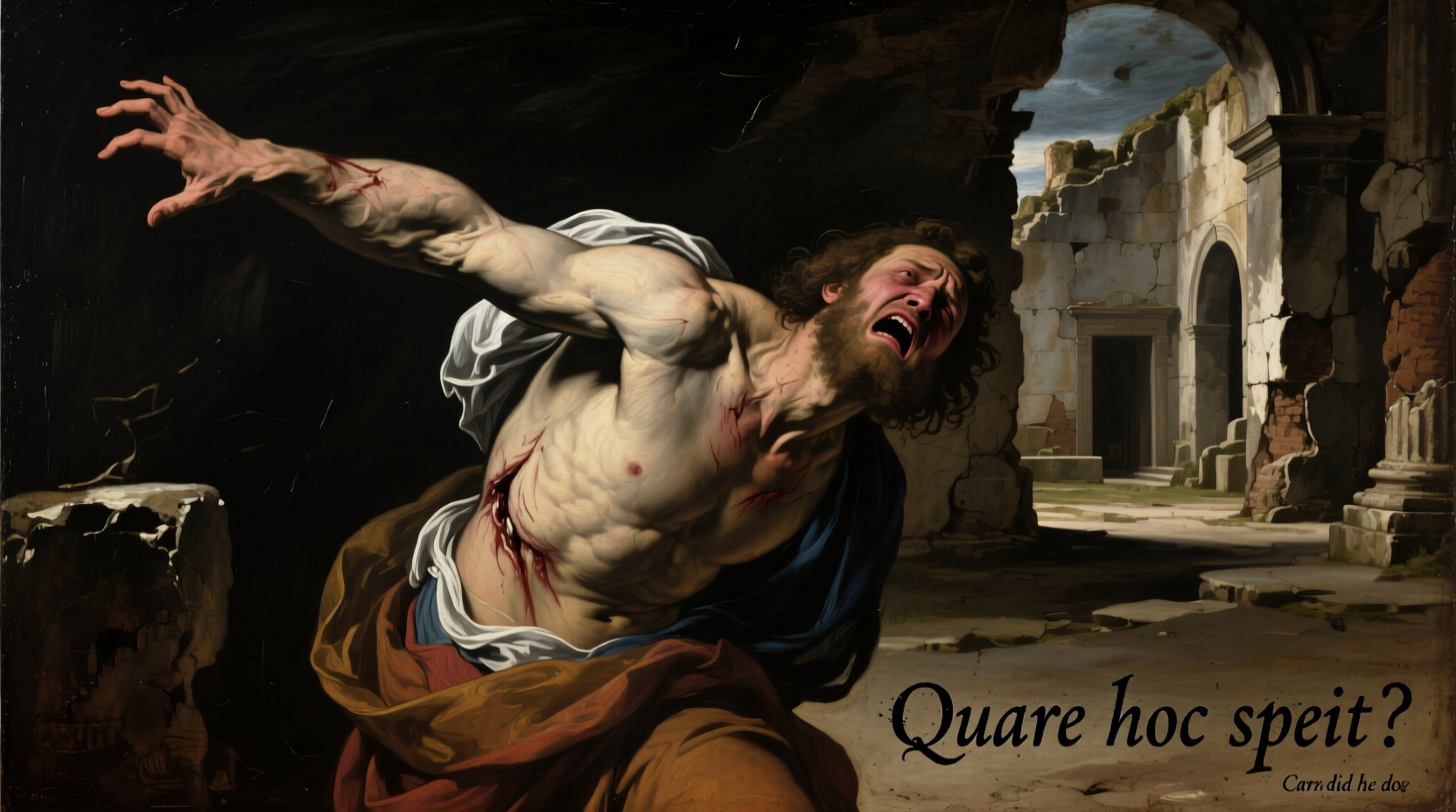
Foreshortening is a method of rendering a three-dimensional object on a two-dimensional surface so that it appears to project forward or backward in space. When executed well, it creates an immersive effect, drawing the viewer into the scene. Caravaggio mastered this technique by positioning limbs, bodies, or objects at sharp angles toward or away from the picture plane.
In works like The Entombment of Christ (c. 1602–1603), the body of Christ is dramatically foreshortened as it is lowered into the tomb. His feet thrust toward the viewer, while his head recedes into the shadows. This isn’t merely a technical flourish—it’s a calculated choice to break the boundary between painting and spectator.
Caravaggio didn’t invent foreshortening; Renaissance artists like Andrea Mantegna had used it decades earlier. But where Mantegna’s foreshortening often emphasized intellectual precision, Caravaggio weaponized it for emotional immediacy. He used it not to impress with skill, but to provoke awe, sorrow, or spiritual confrontation.
Dramatic Realism and Viewer Engagement
One of Caravaggio’s primary goals was to make biblical narratives feel immediate and real. At a time when Counter-Reformation Catholicism called for emotionally resonant religious art, Caravaggio responded by placing sacred events in gritty, contemporary settings. Foreshortening amplified this realism by forcing the viewer into physical proximity with the divine.
Consider The Calling of Saint Matthew. While not heavily foreshortened in the traditional sense, the extension of Christ’s hand across the canvas mimics the spatial intrusion achieved through the technique. In more literal examples—like The Crucifixion of Saint Peter, where the apostle’s feet loom large as he is raised upside down—the distortion makes the martyrdom feel unavoidable, almost invasive.
This tactic pulls viewers out of passive observation and into active participation. You don’t just see the scene—you feel it approaching you. Art historian John Gash notes, “Caravaggio’s foreshortening collapses the distance between the sacred and the profane, the eternal and the everyday.”
“Caravaggio didn’t paint saints on pedestals—he dragged them into the street, and made us kneel beside them.” — Dr. Elena Marchetti, Baroque Art Historian
Psychological Intensity and Emotional Impact
Foreshortening wasn’t just about spatial illusion; it was a psychological device. By distorting anatomy and perspective, Caravaggio heightened tension and vulnerability. Limbs thrusting outward suggest movement, urgency, or collapse—states of transition that mirror spiritual transformation.
In The Death of the Virgin (c. 1606), the Virgin Mary lies in repose, her body slightly angled and feet subtly foreshortened. The modest use of the technique here doesn’t shock, but rather draws the eye gently toward her face and hands—areas of emotional focus. The restrained foreshortening enhances the sense of quiet tragedy, making her mortality palpable.
Conversely, in The Supper at Emmaus (1601), the moment of recognition—when the disciples realize the resurrected Christ—is punctuated by the dramatic extension of Christ’s arms and the foreshortened still life on the table. A basket of fruit teeters on the edge, its protruding fruits breaking the picture plane. This isn’t just realism—it’s theatricality calibrated to amplify revelation.
Religious Context and Counter-Reformation Demands
To fully understand Caravaggio’s use of foreshortening, one must consider the religious climate of his time. The Council of Trent (1545–1563) had issued strict guidelines for religious art: it should be clear, emotionally stirring, and doctrinally sound. Art was no longer for elite contemplation—it was a tool for mass devotion.
Foreshortening helped Caravaggio meet these demands. By making figures burst into the viewer’s space, he created moments of spiritual confrontation. In The Conversion of Saint Paul (1601), Paul lies prone on the ground, blinded by divine light. His horse dominates the upper half of the composition, its massive, foreshortened rear end looming over the scene. Paul’s own body is compressed and twisted, his arms flung upward in surrender. The viewer stands—or falls—right beside him.
This wasn’t decoration. It was devotional theater. The Church wanted believers to *feel* the power of grace, and Caravaggio delivered it with anatomical daring and spatial boldness.
| Painting | Use of Foreshortening | Emotional Effect |
|---|---|---|
| The Entombment of Christ | Christ’s body extended toward viewer | Sorrow, intimacy, physical weight of death |
| The Crucifixion of Saint Peter | Peter’s feet dominate foreground | Shock, vulnerability, martyrdom |
| The Supper at Emmaus | Arms and still life project forward | Revelation, surprise, immediacy |
| The Conversion of Saint Paul | Horse and Paul’s limbs break space | Divine intervention, disorientation |
Legacy and Influence on Later Artists
Caravaggio’s use of foreshortening influenced generations of painters, particularly the Caravaggisti—artists across Europe who adopted his dramatic style. Figures like Artemisia Gentileschi, Jusepe de Ribera, and Georges de La Tour borrowed his techniques to convey spiritual crisis and human fragility.
Gentileschi’s Judith Slaying Holofernes uses aggressive foreshortening in the thrashing limbs and spraying blood, clearly echoing Caravaggio’s visceral approach. Similarly, Spanish Baroque painters employed the technique to heighten the agony of martyrdom scenes, ensuring that viewers could not look away.
Even beyond the Baroque period, Caravaggio’s spatial audacity can be seen in the works of Delacroix, Manet, and modern filmmakers who use extreme camera angles to create psychological tension. The principle remains: when a body breaks the frame, the audience feels implicated.
Mini Case Study: The Shock of the Real in The Incredulity of Saint Thomas
In The Incredulity of Saint Thomas (c. 1601–1602), Caravaggio depicts the moment Thomas places his finger into Christ’s wound. Christ guides his hand, and the forearm is sharply foreshortened, thrusting toward the viewer. The wound is visible, raw, and unidealized.
This painting caused discomfort among some contemporaries—not because of the subject, but because of its realism. The foreshortened arm forces the viewer to imagine the sensation of touch, of probing flesh. It turns doubt into a tactile experience. Here, foreshortening isn’t about perspective; it’s about empathy. Caravaggio makes belief a physical act.
Frequently Asked Questions
What is foreshortening in art?
Foreshortening is a technique used to depict an object or human body in a way that creates the illusion of depth and extension in space. It involves compressing or distorting proportions to simulate a view from a particular angle, often making parts of the body appear to project toward or away from the viewer.
Did Caravaggio invent foreshortening?
No, foreshortening predates Caravaggio by over a century. Artists like Andrea Mantegna used it during the Renaissance. However, Caravaggio revolutionized its purpose—shifting it from a display of technical mastery to a tool for emotional and spiritual engagement.
Why is foreshortening so effective in religious art?
Foreshortening breaks the barrier between artwork and viewer, creating immediacy. In religious contexts, this allows worshippers to feel present at sacred events—witnessing miracles, martyrdoms, or revelations—as if they were physically there. Caravaggio used this to align with Counter-Reformation goals of fostering personal piety and emotional connection to faith.
Conclusion: Why Caravaggio’s Technique Still Matters
Caravaggio’s use of foreshortening was never merely decorative. It was a strategic, deeply intentional method to shatter detachment and ignite feeling. Whether depicting the dead body of Christ, the trembling hand of Thomas, or the upturned face of a saint, he used distorted perspective to pull viewers into the heart of the drama.
His legacy reminds us that great art doesn’t just show—it involves. It doesn’t illustrate—it implicates. And in an age where attention is fleeting and images are abundant, Caravaggio’s radical realism offers a timeless lesson: true impact comes not from perfection, but from presence.




 浙公网安备
33010002000092号
浙公网安备
33010002000092号 浙B2-20120091-4
Comments
No comments yet. Why don't you start the discussion?