
Cardamom and nutmeg are two of the world’s most revered spices, prized for their complex aromas and transformative effects on both sweet and savory dishes. Yet despite their frequent coexistence in spice cabinets—and even in some recipes—they are botanically, flavorfully, and functionally distinct. Confusing one for the other can alter the character of a dish entirely. Understanding the fundamental differences between cardamom and nutmeg is essential for precise seasoning, authentic recipe execution, and creative culinary development. This guide dissects their origins, flavor profiles, forms, uses, and storage to empower cooks with informed decision-making at the mortar and pestle.
Definition & Overview
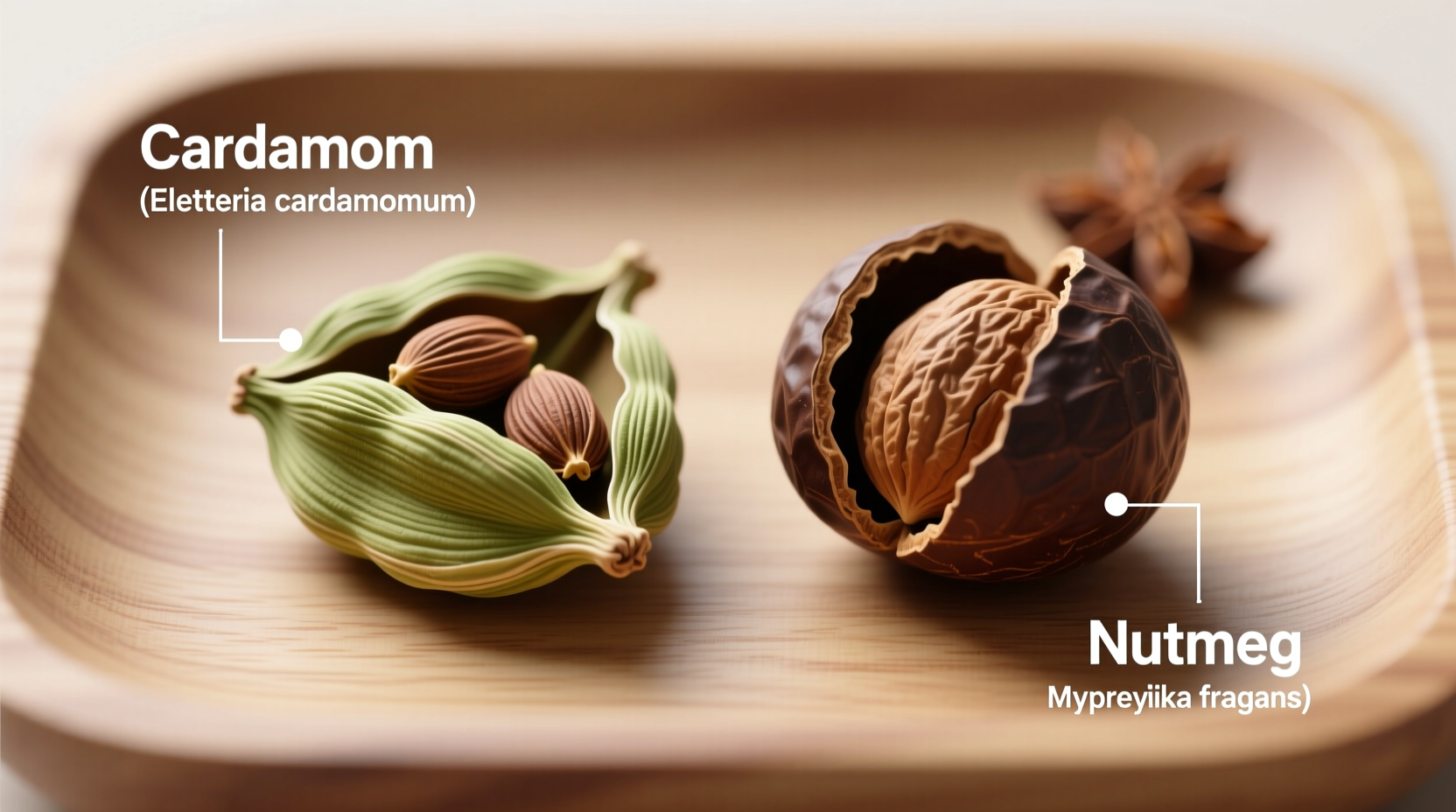
Cardamom (Elettaria cardamomum) is a member of the ginger family (Zingiberaceae), native to the moist forests of southern India, though now cultivated in Guatemala, Sri Lanka, and Tanzania. It grows as a tall perennial herb whose seed pods contain small black seeds encased in a fibrous outer shell. The spice is available in green, black, and white varieties, with green being the most common and aromatic. Cardamom is often called the \"Queen of Spices\" due to its high value and distinctive fragrance.
Nutmeg (Myristica fragrans) is the seed of a tropical evergreen tree native to the Banda Islands in Indonesia. The same fruit yields two separate spices: nutmeg from the seed itself, and mace from the lacy red aril that surrounds it. Unlike cardamom, which is used whole or ground from podded seeds, nutmeg is typically grated fresh from a solid seed or purchased pre-ground. Its warm, sweetly pungent aroma has made it a staple in European baking, Middle Eastern rice dishes, and global spice blends.
Key Characteristics
| Characteristic | Cardamom | Nutmeg |
|---|---|---|
| Botanical Origin | Zingiberaceae family; seed pod of a tropical herb | Myristicaceae family; seed of a tropical fruit |
| Primary Form | Whole pods, seeds, or ground powder | Whole seed (grated) or ground powder |
| Flavor Profile | Bold, citrusy, eucalyptus-like, slightly camphorous with floral sweetness | Warm, sweet, woody, faintly peppery, with notes of clove and cinnamon |
| Aroma | Intensely aromatic, perfumed, bright | Deeply warm, resinous, subtly intoxicating |
| Color | Green (most common), pale brown when dried, dark seeds | Rust-orange to deep brown when ground; pale tan when whole |
| Culinary Function | Flavor enhancer in both savory stews and sweet desserts; base note in masalas and chai | Warming accent in creamy dishes, baked goods, sauces, and spice rubs |
| Shelf Life (Whole) | Up to 2 years if stored properly | 3+ years due to low moisture content |
| Shelf Life (Ground) | 6–12 months before aroma fades | 1–2 years, but best within first year |
| Heat Level | None—aromatic intensity may feel “hot” but not spicy | None—warming sensation without capsaicin heat |
Practical Usage
Understanding how to apply cardamom and nutmeg in cooking goes beyond simply adding them to a dish—it involves timing, form, and proportion. Their potency demands respect, especially since both can dominate a recipe if overused.
Using Cardamom
Green cardamom pods are best lightly crushed before use to release the volatile oils within the seeds. In Indian cuisine, they are often dry-roasted and added early in the tempering process (tadka) along with mustard seeds and cumin. The entire pod can be included in rice dishes like biryani or pilaf and removed before serving, much like a bay leaf.
For beverages such as chai, crush 4–6 pods and simmer with tea leaves, milk, and sugar. The result is a layered, invigorating drink with citrusy depth. In Scandinavian baking—like Swedish kardemummabullar—ground cardamom is sifted into dough for a subtle, perfumed lift that complements butter and cardamom.
When grinding at home, remove the husks and grind only the black seeds for a more concentrated flavor. Alternatively, use pre-ground cardamom sparingly, as oxidation dulls its brightness quickly.
TIP: Never boil cardamom pods for extended periods—prolonged heat diminishes their delicate top notes. Add them in the last 10–15 minutes of simmering soups or compotes to preserve aroma.
Using Nutmeg
Freshly grated nutmeg is vastly superior to pre-ground versions. A microplane or fine grater works best. Use just a pinch—about ⅛ to ¼ teaspoon per quart of liquid—to season béchamel, mac and cheese, or mashed potatoes. Its ability to enhance dairy-based dishes lies in its synergy with fat-soluble flavor compounds.
In desserts, nutmeg pairs beautifully with pumpkin, apple, banana, and chocolate. A dusting over eggnog or custard is classic. In savory contexts, it appears in Italian ragù, Dutch vegetable stews, and Middle Eastern kibbeh. It's also a component of spice blends like garam masala, quatre épices, and pumpkin pie spice.
Because nutmeg contains myristicin—a compound that can be psychoactive in large doses—use moderation. Consuming more than 1–2 teaspoons raw or in supplement form may lead to nausea or dizziness.
TIP: Store whole nutmeg in an airtight container away from light. One seed can yield dozens of gratings and will retain peak flavor far longer than any ground version.
Variants & Types
Types of Cardamom
- Green Cardamom (Elettaria cardamomum): The most widely used type, known for its bright, lemony-eucalyptus notes. Ideal for both sweet and savory applications.
- Black Cardamom (Amomum subulatum): Larger, smokier pods from the Himalayas. Used in North Indian and Chinese cooking, particularly in meat curries and lentil dishes. Imparts a campfire-like aroma due to open-flame drying.
- White Cardamom: Essentially bleached green cardamom, stripped of color and some flavor. Mostly a visual choice for light-colored dishes but lacks the vibrancy of natural green pods.
Related Forms of Nutmeg
- Whole Nutmeg Seed: Preferred for maximum freshness and control over texture. Best when grated just before use.
- Ground Nutmeg: Convenient but loses potency rapidly. Suitable for quick baking tasks where precision isn’t critical.
- Mace (the aril): Though not nutmeg itself, mace comes from the same fruit and shares similar flavor traits—slightly more metallic and sharper. Often used in processed meats, soups, and pickling spice blends.
| Type | Best Used In | Substitution Note |
|---|---|---|
| Green Cardamom | Chai, rice puddings, biryanis, Scandinavian pastries | No direct substitute; closest approximation: mix coriander + cloves + lemon zest |
| Black Cardamom | Lamb curries, pho broth, smoked bean stews | Not interchangeable with green; too smoky for sweets |
| Whole Nutmeg | Custards, cream sauces, fresh gratins | Use ¾ tsp ground per whole seed if substituting |
| Mace | Sausages, pickles, spiced wine | Use ⅓ less than nutmeg due to higher potency |
Comparison with Similar Ingredients
Both spices are sometimes mistaken for others due to overlapping warmth or regional usage. Clarifying these distinctions prevents culinary missteps.
Cardamom vs. Cinnamon
- Cardamom delivers a brighter, more complex aroma with citrus and herbal tones.
- Cinnamon offers a straightforward sweetness with woody warmth, lacking cardamom’s volatility.
- Usage Tip: They complement each other but aren't interchangeable. Combine in chai or apple cakes for depth.
Nutmeg vs. Allspice
- Nutmeg is singular in origin and flavor—sweet, woody, mildly peppery.
- Allspice (Pimenta dioica) tastes like a blend of nutmeg, cinnamon, and cloves, hence the name.
- Substitution: Allspice can mimic nutmeg in mulled wine or mincemeat, but use half the amount to avoid clove dominance.
Cardamom vs. Star Anise
- Despite both having licorice notes, cardamom is floral and citrus-forward.
- Star anise is intensely anise-like, derived from a completely different plant (Illicium verum).
- Caution: Do not substitute in infant food or medicinal preparations—star anise contains compounds unsafe in excess.
\"The difference between cardamom and nutmeg is like comparing a soprano to a cello—one lifts and brightens, the other grounds and warms.\" — Chef Lila Varma, author of *Spice Alchemy*
Practical Tips & FAQs
How much cardamom should I use?
Start with 3–4 crushed green pods for a curry serving four, or ¼ tsp ground cardamom per cup of flour in baking. Adjust upward cautiously—the flavor builds quickly.
Can I substitute nutmeg for cardamom?
No. While both are warm spices, their flavor architectures differ fundamentally. Nutmeg lacks the bright, citrusy lift of cardamom and will mute rather than elevate a dish intended for cardamom’s presence.
Is ground spice as good as whole?
For both spices, whole forms are superior. Ground cardamom loses up to 70% of its volatile oils within six months. Ground nutmeg degrades faster than whole seeds, which can remain potent for years. Invest in a grater and buy whole whenever possible.
What are signs of stale spices?
- Faded color
- Weak or musty smell
- Lack of immediate aroma upon crushing (for cardamom)
- Flat taste with no lingering finish
How should I store them?
Keep both in airtight glass jars, away from heat, light, and moisture. A cool, dark pantry is ideal. Label containers with purchase dates. Whole nutmeg lasts longest; ground cardamom turns fastest.
Are there health benefits?
Cardamom has been studied for digestive support and anti-inflammatory properties. Nutmeg in small amounts may aid sleep and digestion, but excessive intake (over 5 grams) can cause adverse neurological effects due to myristicin. Culinary use is safe; medicinal dosing requires caution.
Which cuisines rely heavily on each?
- Cardamom: Indian, Persian, Scandinavian, Middle Eastern, Southeast Asian
- Nutmeg: Indonesian, Dutch, Caribbean, North African, American (especially holiday baking)
Can I grow these at home?
Cardamom requires tropical humidity and shade, making it challenging outside USDA zones 10–12. Nutmeg trees need consistent warmth, high rainfall, and take 7–9 years to bear fruit. Both are impractical for most home growers but thrive in greenhouse settings with expert care.
PRO TIP: Create a signature spice blend: Mix equal parts freshly ground green cardamom, nutmeg, and cinnamon. Use in oatmeal, pancake batter, or roasted squash for instant warmth and complexity.
Summary & Key Takeaways
Cardamom and nutmeg, while both treasured in global kitchens, serve distinctly different roles. Cardamom brings a vibrant, citrusy, almost medicinal brightness ideal for lifting rich dishes and infusing beverages. Nutmeg contributes a deep, sweet warmth that enhances creamy textures and rounds out spice profiles. Recognizing their botanical origins, optimal forms, and proper applications ensures balanced, flavorful results.
Key distinctions include:
- Cardamom comes from a podded herb; nutmeg from a single hard seed.
- Cardamom is best used crushed or freshly ground; nutmeg shines when freshly grated.
- Green cardamom differs significantly from black and white variants—choose based on desired effect.
- Nutmeg pairs with dairy and starch; cardamom excels in aromatic liquids and doughs.
- Never substitute one for the other without recalibrating the entire flavor structure.
- Whole forms of both spices vastly outperform pre-ground counterparts in longevity and aroma.
To truly master these spices, conduct a side-by-side tasting: Brew two cups of plain black tea. Add one cracked green cardamom pod to one, and a light grating of nutmeg to the other. Sip slowly and note how cardamom energizes the palate while nutmeg soothes it. This simple exercise builds sensory literacy that translates directly into better cooking.




 浙公网安备
33010002000092号
浙公网安备
33010002000092号 浙B2-20120091-4
Comments
No comments yet. Why don't you start the discussion?