
Precise cash flow forecasting isn’t just a finance department task—it’s a strategic necessity. Whether you're running a startup or managing a mid-sized enterprise, understanding your future liquidity allows you to make informed decisions about growth, investments, and risk mitigation. Yet, many businesses still rely on outdated spreadsheets or overly optimistic assumptions that lead to inaccurate predictions. The difference between survival and success often hinges on how well you anticipate your cash needs.
This guide outlines the most effective practices used by financial leaders and CFOs to build reliable forecasts. From data hygiene to scenario modeling, these strategies will help you reduce uncertainty and increase confidence in your financial planning.
Why Accuracy in Cash Flow Forecasting Matters
Cash is the lifeblood of any business. Even profitable companies can fail if they run out of working capital. A 2023 U.S. Bank study found that 82% of small business failures are due to poor cash flow management. Accurate forecasting enables proactive decision-making—whether it's delaying a hire, securing a line of credit early, or identifying opportunities to reinvest.
More than just predicting bank balances, accurate forecasting strengthens relationships with lenders, investors, and vendors. It signals operational maturity and fiscal responsibility.
“Cash flow forecasting isn't about predicting the future perfectly—it's about preparing for multiple versions of it.” — Sarah Lin, CFO at TechGrowth Ventures
Best Practices for Building Reliable Forecasts
1. Use Real-Time Data Integration
One of the biggest pitfalls in forecasting is relying on stale or siloed data. Manual entry from disparate systems introduces delays and errors. Instead, integrate your accounting software (e.g., QuickBooks, Xero) with forecasting tools using APIs. This ensures that receivables, payables, payroll, and expenses reflect current realities.
2. Choose the Right Forecasting Horizon
The time frame you select should match your business rhythm and decision-making needs:
- Short-term (1–4 weeks): Ideal for managing payroll, supplier payments, and emergency buffers.
- Mid-term (1–3 months): Best for operational planning, inventory purchasing, and staffing adjustments.
- Long-term (6–12+ months): Useful for strategic initiatives like expansion, fundraising, or capital expenditures.
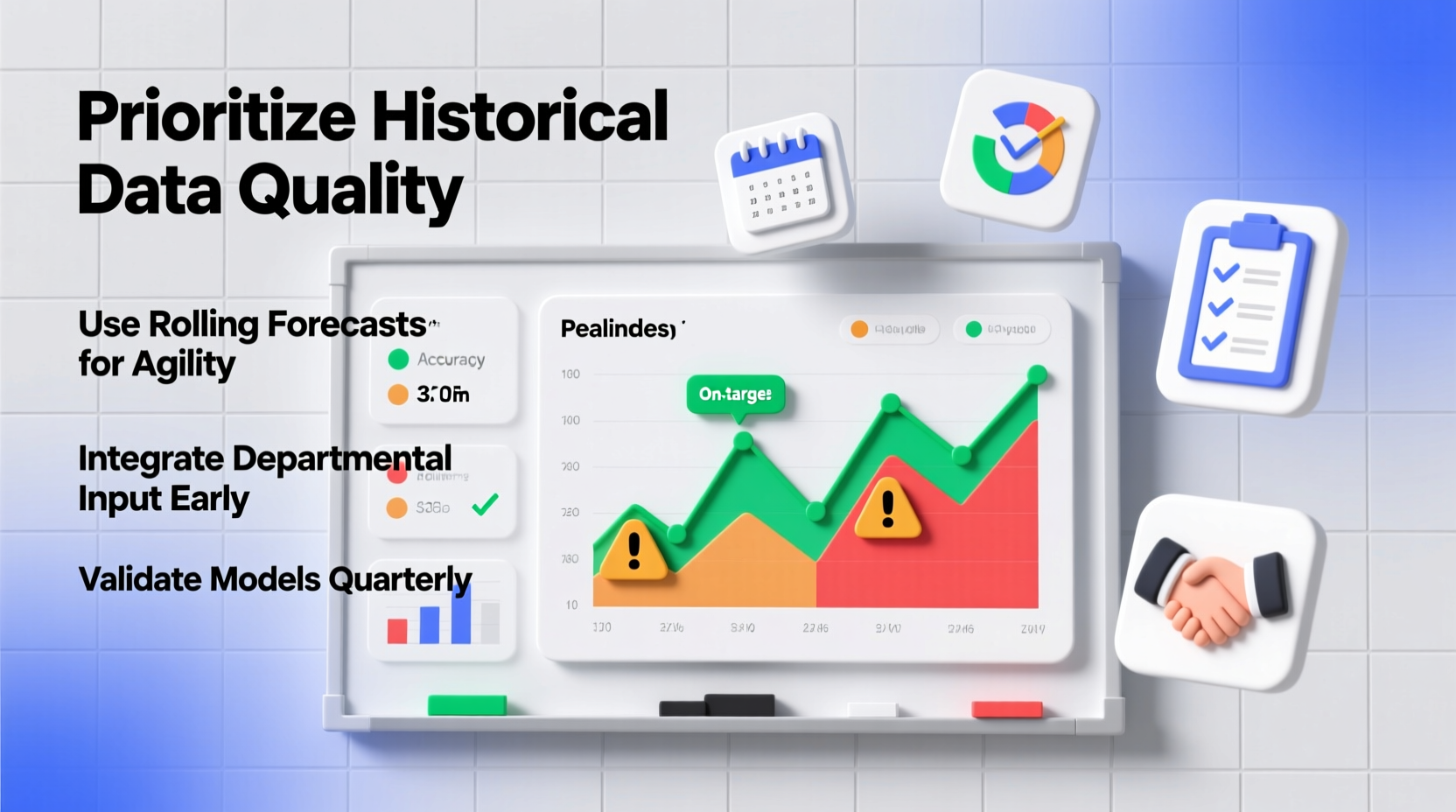
Top-performing companies use rolling forecasts updated monthly, replacing static annual models that quickly become obsolete.
3. Segment Your Cash Flows
Break down inflows and outflows into meaningful categories. Avoid lumping all revenue together. Instead, differentiate by:
- Customer type (e.g., recurring vs. one-time)
- Sales channel (direct, reseller, online)
- Payment terms (net-30, upfront, milestone-based)
Similarly, classify outflows by function: operations, marketing, R&D, debt service, etc. Granularity improves accountability and reveals hidden trends.
Step-by-Step Guide to Building an Accurate Forecast
- Gather historical data from the past 12–24 months across all financial systems.
- Identify key drivers such as sales cycles, customer payment behavior, and seasonality.
- Create baseline projections using conservative estimates—not aspirational targets.
- Incorporate known future events, like upcoming renewals, tax payments, or equipment leases.
- Model multiple scenarios (best case, base case, worst case) to prepare for volatility.
- Review and revise monthly with input from sales, operations, and finance teams.
- Compare actuals vs. forecast to refine assumptions and improve accuracy over time.
Avoiding Common Pitfalls: Do’s and Don’ts
| Do | Don’t |
|---|---|
| Use conservative revenue assumptions based on signed contracts or high-probability deals. | Include unconfirmed verbal commitments as guaranteed income. |
| Factor in average customer payment delays—even if terms say “net-30.” | Assume all invoices will be paid on time without historical evidence. |
| Update forecasts regularly with actual performance data. | Set and forget your forecast after quarterly budgeting. |
| Involve department heads in providing input on upcoming expenses. | Rely solely on finance team assumptions without cross-functional validation. |
| Track forecast accuracy metrics (e.g., variance analysis). | Ignore discrepancies between projected and actual cash positions. |
Mini Case Study: How a SaaS Startup Avoided a Liquidity Crisis
A 50-person SaaS company was growing rapidly but faced a near-miss cash shortfall six months into a funding round. Their initial forecast assumed clients would pay within 30 days, but internal data showed an average collection period of 47 days. Additionally, they hadn’t accounted for a spike in support staffing costs tied to new client onboarding.
After implementing a revised forecasting model that included:
- Historical DSO (Days Sales Outstanding) averages
- Department-level expense planning
- Rolling 13-week forecasts
…the leadership team identified a $180,000 gap three months in advance. They adjusted hiring timelines, renegotiated vendor terms, and secured a short-term credit line before cash reserves dipped below safety thresholds. The fix wasn’t dramatic—but the foresight was critical.
Expert Insight: The Role of Scenario Planning
Uncertainty is inevitable. The best forecasts don’t pretend otherwise—they plan for it. Scenario modeling allows businesses to stress-test their liquidity under different conditions.
“In volatile markets, single-point forecasts are misleading. We run three scenarios: base, downside (-20% revenue), and upside (+15%). This helps us pre-plan triggers—like when to freeze spending or accelerate collections.” — Marcus Tran, FP&A Director at ScaleOps Inc.
For example, a downside scenario might assume delayed customer payments and reduced renewal rates. An upside scenario could include faster-than-expected growth but higher infrastructure costs. Each path comes with predefined action plans.
Checklist: Building a More Accurate Cash Flow Forecast
- ✅ Pull real-time data from accounting and CRM systems
- ✅ Segment revenue and expenses by category and timing
- ✅ Apply conservative assumptions to incoming cash
- ✅ Include non-monthly obligations (taxes, insurance, bonuses)
- ✅ Model at least three scenarios: best, base, and worst case
- ✅ Review forecast accuracy monthly with variance reports
- ✅ Share key outputs with executives and department leads
- ✅ Update the forecast every 2–4 weeks
FAQ
How far ahead should I forecast cash flow?
Most businesses benefit from a layered approach: a detailed 4- to 13-week rolling forecast for immediate decisions, supplemented by a high-level 6- to 12-month projection for strategic planning. Adjust based on your sales cycle and operational complexity.
What’s the biggest mistake people make in cash flow forecasting?
Overestimating revenue timing and volume. Many founders treat expected sales as certain cash, ignoring conversion rates, approval delays, and customer payment habits. Always anchor forecasts in historical realization rates, not pipeline value.
Can automation replace manual forecasting?
Automation enhances accuracy and efficiency but doesn’t eliminate judgment. Tools can aggregate data and generate models, but human insight is essential for interpreting context—like market shifts, customer negotiations, or internal strategy changes. The best results come from combining technology with experienced oversight.
Conclusion: Turn Forecasting Into a Strategic Advantage
Cash flow forecasting shouldn’t be a compliance exercise or a once-a-quarter chore. When done right, it becomes a dynamic tool for resilience and growth. By integrating timely data, applying disciplined assumptions, and planning for multiple outcomes, you shift from reacting to crises to shaping your financial future.
Start small: pick one area where your forecast lacks clarity—maybe customer collections or seasonal expenses—and apply these best practices. Refine your process monthly. Over time, you’ll build a forecasting culture that empowers smarter decisions across your organization.




 浙公网安备
33010002000092号
浙公网安备
33010002000092号 浙B2-20120091-4
Comments
No comments yet. Why don't you start the discussion?