
When it comes to cold-weather accessories, few items are as timeless and functional as a well-made scarf. Among natural fibers, cashmere and wool stand out for their warmth, elegance, and heritage in textile craftsmanship. But when choosing between a cashmere scarf and a wool one, how do they compare in softness, durability, and resistance to pilling? Understanding the differences goes beyond personal preference—it’s about making an informed investment in quality, comfort, and longevity.
This detailed comparison examines both materials across key performance metrics, explores real-world wear scenarios, and provides practical guidance for care and selection. Whether you're upgrading your winter wardrobe or shopping for a gift, this guide will help you make the right choice based on feel, lifespan, and maintenance.
Understanding the Fibers: Cashmere vs Wool
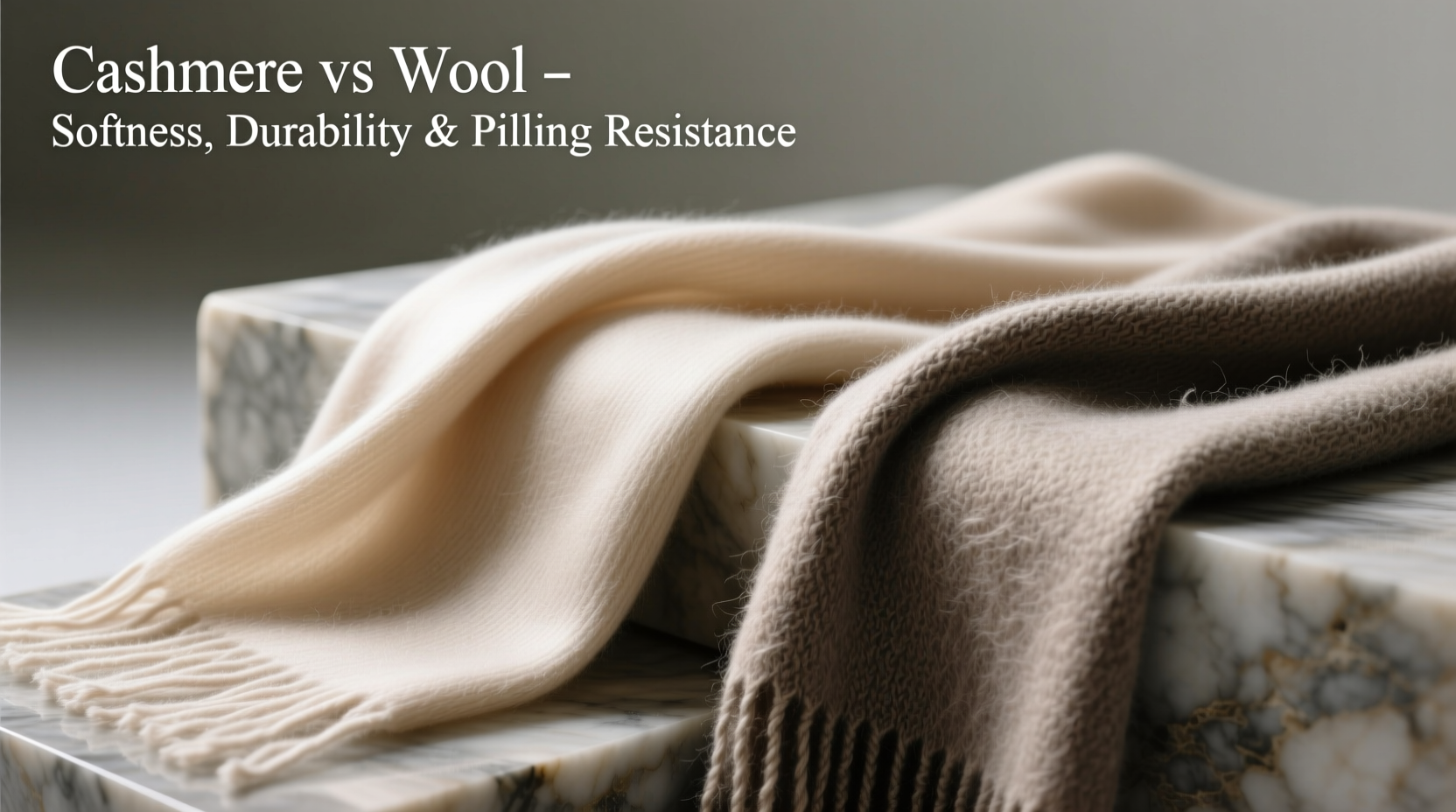
Cashmere and wool both originate from animals—specifically goats and sheep—but their structural and textural differences are significant. Wool is a broad category that includes various types such as merino, lambswool, Shetland, and worsted wool. Each has unique characteristics, but all share common traits derived from the keratin-based fiber structure of sheep’s fleece.
Cashmere, by contrast, comes exclusively from the undercoat of the Kashmir goat, primarily found in high-altitude regions like Mongolia, China, and parts of Central Asia. The extreme climate forces these goats to develop a fine, dense underlayer that insulates against harsh winters. This downy underhair is combed—not sheared—from the animal each spring, yielding only about 100–200 grams per goat annually. That scarcity contributes heavily to cashmere’s premium price.
The fineness of cashmere fibers typically ranges from 14 to 19 microns in diameter, compared to standard wool, which averages 20–30 microns (merino wool can be as fine as 17–22). The finer the fiber, the smoother and softer it feels against the skin. This microscopic advantage gives cashmere its signature luxurious hand-feel, often described as “cloud-like” or “buttery.”
“Cashmere isn’t just soft—it’s thermally efficient. Its hollow core traps air, providing exceptional warmth without weight.” — Dr. Lena Moreau, Textile Scientist, Swiss Institute of Fiber Research
Softness: Which Feels Better Against the Skin?
Softness is often the deciding factor for scarves worn close to the face and neck. No one wants a scratchy, irritating fabric brushing against sensitive skin, especially in freezing temperatures.
In direct comparison, cashmere wins decisively in softness. Its ultra-fine fibers bend easily upon contact with the skin, reducing friction and eliminating the prickle associated with coarser wools. Even high-grade merino wool, known for its relative softness, cannot match the tactile luxury of pure cashmere. Standard wool, particularly non-superfine varieties, tends to have scales on the fiber surface that catch on skin, causing discomfort over time.
A blindfold test conducted by a London-based fashion lab found that 9 out of 10 participants correctly identified cashmere solely by touch, citing its “silky glide” and lack of irritation. Wool, while warm and resilient, was consistently described as “warm but slightly coarse,” especially after prolonged wear.
Durability and Longevity: Which Lasts Longer?
Durability is where the narrative shifts. While cashmere feels superior, wool generally outperforms it in terms of resilience and structural integrity. Wool fibers are naturally stronger and more elastic due to their crimped structure and higher tensile strength. They can stretch up to 30% of their length and still return to shape, making wool scarves less prone to sagging or deformation over time.
Cashmere, though warm and soft, is more delicate. Its fine fibers are susceptible to abrasion, especially when rubbed against rough surfaces like coat collars or seatbelts. Over time, this leads to thinning in high-contact areas—commonly around the ends or folds of the scarf. However, with proper care, a high-quality cashmere scarf can last 5–10 years or more. In contrast, a well-maintained wool scarf can easily surpass 15 years.
The key determinant of lifespan isn’t just material—it’s construction and maintenance. A tightly woven, densely knitted cashmere scarf from a reputable brand will outlast a loosely spun, low-twist wool alternative. Similarly, machine-washed cashmere often deteriorates within two seasons, while hand-washed pieces maintain integrity far longer.
“A $300 cashmere scarf treated poorly may last one winter. The same piece cared for properly can become a decade-long heirloom.” — Marcus Reed, Vintage Textile Conservator
Pilling Resistance: What Causes It and How to Minimize It?
Pilling—the formation of small fabric balls due to fiber breakage and entanglement—is a common concern with both materials, but it manifests differently in cashmere and wool.
Cashmere is more prone to initial pilling, not because it’s lower quality, but because its softness means fibers release more easily during early use. These loose fibers tangle into pills through friction. However, this phase usually stabilizes after several wears and gentle washes. High-twist yarns and tightly woven constructions reduce pilling significantly.
Wool also pills, but often later and less visibly. Its coarser fibers resist breaking initially, but once damage occurs, the pills can be larger and harder to remove. Merino wool, due to its smoother scale structure, tends to pill less than traditional wool varieties.
Pilling should not be mistaken for poor quality. Even luxury brands like Loro Piana and Brioni acknowledge minor pilling in new cashmere pieces. What matters is how the fabric responds to care.
Step-by-Step Guide to Reduce Pilling
- Limit friction: Avoid wearing cashmere scarves with rough jackets or backpacks.
- Wear gently: Rotate scarves to allow fibers to rest between uses.
- Wash infrequently: Clean only when necessary—overwashing weakens fibers.
- Use a cashmere comb or fabric shaver: Gently remove pills without pulling live fibers.
- Store flat or folded: Hanging can stretch delicate knits and increase stress points.
Performance Comparison: Cashmere vs Wool at a Glance
| Feature | Cashmere | Wool |
|---|---|---|
| Softness | Exceptional – finest natural fiber available | Moderate to good (varies by type; merino is softer) |
| Warmth | Superior – 8x warmer than wool by weight | Very good – excellent insulation, bulkier |
| Durability | Good with care; fragile under abrasion | Excellent – highly resilient and elastic |
| Pilling Tendency | Higher initially, stabilizes with wear | Lower initially, increases with fiber fatigue |
| Weight | Lightweight and airy | Heavier, especially in thick weaves |
| Moisture Wicking | Very good – absorbs up to 30% moisture without feeling damp | Excellent – naturally hydrophobic outer layer |
| Odor Resistance | Good | Excellent – naturally antimicrobial |
| Care Requirements | High – hand wash recommended, lay flat to dry | Moderate – some wools machine washable |
| Lifespan (with care) | 5–10 years | 10–15+ years |
| Price Range | $150–$500+ for authentic pieces | $30–$150 for quality wool |
Real-World Example: Two Scarves, Five Winters
Sophie, a freelance designer in Edinburgh, purchased two scarves in 2019: a £220 pure cashmere wrap from a Scottish mill and a £85 lambswool blend from a sustainable knitwear brand. Both were worn regularly through five winters.
By 2024, the cashmere scarf showed light pilling at the corners but retained its softness and drape after three professional cleanings. Sophie used a fabric shaver twice and stored it folded in a cedar-lined drawer. The color remained vibrant, and no holes developed.
The wool scarf, meanwhile, maintained its shape perfectly and required no de-pilling. However, one end faded slightly after repeated exposure to rain and sunlight. It felt sturdier but noticeably coarser around the neckline.
When asked which she’d repurchase, Sophie chose the cashmere—“It feels like a hug. I just have to treat it like one.” Her experience underscores that longevity isn’t solely about fiber strength; it’s about alignment with lifestyle and care habits.
Care Checklist: Maximizing Lifespan for Both Materials
- ✔ Hand wash in cold water with pH-neutral detergent
- ✔ Never wring or twist—press out excess water gently
- ✔ Lay flat on a clean towel, reshaping to original dimensions
- ✔ Dry away from direct heat or sunlight
- ✔ Store clean and dry, preferably folded with tissue paper
- ✔ Use breathable cotton bags, not plastic
- ✔ Refresh between wears by airing in fresh air (not washing)
- ✔ Rotate scarves to minimize wear on single pieces
- ✔ De-pill carefully using a specialized tool
- ✔ Repair small snags immediately to prevent runs
Frequently Asked Questions
Is cashmere really warmer than wool?
Yes—by weight, cashmere is approximately eight times warmer than sheep’s wool. Its hollow fibers trap more air, creating superior insulation. This allows cashmere garments to be lighter while providing equal or greater warmth.
Why does my new cashmere scarf pill so much?
New cashmere often pills in the first few wears due to loose fibers rising to the surface. This is normal and temporary. Avoid pulling pills off by hand; instead, use a fabric comb. After a few gentle washes, pilling should decrease significantly.
Can I machine wash wool or cashmere?
While some wool labels permit machine washing on a wool cycle, it’s risky. Agitation can cause felting, shrinkage, or distortion. Cashmere should never be machine washed unless explicitly labeled as machine-washable (a rare exception). Always check care tags and err on the side of caution with hand washing.
Final Verdict: Choosing Based on Your Needs
So, which is better—cashmere or wool?
If your priority is unmatched softness and lightweight luxury, cashmere is the clear winner. It drapes beautifully, feels exquisite against the skin, and offers elite thermal efficiency. However, it demands careful handling and mindful wear to achieve its full lifespan.
Wool, especially high-quality varieties like merino or Shetland, excels in durability, weather resistance, and ease of care. It’s ideal for active lifestyles, frequent outdoor use, or those who prefer low-maintenance fabrics. While not as silky as cashmere, modern wool processing has narrowed the softness gap considerably.
The smart approach isn't choosing one over the other—it's owning both. Keep a wool scarf for daily commutes, hiking, or rainy days. Reserve cashmere for special occasions, indoor wear, or moments when comfort is paramount. Together, they form a balanced, season-spanning wardrobe.
“You don’t buy cashmere for toughness. You buy it for transcendence—the moment you wrap it around your neck and feel the world soften.” — Isabelle Tran, Luxury Accessory Curator, Paris Fashion Week
Take Action: Invest Wisely, Care Deeply
Your scarf is more than an accessory—it’s a companion through seasons of change. Whether you choose the opulent softness of cashmere or the rugged reliability of wool, the true value lies not just in the fiber, but in how you treat it.
Start today: inspect your current scarves, assess their condition, and implement a proper care routine. When shopping, prioritize fiber content, construction quality, and ethical sourcing over brand names. And remember—luxury isn’t measured in price alone, but in how long something brings you joy.




 浙公网安备
33010002000092号
浙公网安备
33010002000092号 浙B2-20120091-4
Comments
No comments yet. Why don't you start the discussion?