
When it comes to cold-weather accessories, few items rival the elegance and function of a well-crafted scarf. Among natural fibers, cashmere and wool stand out for their insulation and style. But choosing between them isn’t always straightforward. While both offer warmth, they differ significantly in softness, durability, pilling behavior, and cost. Understanding these differences helps you make an informed decision—whether you're investing in a lifelong staple or seeking a practical everyday layer.
Cashmere is often associated with luxury, while wool remains a workhorse of winter wardrobes. Yet not all wool is created equal, and cashmere isn't immune to flaws. This detailed comparison explores how each fabric performs across key metrics: thermal efficiency, tactile comfort, resistance to pilling, maintenance needs, and long-term value.
Understanding the Fibers: What Makes Cashmere and Wool Different?
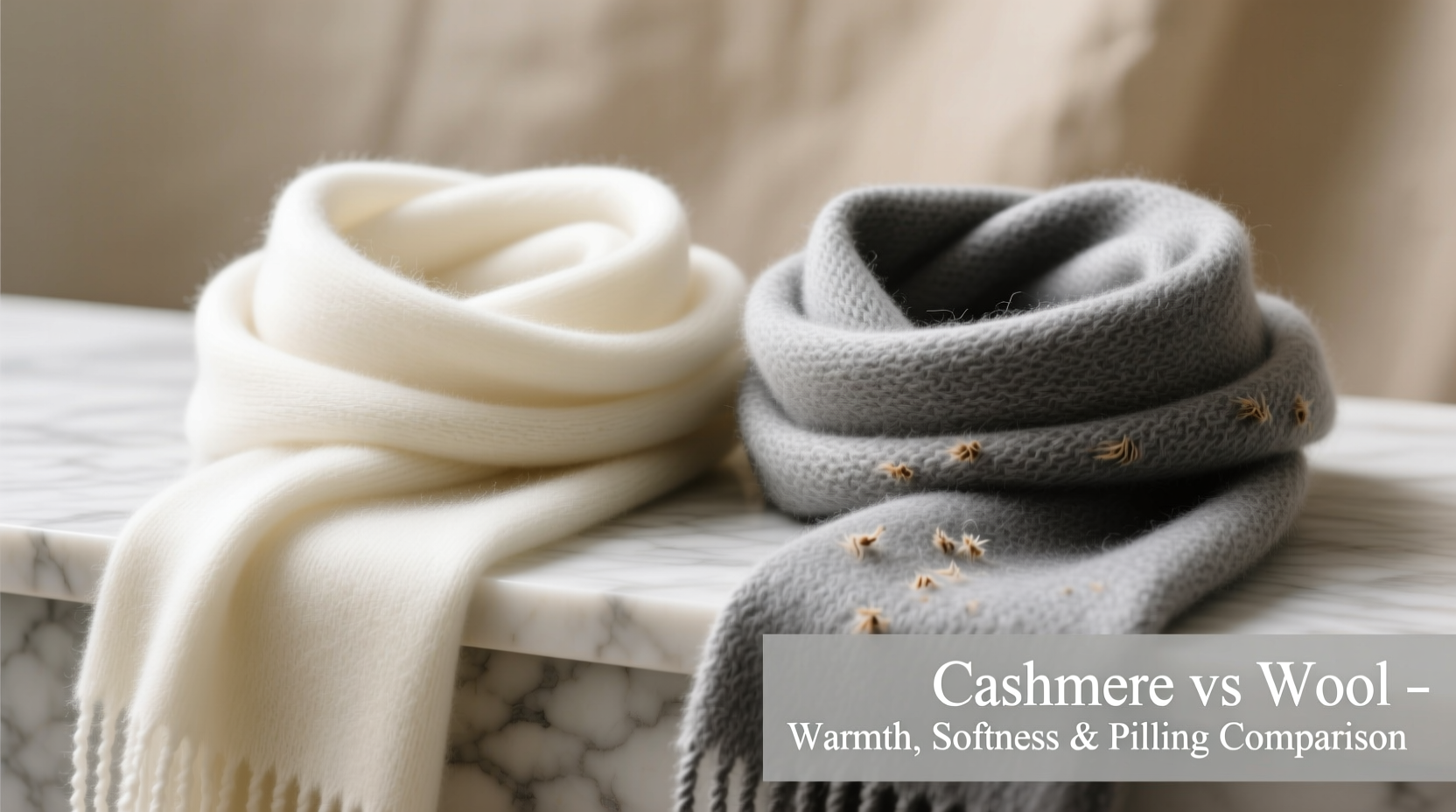
The foundation of any textile comparison lies in the source material. Both cashmere and wool originate from animals, but their structure, harvesting process, and yield vary dramatically.
Wool typically refers to fiber sheared from sheep. It's abundant, durable, and naturally water-resistant due to lanolin content. Merino wool, a finer variant, has gained popularity for its softer hand feel compared to traditional coarse wools. Wool fibers are crimped and elastic, which contributes to breathability and insulation even when damp.
Cashmere, by contrast, comes from the undercoat of cashmere goats, primarily found in high-altitude regions like Mongolia, China, and Iran. These goats produce a fine, downy layer beneath their coarse outer hair, harvested once per year during molting season. It takes several goats to yield enough fiber for a single scarf, making cashmere rare and labor-intensive to collect. The resulting fibers are significantly thinner than average sheep’s wool—often one-fifth the diameter—contributing to its renowned softness.
“Cashmere’s rarity and fineness give it a sensory edge, but that delicacy also demands more careful handling.” — Dr. Lena Patel, Textile Scientist at the Royal School of Textiles
This biological distinction sets the stage for performance differences in real-world use. Let’s examine how these properties translate into warmth, comfort, and longevity.
Warmth: How Do They Stack Up in Cold Conditions?
One of the primary reasons people wear scarves is to stay warm. Both materials excel here, but through different mechanisms.
Wool traps air within its crimped fibers, creating insulating pockets that retain body heat. Its moisture-wicking ability allows it to remain effective even in damp conditions—a critical advantage in rainy or snowy climates. High-quality merino wool can regulate temperature effectively, preventing overheating while still offering substantial protection against wind and chill.
Cashmere, despite being lighter in weight, provides up to eight times the warmth of sheep’s wool by volume. This exceptional thermal efficiency stems from the dense, fine underhair evolved to protect goats from sub-zero Himalayan winters. Because the fibers are so thin, more can be packed into a given space, enhancing loft and heat retention without bulk.
In practical terms, a lightweight cashmere scarf can provide comparable—or superior—warmth to a thicker wool version. However, this assumes dry conditions. Unlike wool, cashmere lacks natural lanolin, reducing its water resistance. When wet, it loses some insulating capacity and takes longer to dry, making it less ideal for active outdoor use in wet environments.
Softness and Comfort: The Feel Test
Touch is perhaps the most immediate difference between cashmere and wool. Softness influences not only comfort but also how often you’ll reach for a particular scarf.
Traditional wool, especially non-merino varieties, can feel scratchy against sensitive skin. This irritation arises from the scale structure and thickness of the fibers. However, modern processing techniques and tighter spinning have reduced this issue significantly in premium wools. Merino wool, in particular, is known for its smooth surface and flexibility, making it wearable directly against the neck for most people.
Cashmere, on the other hand, is celebrated for its buttery-soft texture. The ultra-fine fibers bend easily upon contact with skin, minimizing friction and eliminating itchiness. High-grade cashmere feels almost weightless, draping smoothly around the shoulders without stiffness. This makes it ideal for those with sensitive skin or anyone seeking indulgent comfort.
That said, not all cashmere is equally soft. Lower grades may include coarser fibers or be blended with synthetic materials, diminishing the tactile experience. Look for 100% pure, Grade A cashmere (with fiber diameter below 15.5 microns) for the true luxury feel.
| Fiber Type | Average Diameter (microns) | Perceived Softness | Skin Sensitivity Suitability |
|---|---|---|---|
| Standard Wool | 25–35 | Moderate to scratchy | Poor for sensitive skin |
| Merino Wool | 17–20 | Smooth, comfortable | Good for most |
| Cashmere (Grade A) | 14–15.5 | Exceptionally soft | Excellent |
Pilling: Why It Happens and Which Fabric Resists It Better
No discussion about scarves is complete without addressing pilling—the formation of small fiber balls on the fabric surface due to friction. Pilling affects appearance and perceived quality, though it doesn’t necessarily indicate poor craftsmanship.
All natural fibers pill to some degree. The phenomenon occurs when short fibers break free from the yarn and tangle into tiny knots. Rubbing against coats, bags, or even your own movements can trigger this. Finer fibers like cashmere are actually more prone to pilling initially because their delicate strands are more easily displaced.
However, high-quality cashmere tends to stabilize over time. Once loose fibers are shed or removed, the remaining fabric becomes smoother and more resistant to further pilling—provided it’s cared for properly. Poorly spun or blended cashmere pills excessively and unevenly, degrading faster.
Wool, particularly tightly woven or felted varieties, generally shows less early-stage pilling. Its stronger, coarser fibers resist abrasion better. That said, lower-twist yarns or loosely knitted wool scarves can still develop pills, especially around collar areas.
Mini Case Study: Two Scarves, One Winter Season
Sophie, a London-based professional, wore two scarves daily throughout a six-month winter commute: one 100% merino wool, the other Grade A cashmere. After three months, the cashmere developed light pilling along the edges where it rubbed against her coat collar. She used a cashmere comb weekly, and by month five, pilling had decreased noticeably. The wool scarf showed minimal pilling but began to lose shape after frequent machine washing (despite label instructions). By season’s end, the cashmere retained its drape and softness, while the wool appeared slightly stretched and less vibrant. Sophie concluded that while the wool required less initial maintenance, the cashmere aged more gracefully with attentive care.
Care and Maintenance: Longevity Through Proper Handling
The lifespan of a scarf depends heavily on how it’s cleaned and stored. Here, the differences between cashmere and wool become crucial.
Both fabrics benefit from hand washing in cool water with a pH-neutral detergent. Agitation and heat cause fibers to shrink and felt, so machine washing—even on gentle cycles—is risky. Lay flat to dry away from direct sunlight or radiators to prevent deformation and fading.
Cashmere requires extra caution. It absorbs moisture quickly and can stretch if handled while wet. Never hang a wet cashmere scarf; gravity will distort its shape. Storage matters too: moths are attracted to keratin in animal fibers, so cedar blocks or breathable cotton bags are recommended. Fold rather than roll to avoid creasing.
Wool is more forgiving. Some merino blends are labeled as machine-washable due to specialized treatments that lock scales in place. Still, hand washing extends life and preserves texture. Wool’s natural resilience helps it bounce back from minor wrinkles and compression.
Checklist: How to Care for Your Scarves
- Wash only when necessary—airing out reduces cleaning frequency
- Use cold water and mild detergent formulated for delicates
- Never wring or twist; gently press out excess water
- Lay flat on a clean towel, reshaping to original dimensions
- Store folded in a breathable container, away from pests
- Rotate usage to minimize wear on one piece
Cost and Value: Is Cashmere Worth the Investment?
Cashmere scarves often cost three to ten times more than wool equivalents. A premium cashmere piece might retail for $200+, while a high-quality merino wool scarf ranges from $50–$100. So, is the splurge justified?
The answer depends on usage and expectations. If you prioritize softness, drape, and understated luxury, cashmere delivers unmatched sensory pleasure. With proper care, a well-made cashmere scarf can last 10–15 years or more, making the cost-per-wear surprisingly low over time.
Wool offers better value for rugged use. It withstands frequent washing, resists odors, and performs reliably in variable weather. For travelers, outdoor enthusiasts, or those building a versatile wardrobe, wool’s practicality often outweighs cashmere’s delicacy.
Consider blending both into your collection: a cashmere scarf for formal occasions and city wear, and a wool option for weekends, travel, or unpredictable climates.
Frequently Asked Questions
Does cashmere get softer over time?
Yes, high-quality cashmere often becomes softer with gentle use and proper washing. As fibers relax and settle, the drape improves. However, excessive pilling or poor care can degrade texture instead.
Can I wear wool if I’m allergic to it?
True wool allergies are rare; most reactions are due to fiber roughness or lanolin sensitivity. Merino and ultrafine wools are usually well-tolerated. For severe sensitivities, consider cashmere or plant-based alternatives like modal or TENCEL™.
How do I tell real cashmere from fake?
Authentic cashmere feels uniformly soft, has a slight nap, and warms quickly in your hands. Burn tests (not recommended on finished goods) show animal fiber burns slowly with a hair-like smell. Look for reputable brands with transparency about sourcing and fiber specifications.
Conclusion: Choosing Based on Lifestyle, Not Just Luxury
The choice between cashmere and wool isn’t about which is objectively better—it’s about alignment with your lifestyle. Cashmere excels in softness and warmth-to-weight ratio, making it ideal for refined, low-friction environments. Wool, especially merino, shines in versatility, durability, and moisture management.
Pilling should not deter you from either fabric. It’s a natural part of wear, manageable with simple tools and habits. What matters most is consistent care and realistic expectations. A $200 cashmere scarf poorly maintained will degrade faster than a $60 wool one treated with respect.




 浙公网安备
33010002000092号
浙公网安备
33010002000092号 浙B2-20120091-4
Comments
No comments yet. Why don't you start the discussion?