
Cats are natural hunters. Even well-fed domestic felines retain strong predatory instincts, often leading them to stalk and kill birds, small mammals, and insects. While this behavior is instinctual, it raises ethical concerns—especially as outdoor cats contribute significantly to declining bird populations. One widely adopted strategy to reduce predation is the use of collars, particularly those equipped with bells. But how effective are they compared to silent collars? And which option truly offers a more ethical solution for minimizing harm to wildlife?
This article examines the science behind cat collars, evaluates real-world outcomes, and explores the balance between feline freedom and ecological responsibility. The goal is not to vilify cats, but to empower owners with knowledge that supports both pet welfare and biodiversity conservation.
The Impact of Outdoor Cats on Bird Populations
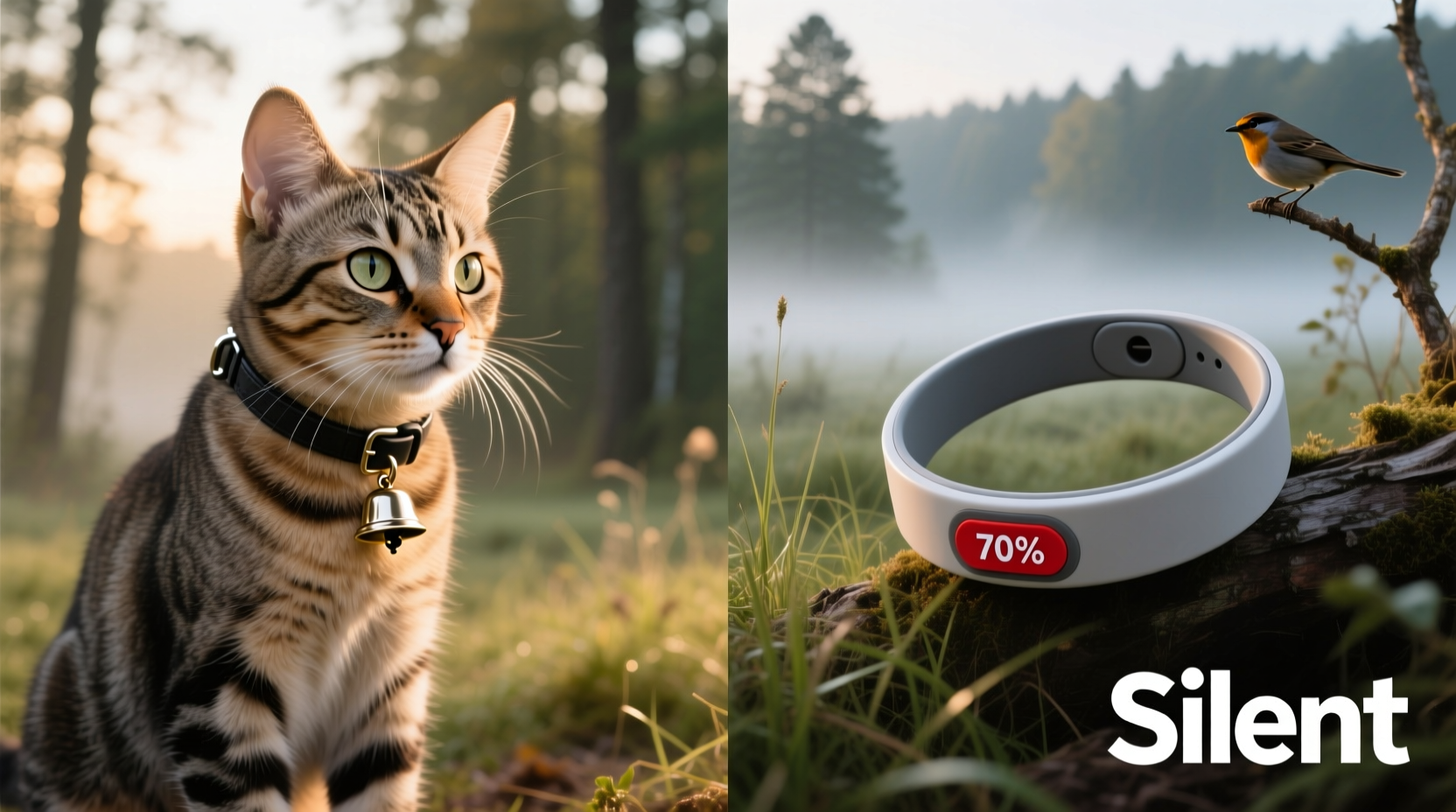
Domestic cats, even those that are primarily indoor pets, can become efficient predators when allowed outdoors. Studies estimate that free-roaming cats in the United States alone are responsible for the deaths of 1.3 to 4 billion birds annually. These numbers place cats among the top human-linked threats to avian species, particularly native and migratory birds already facing habitat loss and climate change.
The ethical dilemma arises from the fact that these kills are rarely driven by hunger. Most outdoor cats are well-fed by their owners; hunting is instead a manifestation of instinct. This means that each bird caught by a cat represents an unnecessary loss—one that could potentially be mitigated through simple interventions like collar design.
“Cats don’t hunt because they’re hungry—they hunt because they’re cats. Our responsibility as owners is to minimize the unintended consequences of that behavior.” — Dr. John Bradshaw, anthrozoologist and author of *Cat Sense*
How Collars Influence Hunting Success
A cat’s ability to catch prey relies heavily on stealth. Their padded paws allow silent movement, and their ambush tactics depend on surprise. Any device that disrupts this element of surprise can theoretically reduce hunting success.
This is where collars come into play. Two primary types are used: collars with bells and silent (or breakaway) collars without auditory attachments. The key difference lies in sensory warning—bells alert potential prey, while silent collars do not.
Research supports the idea that bells act as a deterrent. A landmark study published in *Biological Conservation* found that cats wearing collars with bells brought home 50% fewer birds than those without. In some cases, the reduction reached up to 67%, depending on bell type and placement. The jingling sound gives birds crucial seconds to flee, disrupting the cat’s strike timing.
Silent collars, while safer in terms of entanglement risk, offer no such auditory cue. They may improve comfort and reduce stress for the cat, but they do little to prevent predation unless paired with other strategies.
Effectiveness Comparison: Bell vs Silent Collars
To better understand the trade-offs, here’s a comparative analysis of bell and silent collars across key criteria:
| Feature | Bell Collar | Silent Collar |
|---|---|---|
| Bird Predation Reduction | High (50–67% reduction) | Minimal to none |
| Cat Comfort | Moderate (some cats dislike noise) | High (quiet, lightweight) |
| Safety (entanglement risk) | Moderate (if not breakaway) | High (especially breakaway models) |
| Owner Compliance | Lower (some remove due to noise) | Higher (less intrusive) |
| Ethical Wildlife Protection | High | Low |
The data clearly favors bell-equipped collars when the objective is reducing bird kills. However, effectiveness varies based on individual cat behavior, bell design, and consistency of use. Some cats learn to move silently despite the bell, “mousing” their steps to dampen the sound. Others ignore the collar altogether and continue hunting with reduced success.
Real-World Example: The Neighborhood Study
In a suburban community in southern England, a group of 30 cat owners participated in a six-month trial to assess collar efficacy. Each owner agreed to rotate their cat between three conditions: no collar, silent breakaway collar, and bell-equipped breakaway collar. Participants recorded all prey brought home, verified by photo submission.
The results were telling. During the bell-collar phase, bird captures dropped by an average of 58%. Mammal captures (mostly mice and voles) decreased by 36%. Silent collars showed no statistically significant reduction in kills compared to the no-collar phase.
One participant, Sarah Thompson, noted: “I was skeptical at first. My cat, Luna, is a skilled hunter. But once we put the bell on, I noticed she’d get close to birds, then they’d suddenly fly off. She looked confused. Over time, she brought home far fewer animals.”
The study concluded that while no collar eliminates hunting entirely, bells provide a measurable, low-cost intervention that benefits local wildlife without compromising feline well-being.
Beyond the Bell: Additional Ethical Strategies
While bell collars are effective, they are not a standalone solution. Ethical cat ownership involves a layered approach that respects both the animal’s nature and environmental impact. Consider combining collar use with the following practices:
- Supervised outdoor time: Use a harness and leash or an enclosed catio to allow safe exploration without unchecked hunting.
- Indoor enrichment: Provide puzzle feeders, climbing structures, and interactive toys to satisfy hunting instincts indoors.
- Timing management: Keep cats indoors during dawn and dusk, peak hunting hours for both cats and birds.
- Catios or secure runs: Enclosed outdoor spaces let cats experience the outdoors safely and without access to wildlife.
- Identification: Ensure collars include ID tags or QR codes for lost pet recovery, even if using a bell.
Some owners opt for brightly colored collars or “Birdsbesafe” covers—collars with vibrant fabric sleeves proven to visually alert birds. Studies show these can reduce bird kills by up to 87%, especially when combined with a bell. This dual-sensory approach (visual + auditory) maximizes detection time for prey.
Addressing Common Concerns
Despite evidence supporting bell collars, many owners hesitate due to misconceptions. Let’s address the most frequent objections:
“The bell stresses my cat.”
Most cats adapt to the sound within a few days. Introduce the collar gradually—start with short indoor sessions. Choose lightweight, low-jingle bells designed for pets. Monitor behavior closely, but recognize that mild initial curiosity does not equal distress.
“My cat will get tangled in trees or fences.”
This is a valid concern, but modern breakaway collars are engineered to release under pressure. Always use a safety collar—never a standard buckle or chain. Check fit regularly to ensure two fingers can slide beneath the collar.
“If my cat doesn’t eat the birds, it’s not hurting anything.”
Even unsuccessful hunts cause stress and injury. Birds attacked by cats often die later from infections caused by bacteria in cat saliva (*Pasteurella multocida*). Additionally, repeated disturbances can disrupt nesting, feeding, and migration patterns.
“The ethical issue isn’t just mortality—it’s the broader ecological disruption caused by millions of cats engaging in non-survival hunting.” — Dr. Peter Marra, conservation scientist and co-author of *Cat Wars*
Actionable Checklist for Ethical Cat Ownership
To reduce your cat’s impact on wildlife while maintaining their health and happiness, follow this practical checklist:
- ✅ Fit your cat with a breakaway collar featuring a bell (or dual bell).
- ✅ Consider adding a Birdsbesafe® cover for enhanced visual warning.
- ✅ Limit outdoor access during early morning and evening hours.
- ✅ Enrich your home environment with hunting-style toys and activities.
- ✅ Transition to supervised outdoor time using a harness or enclosed run.
- ✅ Participate in citizen science programs like “KittyCam” studies to track behavior.
- ✅ Support local wildlife conservation efforts and advocate for responsible pet policies.
Frequently Asked Questions
Do silent collars reduce bird hunting at all?
No meaningful evidence suggests that silent collars reduce predation. They may improve safety and comfort but do not interfere with a cat’s ability to stalk prey. Their primary benefit is identification and entanglement prevention, not wildlife protection.
Are there cats that won’t wear any collar?
Yes, some cats strongly resist collars. In such cases, prioritize alternative solutions like indoor-only living, scheduled leash walks, or secure outdoor enclosures. Never force a collar if it causes prolonged anxiety or escape behaviors.
Can I rely solely on a bell collar, or should I do more?
A bell collar is a strong first step, but it’s not foolproof. For maximum ethical impact, combine it with reduced outdoor access and environmental enrichment. The most effective strategies are multi-layered and tailored to your cat’s personality and lifestyle.
Conclusion: Balancing Instinct and Responsibility
The choice between a bell collar and a silent one isn’t merely about personal preference—it’s an ethical decision with tangible consequences for local ecosystems. While silent collars may seem gentler or less intrusive, they do little to interrupt the cycle of predation. Bell collars, supported by decades of research, offer a proven, accessible way to protect birds without harming cats.
True ethical pet ownership means acknowledging our role in mitigating the unintended effects of domestication. We can honor our cats’ instincts while also respecting the wild creatures they share space with. By choosing tools like bell-equipped breakaway collars and adopting holistic management practices, we create a safer world for both pets and wildlife.




 浙公网安备
33010002000092号
浙公网安备
33010002000092号 浙B2-20120091-4
Comments
No comments yet. Why don't you start the discussion?