
For cat owners, introducing safe, enriching elements into their pet’s environment is essential. Two popular options—cat grass and catnip—are often confused or used interchangeably. While both are plant-based and feline-friendly, they serve very different purposes in a cat’s life. Understanding their distinctions helps you make informed choices that support your cat’s digestion, mental stimulation, and overall well-being.
This guide breaks down the science, effects, and practical uses of cat grass and catnip. You’ll learn how each affects your cat, when to offer them, and how to decide which (or both) to bring into your home.
What Is Cat Grass?
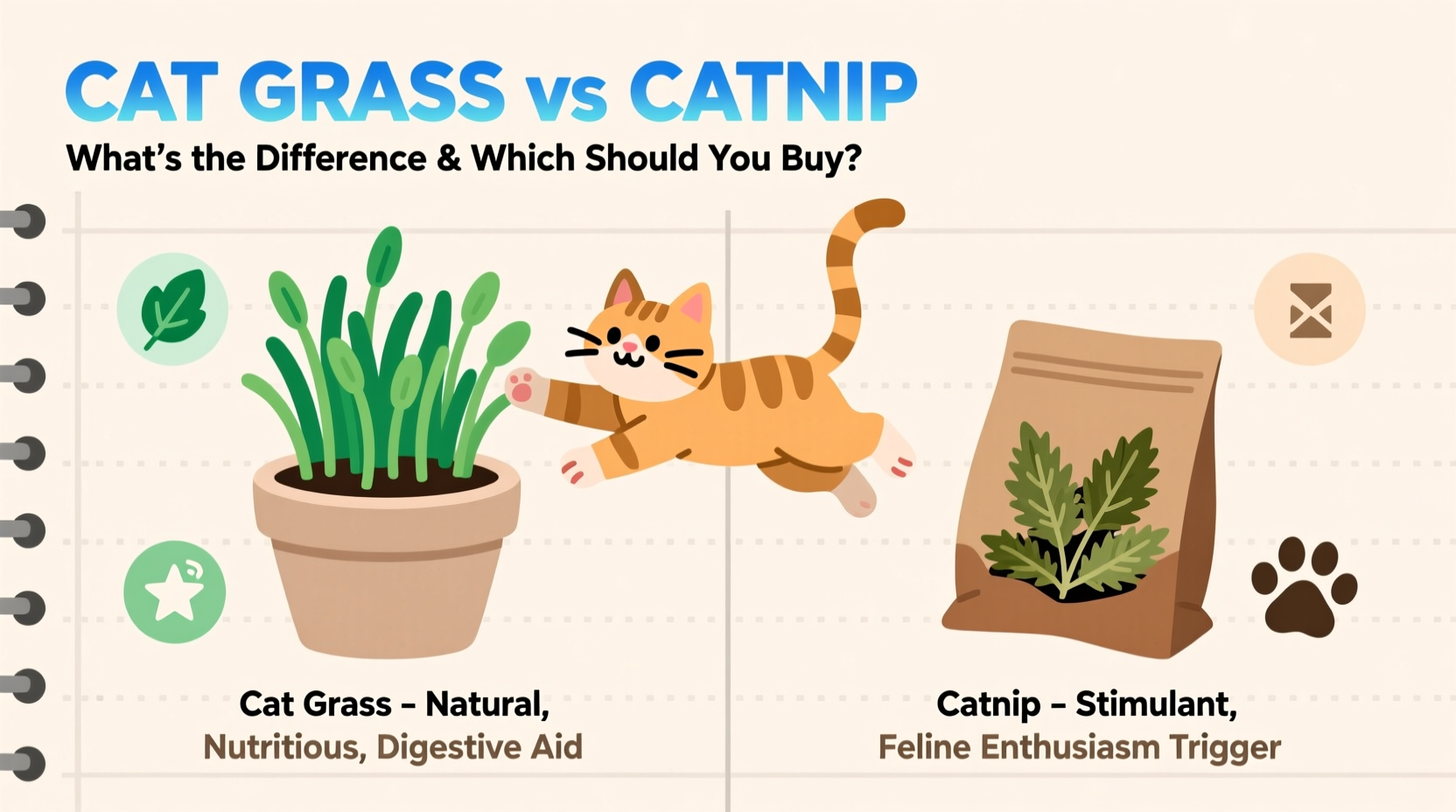
Cat grass refers to young cereal grasses grown specifically for cats to consume. Most commonly, it includes species like wheatgrass, oat grass, barley grass, or rye grass. Unlike typical houseplants, cat grass is non-toxic and safe for ingestion—even encouraged.
Cats in the wild often nibble on grass as part of their natural behavior. Domestic cats retain this instinct, and offering cat grass satisfies their urge to graze. It plays a functional role in digestion and can help with hairball management.
Digestive Benefits of Cat Grass
When cats groom themselves, they ingest loose fur, which can accumulate in the stomach and form hairballs. Eating grass stimulates gastric secretions and promotes vomiting, helping cats expel indigestible material safely. However, not all cats vomit after eating grass—many simply pass it through their system, benefiting from added fiber.
Additionally, cat grass contains chlorophyll, enzymes, and nutrients like vitamins A, D, and E, which may support immune function and detoxification.
What Is Catnip?
Catnip (Nepeta cataria) is a member of the mint family and produces a powerful aromatic compound called nepetalactone. This substance interacts with receptors in a cat’s nasal tissue, triggering a temporary behavioral response in about 50–70% of cats.
The effects are neurological rather than digestive. When exposed to catnip, susceptible cats may exhibit behaviors such as rolling, rubbing, purring, hyperactivity, or even mild aggression. The reaction typically lasts 5–15 minutes, after which the cat becomes temporarily immune to its effects for roughly 30 minutes.
Not all cats respond to catnip. Sensitivity is genetic, meaning kittens under six months and some adult cats show little to no interest. Older cats may also lose sensitivity over time.
“Catnip acts as a feline euphoric stimulant—it doesn’t provide nutrition, but it does enrich play and reduce stress.” — Dr. Rebecca Thompson, Feline Behavior Specialist
Key Differences Between Cat Grass and Catnip
While both products are marketed toward cat owners and labeled as “safe for cats,” their roles differ significantly. The following table outlines the core distinctions:
| Feature | Cat Grass | Catnip |
|---|---|---|
| Purpose | Digestive aid, fiber source | Behavioral stimulant, enrichment |
| Active Component | Fiber, chlorophyll, vitamins | Nepetalactone (aromatic oil) |
| Consumption Method | Eaten (chewed and swallowed) | Inhaled or rubbed (not typically eaten) |
| Effect Duration | Ongoing (daily use possible) | Short-term (5–15 minutes per session) |
| Cat Response Rate | High (most cats will nibble) | 50–70% (genetically determined) |
| Safety | Safe for regular consumption | Safe, but overuse may cause lethargy |
| Form Available | Live potted grass, seeds, grow kits | Dried leaves, sprays, toys, oils |
This comparison highlights that cat grass supports physical health, while catnip enhances emotional and behavioral wellness. They are not substitutes but complementary tools in cat care.
Which One Should You Buy? Factors to Consider
The choice between cat grass and catnip depends on your cat’s age, health, personality, and your goals as a pet owner. In many cases, having both available offers the most balanced approach.
Choose Cat Grass If:
- Your cat frequently grooms and produces hairballs.
- You want to provide a natural source of fiber and micronutrients.
- Your cat shows interest in chewing plants or houseplants.
- You’re looking for a daily-use supplement rather than occasional entertainment.
Choose Catnip If:
- Your cat needs mental stimulation or encouragement to play.
- You want to motivate your cat to use scratching posts or new toys.
- Your cat seems anxious or withdrawn and could benefit from sensory engagement.
- You’re training or redirecting behavior (e.g., reducing furniture scratching).
Real-Life Example: Managing a Multi-Cat Household
Sarah, a cat owner in Portland, adopted two rescue cats with contrasting personalities. Luna, a 3-year-old tabby, was energetic but prone to hairballs. Milo, age 5, was more reserved and showed little interest in toys.
Sarah introduced cat grass first. Luna immediately began grazing daily and reduced her vomiting episodes from weekly to once a month. Encouraged, Sarah added catnip to Milo’s routine by sprinkling dried leaves on a new scratching post. Within days, Milo started using it regularly and became more playful.
Over time, Sarah maintained both: a rotating batch of fresh cat grass on the windowsill and occasional catnip sessions during playtime. Both cats benefited—Luna physically, Milo emotionally.
This case illustrates how combining both products addresses diverse feline needs within a single household.
How to Grow and Use Cat Grass Safely
Buying pre-grown cat grass is convenient, but growing it at home ensures freshness and cost efficiency. Follow this step-by-step guide:
- Choose a seed mix: Look for organic cat grass blends containing wheat, oat, or barley seeds.
- Use a shallow container: Drainage holes are ideal; add potting soil suitable for indoor plants.
- Plant the seeds: Scatter evenly and cover lightly with soil. Mist with water until damp.
- Place in indirect sunlight: Keep in a warm spot, out of direct sun. Water gently every 1–2 days.
- Harvest in 7–10 days: Grass is ready when it reaches 3–4 inches tall.
- Introduce gradually: Let your cat sniff and nibble at their own pace.
- Replace when soiled or yellowed: Discard old grass and restart the cycle.
Avoid using fertilizers or pesticides. Even organic ones can be harmful if ingested in quantity. Stick to plain soil and water.
Using Catnip Effectively: Best Practices
To maximize catnip’s benefits without diminishing its impact, follow these guidelines:
- Test sensitivity first: Offer a small pinch. Watch for signs of excitement or indifference.
- Limit frequency: Use no more than 2–3 times per week to preserve novelty.
- Refresh stored catnip: Crush dried leaves slightly before use to release more nepetalactone.
- Rotate delivery methods: Alternate between loose herb, sprays, and stuffed toys.
- Store properly: Keep in an airtight container away from light and heat to preserve potency.
Catnip sprays are excellent for revitalizing old toys or encouraging use of new scratching surfaces. A quick spritz can turn an ignored cardboard pad into a favorite hangout.
Frequently Asked Questions
Can cats eat catnip?
Yes, but they usually don’t. While inhaling catnip triggers a response, eating it tends to have a sedative effect. Some cats may chew it, but it’s not intended as a dietary supplement like cat grass. Ingesting small amounts is safe, but large quantities may cause mild stomach upset.
Is cat grass the same as lawn grass?
No. While outdoor grass may seem identical, it can be contaminated with pesticides, fertilizers, or parasites (like intestinal worm eggs). Cat grass grown indoors from certified seeds is safer and free from environmental hazards.
Can I give my kitten cat grass or catnip?
Kittens can safely eat cat grass from around 8–10 weeks old, especially as they begin self-grooming. However, avoid giving catnip to kittens under 6 months. Their nervous systems are still developing, and they typically won’t respond anyway.
Action Checklist: Choosing and Using Cat Grass vs Catnip
Before purchasing, ask yourself the following questions and take these actions:
- ✅ Observe your cat’s behavior: Do they chew on plants or need more play stimulation?
- ✅ Test for catnip sensitivity: Offer a small amount and note any reaction.
- ✅ Decide your primary goal: Digestive support (choose cat grass) or enrichment (choose catnip).
- ✅ Purchase quality products: Opt for organic, pesticide-free cat grass seeds and pure, lab-tested catnip.
- ✅ Introduce one at a time: Monitor your cat’s response before combining both.
- ✅ Maintain hygiene: Replace cat grass weekly; store catnip sealed and cool.
- ✅ Rotate usage: Use catnip intermittently; keep cat grass available continuously.
Final Thoughts: It Doesn’t Have to Be Either/Or
The question isn’t necessarily “cat grass vs catnip”—it’s about understanding how each contributes uniquely to your cat’s life. Cat grass supports internal health and satisfies a primal grazing instinct. Catnip boosts mood, encourages activity, and strengthens the bond between you and your pet through interactive play.
Many experienced cat owners keep both on hand. A small pot of cat grass near a sunny window provides daily access to a healthy snack. A sealed jar of catnip stays ready for play sessions, training moments, or calming anxious episodes.
Ultimately, your decision should align with your cat’s individual needs. Start with one, observe the response, and expand from there. Your cat’s enjoyment, health, and enrichment are worth the small effort.




 浙公网安备
33010002000092号
浙公网安备
33010002000092号 浙B2-20120091-4
Comments
No comments yet. Why don't you start the discussion?