
Cats are instinctive foragers and chewers, a trait inherited from their wild ancestors who consumed plant matter to aid digestion and expel parasites. As indoor pets, domestic cats often lack access to natural vegetation, making it essential for owners to provide safe alternatives. Two of the most popular options—cat grass and catnip—are frequently offered to feline companions, but they serve very different purposes. While both are marketed as “cat-friendly” plants, only one consistently supports natural chewing behavior that aligns with a cat’s biological needs. Understanding the differences between cat grass and catnip is key to promoting healthier habits in your pet.
Understanding Cat Grass: Purpose and Benefits
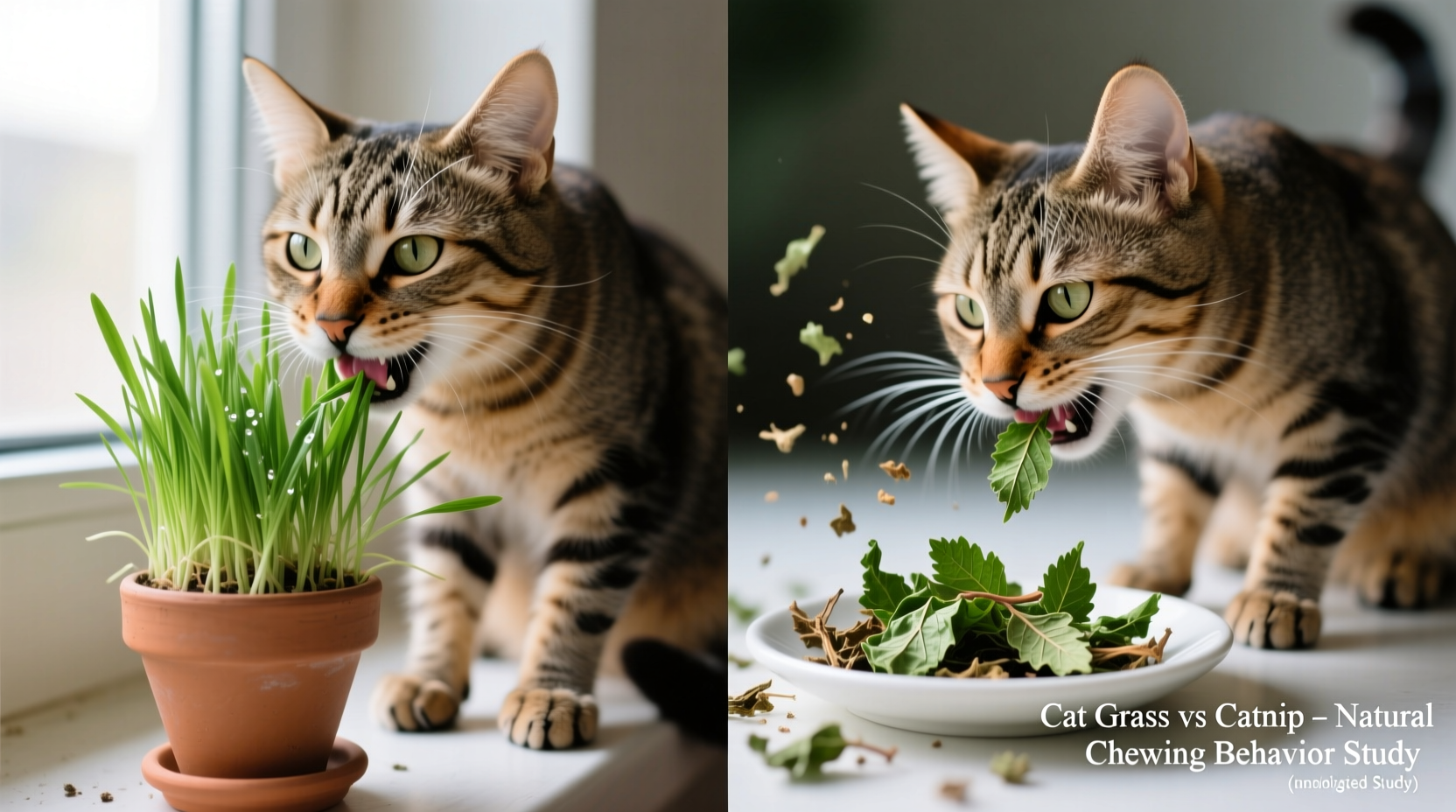
Cat grass typically refers to young cereal grasses such as wheatgrass, oat grass, barley, or rye, grown specifically for feline consumption. Unlike catnip, cat grass is not psychoactive. It does not alter a cat’s mood or induce euphoria. Instead, it serves a functional role in digestion and gut health.
In the wild, cats consume small amounts of grass to help move indigestible materials like fur and feathers through their digestive tract. This behavior often leads to vomiting, which may seem alarming to owners but is actually a natural mechanism for clearing blockages. Domestic cats retain this instinct, which is why many will nibble on houseplants, carpet fibers, or even plastic if no safe alternative is available.
Cat grass provides a controlled, non-toxic outlet for this behavior. It contains dietary fiber and enzymes that support intestinal motility. Additionally, chewing on fresh grass can satisfy oral fixation and reduce stress-related chewing on inappropriate objects.
The Role of Catnip: Pleasure Over Function
Catnip (Nepeta cataria) is a member of the mint family known for its potent effect on approximately 50–70% of cats. The active compound, nepetalactone, binds to receptors in the cat’s nasal tissue, triggering a temporary response that can include rolling, rubbing, vocalizing, hyperactivity, or zoning out. This reaction lasts anywhere from 5 to 15 minutes and is entirely behavioral—it has no nutritional or digestive benefit.
While some cats may chew on catnip during these episodes, the act is usually incidental rather than purposeful. Chewing is not driven by a need to digest fiber or clear the stomach; instead, it’s part of the sensory experience. After the high wears off, most cats lose interest quickly. In fact, repeated exposure can lead to desensitization, reducing effectiveness over time.
Importantly, catnip does not fulfill the same physiological role as cat grass. It doesn’t aid digestion, offer nutrients, or support dental health. Its primary function is enrichment through stimulation, not encouraging sustained, natural chewing patterns.
“Catnip excites the senses, but cat grass satisfies an instinct. One gives a momentary thrill; the other supports long-term well-being.” — Dr. Lena Torres, Feline Behavior Specialist
Comparing Chewing Behavior: Natural vs. Stimulated
To determine which plant encourages more natural chewing behavior, it’s important to define what “natural” means in this context. Natural chewing behavior in cats includes:
- Repeated, moderate nibbling throughout the day
- Preference for fibrous, leafy textures
- Chewing linked to digestion or grooming cycles
- Lack of dependency or habituation
- Voluntary cessation when satiated
When evaluated against these criteria, cat grass emerges as the superior option for fostering biologically appropriate chewing habits.
| Behavioral Trait | Cat Grass | Catnip |
|---|---|---|
| Frequency of Chewing | Daily, consistent use | Intermittent, excitement-driven |
| Digestive Benefit | Yes – aids motility and vomiting of hairballs | No – no nutritional value |
| Duration of Interest | Weeks (until plant dies) | Minutes per session |
| Oral Health Impact | Mild mechanical cleaning from fibrous texture | Negligible |
| Risk of Overuse | Very low – self-regulated | Moderate – possible overstimulation |
| Suitability for All Cats | Yes – including kittens and seniors | No – ineffective in ~30% of cats |
The data shows that cat grass supports ongoing, instinctual chewing that mirrors wild feline behavior. Catnip, while enjoyable for many cats, produces short bursts of activity that do not contribute to routine oral or digestive health.
Step-by-Step Guide to Introducing Safe Chewing Options
Introducing plant-based chewing options requires planning and observation. Follow this timeline to ensure a smooth transition and maximum acceptance.
- Week 1: Assess Your Cat’s Current Habits
Observe whether your cat already chews on plants, cords, or fabric. Note frequency and triggers (e.g., after meals, during grooming). - Week 2: Purchase or Grow Cat Grass
Buy organic seeds (wheatgrass or oat) and grow them in a shallow tray. Avoid chemical fertilizers. Let the grass grow 3–4 inches before offering it. - Day 1–3: Place Grass Nearby
Set the pot near your cat’s favorite resting spot. Do not force interaction. Many cats will investigate within hours. - Day 4–7: Monitor Consumption
Check for signs of chewing, vomiting, or stool changes. Some cats may eat daily; others only occasionally. - Week 3: Introduce Catnip (Optional)
If you want to offer catnip, do so separately. Use dried leaves or a toy. Observe whether your cat chews it or merely rubs against it. - Ongoing: Rotate and Refresh
Replace cat grass every 10–14 days as it yellows. Keep one batch growing while another is in use.
Real-World Example: Solving Destructive Chewing
Sarah, a cat owner from Portland, noticed her 3-year-old tabby, Milo, had started chewing the frayed edges of her rug. Concerned about ingestion risks, she consulted her veterinarian, who suggested introducing cat grass. Sarah planted a small tray of wheatgrass on her windowsill. Within two days, Milo began nibbling the blades after meals. Over the next three weeks, his carpet-chewing stopped completely. He now visits the grass pot daily, consuming small amounts without vomiting. Sarah rotates batches every 10 days and reports that Milo seems calmer and more satisfied post-meal.
This case illustrates how providing a biologically appropriate chewing outlet can redirect destructive behaviors and fulfill innate instincts. Notably, when Sarah later offered a catnip toy, Milo showed mild interest but did not chew it—reinforcing that pleasure-based stimuli don’t necessarily replace functional chewing needs.
Expert Recommendations and Common Misconceptions
Many pet owners assume that because catnip makes cats excited, it must be more “effective” than plain grass. However, experts emphasize that excitement does not equate to enrichment in the truest sense.
Dr. Alan Prescott, a veterinary ethologist, explains: “Enrichment isn’t just about stimulation—it’s about meeting species-specific needs. For cats, chewing fibrous material is a hardwired survival behavior. Cat grass directly supports that. Catnip is entertainment, not necessity.”
Another common misconception is that all green plants are interchangeable. This is dangerous. Many household plants—such as lilies, pothos, and philodendrons—are toxic to cats. Always ensure that any plant offered is verified safe for feline consumption.
Checklist: Choosing the Right Option for Your Cat
Use this checklist to decide whether to prioritize cat grass, catnip, or both:
- ✅ Does your cat chew on non-food items? → Start with cat grass
- ✅ Is your cat prone to hairballs? → Cat grass can help with expulsion
- ✅ Do you want to encourage calm, daily routines? → Cat grass supports consistency
- ✅ Is your cat highly energetic or bored? → Catnip may provide mental stimulation
- ✅ Does your cat respond to catnip? (Test once) → If no reaction, avoid wasting time
- ✅ Are you looking for long-term chewing support? → Cat grass is the clear choice
For optimal results, consider offering both—but keep them separate. Use catnip for play sessions and cat grass as a permanent fixture in your home environment.
Frequently Asked Questions
Can cats eat too much cat grass?
While rare, excessive consumption may lead to vomiting or mild stomach upset. Most cats self-regulate and stop when satisfied. Replace old or moldy grass promptly to prevent overeating due to desperation.
Is catnip harmful if chewed regularly?
No, catnip is non-toxic, even if ingested. However, frequent exposure may reduce sensitivity over time. Limit catnip sessions to once or twice a week for best results.
Can I grow cat grass year-round indoors?
Yes. With adequate sunlight (or a grow light) and regular seeding, you can maintain a continuous supply. Sow new seeds every 10–14 days to ensure rotation and freshness.
Conclusion: Prioritizing Natural Instincts Over Temporary Thrills
When comparing cat grass and catnip in terms of encouraging natural chewing behavior, the evidence is clear: cat grass wins hands down. It aligns with feline biology, supports digestive health, and satisfies deep-rooted instincts without dependency or diminishing returns. Catnip, while enjoyable for many cats, serves a different purpose—one of sensory delight rather than functional necessity.
Responsible cat care involves understanding the difference between entertainment and enrichment. By offering cat grass as a staple and reserving catnip for occasional fun, owners can create a balanced environment that honors both the playful and primal sides of their pets.




 浙公网安备
33010002000092号
浙公网安备
33010002000092号 浙B2-20120091-4
Comments
No comments yet. Why don't you start the discussion?