
For cat owners, understanding what truly benefits their feline companions goes beyond food and toys. Two popular green additions to a cat’s environment—cat grass and catnip—are often used interchangeably, but they serve very different purposes. While both are safe and widely available, their effects on digestion and playtime vary significantly. Sorting out the confusion between these two plants is essential for making informed decisions about your cat’s health and happiness.
Cat grass typically refers to young cereal grasses like wheatgrass, oat grass, or barley grass grown specifically for pets. Catnip, on the other hand, is a member of the mint family (Nepeta cataria) known for its psychoactive effects on many cats. Despite their similar appearance and common placement in pet stores, their biological impacts are distinct—one primarily supports digestive function, while the other influences behavior and stimulation.
The Digestive Role of Cat Grass
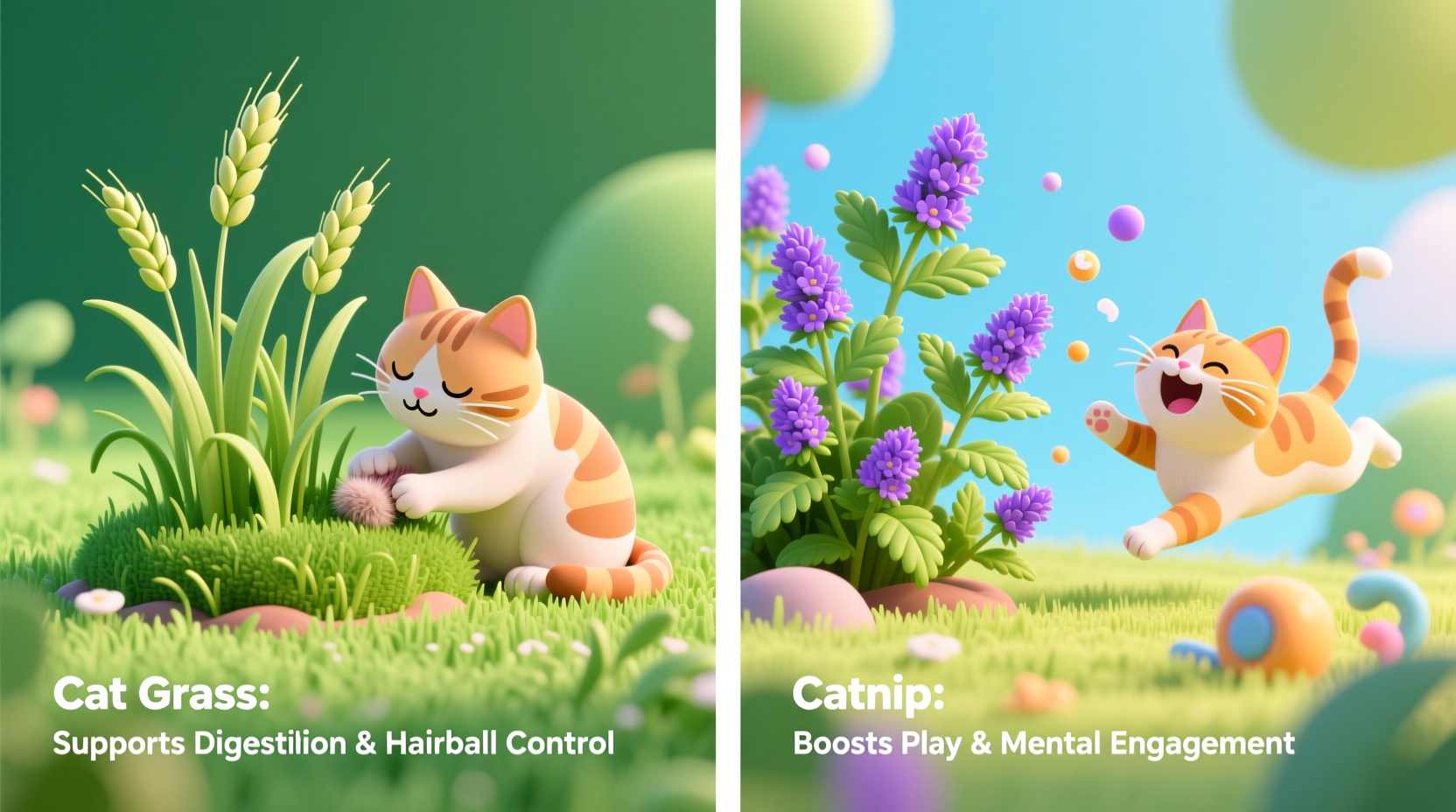
Cats are obligate carnivores, meaning their diet is primarily meat-based. Yet, in both domestic and wild settings, felines frequently consume plant material, especially grass. This instinctual behavior has evolved over time and serves multiple physiological functions.
One of the most well-documented benefits of cat grass is its role in aiding digestion. When cats ingest grass, the fibrous blades help move indigestible materials—such as fur, feathers, or bone fragments—through the gastrointestinal tract. In some cases, this leads to vomiting, which allows the cat to expel hairballs or irritants. However, not all grass consumption results in vomiting; more often, it acts as a natural laxative or intestinal brush.
Additionally, cat grass contains chlorophyll, enzymes, and certain nutrients that may support liver function and detoxification. While not nutritionally complete, it offers trace vitamins including A, D, E, and K, which contribute to overall wellness.
How Cat Grass Supports Digestive Health
- Fiber Content: Promotes regular bowel movements and reduces constipation.
- Natural Hairball Relief: Assists in moving ingested fur through the digestive system.
- Gut Stimulation: The texture of grass triggers mild peristalsis, helping keep the gut active.
- Safe Vomiting Mechanism: Provides a controlled way for cats to clear stomach irritants when needed.
“Grass-eating in cats is not a sign of illness—it's a natural behavior that supports gastrointestinal hygiene.” — Dr. Sarah Lim, Feline Internal Medicine Specialist
The Behavioral Effects of Catnip
Unlike cat grass, catnip does not offer significant nutritional or digestive benefits. Instead, its primary value lies in behavioral enrichment. The active compound in catnip, nepetalactone, binds to receptors in a cat’s nasal tissue that stimulate sensory neurons leading to the brain, particularly the amygdala and hypothalamus—areas involved in emotion and response.
Reactions to catnip vary widely. Approximately 50–70% of cats exhibit a behavioral response, which can include rolling, rubbing, purring, hyperactivity, or even temporary aggression. These effects last about 5–15 minutes, after which the cat becomes temporarily immune to further stimulation.
Kittens under six months and senior cats are less likely to respond, suggesting a genetic and developmental component. Notably, catnip has no long-term side effects and is non-addictive, making it a safe option for mental stimulation.
Why Catnip Enhances Playtime
Catnip’s ability to trigger excitement makes it an excellent tool for encouraging physical activity. Indoor cats, in particular, benefit from environmental enrichment to prevent boredom and obesity. When used during play sessions, catnip can:
- Increase interest in toys and scratching posts
- Stimulate predatory behaviors like pouncing and chasing
- Improve engagement during training or interactive games
- Help shy or anxious cats become more confident
Direct Comparison: Cat Grass vs Catnip
To clarify the differences, here’s a detailed comparison highlighting key aspects relevant to digestion and playtime:
| Feature | Cat Grass | Catnip |
|---|---|---|
| Primary Benefit | Digestive aid, hairball control | Behavioral stimulation, play enhancement |
| Active Compound | Fiber, chlorophyll, enzymes | Nepetalactone |
| Effect on Digestion | Positive – promotes motility and expulsion of debris | Neutral to mild – no direct digestive function |
| Impact on Playtime | Minimal – cats may chew but rarely become excited | High – induces euphoric, playful behavior in responsive cats |
| Safety | Very high – non-toxic, edible | Very high – non-addictive, temporary effects |
| Genetic Response Required? | No – all cats can benefit | Yes – only ~50-70% react |
| Lifespan of Effect | Ongoing – daily use possible | Short-term – 5–15 minutes per exposure |
This table underscores a critical point: if your goal is improved digestion or hairball management, cat grass is the superior choice. If you're aiming to increase playfulness, reduce stress, or encourage exercise, catnip is far more effective.
When to Use Each Plant: A Practical Guide
Understanding the purpose behind each plant allows for strategic use in your cat’s routine. Here’s how to integrate them effectively based on your cat’s needs.
Step-by-Step Integration Plan
- Assess Your Cat’s Needs: Observe whether your cat struggles with hairballs, constipation, or low energy levels.
- Introduce Cat Grass for Digestive Support: Place a small pot near feeding or resting areas. Replace every 7–10 days as it yellows.
- Monitor Consumption: Most cats self-regulate. Remove if eaten excessively or causes diarrhea.
- Test Catnip Responsiveness: Offer a pinch of dried catnip or a catnip-infused toy. Watch for signs of excitement within minutes.
- Use Catnip Strategically: Apply before play sessions, during training, or to encourage use of new scratching furniture.
- Alternate for Balance: Combine both—offer cat grass daily and catnip 2–3 times weekly to avoid habituation.
“We recommend cat grass as part of a holistic digestive care plan, especially for long-haired breeds prone to hairballs.” — Dr. Elena Torres, Veterinary Nutritionist
Real-Life Example: Managing Hairballs in a Persian Cat
Milo, a 4-year-old Persian living in Chicago, had been experiencing frequent vomiting and occasional constipation. His owner, Lisa, initially assumed he was sick and visited the vet twice in three months. After ruling out medical conditions, the veterinarian suggested introducing cat grass to support natural digestion.
Lisa placed a small tray of organic wheatgrass beside Milo’s favorite sunspot. Within days, she noticed he nibbled it daily, usually after grooming. Over the next month, his vomiting episodes decreased from once a week to once every few weeks, and his stools became more consistent.
Separately, Lisa introduced catnip to encourage play, as Milo was relatively sedentary. She rubbed dried catnip onto a feather wand, and for the first time, Milo engaged in active chasing for nearly ten minutes. Now, she uses catnip twice weekly during playtime and keeps fresh cat grass available at all times.
“It’s amazing how something so simple made such a difference,” Lisa said. “He’s healthier and more active than ever.”
Common Misconceptions Debunked
Several myths persist about these plants, often leading to misuse or avoidance.
- Myth: Cats eat grass because they’re sick.
Reality: While vomiting may occur, grass consumption is a normal, preventive behavior. - Myth: Catnip is dangerous or addictive.
Reality: It’s completely safe and non-habit-forming. Effects wear off quickly. - Myth: All cats love catnip.
Reality: Genetics determine responsiveness. Some cats simply won’t react. - Myth: Any grass is fine for cats.
Reality: Lawn grass may be treated with pesticides or host parasites. Always provide clean, pet-safe cat grass.
Frequently Asked Questions
Can I grow cat grass and catnip together?
Yes, but keep them in separate containers. Catnip can spread aggressively if grown outdoors, and mixing them may confuse your cat’s interaction patterns. Indoors, place them in different rooms or use labeled pots.
Is it safe for kittens to consume cat grass?
Yes. Kittens over eight weeks old can safely nibble cat grass. It may even help ease the transition to solid foods by supporting gentle digestion. Avoid giving catnip to kittens under six months, as they typically don’t respond and may become overstimulated.
What if my cat doesn’t like either plant?
Not all cats show interest, and that’s normal. Some prefer alternative enrichments like silver vine or valerian root. For digestion, ensure your cat has a high-fiber diet or consult your vet about hairball remedies.
Action Checklist for Cat Owners
Follow this checklist to optimize your cat’s experience with both plants:
- ✅ Purchase organic, pesticide-free cat grass seeds or pre-grown trays.
- ✅ Grow or buy catnip in dried form or infused into toys.
- ✅ Test catnip response with a small amount during a calm moment.
- ✅ Place cat grass in a quiet, accessible area away from litter boxes.
- ✅ Limit catnip use to 2–3 times per week to maintain effectiveness.
- ✅ Replace cat grass every 7–10 days to ensure freshness.
- ✅ Monitor stool quality and vomiting frequency after introducing grass.
- ✅ Consult your vet if digestive issues persist despite grass use.
Final Thoughts: Choosing What’s Best for Your Cat
The choice between cat grass and catnip isn’t about picking one over the other—it’s about understanding their unique roles. Cat grass serves a functional, physiological purpose, supporting digestive health in a natural, instinct-driven way. Catnip, meanwhile, enriches emotional and behavioral well-being, turning ordinary moments into bursts of joy and activity.
Smart cat care involves using both tools appropriately. Think of cat grass as a daily wellness aid and catnip as a fun, intermittent treat. Together, they contribute to a balanced, enriched life for your feline companion.




 浙公网安备
33010002000092号
浙公网安备
33010002000092号 浙B2-20120091-4
Comments
No comments yet. Why don't you start the discussion?