
For indoor cats, environmental enrichment is not a luxury—it's a necessity. Without access to the outdoors, felines miss out on natural stimuli like hunting, climbing, and foraging. Two popular plant-based options—cat grass and catnip—are often introduced into homes to improve feline well-being. While both are safe and widely available, they serve very different purposes. Understanding their distinct benefits, effects, and long-term impacts can help pet owners make informed choices that support both happiness and health in their cats.
Understanding Cat Grass: Nutrition and Digestive Support
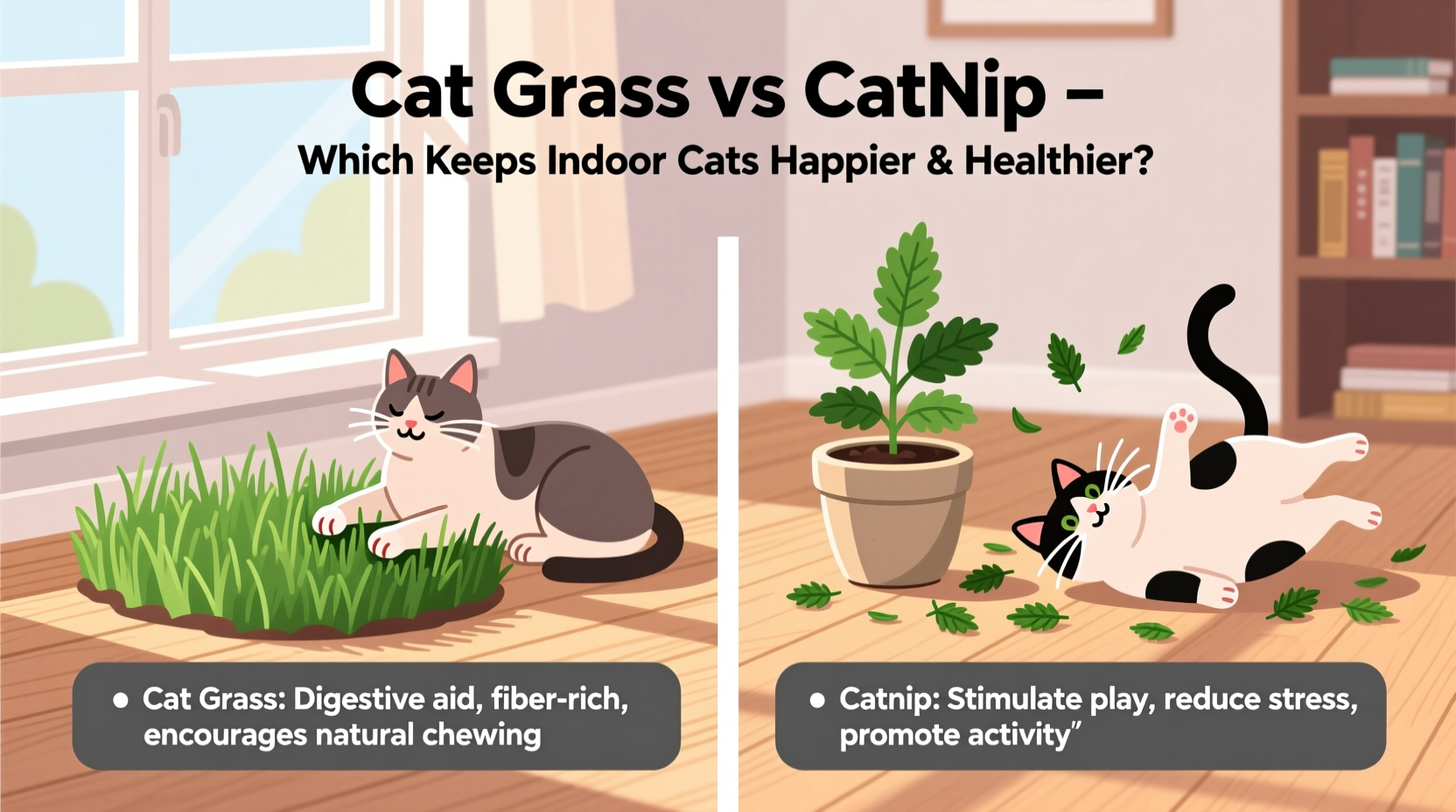
Cat grass typically refers to young cereal grasses such as wheatgrass, oat grass, barley, or rye. It is not psychoactive and does not alter a cat’s behavior. Instead, it functions more like a dietary supplement. Cats are obligate carnivores, meaning their primary nutrition comes from animal protein, but they still benefit from small amounts of plant matter.
In the wild, cats consume grass to aid digestion. The fibrous texture helps move hair through the digestive tract, reducing hairballs. It may also induce mild vomiting when necessary, allowing cats to expel indigestible materials like fur or feathers. More importantly, cat grass contains chlorophyll, antioxidants, and certain vitamins (A, C, E, and K) that support overall cellular health.
Unlike outdoor grass, which may be contaminated with pesticides or parasites, cat grass grown indoors provides a clean, controlled source of fiber. It’s especially beneficial for indoor cats who groom frequently and are prone to hairball formation.
The Science Behind Catnip: Behavioral Enrichment and Stimulation
Catnip (Nepeta cataria) is a member of the mint family and produces a volatile oil called nepetalactone. When inhaled, this compound binds to receptors in a cat’s nasal tissue, stimulating sensory neurons that influence the amygdala and hypothalamus—brain regions involved in emotion and behavior.
The result? A temporary euphoric state characterized by rolling, rubbing, purring, hyperactivity, or even zoning out. This reaction lasts about 5 to 15 minutes, after which cats become temporarily immune to its effects for roughly 30 minutes. Not all cats respond to catnip—sensitivity is hereditary, with estimates suggesting only 50–70% of cats are affected.
“Catnip acts as a safe, non-addictive stimulant that mimics aspects of predatory play. It gives indoor cats a burst of mental engagement they might otherwise lack.” — Dr. Lena Reyes, Feline Behavior Specialist
While catnip doesn’t offer nutritional value, its psychological benefits are significant. Regular exposure can reduce stress, prevent boredom, and encourage physical activity—critical factors in preventing obesity and related conditions like diabetes in sedentary indoor cats.
Comparative Breakdown: Cat Grass vs Catnip
| Feature | Cat Grass | Catnip |
|---|---|---|
| Nutritional Value | Yes – contains fiber, chlorophyll, vitamins | No – no caloric or nutrient contribution |
| Behavioral Effect | Minimal – may cause mild chewing or nibbling | Strong – induces excitement, rolling, vocalization |
| Digestive Benefits | Yes – aids hairball control and gut motility | No direct effect |
| Safety | Very high – safe for daily use | High – non-toxic, but overuse may lead to overstimulation |
| Response Rate | Nearly 100% – all cats can eat it | 50–70% – genetic sensitivity required |
| Lifespan of Plant | 2–4 weeks with proper care | Dried form lasts months; live plant shorter |
| Best For | Digestive health, routine enrichment | Mental stimulation, play sessions, mood enhancement |
When to Use Each: A Practical Guide
Choosing between cat grass and catnip isn’t about picking a winner—it’s about understanding your cat’s needs at any given moment. Here’s how to integrate both effectively into your cat’s routine.
Step-by-Step Integration Plan
- Assess your cat’s behavior and health. Does your cat vomit frequently? Have large hairballs? These signs suggest a need for digestive support—start with cat grass.
- Introduce cat grass first. Place a small pot near their favorite resting area. Monitor consumption. Replace every 2–3 weeks or when it yellows.
- Test for catnip sensitivity. Offer a pinch of dried catnip or a catnip-infused toy. Observe for 10–15 minutes. Signs of response include sniffing, licking, head shaking, rubbing, or playful bursts.
- Use catnip strategically. Apply before playtime to boost engagement. Avoid using during stressful events (e.g., vet visits), as it may increase agitation in sensitive cats.
- Combine both for holistic care. Let your cat graze on cat grass daily while offering catnip once or twice a week for mental stimulation.
Real-World Example: Luna’s Transformation
Luna, a 4-year-old domestic shorthair living in a downtown apartment, had become increasingly lethargic. Her owner, Sarah, noticed she spent most days sleeping and had begun coughing up large hairballs weekly. Concerned, she consulted a veterinarian, who ruled out medical issues but recommended environmental enrichment.
Sarah started growing wheatgrass in a small pot on her balcony. Within days, Luna began nibbling it regularly. Over the next month, her hairball frequency dropped from once a week to once a month. Encouraged, Sarah introduced catnip during evening play sessions. Luna responded strongly—chasing toys with renewed energy, pouncing, and even initiating play.
Three months later, Luna was more active, her coat shinier, and her overall demeanor brighter. “I didn’t realize how much she was missing,” Sarah said. “The grass helped her body, and the catnip woke up her spirit.”
Common Misconceptions and Mistakes to Avoid
- Mistake: Using catnip as a daily treat. Overexposure can dull the response and lead to overstimulation. Limit use to 1–2 times per week unless used briefly during play.
- Mistake: Assuming all green plants are safe. Many houseplants (e.g., lilies, pothos) are toxic to cats. Always ensure only cat-safe grasses or catnip are accessible.
- Mistake: Discarding yellowing cat grass. While less nutritious, older grass is still safe to eat. However, moldy or slimy grass must be discarded immediately.
- Mistake: Expecting immediate results. Some cats take days or weeks to approach new plants. Patience and placement near familiar areas improve acceptance.
Expert Recommendations for Optimal Use
Veterinarians and feline behaviorists agree: both cat grass and catnip have roles in a balanced indoor environment. However, their applications differ.
“The ideal indoor habitat includes multiple forms of enrichment. Cat grass supports physiological health, while catnip contributes to emotional well-being. Together, they mimic aspects of a natural feline experience.” — Dr. Alan Zhou, DVM, Board-Certified Feline Practitioner
Experts recommend:
- Growing fresh cat grass in rotation (start a new batch every 2 weeks).
- Using organic, pesticide-free seeds to avoid chemical exposure.
- Storing dried catnip in an airtight container away from light to preserve potency.
- Observing your cat’s individual preferences—some favor oat grass over wheatgrass, others prefer silver vine over traditional catnip.
Frequently Asked Questions
Can I give my cat too much cat grass?
While cat grass is safe, excessive consumption may lead to mild stomach upset or increased vomiting. Most cats self-regulate. If your cat eats large amounts rapidly, limit access temporarily and reintroduce in smaller quantities.
Is catnip harmful if eaten instead of sniffed?
No. Ingesting catnip tends to have a mild sedative effect rather than a stimulant one. While sniffing causes excitement, eating it may make a cat calm or drowsy. Both reactions are normal and harmless in moderation.
My cat doesn’t react to catnip. What should I do?
About 30–50% of cats don’t respond due to genetics. Try alternatives like silver vine, valerian root, or Tatarian honeysuckle, which elicit similar responses in non-responsive cats. These can be found in toys or powdered forms.
Checklist: Optimizing Your Cat’s Plant-Based Enrichment
- ✅ Choose organic, pet-safe seeds for growing cat grass.
- ✅ Introduce one plant at a time to monitor reactions.
- ✅ Place cat grass in a quiet, accessible spot (e.g., near a window).
- ✅ Test catnip sensitivity with a small amount during a calm moment.
- ✅ Use catnip to enhance play sessions, not as a constant stimulus.
- ✅ Replace cat grass every 2–3 weeks or when discolored.
- ✅ Store dried herbs in sealed containers to maintain freshness.
- ✅ Watch for signs of overconsumption (excessive vomiting, diarrhea).
- ✅ Consult your vet if your cat shows adverse reactions.
- ✅ Combine with other enrichment: scratching posts, puzzle feeders, climbing shelves.
Conclusion: Harmony Over Hierarchy
The question isn’t whether cat grass or catnip makes indoor cats happier or healthier—it’s how to use both wisely. Cat grass addresses physical needs, supporting digestion and providing trace nutrients. Catnip fulfills emotional and behavioral needs, sparking joy and encouraging movement. Neither replaces veterinary care, proper diet, or human interaction, but both are valuable tools in creating a fulfilling indoor life.
Every cat is unique. Some will zealously devour grass and ignore catnip; others will go wild for catnip but never glance at greens. Observing your cat’s habits, respecting their limits, and offering variety creates a richer, more satisfying environment. Start small, stay consistent, and watch your indoor cat thrive—not just survive.




 浙公网安备
33010002000092号
浙公网安备
33010002000092号 浙B2-20120091-4
Comments
No comments yet. Why don't you start the discussion?