
Cats have a reputation for being graceful, intelligent creatures—yet many owners are baffled when their seemingly elegant feline suddenly swipes a coffee mug off the counter with precision and purpose. This common but perplexing behavior isn’t random mischief; it’s rooted in instinct, communication, and environmental factors. Understanding why your cat engages in countertop sabotage is the first step toward managing and redirecting the behavior in a way that respects both your space and your pet’s natural needs.
While some dismiss this as mere “cattitude,” the truth is more nuanced. From sensory exploration to territorial signaling, cats knock objects off surfaces for reasons that make perfect sense from their perspective. The challenge lies in bridging the gap between human expectations and feline instincts without resorting to punishment or frustration. With patience, consistency, and the right tools, you can reduce unwanted knockdowns while enriching your cat’s life.
The Instinct Behind the Swipe: Why Cats Knock Things Off Counters
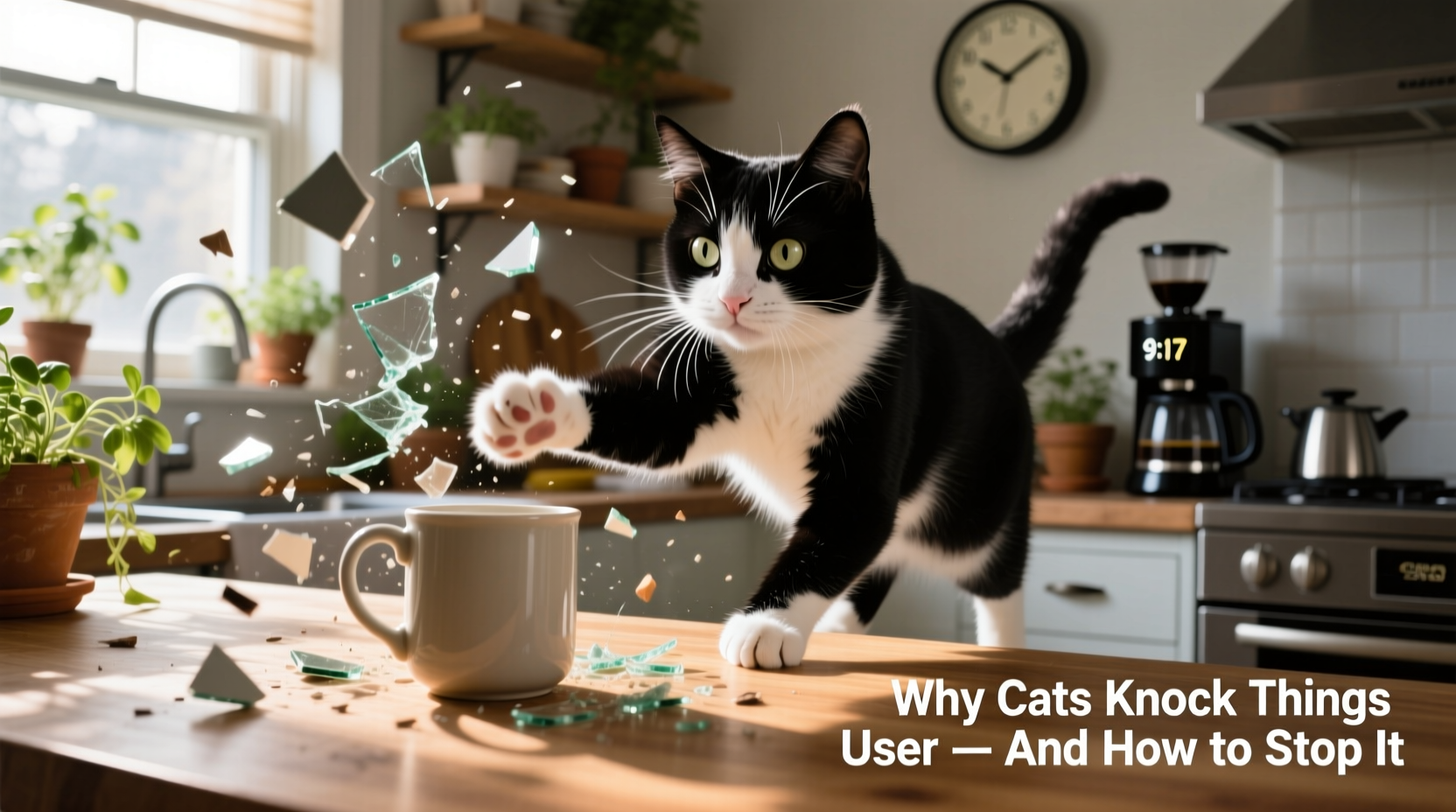
Cats are predators by nature. Even well-fed indoor cats retain the hunting instincts of their wild ancestors. When a cat knocks an object off a surface, it often triggers a response similar to capturing prey: movement, sound, and unpredictability. A pen rolling across the floor mimics the erratic motion of insects or small animals, stimulating the cat’s chase reflex.
Additionally, cats rely heavily on their senses to interpret the world. Their vision is optimized for detecting motion rather than fine detail, so stationary objects may not register as significant until they move. By batting at items, cats gather information about texture, weight, and reaction—essentially conducting a tactile investigation.
Another key factor is attention-seeking. If a cat learns that knocking something over results in a reaction—whether it's you rushing into the room, raising your voice, or even cleaning up—they may repeat the behavior to initiate interaction. In multi-pet households, this action can also serve as a way to assert dominance or test boundaries within the social hierarchy.
Environmental Triggers and Misunderstood Communication
A cat’s environment plays a major role in shaping its behavior. Cluttered countertops with dangling cords, shiny utensils, or moving shadows from nearby windows can be highly stimulating. These visual and tactile cues mimic elements found in natural hunting grounds, making the kitchen counter an irresistible playground.
Some cats knock things off simply because they enjoy the cause-and-effect outcome. The crash, the roll, the startled human response—it’s all part of a self-rewarding loop. Over time, this becomes a learned habit, especially if no alternative outlets are provided.
In other cases, the behavior may signal underlying stress or boredom. Cats confined to limited spaces without sufficient mental stimulation may resort to destructive actions as a form of self-entertainment. Lack of vertical territory, interactive toys, or daily engagement can contribute to repetitive behaviors like counter surfing and object displacement.
“Cats don’t misbehave out of malice. They act based on instinct, need, or learned outcomes. What looks like defiance is often unmet enrichment.” — Dr. Sarah Thompson, DVM, Feline Behavior Specialist
How to Redirect the Behavior: A Step-by-Step Guide
Punishment doesn’t work with cats—and it damages trust. Instead, focus on redirection and environmental management. The goal isn’t to suppress natural feline behaviors but to channel them appropriately.
- Remove temptation. Keep countertops clear of loose items, especially lightweight or noisy ones. Store pens, mugs, remotes, and decorative objects out of reach when unsupervised.
- Provide alternative surfaces. Designate a shelf or table with safe, engaging items—a bell ball, crinkle toy, or treat dispenser—that your cat is encouraged to interact with.
- Increase vertical space. Install cat shelves, perches, or a cat tree near the kitchen or living area. Elevated spaces satisfy climbing instincts and reduce the appeal of countertops.
- Engage in daily play sessions. Use wand toys to simulate hunting for 10–15 minutes twice a day. This helps burn energy and fulfill predatory drives in a constructive way.
- Use positive reinforcement. Reward your cat with treats or praise when they interact with appropriate toys or stay off restricted surfaces.
- Introduce deterrents (non-harmful). Double-sided tape, aluminum foil, or motion-activated air sprays can discourage jumping without causing fear or pain.
Consistency is crucial. All household members must follow the same rules to avoid confusing the cat. It may take several weeks for new habits to form, especially if the behavior has been reinforced over time.
Do’s and Don’ts: Managing Counter-Knocking Behavior
| Do’s | Don’ts |
|---|---|
| Offer puzzle feeders and interactive toys to stimulate problem-solving | Leave tempting objects unattended on counters |
| Rotate toys weekly to maintain novelty and interest | Use physical punishment or spray bottles as corrections |
| Create a cat-friendly zone with shelves, scratching posts, and hiding spots | Ignore signs of boredom or overstimulation |
| Use clicker training to teach alternative behaviors (e.g., “go to mat”) | Assume the behavior will resolve on its own without intervention |
| Consult a veterinarian or behaviorist if the behavior escalates or seems compulsive | Label your cat as “bad” or “spiteful” |
Real-Life Example: Solving Luna’s Midnight Mayhem
Luna, a 3-year-old tabby, lived with her owner Maria in a small apartment. Every night around 2 a.m., Maria would wake to the sound of glass shattering—the fifth water glass knocked off the counter in two months. Frustrated and concerned, Maria considered rehoming Luna until she consulted a certified cat behavior consultant.
The assessment revealed several contributing factors: Luna had no cat tree or high perches, minimal daytime interaction due to Maria’s work schedule, and a habit of nocturnal activity fueled by hunger and boredom. The consultant recommended a structured plan: installing wall-mounted shelves, feeding Luna a timed meal before bedtime using an automatic feeder, and introducing a nightly play routine with a feather wand.
Within three weeks, the glass-knocking incidents stopped. Luna redirected her energy to climbing and chasing toys on her new perch system. Maria reported not only fewer disruptions but also a stronger bond with her cat. This case underscores how addressing root causes—not just symptoms—leads to lasting change.
Enrichment Checklist: Preventing Destructive Knocking
Ensure your cat has access to all essential forms of enrichment. Use this checklist to evaluate your home environment:
- ✅ At least one vertical space (shelf, cat tree, window perch)
- ✅ Daily interactive play (minimum 10 minutes, twice a day)
- ✅ Rotating toy selection (puzzle toys, wand toys, solo-play options)
- ✅ Safe, designated areas for scratching and climbing
- ✅ Clear separation between food zones and litter boxes
- ✅ Supervised or blocked access to countertops
- ✅ Consistent routine for feeding and interaction
- ✅ Opportunities for scent exploration (cat-safe herbs like catnip or silver vine)
Cats thrive on predictability and stimulation. When these needs are met, the urge to create chaos diminishes significantly.
Frequently Asked Questions
Is my cat knocking things off counters to get back at me?
No. Cats do not act out of revenge or spite. Their behavior is driven by instinct, environment, or learned outcomes—not moral judgment. What may seem personal is usually a response to unmet needs or sensory triggers.
Will neutering or spaying stop this behavior?
Spaying or neutering can reduce certain hormonally influenced behaviors, such as roaming or aggression, but it won’t directly stop object-knocking unless the behavior is linked to mating-related stress. Environmental enrichment remains the most effective solution.
Are certain breeds more prone to this behavior?
Some breeds, like Bengals, Siamese, and Abyssinians, tend to be more active and curious, which may increase the likelihood of counter exploration and object manipulation. However, any cat can develop this habit depending on upbringing and environment.
Conclusion: Building Harmony Through Understanding
Your cat isn’t trying to annoy you when they send your phone flying off the counter. They’re responding to a world designed for humans, not felines. By recognizing the motivations behind the behavior—curiosity, instinct, attention, or boredom—you gain the power to guide your cat toward better choices without conflict.
Redirecting counter-knocking isn’t about winning a battle of wills; it’s about creating a home where your cat feels fulfilled, secure, and mentally engaged. Start today by clearing surfaces, adding enrichment, and playing with purpose. Small changes lead to big shifts in behavior—and deeper connection between you and your companion.




 浙公网安备
33010002000092号
浙公网安备
33010002000092号 浙B2-20120091-4
Comments
No comments yet. Why don't you start the discussion?