
Every day, thousands of people clip keychains to their backpacks—some for function, others for flair. Among the most popular are cat plushie keychains, adored for their charm and softness, and metal keychains, valued for their sleek look and sturdiness. But when attached to a backpack that’s exposed to weather, friction, and daily jostling, which of these two common types truly lasts longer? The answer isn’t as simple as “metal is stronger.” It depends on materials, usage patterns, and environmental exposure. This article breaks down the long-term performance of both options based on real-world conditions, material science, and user behavior.
Durability Factors That Matter Most
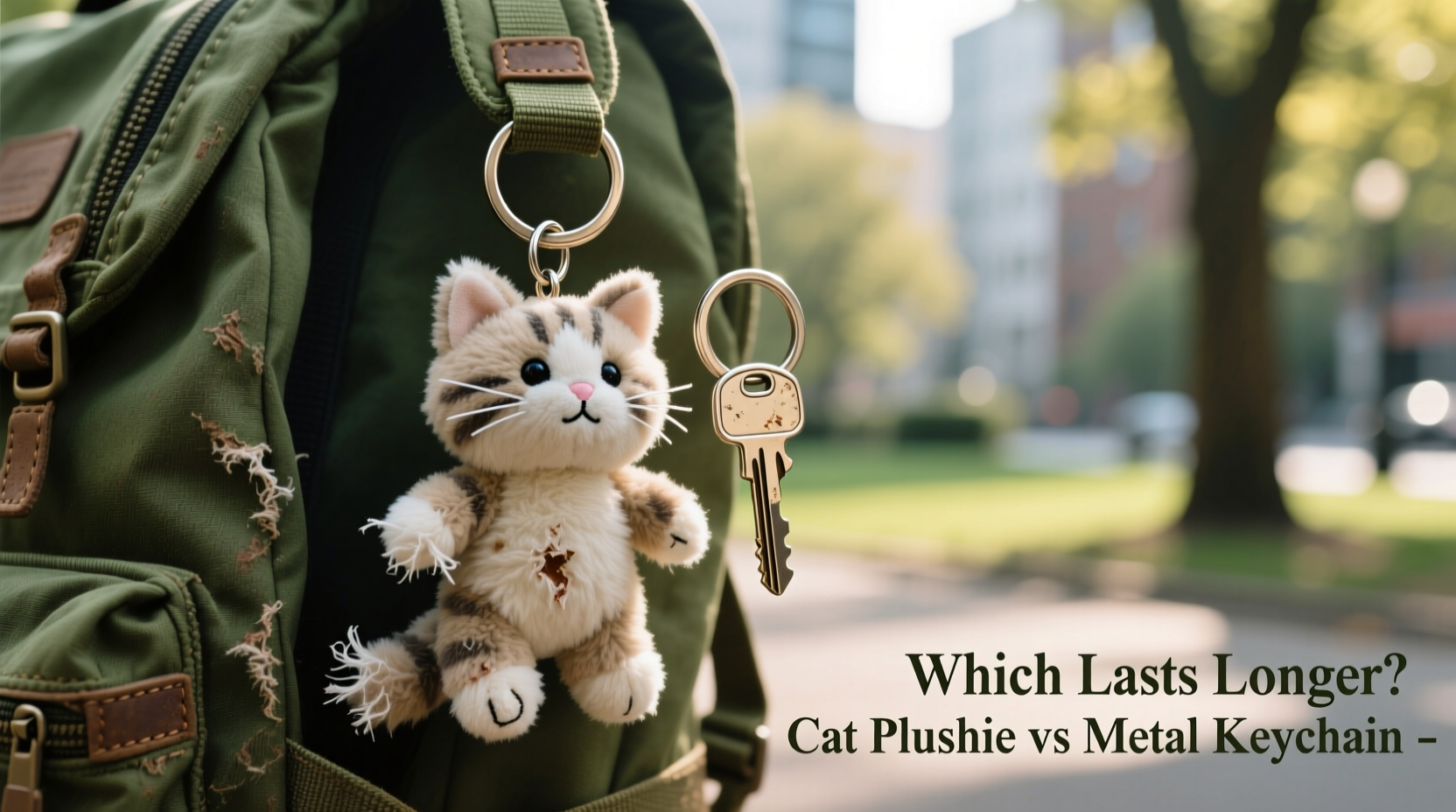
When evaluating how long a keychain lasts on a backpack, it's not just about strength—it's about resilience over time. Several factors influence longevity:
- Material degradation: How fabrics fade, fray, or compress; how metals corrode or scratch.
- Environmental exposure: Sunlight (UV), moisture, temperature changes, and dirt accumulation.
- Mechanical stress: Constant rubbing against fabric, impact from drops, and tension from swinging.
- User interaction: Frequency of handling, cleaning habits, and whether the item is treated as decorative or functional.
A cat plushie may survive gentle indoor use for years, but outdoors on a backpack, it faces a harsher reality. Metal doesn't degrade from UV light like fabric does, but it can still fail due to corrosion or structural fatigue at weak points like clasps or welds.
Material Breakdown: Plushie vs Metal
Cat plushie keychains are typically made from polyester or acrylic fibers with plastic eyes and stitching. The soft body is filled with polyfill, which retains shape initially but compacts over time. In contrast, metal keychains are usually crafted from zinc alloy, stainless steel, or aluminum—materials chosen for density, weight, and resistance to deformation.
Plush materials begin deteriorating under UV exposure within weeks. Sunlight breaks down polymer chains in synthetic fibers, leading to fading, brittleness, and eventual disintegration. Moisture accelerates this process, especially if the plushie gets wet and remains damp, promoting mold growth inside the stuffing.
Metal, while more resilient, isn’t immune to damage. Zinc alloys can corrode in humid environments, particularly if scratched. Stainless steel resists rust well but may develop surface pitting over years. Aluminum is lightweight and corrosion-resistant but softer, making it prone to dents.
“Soft accessories on bags often fail not from tearing, but from cumulative abrasion and poor attachment design.” — Lena Torres, Product Durability Analyst at Urban Gear Labs
Real-World Wear Comparison
To assess actual lifespan, consider typical backpack usage:
- Commuting students swing bags into lockers and buses.
- Hikers expose gear to rain, mud, and trail debris.
- Urban professionals carry bags through crowded subways and coffee shops.
In all cases, dangling items experience constant motion. A plushie will rub against the backpack fabric, gradually wearing thin spots. Seams split first, followed by filling leakage. After 3–6 months of daily outdoor use, most plushies show visible signs of wear: flattened shapes, stained surfaces, missing eyes, or torn loops.
Metal keychains fare better. They don’t absorb water or compress. However, cheaper models often have weak solder joints or flimsy split rings. These can snap after repeated twisting or impact. High-quality metal versions with welded attachments and polished finishes can last five years or more—even decades—with minimal change.
Mini Case Study: Two Commuters, Two Keychains
Sophia, a college student, attached a pastel cat plushie keychain to her canvas backpack at the start of the semester. Within three months, the tail had frayed, the face was smudged with ink from her pens, and after an accidental wash cycle (she forgot to remove it), the stuffing clumped and shrank. By month six, she replaced it.
Meanwhile, David chose a minimalist stainless steel cat-shaped keychain. After 18 months of daily subway rides and occasional rain exposure, his keychain remained intact. Minor scratches appeared, but no structural damage. He reported only one issue: the sharp edge occasionally caught on his coat lining.
This contrast highlights a key insight: perceived cuteness comes with trade-offs in endurance.
Comparison Table: Plushie vs Metal Keychains
| Feature | Cat Plushie Keychain | Metal Keychain |
|---|---|---|
| UV Resistance | Poor – fades and degrades quickly | Excellent – no color change |
| Water Resistance | Fair – absorbs moisture, risks mold | Good – stainless resists corrosion |
| Impact Resistance | High – absorbs shocks without breaking | Moderate – may dent or chip |
| Abrasion Resistance | Low – fabric wears down over time | High – resists surface wear |
| Lifespan (Daily Outdoor Use) | 3–8 months | 2–10+ years |
| Main Failure Point | Seams, stitching, loop attachment | Split ring, clasp weld |
| Maintenance Needs | Hand-wash occasionally, air dry | Wipe clean; inspect for corrosion |
How to Maximize Longevity: Practical Tips
Whether you prefer plush or metal, small adjustments can significantly extend life. Here’s what works:
- Use protective coatings: For metal, apply a clear nail polish layer on engraved areas to prevent oxidation.
- Avoid direct sun storage: Never leave your backpack on a windowsill or car dashboard where UV rays intensify.
- Reinforce attachment points: Add a secondary mini-carabiner or double-loop chain to reduce strain on the primary clip.
- Clean gently: Wipe metal with a dry cloth weekly; spot-clean plush with mild soap and cold water—never machine wash.
- Check hardware monthly: Inspect split rings and jump rings for gaps or bending.
Checklist: Extending Your Keychain’s Life
- ✅ Attach using a rotating swivel hook to reduce twisting stress
- ✅ Store backpack indoors when not in use
- ✅ Remove keychain before washing or repairing the bag
- ✅ Choose plushies with reinforced stitching and non-porous eyes
- ✅ Opt for stainless steel or titanium over plated alloys
FAQ: Common Questions Answered
Can I make a plushie last longer with waterproof spray?
Yes, fabric protector sprays add temporary water resistance and reduce staining. However, they don’t stop UV degradation or seam wear. Reapply every few weeks for best results, and avoid overspray near zippers or straps.
Are enamel-coated metal keychains more durable?
Enamel adds color and smoothness but can chip if dropped on hard surfaces. Underneath, the base metal still determines overall strength. Solid stainless steel without enamel often outlasts coated alternatives in high-impact scenarios.
Why do some metal keychains turn green?
This happens with low-grade alloys containing copper or nickel, especially when exposed to sweat and moisture. The reaction forms copper oxide, which transfers to skin. Stick to hypoallergenic metals like surgical-grade stainless steel or titanium.
Final Verdict: Which Lasts Longer?
The evidence is clear: metal keychains last significantly longer than cat plushie keychains when used daily on a backpack. While plushies offer emotional appeal and tactile satisfaction, they are inherently temporary under regular outdoor conditions. Even high-quality ones rarely exceed a year of consistent use without visible wear.
Metal keychains, especially those made from durable alloys with strong attachments, can endure years of abuse with little maintenance. Their main vulnerabilities—weak rings or poor craftsmanship—are avoidable with careful selection.
If longevity is your priority, metal wins decisively. But if personal expression matters more than permanence, a plushie offers charm while it lasts—just expect to replace it sooner.




 浙公网安备
33010002000092号
浙公网安备
33010002000092号 浙B2-20120091-4
Comments
No comments yet. Why don't you start the discussion?