
Cats scratch. It’s not just a habit—it’s a biological necessity. From marking territory to shedding claw sheaths and stretching muscles, scratching is deeply ingrained in feline behavior. As responsible cat owners, we’re tasked with providing appropriate outlets for this instinct. But when it comes to choosing between a traditional cat scratching post and a humble cardboard scratcher, which one do cats truly favor?
The answer isn’t as straightforward as “one size fits all.” Cats are individuals with distinct preferences shaped by age, environment, personality, and even past experiences. However, understanding the functional differences, material appeal, and behavioral drivers behind each option can help you make an informed decision—and possibly save your furniture in the process.
Why Cats Scratch: The Science Behind the Behavior
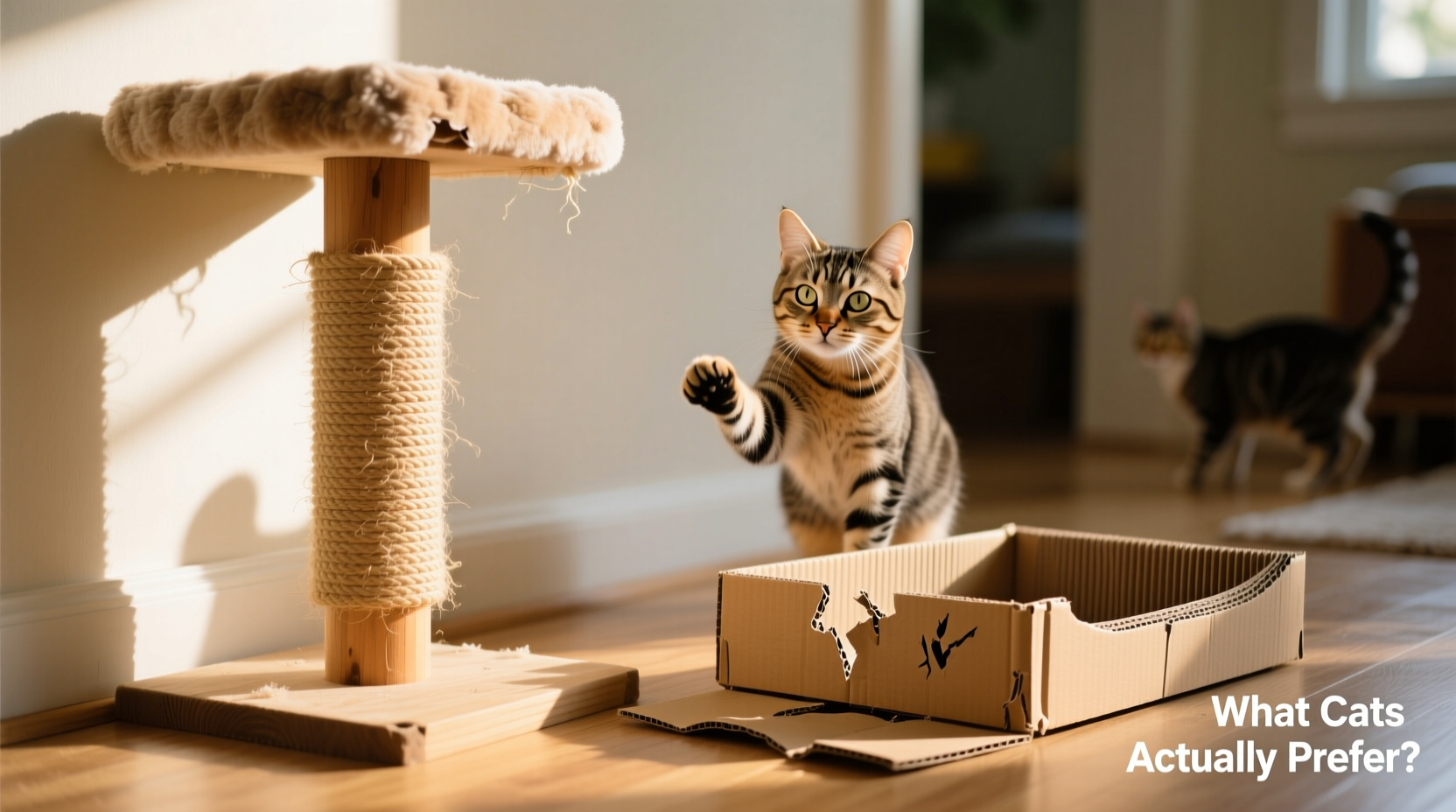
Before comparing tools, it’s essential to understand why cats scratch in the first place. This behavior serves multiple purposes:
- Muscle and joint conditioning: Stretching during scratching helps maintain flexibility, especially in the shoulders and back.
- Claw maintenance: Scratching removes the outer layer of dead claws, keeping them sharp and healthy.
- Scent marking: Cats have scent glands in their paws. Each swipe deposits pheromones, signaling ownership and creating a sense of security.
- Emotional regulation: Scratching can be calming or stress-relieving, especially in unfamiliar or high-anxiety environments.
Dr. Sarah Ellis, a feline behavior expert at the University of Lincoln, explains:
“Scratching is not destructive behavior—it’s normal, species-specific behavior. When cats scratch inappropriate items like sofas, it usually means their environmental needs aren’t being met.” — Dr. Sarah Ellis, Feline Behavior Scientist
This insight shifts the focus from punishment to prevention. Instead of asking, “How do I stop my cat from scratching?” we should ask, “How can I provide better alternatives?” That leads us directly to the showdown: scratching posts versus cardboard scratchers.
Scratching Posts: Structure, Stability, and Longevity
A typical cat scratching post consists of a vertical or angled structure wrapped in sisal rope, carpet, or corrugated cardboard, mounted on a stable base. These are often tall enough to allow full-body stretching—critical for adult cats.
Advantages of scratching posts:
- Supports full upward stretch, engaging more muscle groups.
- Durable construction lasts years with heavy use.
- Stable base reduces wobbling, which many cats dislike.
- Versatile designs include multi-level platforms, condos, and integrated toys.
However, not all scratching posts are created equal. Poorly built models with flimsy bases or low height fail to meet cats’ physical needs. A post that tips over during use will likely be abandoned quickly.
Additionally, placement matters. Posts located in isolated corners or unused rooms are less likely to be used. Cats prefer scratching near sleeping areas, entryways, or high-traffic zones where scent marking has maximum effect.
Cardboard Scratchers: Simplicity, Texture, and Appeal
Cardboard scratchers come in flat, curved, or tunnel shapes, typically made from tightly layered corrugated cardboard. They’re lightweight, affordable, and widely available.
What makes them so appealing to cats?
- Texture: The ridged surface of corrugated cardboard provides excellent resistance, allowing cats to effectively shed claw layers.
- Sound: The crinkling noise mimics natural prey sounds, triggering instinctive engagement.
- Replaceability: Once worn out (usually after 2–6 weeks), they can be recycled and replaced easily.
- Warmth retention: Cardboard holds body heat, making flat scratchers popular as lounging spots too.
Many cats exhibit a strong preference for cardboard over sisal or carpet. In a 2020 observational study conducted by the International Cat Care organization, 78% of participating cats showed initial interest in cardboard scratchers compared to 54% for sisal posts.
“I’ve seen cats who ignore $100 scratching towers but go wild for a $5 cardboard pad. It’s not about price—it’s about texture and accessibility.” — Dr. Mikel Delgado, Certified Cat Behavior Consultant
Still, cardboard has limitations. It lacks height for vertical stretching and degrades faster under frequent use. For senior cats or those with arthritis, the low profile may be ideal. But for younger, energetic cats, it might not satisfy their full-body scratching needs.
Head-to-Head Comparison: Features That Matter
| Feature | Scratching Post | Cardboard Scratcher |
|---|---|---|
| Height & Stretch Support | High – supports full extension | Low – limited stretching |
| Durability | Years with proper care | Weeks to months |
| Texture Preference | Varies (sisal preferred over carpet) | High – corrugated texture highly attractive |
| Stability | Depends on base quality | Generally stable when placed on floor |
| Cost | $30–$150+ | $5–$20 |
| Space Requirements | Larger footprint | Compact, easy to store |
| Cat Age Suitability | Ideal for adults and kittens | Better for seniors or small spaces |
The data shows no clear winner across all categories. Instead, the best choice depends on individual cat needs and household dynamics.
Real-World Example: How One Shelter Improved Scratching Behavior
In Portland, Oregon, the Purrfect Haven Animal Shelter faced a recurring issue: newly adopted cats were returned due to destructive scratching. Staff suspected inadequate scratching options but weren’t sure which type worked best.
They launched a 12-week trial with 30 resident cats. Each cat had access to both a sisal-wrapped scratching post and a horizontal cardboard scratcher placed near their resting area. Cameras recorded usage frequency, duration, and body language.
Results revealed a split preference:
- Younger cats (under 3 years) used the scratching post 68% more often, primarily for vertical stretches upon waking.
- Senior cats (over 8 years) spent 82% of scratching time on cardboard pads, often combining scratching with napping.
- Kittens showed equal interest in both but favored cardboard for play-based scratching.
The shelter now adopts a dual-approach strategy: every outgoing cat receives a starter kit with a compact scratching post and one replaceable cardboard scratcher. Return rates due to scratching issues dropped by 60% within six months.
How to Determine Your Cat’s Preference: A Step-by-Step Guide
You don’t need a research lab to figure out what your cat likes. Follow these steps to identify their true preference:
- Observe current behavior: Where does your cat already scratch? On the couch corner? Carpet edge? Baseboards? Note the orientation (vertical vs. horizontal).
- Introduce both types: Place a sturdy scratching post and a flat cardboard scratcher in high-use areas (e.g., beside the bed, near the litter box).
- Monitor usage: Watch for at least one week. Look for active scratching, paw kneading, or lingering scent-marking behavior.
- Test positioning: If ignored, try relocating the less-used option. Sometimes proximity to sleep or feeding areas increases appeal.
- Add attractants: Sprinkle catnip or silver vine on both surfaces to encourage investigation.
- Evaluate wear patterns: After two weeks, check which item shows the most fraying or damage—that’s your winner.
- Adjust and expand: Invest in more of the preferred type, but keep one of each for variety.
Best Practices Checklist: Optimizing Scratching Options
Use this checklist to ensure your cat’s scratching needs are fully met:
- ✅ Provide at least one scratching option per cat.
- ✅ Include both vertical and horizontal surfaces if space allows.
- ✅ Place scratchers near sleeping areas, entrances, and windows.
- ✅ Replace cardboard scratchers when heavily worn (every 2–3 months).
- ✅ Clean posts periodically to remove dust and old pheromones.
- ✅ Avoid placing scratchers near food and water (cats avoid scratching near eating zones).
- ✅ Discourage furniture scratching with double-sided tape or aluminum foil covers—temporarily redirect, don’t punish.
Frequently Asked Questions
Can I use only cardboard scratchers instead of a scratching post?
It depends on your cat. While cardboard is appealing, it doesn’t support full-body stretching. Kittens and agile adults benefit from vertical scratching. Using only cardboard may lead to unmet physical needs over time. A combination approach is ideal.
Why does my cat scratch the carpet but ignore both the post and cardboard?
This often indicates poor placement or texture mismatch. Cats prefer rough, fibrous materials. If your carpet is looped or plush, your cat may associate that texture with acceptable scratching. Try adding a sisal rug or repositioning scratchers directly over the problem area (then gradually move them).
How many scratching options should I have in my home?
At minimum, one per cat. Ideally, place multiple scratchers in different locations—especially in multi-level homes. Key zones include: near main sleeping areas, by exits/entrances, and adjacent to windows with bird activity.
Conclusion: It’s Not Either/Or—It’s Both/And
The debate between cat scratching posts and cardboard scratchers isn’t about declaring a single winner. It’s about recognizing that cats thrive on variety and choice. Just as humans enjoy different chairs for different purposes, cats benefit from having multiple scratching textures and orientations available.
Research, observation, and real-world evidence suggest that while cardboard scratchers win in immediate appeal and sensory satisfaction, scratching posts fulfill critical physical and territorial needs that flat surfaces cannot match.
The most effective solution? Combine both. Use durable posts for daily stretching and marking, and supplement with replaceable cardboard scratchers for texture variety and mental stimulation. Rotate them occasionally to keep things interesting.




 浙公网安备
33010002000092号
浙公网安备
33010002000092号 浙B2-20120091-4
Comments
No comments yet. Why don't you start the discussion?