
For cat owners living in apartments, condos, or compact homes, maximizing usable space without sacrificing pet comfort is a constant challenge. One of the most overlooked solutions lies in a simple architectural detail: the corner. Often underutilized, room corners offer an ideal opportunity to install cat trees that blend seamlessly into the home while freeing up valuable floor area. Corner-specific cat trees not only optimize spatial efficiency but also provide cats with elevated vantage points, privacy, and vertical territory—all essential components of feline well-being.
Modern cat tree designs have evolved far beyond bulky, boxy structures cluttering the center of a room. Today’s models are engineered with ergonomics, aesthetics, and behavioral science in mind. By leveraging triangular footprints, wall-mounted platforms, and modular systems, these corner-friendly units deliver full functionality in minimal square footage. Whether you're furnishing a studio apartment or simply want to declutter your living room, choosing a corner cat tree can be a game-changer.
Why Corner Cat Trees Make Sense
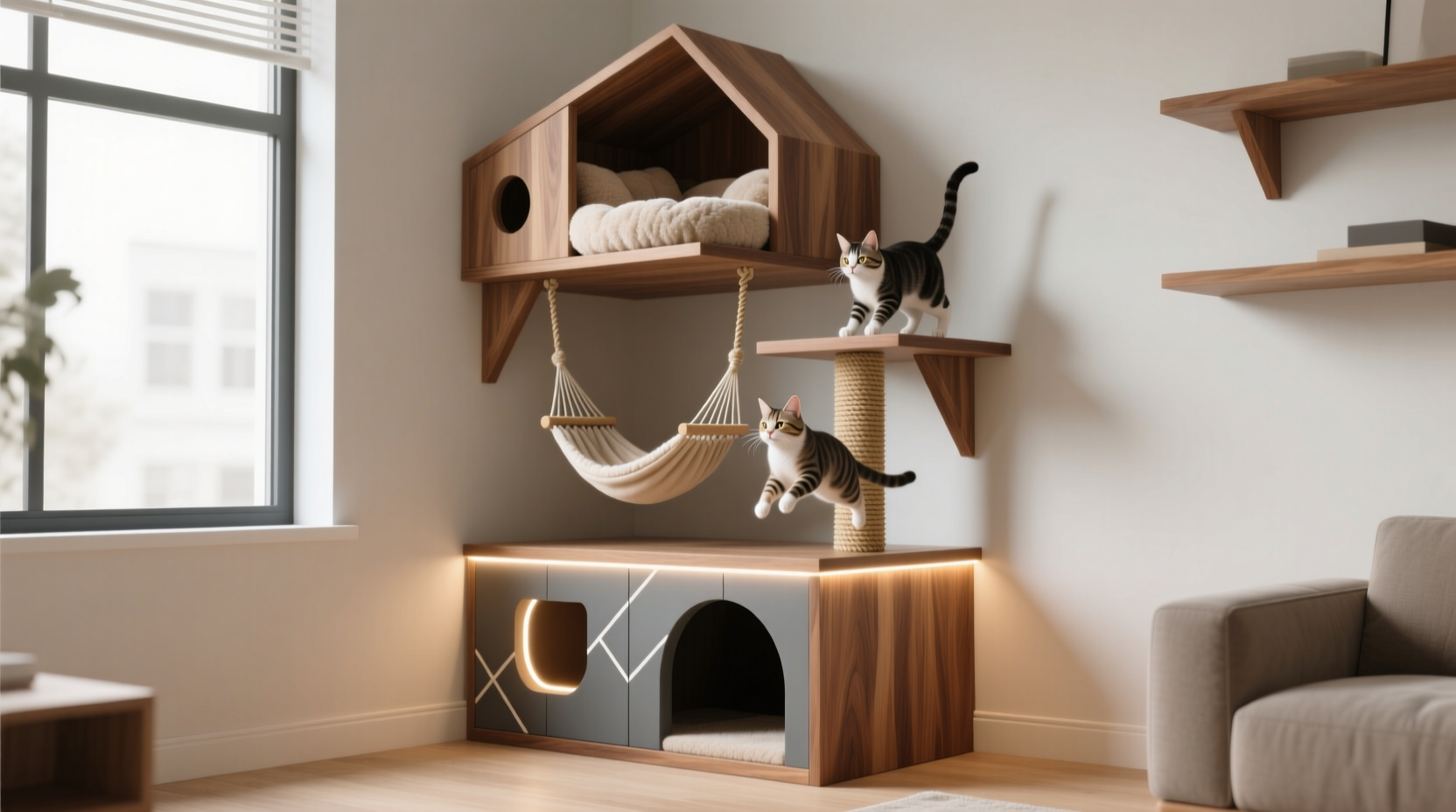
Cats are naturally inclined toward high places where they can observe their environment safely. In the wild, felines use elevation to survey for threats and prey. Indoors, this instinct remains strong. A corner location supports this behavior by offering two adjacent walls for stability and enhanced security. Cats feel more protected when their backs are shielded, and a corner inherently provides that sense of enclosure.
From a design perspective, corners represent unused zones in most rooms. Placing a cat tree there transforms dead space into functional real estate. Unlike freestanding units that require clearance on all sides, corner models tuck neatly into L-shaped junctions, often blending with furniture lines or behind doors. This strategic placement keeps pathways clear and maintains open sightlines, contributing to a less cluttered visual aesthetic.
Top Design Features of Space-Saving Corner Cat Trees
The best corner cat trees combine structural ingenuity with cat-centric amenities. Look for these key features when shopping:
- Triangular Base: Maximizes footprint efficiency and aligns perfectly with standard 90-degree corners.
- Wall-Mounted Components: Shelves, perches, or hammocks anchored to the wall reduce reliance on floor support and create floating pathways.
- Modular Expandability: Units that allow vertical stacking or lateral extension let you customize height and function over time.
- Narrow Profile: Depth under 24 inches ensures the unit doesn’t protrude too far into the room.
- Integrated Hiding Spots: Enclosed cubbies or cave-like nooks positioned at lower levels give cats a private retreat without adding bulk.
- Durable, Low-Profile Materials: Sisal-wrapped posts for scratching, compressed wood shelves, and non-toxic finishes ensure longevity and safety.
Some advanced models even incorporate passive design elements like built-in window perches or connections to existing shelving systems, further blurring the line between pet furniture and human interior design.
Types of Corner-Friendly Cat Tree Configurations
Not all corner cat trees look alike. Different configurations serve different household needs, cat personalities, and room layouts. Below is a breakdown of popular types:
| Design Type | Floor Space Used | Ideal For | Key Benefits |
|---|---|---|---|
| Compact Triangular Tower | 2–3 sq ft | Small apartments, single cats | Tight footprint, includes scratching post and one perch |
| Wall-Mounted Ladder System | Minimal (wall-supported) | High climbers, modern interiors | Almost no floor contact; creates a vertical \"cat highway\" |
| Corner Cubby Tree | 3–4 sq ft | Kittens, shy cats | Enclosed spaces promote security; easy access from multiple sides |
| Multi-Level Modular Unit | 4–6 sq ft | Multicat homes, larger rooms | Expandable; accommodates play, rest, and scratching zones |
| Window-Integrated Perch Tree | 2–3 sq ft | Sun-loving cats, bay windows | Combines view access with climbing structure; energy-efficient |
Each configuration balances form and function differently. For instance, a wall-mounted ladder system might lack a hideout but excels in space conservation. Conversely, a modular unit offers versatility at the cost of slightly more floor coverage.
Real-Life Example: A Studio Apartment Transformation
Consider Maria, a graphic designer living in a 500-square-foot downtown studio. Her two rescue cats, Luna and Milo, previously shared a large central cat tree that dominated the main room, making movement difficult and disrupting her work-from-home setup. After researching space-saving options, she installed a custom corner cat tree in the living area’s back left corner—adjacent to a window.
The new unit featured a triangular base with a sisal-wrapped post, two staggered perches, and a suspended hammock attached to wall anchors. The top platform aligned with a floating bookshelf, creating a continuous path along the perimeter. Within days, both cats adapted to the new layout. Luna, the more anxious of the two, spent hours napping in the enclosed lower cubby, while Milo used the upper levels to watch birds outside.
Most importantly, removing the central tower opened up nearly 10% of her floor space. She repositioned her desk and added a small reading chair—luxuries previously impossible. “It’s like I gained a whole new zone,” Maria said. “And the cats seem happier—they each have their own spots now.”
“Cats thrive in environments where vertical space compensates for limited horizontal room. A well-designed corner tree can fulfill territorial, exercise, and psychological needs efficiently.” — Dr. Rebecca Langston, DVM, Feline Behavior Consultant
How to Choose the Right Corner Cat Tree for Your Home
Selecting the ideal model requires evaluating several factors beyond just size. Follow this step-by-step guide to make an informed decision:
- Assess Your Available Corner: Use a tape measure to record the width, depth, and ceiling height. Note any obstructions like radiators, outlets, or baseboard heaters.
- Evaluate Your Cat’s Behavior: Is your cat a climber, a digger, or a cuddler? Active cats need multiple platforms; anxious ones benefit from enclosed spaces.
- Check Weight Capacity: Ensure the unit supports your cat’s weight, especially if you have larger breeds like Maine Coons.
- Match to Interior Style: Modern homes suit minimalist metal-and-wood designs; traditional spaces may pair better with carpeted or faux-fur-covered trees.
- Verify Assembly & Anchoring Options: Look for models with wall straps or brackets to prevent tipping—a critical safety feature.
- Review Maintenance Needs: Removable, washable cushions and replaceable sisal wraps extend lifespan and hygiene.
- Read User Feedback: Pay attention to comments about stability, durability, and ease of assembly.
DIY vs. Pre-Built: Weighing the Options
While many high-quality pre-built corner cat trees are available, some owners opt for DIY solutions to tailor dimensions and materials precisely. Each approach has advantages:
- Pre-Built Advantages: Engineered for stability, often tested for safety standards, quicker installation, warranty included.
- DIY Advantages: Full customization, potential cost savings, ability to match exact color schemes or repurpose materials.
A hybrid approach—using a commercial base with custom add-ons like wall-mounted shelves or dangling toys—is increasingly popular. For example, starting with a compact corner tower and later installing floating sisal steps up the adjacent wall allows incremental expansion based on your cat’s evolving preferences.
Space-Saving Checklist Before You Buy
Before finalizing your purchase, run through this checklist to ensure maximum efficiency and safety:
- ✅ Measures under 24 inches in depth to avoid obstructing walkways
- ✅ Includes wall anchor kit or provisions for secure mounting
- ✅ Has at least one elevated resting spot above 3 feet (optimal viewing height)
- ✅ Provides scratching surfaces oriented for natural clawing motion
- ✅ Fits within your room’s corner without blocking doors or windows
- ✅ Uses non-toxic, pet-safe materials (e.g., formaldehyde-free particleboard)
- ✅ Allows for future expansion or reconfiguration
Frequently Asked Questions
Can a corner cat tree support multiple cats?
Yes, provided it’s designed for multi-cat use. Look for models with separate activity zones—such as dual perches, independent cubbies, or wide platforms—to prevent territorial disputes. Always check the manufacturer’s stated weight limit and consider adding wall-mounted extensions to distribute load.
Are corner cat trees stable enough to prevent tipping?
When properly assembled and anchored, yes. Stability depends on construction quality and whether the unit includes a wall attachment. Never skip the anchoring step, even with low-profile trees. Top-heavy designs without reinforcement pose a risk, especially with playful or large cats.
Do corner trees work in rooms with angled or non-standard walls?
They can, but require careful selection. Some manufacturers offer adjustable bases or modular connectors that accommodate angles between 85° and 95°. Alternatively, a wall-mounted system gives more flexibility since it relies less on floor alignment. In historic homes with curved or irregular walls, custom fabrication may be necessary.
Final Thoughts: Reclaim Space Without Compromising Comfort
Choosing a cat tree that fits in corners and saves floor space isn’t just about convenience—it’s about designing a harmonious living environment where both humans and cats thrive. These intelligent solutions honor feline instincts while respecting spatial constraints, proving that thoughtful pet furniture can enhance, rather than detract from, your home’s functionality and beauty.
With so many innovative designs on the market—from sleek Scandinavian-inspired towers to rugged industrial wall systems—there’s no reason to settle for a clunky, space-hogging alternative. By prioritizing corner utilization, you unlock hidden potential in every room, turning forgotten angles into vibrant hubs of feline activity.




 浙公网安备
33010002000092号
浙公网安备
33010002000092号 浙B2-20120091-4
Comments
No comments yet. Why don't you start the discussion?