
Cats are naturally selective about their drinking habits. Unlike dogs, who often lap up water enthusiastically, many cats barely touch their bowls—sometimes leading to chronic dehydration. This has led pet owners and veterinarians alike to explore alternatives, with cat water fountains gaining popularity in recent years. But is the investment worth it? Does flowing water truly encourage cats to drink more, or is it just a marketing gimmick? The answer lies in understanding feline instincts, hydration needs, and how water presentation influences behavior.
Domestic cats evolved from desert-dwelling ancestors, which means they’re biologically adapted to extract moisture from prey rather than rely on standing water sources. In the wild, stagnant water can be contaminated or indicate danger, so cats instinctively avoid it. This deep-rooted survival mechanism persists even in housecats, making them hesitant to drink from traditional bowls—especially if the water appears stale or is placed near food (which can trigger predator-prey associations).
This article examines the science and behavioral psychology behind why flowing water may be more appealing, compares fountains to standard bowls across multiple criteria, and provides evidence-based recommendations for improving your cat’s hydration.
The Science of Feline Hydration
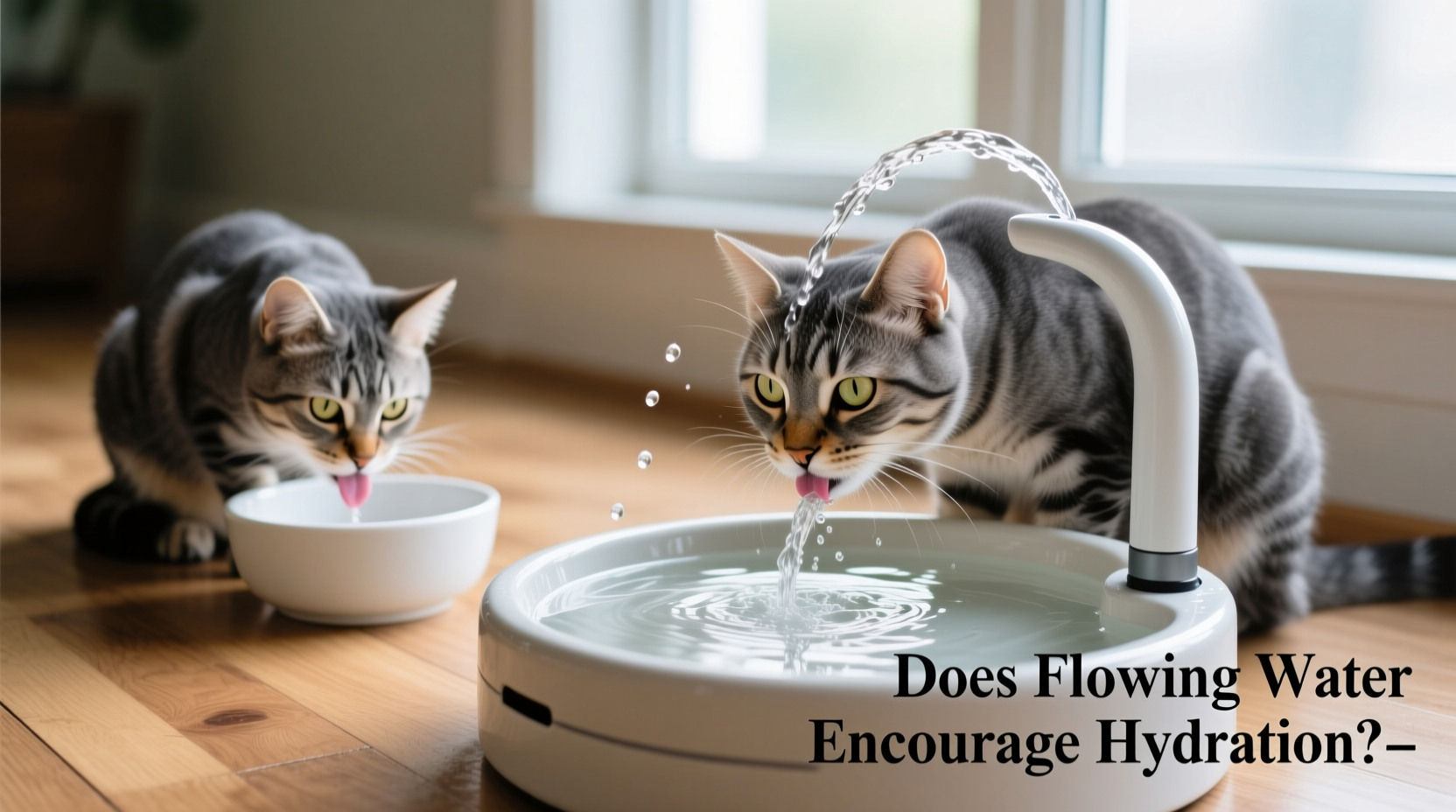
Proper hydration is critical for kidney function, urinary tract health, and overall metabolic balance in cats. Chronic mild dehydration is a major contributor to conditions like feline lower urinary tract disease (FLUTD), bladder stones, and kidney disease—common and often preventable issues in adult and senior cats.
On average, a 10-pound cat should consume about 7–9 ounces (200–270 ml) of water per day. However, cats on dry food diets—which contain only 5–10% moisture—must drink significantly more water independently to compensate. Wet food, by contrast, is 70–80% water, reducing the need for additional intake.
A study published in the Journal of Feline Medicine and Surgery found that cats fed exclusively dry food had higher urine concentration and were at greater risk for crystal formation compared to those consuming wet food or supplemented water sources. This underscores the importance of encouraging voluntary water consumption.
“Cats have a low thirst drive. They don’t naturally seek out water like other animals. It’s our responsibility to make hydration appealing.” — Dr. Sarah Wooten, DVM, Veterinary Contributor, American Animal Hospital Association
Why Flowing Water Appeals to Cats
The appeal of a water fountain isn’t just aesthetic—it taps into instinctual behaviors. Moving water signals freshness. In nature, running streams are safer to drink from than stagnant pools, which may harbor bacteria, parasites, or predators. A cat’s evolutionary wiring interprets still water as potentially unsafe, especially if it’s been sitting for hours.
Beyond safety, movement enhances sensory stimulation. The sound of trickling water can attract a curious cat, while the visual ripple mimics natural water sources. Many cats also prefer to drink from moving water because it feels cooler and more oxygenated.
Observational studies in multi-cat households show that cats often spend time watching or pawing at faucets or fountains before drinking. This suggests engagement precedes consumption—behavior less commonly seen with static bowls.
Water Fountain vs. Regular Bowl: A Detailed Comparison
| Feature | Cat Water Fountain | Regular Water Bowl |
|---|---|---|
| Water Freshness | Continuously filtered and circulated, reducing bacterial growth and debris accumulation. | Stagnant; requires frequent changing to maintain cleanliness. |
| Hydration Encouragement | Flow and sound attract cats; increases voluntary drinking in many cases. | Limited appeal; cats may ignore it if water appears old or still. |
| Maintenance | Requires weekly cleaning and filter replacement every 2–4 weeks. | Easier daily wipe-downs, but must be refilled and cleaned daily. |
| Cost Over Time | Higher initial cost ($30–$80); ongoing filter expenses (~$10–$15/month). | Negligible cost; durable bowls last years. |
| Suitability for Multi-Cat Homes | Can serve multiple cats; some models have wide reservoirs. | Risk of dominance-related avoidance; one cat may guard the bowl. |
| Noise Level | Low hum; may deter noise-sensitive cats. | Silent operation. |
While fountains offer clear advantages in water quality and engagement, they aren’t universally effective. Some cats remain indifferent or even fearful of the motorized flow. Others develop preferences based on texture, depth, or location rather than water movement.
Real-World Impact: A Mini Case Study
In a household in Portland, Oregon, a 7-year-old domestic shorthair named Milo had a history of urinary crystals. His veterinarian recommended increased water intake, but despite daily bowl changes and placement near his favorite napping spot, Milo drank minimally. His owner, frustrated, invested in a stainless steel cat fountain with a triple filtration system.
Within two days, Milo was observed sitting beside the fountain, pawing at the stream, and eventually drinking. Over the next three weeks, his water consumption nearly doubled, as estimated by measuring daily refill volumes. A follow-up urinalysis showed reduced urine concentration and no new crystal formation.
“It wasn’t just about access,” the owner noted. “It was about making water interesting. He used to walk past the bowl like it didn’t exist. Now he checks the fountain several times a day.”
This case illustrates how environmental enrichment—specifically, transforming water from a passive resource to an engaging feature—can shift behavior in measurable ways.
Choosing the Right Option: A Step-by-Step Guide
Not every cat will benefit from a fountain, and not every bowl setup is inadequate. Follow this sequence to determine the best hydration strategy for your cat:
- Assess your cat’s current drinking behavior. Do they drink regularly? From the bowl, sink, or elsewhere? Note patterns over three days.
- Evaluate diet. If your cat eats mostly dry food, prioritize increasing water intake through any effective method.
- Optimize bowl placement and type. Use wide, shallow bowls (to avoid whisker stress), place away from food, and ensure multiple locations in multi-level homes.
- Try a fountain on trial basis. Borrow or purchase a budget-friendly model with adjustable flow. Monitor for interest over 7–10 days.
- Track water intake. Measure daily water loss from the container to estimate consumption before and after introducing the fountain.
- Consult your vet if concerns persist. Low intake despite interventions may indicate underlying medical issues like diabetes or kidney disease.
Common Mistakes That Undermine Hydration
Even with the right equipment, poor practices can discourage drinking:
- Placing water next to food. Cats instinctively avoid drinking near where they eat, associating contamination risks.
- Using narrow, deep bowls. These press against sensitive whiskers, causing discomfort known as “whisker fatigue.”
- Infrequent cleaning. Biofilm and algae grow quickly, especially in sunlight. Clean all containers every 2–3 days.
- Ignoring water temperature. Cats prefer cool, fresh water. Avoid placing bowls in direct sun or near heat sources.
- Overlooking alternative sources. Some cats prefer dripping faucets. If safe, allow occasional access to running tap water.
FAQ: Your Hydration Questions Answered
Do all cats prefer water fountains?
No. While many cats are drawn to flowing water, others show no preference or may be startled by the sound. Individual temperament, age, and past experiences influence acceptance. Older or anxious cats may need gradual introduction.
Can I make my own DIY water fountain?
Yes, though commercial models are safer and easier to maintain. A simple setup using a small submersible pump in a ceramic basin can work, but ensure materials are non-toxic and the flow is gentle. Regular cleaning is essential to prevent mold or electrical hazards.
How often should I clean a cat water fountain?
Full disassembly and cleaning should occur at least once a week. Filters typically last 2–4 weeks depending on usage and water hardness. Algae buildup, mineral deposits, or slimy textures indicate immediate cleaning is needed.
Expert Recommendations and Final Insights
Veterinary professionals increasingly recommend water fountains as part of preventive care, especially for cats on dry diets or with urinary histories. Dr. Elizabeth Colleran, former president of the American Association of Feline Practitioners, emphasizes proactive hydration: “We treat so many cats for conditions that could be mitigated by better water intake. A fountain isn’t a luxury—it’s a tool for long-term health.”
However, experts caution against treating fountains as a universal solution. Success depends on proper maintenance, correct placement, and compatibility with the cat’s personality. A poorly maintained fountain can become a source of bacteria, negating any benefits.
Additionally, combining strategies yields the best results. Pairing a fountain with increased wet food, multiple water stations, and routine veterinary checkups creates a holistic approach to hydration.
“The goal isn’t just to get your cat to drink more today—it’s to support kidney and urinary health for the next ten years.” — Dr. Mike Lappin, Director, Center for Companion Animal Studies
Conclusion: Prioritizing Long-Term Feline Health
The choice between a cat water fountain and a regular bowl isn’t merely about convenience or cost—it’s about aligning with your cat’s instincts to promote better health. While not every cat will leap toward a fountain, the evidence shows that flowing water can significantly increase voluntary drinking in many cases, particularly for cats on dry food or with existing urinary concerns.
Success doesn’t come from the device alone, but from thoughtful implementation: choosing the right model, maintaining it diligently, and observing your cat’s response. For some, a fountain becomes a lifeline; for others, a well-placed, clean ceramic bowl suffices. The key is awareness and consistency.
Hydration is one of the simplest yet most powerful tools in feline wellness. Whether you opt for a high-tech fountain or optimize a traditional setup, the outcome—a healthier, more hydrated cat—is worth the effort.




 浙公网安备
33010002000092号
浙公网安备
33010002000092号 浙B2-20120091-4
Comments
No comments yet. Why don't you start the discussion?