
Cats are notoriously selective about their drinking habits. Many owners have watched their pets ignore a full water bowl while becoming fascinated by dripping faucets or puddles on the floor. This behavior isn’t just quirky—it’s rooted in instinct. In the wild, moving water signals freshness and safety, which explains why many domestic cats show a preference for flowing water. That natural inclination has led to the growing popularity of cat water fountains. But do they actually improve hydration compared to traditional water bowls? The answer involves biology, behavior, and practical care.
Dehydration in cats is a silent but serious issue. Chronic low water intake can contribute to urinary tract infections, kidney disease, and bladder stones—conditions that are both painful and costly to treat. Ensuring your cat drinks enough water isn’t just about convenience; it’s a critical component of long-term health. This article examines the differences between cat water fountains and standard bowls, evaluates scientific and anecdotal evidence, and provides actionable insights to help you make an informed decision.
Why Hydration Matters for Cats
Cats evolved as desert animals, meaning their bodies are highly efficient at conserving water. While this adaptation helped them survive in arid environments, it also means they don’t always feel thirsty—even when dehydrated. Unlike dogs, who often drink frequently and visibly, cats may take small sips throughout the day, making it difficult to monitor their intake.
Insufficient hydration affects multiple systems:
- Kidney function: Reduced urine output concentrates waste, increasing strain on the kidneys.
- Urinary health: Concentrated urine raises the risk of crystal formation and blockages, especially in male cats.
- Digestion: Dehydration slows gastrointestinal motility, potentially leading to constipation.
- Energy levels: Even mild dehydration can cause lethargy and reduced appetite.
Veterinarians often recommend increasing moisture in a cat’s diet—through wet food—as a primary strategy. However, access to appealing, fresh water remains essential, regardless of diet.
How Cat Water Fountains Work
A cat water fountain is a motorized device that continuously circulates and filters water. Most models include a pump that draws water from the reservoir, passes it through one or more filter layers (often charcoal and foam), and dispenses it into a drinking area via a stream, fountain jet, or gentle flow across a surface.
The key components serve specific purposes:
- Pump: Keeps water in motion, mimicking natural running sources.
- Filters: Remove hair, debris, and some impurities, improving taste and clarity.
- Reservoir: Holds several liters of water, reducing refill frequency.
- Design: Often includes multiple drinking zones to accommodate different preferences.
Unlike stagnant water in a bowl, the constant movement in a fountain introduces oxygen, which can make the water taste fresher. This aeration may be particularly appealing to cats with sensitive palates.
“Cats are hardwired to prefer moving water. It’s not just preference—it’s survival instinct. A fountain taps into that instinct, encouraging more frequent drinking.” — Dr. Lindsey Wood, DVM, Feline Health Specialist
Water Fountain vs Regular Bowl: A Direct Comparison
To understand the real-world differences, consider the following factors when comparing fountains to standard bowls.
| Feature | Cat Water Fountain | Regular Water Bowl |
|---|---|---|
| Water Freshness | High – constantly filtered and aerated | Low – stagnates quickly, especially in warm rooms |
| Hygiene Maintenance | Moderate – requires weekly cleaning and filter changes | Easy – simple wash, but must be done daily |
| Appeal to Cats | High – moving water triggers instinctive interest | Variable – depends on material, placement, and cleanliness |
| Refill Frequency | Every 3–7 days (larger capacity) | Daily (smaller volume, evaporation, spillage) |
| Cost Over Time | Higher – initial purchase + replacement filters | Low – inexpensive bowls, no ongoing costs |
| Noise Level | Low hum from pump (may bother sensitive cats) | Silent |
| Risk of Mold/Bacteria | Low if cleaned regularly | High if not changed daily |
The data suggests that while fountains require more maintenance than they might initially appear, their advantages in promoting consistent hydration often outweigh the drawbacks—especially for cats prone to urinary issues.
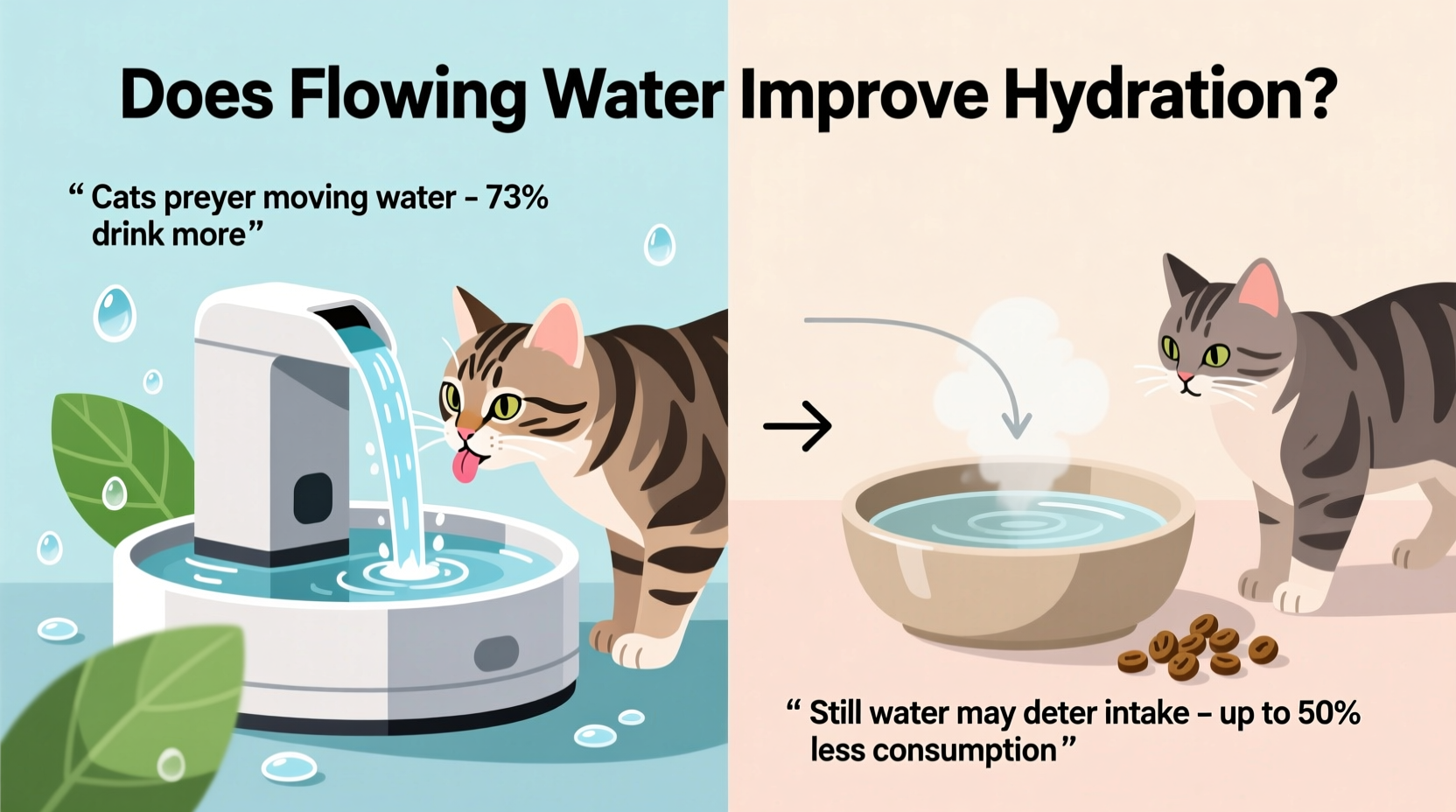
Does Flowing Water Actually Improve Hydration?
Multiple studies and veterinary observations support the idea that flowing water increases water consumption in cats. A 2014 study published in the *Journal of Feline Medicine and Surgery* found that cats exposed to water fountains drank significantly more water over a 2-week period than those using still bowls, even when both were cleaned daily and filled with the same source water.
Beyond measurable intake, behavioral shifts are telling. Owners report cats lingering near fountains, pawing at the water, or returning multiple times per hour—behaviors rarely seen with static bowls. This engagement suggests not just increased access, but enhanced interest.
Why does movement matter?
- Visual stimulation: Ripples and reflections catch a cat’s attention.
- Freshness perception: Running water is associated with clean, safe sources in nature.
- Taste improvement: Aeration reduces flatness and may eliminate chlorine taste.
- Reduced contamination: Filters trap debris, preventing buildup of organic matter.
One limitation: not all cats respond the same way. Some adapt immediately; others may avoid the sound or vibration of the pump. Gradual introduction and model selection (e.g., quieter pumps, stainless steel spouts) can help overcome resistance.
Mini Case Study: Increasing Intake in a Senior Cat
Mr. Whiskers, a 12-year-old domestic shorthair, had a history of recurrent cystitis. Despite eating primarily wet food, his urine was consistently concentrated, and his owner struggled to get him to drink from his ceramic bowl, even when refilled twice daily. After consultation with a veterinarian, a stainless steel fountain with a quiet submersible pump was introduced.
Initially, Mr. Whiskers sniffed around but didn’t drink. The owner placed the fountain beside his usual bowl with both filled. Within three days, he began licking droplets from the stream. By day seven, he was drinking exclusively from the fountain. Over the next month, urine specific gravity measurements showed a marked decrease in concentration, indicating improved hydration. No urinary episodes occurred in the following six months—a first in two years.
This case illustrates how a simple change in water delivery can yield measurable health benefits, especially in at-risk cats.
Choosing the Right Option for Your Cat
While fountains offer compelling advantages, they aren’t mandatory for every household. The best choice depends on your cat’s personality, health status, and your ability to maintain the equipment.
When a Fountain Makes Sense
- Your cat has a history of urinary or kidney issues.
- You notice your cat prefers drinking from sinks or showers.
- You’re away during the day and want a larger, self-sustaining water source.
- Your tap water has a strong odor or taste that deters drinking.
When a Bowl May Suffice
- Your cat already drinks well from a still source.
- You’re on a tight budget or prefer minimal tech in pet care.
- Your cat is noise-sensitive or startled by vibrations.
- You can commit to changing water and washing the bowl daily.
Step-by-Step Guide to Introducing a Water Fountain
- Choose a quiet model: Look for low-decibel pumps and read reviews focused on noise.
- Place it near the current water source: Allow your cat to investigate without pressure.
- Run both fountain and bowl simultaneously: Give your cat time to compare.
- Monitor interaction: Note if your cat sniffs, touches, or drinks from the fountain.
- Gradually phase out the bowl: Only after consistent use of the fountain.
- Establish a cleaning routine: Clean the entire unit weekly and replace filters monthly.
Common Mistakes to Avoid
Even the best fountain won’t help if used incorrectly. Common pitfalls include:
- Infrequent cleaning: Algae and biofilm can build up within days, negating hygiene benefits.
- Using tap water only: High mineral content can damage pumps and leave deposits.
- Placing near food: Cats often avoid drinking where they eat due to instinctive contamination fears.
- Ignoring filter replacements: Old filters harbor bacteria and lose effectiveness.
- Putting it in a high-traffic zone: Noise and foot traffic may deter nervous drinkers.
FAQ
Can I use distilled water in a cat fountain?
Yes, but not exclusively. Distilled water lacks minerals that help stabilize pH and may increase the risk of leaching metals from certain materials. A mix of filtered tap and distilled water is often ideal.
How often should I clean my cat’s water fountain?
Full disassembly and cleaning should happen at least once a week. Rinse the bowl and pump housing every few days, especially in warm climates. Replace filters according to manufacturer guidelines—typically every 2–4 weeks.
Are water fountains safe for kittens?
Yes, most fountains are safe for kittens. Choose models with low water depth and smooth edges. Supervise early use to ensure they don’t paw excessively and soak themselves.
Final Checklist Before You Decide
- ✅ Assess your cat’s current drinking habits and any health concerns.
- ✅ Measure available space and access to electrical outlets.
- ✅ Research models with positive reviews for durability and quiet operation.
- ✅ Budget for replacement filters and potential pump replacements.
- ✅ Commit to a weekly maintenance schedule.
- ✅ Have a backup plan (like a clean bowl) during cleaning or power outages.
Conclusion
The choice between a cat water fountain and a regular bowl isn’t just about convenience—it’s about optimizing your cat’s long-term health. While traditional bowls can work well under ideal conditions, water fountains offer a dynamic solution that aligns with feline instincts, encourages greater water consumption, and supports urinary and kidney wellness. For cats with medical histories or picky drinking behaviors, the investment often pays for itself in fewer vet visits and improved vitality.
Ultimately, the goal is consistent, adequate hydration. Whether achieved through a gently flowing fountain or a meticulously maintained bowl, what matters most is meeting your cat’s needs in a way that fits your lifestyle. If you’ve hesitated to try a fountain, consider starting with a basic model and observing your cat’s response. Small changes can lead to big improvements—one sip at a time.




 浙公网安备
33010002000092号
浙公网安备
33010002000092号 浙B2-20120091-4
Comments
No comments yet. Why don't you start the discussion?